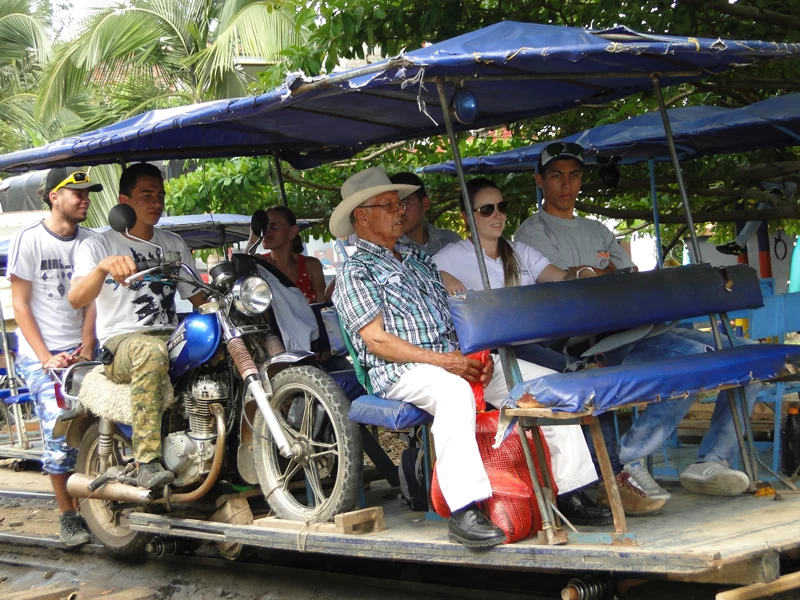
In the remote, verdant corridors of the Colombian countryside, where the topography often defies conventional road construction, a unique form of transportation has emerged from the skeletal remains of a forgotten industrial era. Known as motobalineras—a colloquial blend of motor and balinera (bearing)—these ingenious, improvised vehicles have transformed abandoned railway tracks into essential lifelines for isolated rural communities.
When the locomotives stopped running, the people did not stop moving. Instead, they adapted, proving that necessity is not merely the mother of invention, but the architect of survival.
The Rise and Fall of the Colombian Railway
A Chronology of Industrial Ambition and Abandonment
To understand the existence of the motobalineras, one must first examine the rise of Colombia’s rail network. The mid-19th century marked an era of ambitious infrastructure development. As the nation sought to modernize and integrate its fragmented geography, railroads became the primary arteries of commerce. These tracks carved through the dense Andean forests, connecting highland coffee plantations to coastal ports and sprawling urban centers.
The golden age of Colombian rail lasted until the mid-20th century. During this period, the screech of steel wheels on iron rails was the soundtrack of national progress. However, the trajectory of transportation began to shift in the 1960s and 70s. As government investment pivoted toward road construction and the proliferation of motor vehicles increased, the national rail company, Ferrocarriles Nacionales de Colombia, faced mounting economic pressure.
By the 1990s, the decline became terminal. The state-run rail company was liquidated, and large swaths of the network were abandoned. Bridges fell into disrepair, stations were repurposed or reclaimed by the jungle, and the steel ribbons that had once unified the nation were left to rust in the humidity. For the rural populations living in the shadow of these tracks, the departure of the trains was not just an economic blow; it was a physical isolation.
Anatomy of an Innovation: What is a Motobalinera?
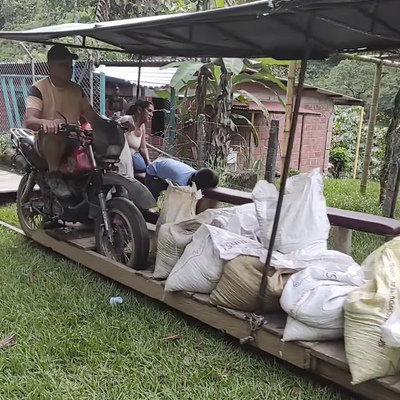
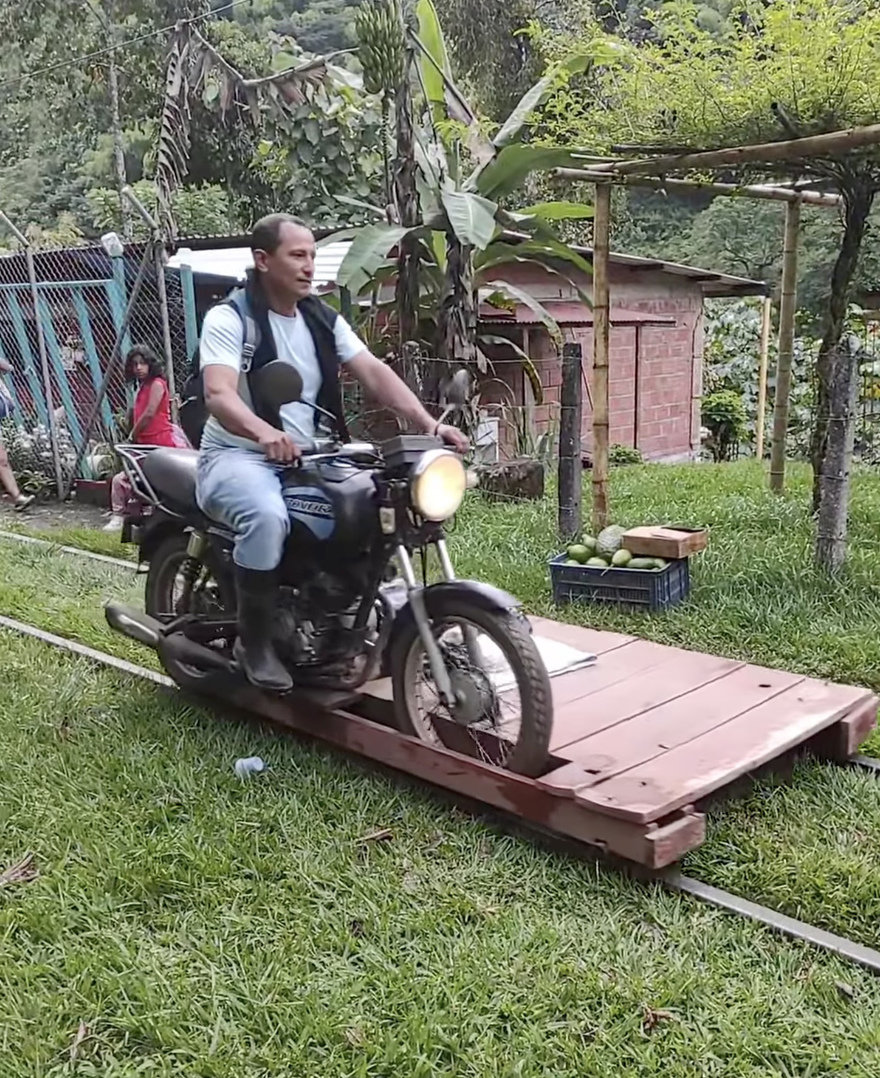
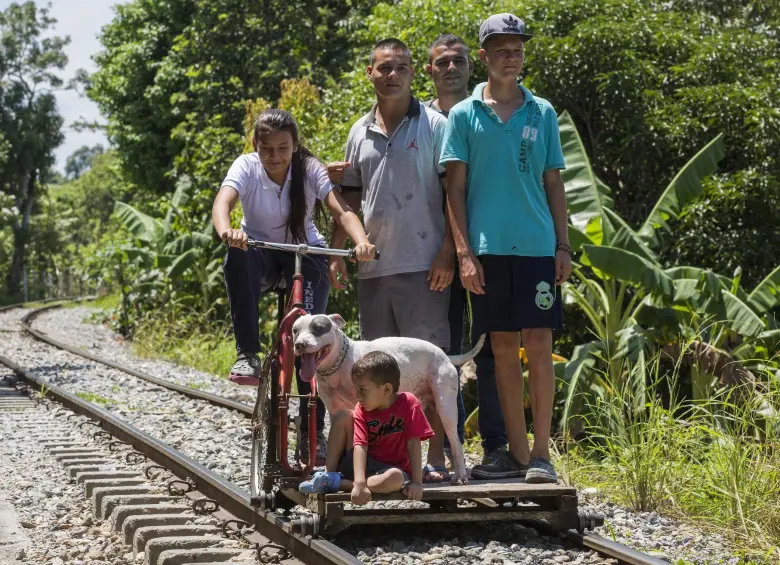
The motobalinera is a testament to the resourcefulness of the Colombian rural workforce. At its core, the vehicle is an exercise in minimalist engineering. It typically consists of a wooden platform, reinforced with salvaged metal, mounted on a set of wheels adapted to fit the gauge of the existing rail tracks.
The Mechanical Configuration
The propulsion system is almost universally provided by a standard motorcycle. The motorcycle is placed on the platform, with its rear wheel aligned directly over the rail. By placing the motorcycle’s tire in direct contact with the track, the rider can use the engine’s torque to propel the entire assembly forward. Some versions use a side-wheel guide to ensure the platform remains balanced, while others rely on precise craftsmanship to center the motorcycle on the track.
Versatility in Design
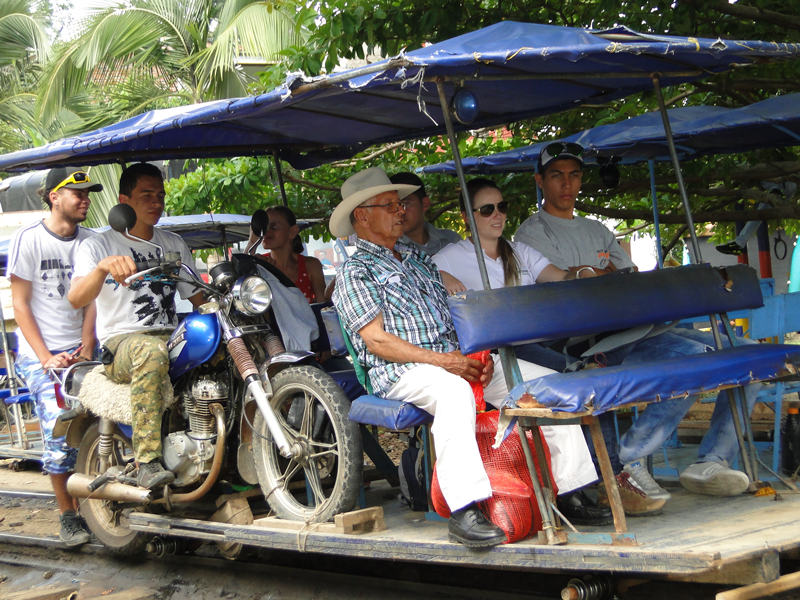
The platforms are surprisingly modular. Depending on the needs of the community, a motobalinera can be:
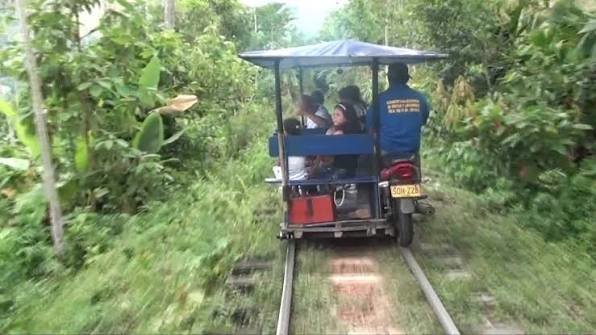
- Passenger Transport: Fitted with wooden benches to carry school children, farmers, and market-goers across otherwise impassable terrain.
- Logistical Support: Stripped down to a flatbed to haul heavy harvests—plantains, coffee, or building materials—that would be impossible to carry on traditional mule tracks.
- Emergency Service: Acting as a makeshift ambulance to transport patients from remote villages to the nearest medical facility.
One of the most defining features of the motobalinera is its portability. Because they are constructed from relatively lightweight materials, they can be manually lifted off the tracks by their operators. This is a crucial design choice; in a system with no signaling or dispatching, the ability to remove the vehicle from the tracks when two riders meet coming from opposite directions is a vital safety feature.
Supporting Data: The Socio-Economic Impact
While no centralized government census tracks the number of motobalineras in operation, local estimates suggest they serve thousands of families across provinces such as Magdalena, Cesar, and Antioquia.
The economic reliance on these vehicles is profound. In regions where the nearest paved road might be hours away by foot or horseback, the rail line provides a "path of least resistance." A journey that would take a full day through muddy, mountainous terrain can be accomplished in a fraction of the time on a motobalinera.
Furthermore, the cost-to-benefit ratio is heavily skewed in favor of the users. By repurposing a motorcycle—an asset many rural families already own for general transport—the cost of creating a rail-capable vehicle is minimal, requiring only the construction of the frame and the acquisition of industrial-grade bearings.
Official Responses and the Legal Gray Zone
The status of motobalineras exists in a complex legal and political gray zone. From the perspective of national transport authorities, these vehicles are technically illegal, as they operate on infrastructure owned by the state or under concession, often without safety inspections, insurance, or formal licensing.
The Conflict of Regulation
Government officials have occasionally expressed concerns regarding the safety of these improvised rails. Accidents, though rarely reported in national media, are a potential risk given the lack of braking systems on many platforms and the potential for collisions on single-track lines.
However, local authorities often turn a blind eye. There is a tacit understanding that for many of these communities, the motobalinera is not a luxury or a hobby—it is an essential service that the state failed to replace when it abandoned the rail system. Shutting down the motobalineras would effectively paralyze the local economy and isolate vulnerable populations, leading to significant social unrest.
Infrastructure Preservation vs. Human Necessity
In some areas, private companies that hold the rights to old rail concessions have attempted to discourage the use of tracks to avoid liability. Yet, the sheer scale of the abandoned network makes policing nearly impossible. The result is a stalemate where the "unofficial" transport system remains the de facto public transit of the interior.
Implications: A Lesson in Resilience
The story of the motobalineras serves as a poignant reminder of the relationship between infrastructure and human agency. When a top-down system—the national railroad—collapsed, the people at the bottom of the hierarchy did not wait for state intervention. They re-engineered the legacy of that system to suit their modern needs.
Implications for Urban Planning
The motobalineras demonstrate the concept of "adaptive reuse" at the grassroots level. It challenges urban planners and development experts to consider how abandoned, large-scale infrastructure can be repurposed for localized, sustainable transport. In a world where climate change and fuel costs are forcing a rethink of transport, the low-energy, high-efficiency nature of the motobalinera is surprisingly modern.
Cultural Significance
Beyond the utility, there is a cultural component to these vehicles. They represent a bridge between the industrial past of Colombia and its rural present. The motobalineras are not just machines; they are symbols of the resilience of the Colombian campesino. They represent a defiance of the isolation that was forced upon them by economic policies decided in distant offices in Bogotá.
Conclusion: The Future of the Rails
As Colombia continues to develop, the question remains: what is the future of the motobalineras? Will they be phased out by the construction of new rural roads, or will they continue to evolve into more sophisticated, perhaps even electrified, forms of transport?
For now, the sound of a small motorcycle engine humming against the rhythm of steel tracks remains a constant in the Colombian countryside. It is a sound of persistence. The motobalineras remind us that even when the official route is closed, human ingenuity finds a way to keep moving forward. They are a vivid example of how communities, when left to their own devices, can reclaim the ghost of an industrial past to build a functional, albeit improvised, future.
The rails may have been abandoned by the state, but they were never truly abandoned by the people. They remain the silent, iron-clad witnesses to a local struggle for mobility, connectivity, and dignity in the heart of the Andes.
About the Author