As GXO Logistics approaches its five-year anniversary as an independent entity—following its high-profile 2021 spin-off from parent company XPO—the contract logistics giant is signaling a fundamental shift in its corporate trajectory. Having spent its formative years aggressively building scale through a series of tactical mergers and acquisitions, GXO is now pivoting toward a strategy of "organic growth." This evolution is designed to transition the company’s revenue mix away from its traditional reliance on retail and e-commerce toward the higher-margin, complex requirements of the Business-to-Business (B2B) sector.
The move marks a maturing phase for the company, which aims to leverage its existing infrastructure and advanced technological capabilities to capture market share in high-barrier-to-entry sectors such as aerospace and defense, life sciences, and data center logistics.
Main Facts: The Strategic Reorientation
At the heart of GXO’s new strategy is a reallocation of resources. Currently, approximately 70% of the company’s revenue is derived from the retail, e-commerce, and consumer packaged goods (CPG) segments. While these sectors provided the volume necessary to establish GXO as a market leader, they are notoriously sensitive to consumer spending fluctuations and seasonal volatility.
By prioritizing B2B verticals, GXO seeks to capitalize on the "specialized logistics" trend. Markets like aerospace, medical devices, and technology require more than simple warehousing; they demand rigorous temperature control, high-level security, and extreme traceability. GXO contends that it is already uniquely equipped for this transition, citing the integration of specialized firms like Wincanton, which brought deep expertise in regulated and high-value product handling into the GXO portfolio.
Chronology: From Spin-Off to Market Evolution
The trajectory of GXO has been defined by rapid expansion, a necessary precursor to its current push for operational optimization.
- August 2021: GXO officially begins trading on the New York Stock Exchange (NYSE) following its separation from XPO, positioning itself as a pure-play contract logistics provider.
- 2022–2024: The company embarks on an acquisition spree, absorbing regional and specialized logistics providers to build a global footprint and broaden its service offerings, most notably the acquisition of Wincanton.
- Q2 2026: In its most recent earnings disclosure, GXO reports revenue of $3.4 billion. The company marks the five-year milestone by highlighting its strongest new business win rate in three years—approximately $410 million in new contracts, representing a 34% year-over-year increase.
- The Present: GXO management shifts the internal narrative from "buying growth" to "generating growth," focusing on organic expansion within strategic verticals.
Supporting Data: Analyzing the Q2 2026 Performance
The market’s reception to GXO’s new direction has been cautiously optimistic. According to analysts at TD Cowen, the company’s second-quarter results were squarely in line with Wall Street expectations, demonstrating the stability of the company’s business model despite global economic headwinds.
Key Financial Indicators
- Adjusted Earnings Per Share (EPS): $0.59.
- Adjusted EBITDA: $219 million.
- Organic Revenue Growth: 3.4%.
- New Business Wins: $410 million (up 34% YoY).
While these figures reflect a healthy organization, analysts point to a "notable profit margin gap" between GXO and its top-tier 3PL competitors. The strategic pivot toward B2B is, in part, an attempt to bridge this gap. By moving into sectors where logistics is a mission-critical component rather than a commodity service, GXO intends to command higher pricing power and, consequently, improve its operating margins.
The Role of Automation: Humanoids and AI
A cornerstone of GXO’s strategy to increase efficiency and profitability is the aggressive integration of artificial intelligence and robotics. CEO Patrick Kelleher has been vocal about the company’s deployment of "humanoid" robots and AI-driven warehouse optimization tools.
Tackling the Labor Shortage
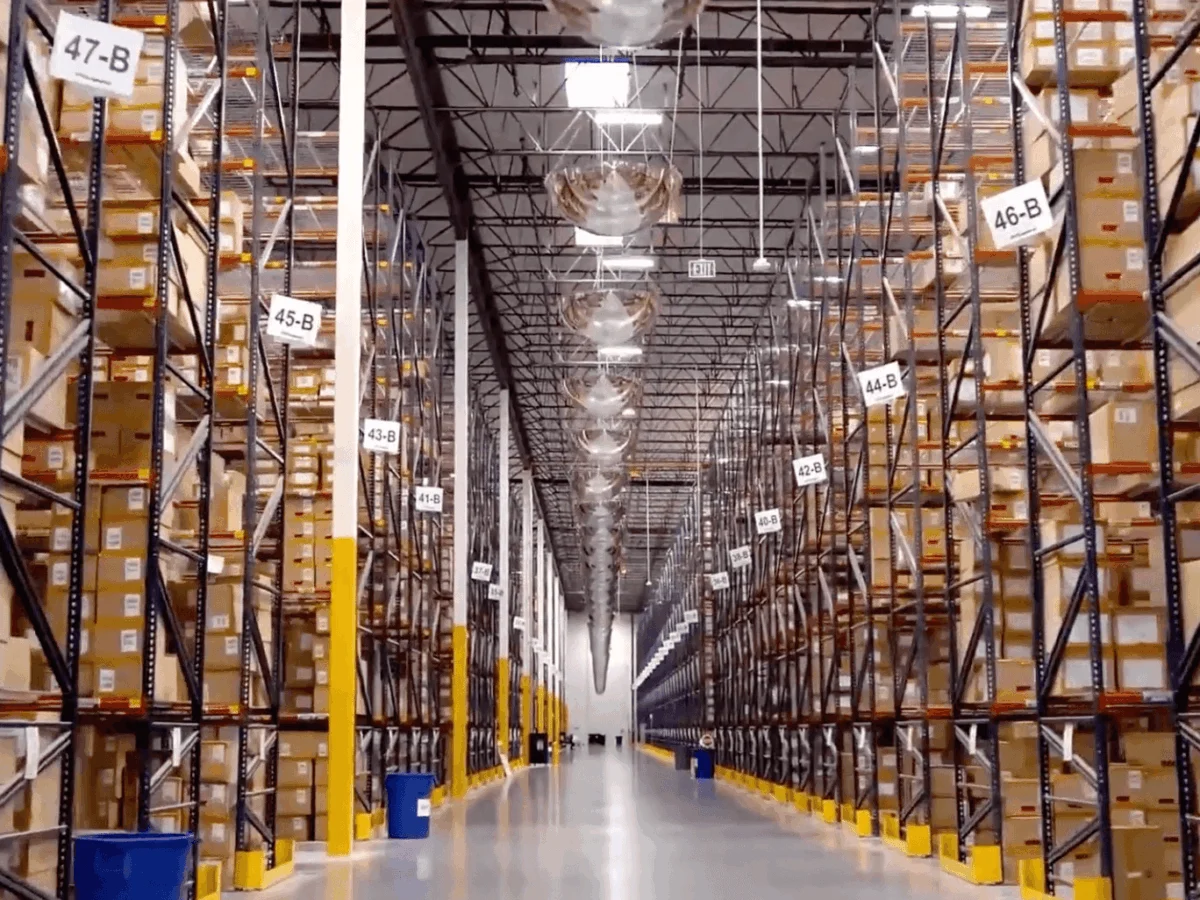
The persistent scarcity of skilled warehouse labor is a universal pain point in the supply chain sector. GXO is addressing this by transforming the workplace environment. Kelleher notes that the introduction of advanced robotics—such as those currently being trialed in Spanx warehouses—serves a dual purpose: increasing raw output and attracting a tech-savvy workforce that views warehouse operation as a high-tech career path.
Measurable Gains
The company has reported a 50% increase in productivity through its proprietary AI agent for "pick path optimization." Beyond software, the physical integration of robots—many equipped with tablet interfaces—has streamlined workflow instructions, reducing errors and training time for human associates.
Official Responses and Strategic Implications
In a post-earnings interview, CEO Patrick Kelleher addressed the broader challenges facing the industry, particularly regarding regulatory shifts.
The Regulatory Hurdle
A major point of contention for 3PLs globally is the recent White House trade policy that threatens to restrict the purchase of foreign-made robotics. Analysts warn that if this policy prohibits the import of key warehouse hardware (including certain AMRs and AGVs), companies like GXO could face significant supply chain disruptions.
Kelleher’s response was measured but firm: "We’ll watch with great interest to see how the regulators sort that out." He emphasized that GXO is not tethered to a single vendor or region. Because GXO has invested heavily in internal systems integration, the company possesses the agility to source technology from a diverse array of U.S. and international suppliers. This internal capability is a "moat" that protects the company from regional trade volatility.
Building Resilience
Regarding the shift to B2B, Kelleher highlighted the "resiliency and predictability" of the current model. "All three regions grew organically," Kelleher stated in his remarks. "We are seeing deeper penetration of our strategic growth verticals—aerospace & defense, technology, industrial and life sciences."
Strategic Implications: The Future of Contract Logistics
The path forward for GXO is clear: they are attempting to become the "prime contractor" of the logistics world. By moving away from the thin margins of e-commerce retail and into the specialized world of B2B, GXO is betting that the global economy will continue to favor companies that can handle complex, high-value, and mission-critical inventory.
Competitive Advantages
- Technological Maturity: Unlike smaller 3PLs, GXO has the capital and the scale to iterate on AI and robotics, creating a feedback loop that lowers costs while increasing precision.
- Vertical Expertise: By integrating specialized firms, GXO has already cleared the steep learning curve associated with regulated industries like life sciences.
- Revenue Stability: B2B contracts are generally longer in duration and less prone to the "bullwhip effect" seen in consumer retail markets.
The Challenges Ahead
Despite the optimism, GXO faces significant hurdles. The "profit margin gap" mentioned by analysts suggests that the company must still prove it can extract higher value from its existing assets. Furthermore, the global regulatory environment remains in flux. Trade protectionism could limit the availability of the very robotics that GXO is relying on to drive its future efficiency gains.
Furthermore, moving from a retail-centric model to a B2B model requires a shift in organizational culture. Sales, operational, and customer service teams must pivot from serving fast-paced, high-volume e-commerce brands to managing the long-term, relationship-heavy requirements of industrial and defense contractors.
Conclusion
GXO Logistics stands at a critical juncture. Five years into its life as an independent company, it has successfully established a global footprint. The next five years will be defined by its ability to execute on its "organic growth" strategy. If GXO can successfully integrate its advanced robotic fleet while capturing the high-value B2B market, it will likely succeed in closing the profit margin gap and solidifying its position as a dominant, high-tech player in the global supply chain landscape.
The strategy is ambitious, yet grounded in the reality of a changing market that values precision, security, and technological prowess over mere physical scale. As the company continues to navigate the complexities of international trade and the rapid pace of automation, the eyes of the logistics industry will remain fixed on GXO’s ability to turn these sophisticated tools into superior shareholder value.
About the Author