As the United States approaches the conclusion of the 2026 midterm election cycle, a significant transformation is taking place in the nation’s executive and legislative halls. Across the country, voters in several states are poised to break long-standing historical barriers, with the 2026 ballot serving as a catalyst for a potential surge in female representation at the highest levels of state government.
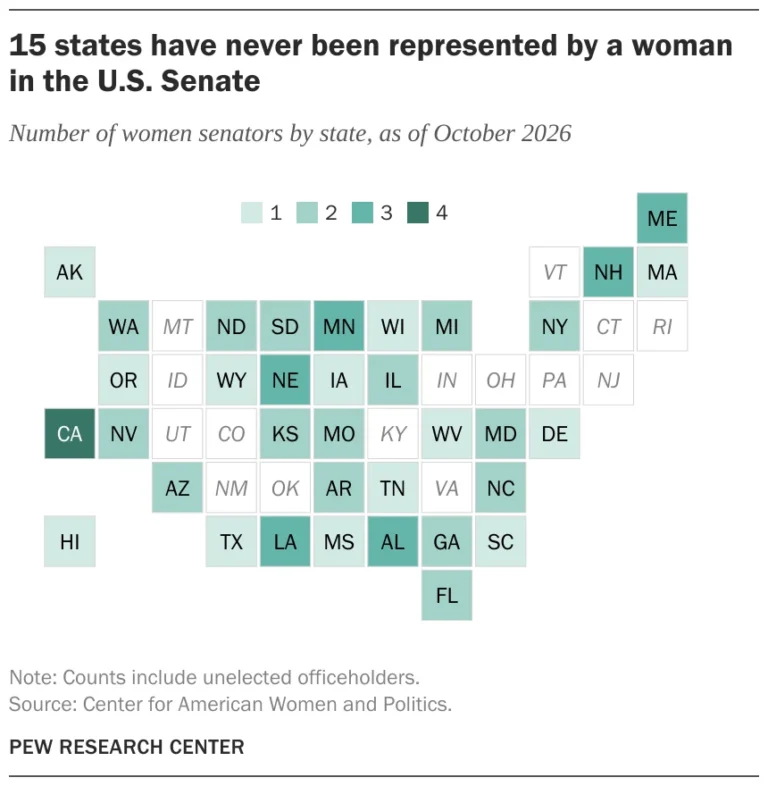
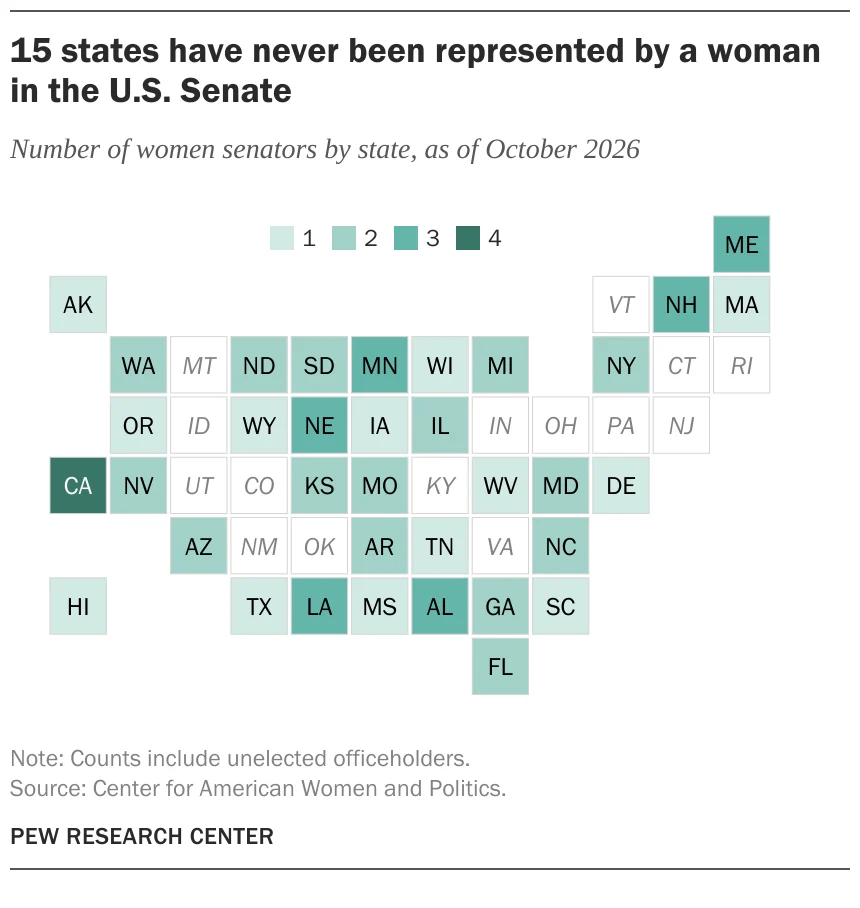
For many Americans, these elections are more than just a contest of policy platforms; they represent a long-awaited milestone in the pursuit of political parity. With 17 states having never elected a woman governor and 15 states yet to be represented by a woman in the U.S. Senate, the 2026 midterms are being closely watched as a bellwether for the future of American leadership.
The Push for Historic Firsts in 2026
The most prominent narratives of this election cycle are centered in Minnesota and Tennessee, where the gubernatorial races have effectively guaranteed that, regardless of the outcome, these states will swear in their first female governor.
In Minnesota, the contest between Democratic U.S. Senator Amy Klobuchar and Republican state House Speaker Lisa Demuth has captivated voters. As both candidates represent the upper echelons of their respective party hierarchies, their presence on the ballot underscores a broader trend: the normalization of women as standard-bearers for major-party tickets. Similarly, in Tennessee, the race between Republican Senator Marsha Blackburn and Democratic Memphis City Council member Jerri Green ensures that the Volunteer State will join the ranks of those led by a woman for the first time in history.
These races are not isolated incidents. In addition to these high-profile matchups, several other states are hosting gubernatorial contests where a woman stands on the precipice of breaking a glass ceiling that has remained intact for over two centuries of statehood.

A Chronological Perspective: From Rebecca Latimer Felton to the Present
The journey toward gender equality in American politics has been slow, often characterized by symbolic breakthroughs that paved the way for substantive, long-term change.
The timeline of women in the U.S. Senate began in 1922 with the appointment of Rebecca Latimer Felton of Georgia. A stalwart suffragist, Felton’s tenure was largely symbolic; she was appointed to a vacant seat at age 87 and served for only one day. While her appointment was a footnote in the history of the 1920s, it served as the crack in the door that would eventually widen over the next century.
It was not until the latter half of the 20th century that the presence of women in the Senate began to shift from the exception to a recognizable minority. The data from the Center for American Women and Politics at Rutgers University reveals a striking acceleration: more than three-quarters of the 65 women who have served in the U.S. Senate since 1922 took office after 1980. This shift coincides with broader societal changes, including the entry of more women into the legal and professional sectors, which historically served as the primary pipelines for federal office.
In the executive branch, the history is equally compelling. The year 1925 marked the first time two women—Nellie Tayloe Ross of Wyoming and Miriam “Ma” Ferguson of Texas—held the office of governor. Ross, who rose to power following the death of her husband, and Ferguson, who won a general election, established a legacy of resilience. Yet, progress remained glacial for decades. It wasn’t until the late 1990s and the 21st century that the number of women governors began to climb, reaching a current high of 14 serving concurrently as of October 2026.
Analyzing the Data: Where the Gaps Persist
While the progress is undeniable, the statistics provided by the Center for American Women and Politics paint a complex picture of regional disparities.

The Gubernatorial Landscape
Currently, 17 states have never had a woman governor. This list includes states with diverse political cultures, from California and New York to Georgia and Mississippi. The absence of a woman in the governor’s mansion in such populous and influential states remains a point of contention for political scientists who study candidate recruitment and voter behavior. Conversely, states like Arizona have seen a relative abundance of female leadership; since 1988, Arizona has elected five women governors, including a stretch of nearly two decades where three women served consecutively.
The U.S. Senate Divide
The Senate remains a body where geography and political culture significantly influence gender representation. Currently, 15 states have never been represented by a woman in the upper chamber. However, the 2026 midterms are challenging this status quo. In Montana and Oklahoma—two states that have yet to send a woman to the Senate—candidates like Alani Bankhead and N’Kiyla Jasmine Thomas are actively campaigning to rewrite their states’ histories.
The "Double-Exclusion" States
Perhaps the most notable data point is that four states—Colorado, Idaho, Indiana, and Pennsylvania—have never had a woman senator or a woman governor. While these states have sent women to the U.S. House of Representatives, the executive and senatorial offices remain exclusively male-dominated. Political analysts often point to the "incumbency advantage" and the structural barriers inherent in statewide races as reasons why these specific offices remain the hardest to reach.
The 119th Senate: A Record-Breaking Chamber
As of October 2026, women hold a record 27 of the Senate’s 100 seats. While this is a historic high, it also highlights the disparity between the two major parties. Women currently account for 34% of the Democratic caucus, compared to 21% of the Republican conference.
The increase in female senators has fundamentally altered the legislative agenda. Research from the Pew Research Center suggests that the presence of women in Congress has led to a greater emphasis on issues traditionally categorized as social policy, healthcare, and education, though these shifts are often mediated by the overarching partisan divide. The longevity of these careers is also increasing; as seen in the examples of the late Dianne Feinstein and Barbara Boxer in California, women are now building the kind of deep institutional power that was historically reserved for men.

Official Responses and Political Implications
The implications of these trends are far-reaching. Political organizations on both sides of the aisle have increasingly invested in "pipeline" programs designed to identify and support female candidates at the municipal and state-legislative levels.
"The 2026 election cycle is a testament to the fact that the barrier to entry is finally being dismantled," says Dr. Elena Rodriguez, a senior fellow at the Center for American Women and Politics. "However, the focus now must shift from simply getting women on the ballot to ensuring that the structural support exists for them to govern effectively once elected. The high number of first-time female nominees is encouraging, but we must look at the long-term sustainability of these trends."
Opponents and critics of the current electoral focus, however, argue that voters continue to prioritize ideology over identity. "The gender of a candidate is less important to the average voter than their stance on the economy, inflation, and national security," notes a spokesperson for a national political committee. "We are seeing more women running because the talent pool has expanded, not because of a mandate for representation."
Despite these differing views, the impact on voter turnout cannot be ignored. In states where a woman is on the ballot for a major office, participation among female voters has historically seen a marginal but significant uptick. This, in turn, influences the campaign strategies of both parties, who are increasingly tailoring their messaging to address issues that resonate with women voters.
Looking Toward the Future
As the 2026 midterms draw to a close, the focus will inevitably shift toward the 2028 presidential cycle and the potential for a woman to hold the highest office in the land. The progress made in the Senate and at the gubernatorial level is often viewed as the final training ground for national executive leadership.

The story of the 2026 election is not merely one of individual victories; it is a story of a system in flux. By examining the history of women in power—from the one-day term of Rebecca Latimer Felton to the multi-decade legacies of modern senators—we gain a clearer understanding of the persistence required to change the face of American politics.
While 17 states still await their first female governor and 15 await their first female senator, the 2026 midterms demonstrate that the momentum is firmly in the direction of change. Whether through the election of Klobuchar or Demuth in Minnesota, or the efforts of candidates in Montana and Oklahoma, the map of American political power is being redrawn.
The coming years will likely be defined by how these new leaders navigate the challenges of their offices and whether they can translate their electoral success into long-term policy impacts that satisfy an increasingly diverse and demanding electorate. For now, however, the 2026 election stands as a milestone—a moment where the glass ceilings of the past are being tested, and in several instances, finally shattered.
About the Author