For decades, the standard roof rack has remained a quintessential piece of outdoor adventure gear—and a notorious source of frustration. Whether you are hoisting a 50-pound kayak, a heavy mountain bike, or a bulky cargo box, the physical exertion required to clear the roofline of a modern SUV or crossover has long been the "barrier to entry" for many outdoor enthusiasts.
However, a new wave of automotive aftermarket technology is attempting to solve this age-old problem: the powered, automated roof rack. These systems, which utilize motorized, hinged arms to lower the load to waist height and then lift it back onto the roof at the touch of a button, represent a significant leap in convenience. Yet, as this technology gains viral traction on social media, it brings with it a complex set of questions regarding consumer safety, supply chain transparency, and the shifting landscape of global retail.
The Main Facts: How the Mechanism Functions
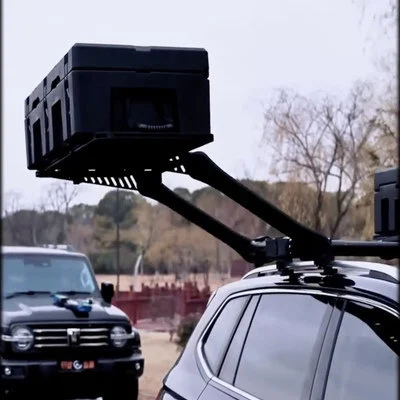
At its core, the automated roof rack is an exercise in clever mechanical engineering. Traditional racks are static; they require the user to lift the gear vertically, often struggling with balance and height, before securing it to crossbars. The automated alternative shifts this paradigm by incorporating a hydraulic or electric scissor-lift mechanism integrated directly into the mounting system.
When engaged via a wired or wireless remote, the rack’s articulating arms extend outward and downward, pivoting away from the vehicle. This brings the mounting platform down to a level where a user can comfortably secure a bike or kayak without needing a step stool or risking damage to the vehicle’s paintwork. Once secured, the motor draws the load back up and locks it into a travel position.
For the average consumer, this technology promises to democratize activities like kayaking and cycling, particularly for those with limited upper body strength or those driving taller vehicles like modern oversized trucks and SUVs.
Chronology: From Viral Concept to Market Mystery
The emergence of these racks follows a timeline characteristic of modern, social-media-driven product discovery.
- 2021–2022: Early prototypes of motorized roof racks began surfacing on industrial manufacturing forums and niche automotive trade shows in China. At this stage, they were largely viewed as industrial engineering demonstrations rather than consumer-facing products.
- Late 2023: Short-form video platforms—specifically TikTok and Instagram Reels—became the primary conduits for these devices. High-definition clips showing a rack gracefully lowering a bicycle to ground level went viral, garnering millions of views.
- Early 2024: The "DM-to-Order" era began. As global interest spiked, small-scale Chinese manufacturers, operating under names like Sionto, Kayjay, and others, began marketing these units directly to Western consumers via Instagram and Facebook.
- Present Day: The market finds itself in a strange purgatory. While the demand for the product is undeniably high, the distribution method remains decentralized, opaque, and fraught with the risks inherent to "shady" social commerce.
The Wild West of Supply Chain Transparency
One of the most pressing issues surrounding these automated racks is the lack of institutional infrastructure behind them. Unlike legacy outdoor brands such as Thule or Yakima—companies that have spent decades building reputations on safety certifications, crash-test data, and warranties—the manufacturers behind these viral racks often lack a permanent web presence.
Potential buyers are often redirected to direct-message (DM) channels, where they are asked to complete transactions through unregulated payment processors. This creates a significant "trust gap." In the current ecosystem of social commerce, there is no guarantee that the product being demonstrated in a highly polished, filtered video is the same product that will arrive in a shipping container weeks later.
Furthermore, the lack of a brand footprint means there is no accountability. Should the motor fail while driving at highway speeds, or should the mechanical arm seize during a lift, the consumer has no recourse for refunds, parts, or safety recalls. This "disposable" model of manufacturing stands in stark contrast to the high-stakes world of automotive accessories, where structural integrity is a matter of public safety.
Supporting Data: The Physics and Safety Implications
To understand why a reputable brand has yet to widely adopt this technology, one must consider the physics of "load-in-motion."
Automotive roof systems are rated for "dynamic load," which is the amount of weight a roof can safely support while the vehicle is in motion. Most modern SUVs have dynamic load ratings between 150 and 200 pounds. A motorized rack adds significant "dead weight" to the vehicle’s roof. If the mechanism itself weighs 50 pounds, the usable load capacity is immediately reduced.
Moreover, the center of gravity is a critical safety factor. By adding an articulating arm, the weight of the cargo is placed on a pivot point rather than a fixed crossbar. Under heavy braking or cornering, these pivot points are subjected to immense shear forces. Without rigorous ISO-standard crash testing, it is impossible to determine whether these aftermarket mechanisms will hold during an emergency maneuver.
In comparison, established manufacturers invest millions into wind tunnel testing and vibrational analysis to ensure that their racks do not become projectiles during a collision. The current crop of viral, direct-to-consumer racks has not, by any public record, undergone these rigorous safety assessments.
Official Responses and Industry Skepticism
When reached for comment, representatives from legacy roof rack manufacturers generally express skepticism regarding the long-term viability of the current "DM-only" market. While many acknowledge that the mechanical concept is sound, they emphasize that "engineering a rack is easy; engineering a rack that won’t kill someone in a high-speed collision is difficult."
Most industry experts suggest that the current wave of Chinese-manufactured automated racks serves as a "proof of concept" for the market. By demonstrating that there is a massive appetite for easier loading solutions, these manufacturers are inadvertently proving to established, reputable companies that the R&D investment for a safe, certified, and warranty-backed version of this technology would likely be profitable.
However, until a major brand decides to license the technology or develop their own proprietary version, the industry remains cautious. The consensus is that while the utility is undeniable, the liability is currently too high for any mainstream player to enter the space without years of additional testing.
Implications for the Future of Automotive Gear
The story of the automated roof rack is a microcosm of the modern consumer experience. It highlights the tension between the immediate gratification promised by social media and the slow, necessary pace of industrial safety and brand building.
The Potential for Mainstream Adoption
If a reputable brand were to successfully engineer a reliable version of this technology, it would revolutionize the automotive accessory market. It would make adventure sports accessible to a broader demographic—specifically aging outdoor enthusiasts who may otherwise have to give up cycling or kayaking due to the physical requirements of loading and unloading.
The Risks of "Social Commerce"
Conversely, the current situation serves as a cautionary tale. Consumers are increasingly tempted by the "viral discovery" model, where the desire for the newest, most convenient gadget overrides the need for safety verification. The implication is that we are moving toward a retail environment where trust is replaced by flashy visuals, and where the lack of brand longevity is becoming a standard feature rather than an anomaly.
A Call for Regulation and Quality
Ultimately, the automated roof rack is a brilliant idea waiting for a responsible executor. The path forward likely involves:
- Standardization: Developing safety regulations for aftermarket articulating roof systems.
- Brand Integration: Larger companies acquiring or partnering with the original inventors to bring these products into the regulated market.
- Consumer Education: Encouraging buyers to prioritize "crash-tested" and "load-rated" hardware over the convenience of a viral trend.
Conclusion: Waiting for the Reputable Arrival
The motorized roof rack is undoubtedly the future of car-top transport. Its utility—eliminating the back-breaking labor of loading heavy gear—is too valuable to be ignored. Yet, as it stands, the current crop of these devices represents a gamble that few informed consumers should be willing to take.
We are currently in a transition period. We have seen the "what" (the automated lift) and the "how" (the scissor-arm mechanism), but we are still missing the most important ingredient: the "who." When a company with a proven track record of safety, engineering transparency, and customer support brings a version of this technology to market, it will change the way we interact with our vehicles and our hobbies. Until then, the safest place for your kayak is on a tried-and-true, static, and thoroughly tested crossbar system. The viral convenience of a DM-ordered rack is not worth the risk to your vehicle, your cargo, or the safety of those sharing the road with you.
About the Author