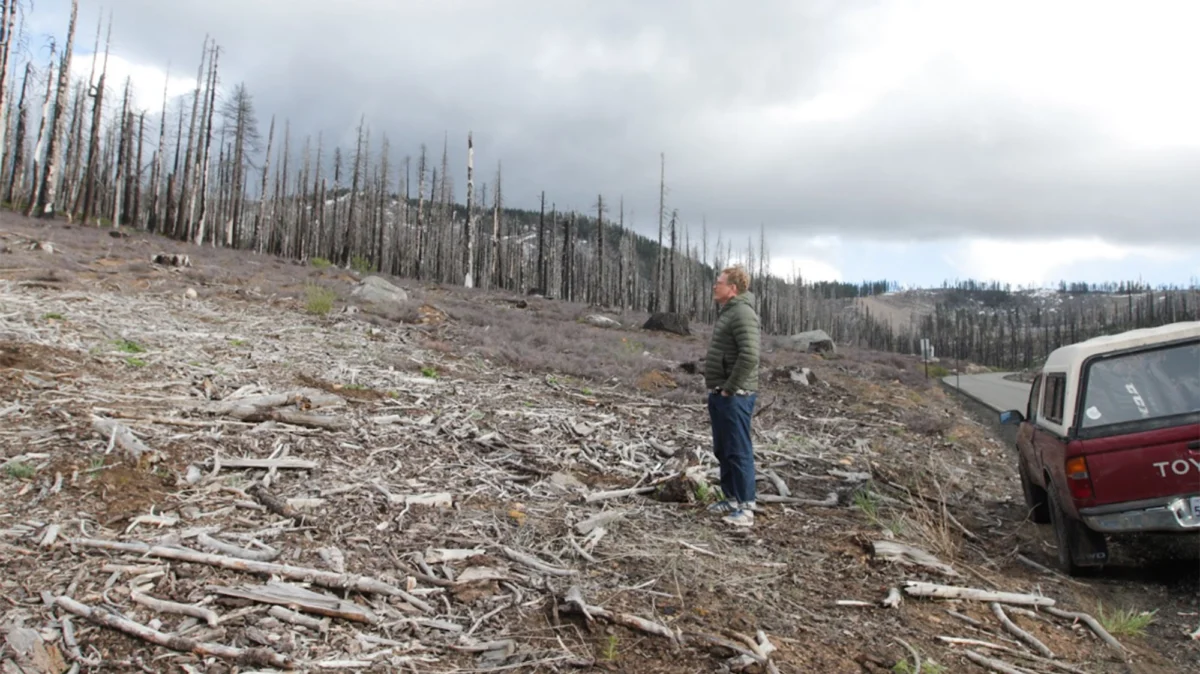
In the charred remains of California’s majestic Sierra Nevada, a new form of ecological intervention is sparking a firestorm of controversy. Following a yearlong investigation by Mother Jones—conducted in partnership with PBS NewsHour—it has been revealed that the U.S. Forest Service is utilizing record-breaking quantities of glyphosate, the active ingredient in the world’s most popular herbicide, Roundup, to clear brush and promote reforestation in areas devastated by wildfires.
This revelation has shifted the conversation from wildfire recovery to public health, setting off a chain reaction that has reached the halls of Congress, local town halls in Lake Tahoe, and the highest court in the land. At the center of the storm is a web of ghostwritten science, regulatory complacency, and a multi-billion dollar legal battle that threatens to rewrite how we define chemical safety in the United States.
The Core Conflict: Nature vs. Chemistry
The U.S. Forest Service frames its use of glyphosate as a necessary tool for fire restoration. After a forest is scorched, invasive shrubs and grasses often move in faster than conifers, potentially competing with new saplings for water and sunlight. To ensure the rapid regrowth of timber, the agency has turned to systematic aerial and ground-level spraying of herbicides.
However, residents and environmental advocates in Lake Tahoe view this strategy as an existential threat. The pristine, sensitive ecosystems of the Tahoe Basin—and the communities surrounding them—are now being blanketed in chemicals that have been linked to non-Hodgkin’s lymphoma and other serious health conditions. Public outcry has reached a fever pitch, with community members flooding local meetings and staging protests, arguing that replacing fire-ravaged forests with chemically treated land is not restoration; it is an ecological gamble with human lives.
Chronology of a Controversy: From Lab to Legislation
To understand the current crisis, one must look back at the decades-long trajectory of glyphosate’s integration into American forestry and agriculture.
- 1974: Monsanto introduces Roundup, containing glyphosate, which quickly becomes the gold standard for weed control.
- 2018: Pharmaceutical giant Bayer acquires Monsanto for $63 billion, inheriting a massive portfolio of legal liabilities and internal documents.
- 2025–2026: Mother Jones begins a comprehensive investigation into the increasing reliance on glyphosate within California’s public forests.
- April 2026: The investigation reveals record-setting usage rates of glyphosate, sparking national media coverage.
- May 2026: Local grassroots movements in Lake Tahoe escalate efforts to block Forest Service spraying programs.
- June 2026: Members of Congress, including Reps. Chellie Pingree and Jared Huffman, launch formal inquiries, demanding transparency from the Forest Service regarding the environmental and health impacts of their chemical practices.
- Late June 2026: A bombshell report confirms that the EPA knowingly cited ghostwritten studies—orchestrated by Monsanto—to validate the safety of glyphosate, despite internal acknowledgement of "research misconduct."
The Ghostwriting Scandal: A Breakdown of Trust
Perhaps the most damaging revelation of the recent investigation is the corruption of the scientific process. For years, the Environmental Protection Agency (EPA) has maintained that glyphosate is not carcinogenic, a stance that has provided legal cover for companies like Bayer and allowed for continued widespread use of the herbicide.
The investigation uncovered that a key study used to support this "safe" designation was not an independent scientific endeavor. Instead, it was secretly orchestrated by Monsanto. The EPA, despite having evidence that the study was ghostwritten—a clear case of research misconduct—continued to cite the data in official government reports. This effectively allowed a private corporation to author the very safety standards that regulators were meant to impose upon them.
For the scientific community, this is a profound betrayal. By relying on industry-funded, non-transparent research, the EPA has compromised its regulatory integrity. The implications are staggering: if the foundational data used to declare a chemical "safe" is tainted by corporate interference, the entire regulatory framework governing pesticides in the U.S. stands on shaky ground.
The Legal Landscape: The Supreme Court and the "Technicality"
While the Forest Service continues its work, Bayer is fighting a war on two fronts: in the public square and in the courtroom. With over $12 billion in legal expenses tied to thousands of lawsuits from cancer victims, the company has sought a definitive legal victory to halt the tide of litigation.
In a landmark decision last month, the U.S. Supreme Court ruled 7–2 in favor of the industry on a critical legal technicality. The Court held that federal law preempts state-level labeling requirements. Essentially, the justices decided that because the EPA is the sole authority authorized to mandate safety labels on pesticides, individual states cannot enforce their own labeling laws that require disclosure of cancer risks.
For the plaintiffs, this is a crushing blow. It effectively shields the manufacturer from state-level lawsuits based on failure-to-warn claims. Because the EPA—relying on the aforementioned ghostwritten studies—maintains that the product is "unlikely to cause cancer," any state law demanding a warning label is now effectively nullified.
Bayer has responded to the ruling by doubling down on its position: "Roundup is safe when used as directed," the company stated, emphasizing that regulators across the globe have approved the herbicide for decades. They argue that the legal onslaught is based on "junk science" that ignores the weight of regulatory consensus.
Implications: A Future in Doubt
The implications of this ongoing drama are vast, touching upon federal environmental policy, corporate accountability, and the health of the American public.
1. The Future of Forest Management
The Forest Service is now under intense pressure to justify its reliance on herbicides. With Congressional inquiries mounting, the agency may be forced to pivot toward more labor-intensive, mechanical, or biological methods of forest management. While these methods are often more expensive, they avoid the chemical contamination that currently plagues the Sierra Nevada.
2. The Credibility of the EPA
The EPA is facing a crisis of confidence. The disclosure of its reliance on ghostwritten research has spurred calls for a complete overhaul of its chemical approval process. Lawmakers are now questioning whether the agency has become "captured" by the industries it is meant to regulate. Without a transparent, independent scientific review process, the public cannot be expected to trust the EPA’s safety mandates.
3. The Rights of the Consumer and Citizen
The Supreme Court’s ruling has created a "federal-only" barrier that limits the ability of citizens to hold corporations accountable for their products. This raises a fundamental constitutional question: if federal agencies are captured by industry, and citizens are barred from seeking redress through state courts, where does the power to protect public health reside?
4. Environmental Legacy
In Lake Tahoe, the immediate concern remains the long-term impact on the water table, the soil, and the wildlife. As the forest begins the slow process of recovering from wildfire, the added chemical load of glyphosate may have unforeseen consequences for biodiversity and water quality, potentially creating a secondary ecological crisis long after the current fires are extinguished.
Conclusion: A Call for Transparency
The intersection of the Lake Tahoe protests, the Congressional inquiries, and the Supreme Court’s recent ruling illustrates a systemic failure. The reliance on chemical shortcuts in the name of restoration, backed by questionable scientific data, has created a scenario where the public is left without clear answers or adequate protection.
As the debate continues to unfold, the path forward remains murky. Will the Forest Service abandon its chemical-heavy approach? Will the EPA undergo a period of radical reform to restore its credibility? And will the voices of the citizens in places like Lake Tahoe—those living, breathing, and walking the land—finally be given the weight they deserve in the halls of power?
For now, the scarred hillsides of the Sierra Nevada stand as a silent, grim monument to these questions. As the summer sun beats down on the freshly sprayed brush, one thing is clear: the era of "safe" chemical usage in our public lands is over. In its place, a new era of scrutiny, skepticism, and struggle for accountability has begun.
About the Author