The Indian retail sector is undergoing a seismic shift. For years, the convenience of e-commerce was defined by two-day shipping or next-day delivery. Today, that benchmark has collapsed to mere minutes. As Indian consumers increasingly prioritize immediacy over almost every other factor, the "quick commerce" sector—a high-stakes arena where groceries and household essentials are delivered in under 20 minutes—has become the new primary battleground for the country’s largest retail conglomerates.
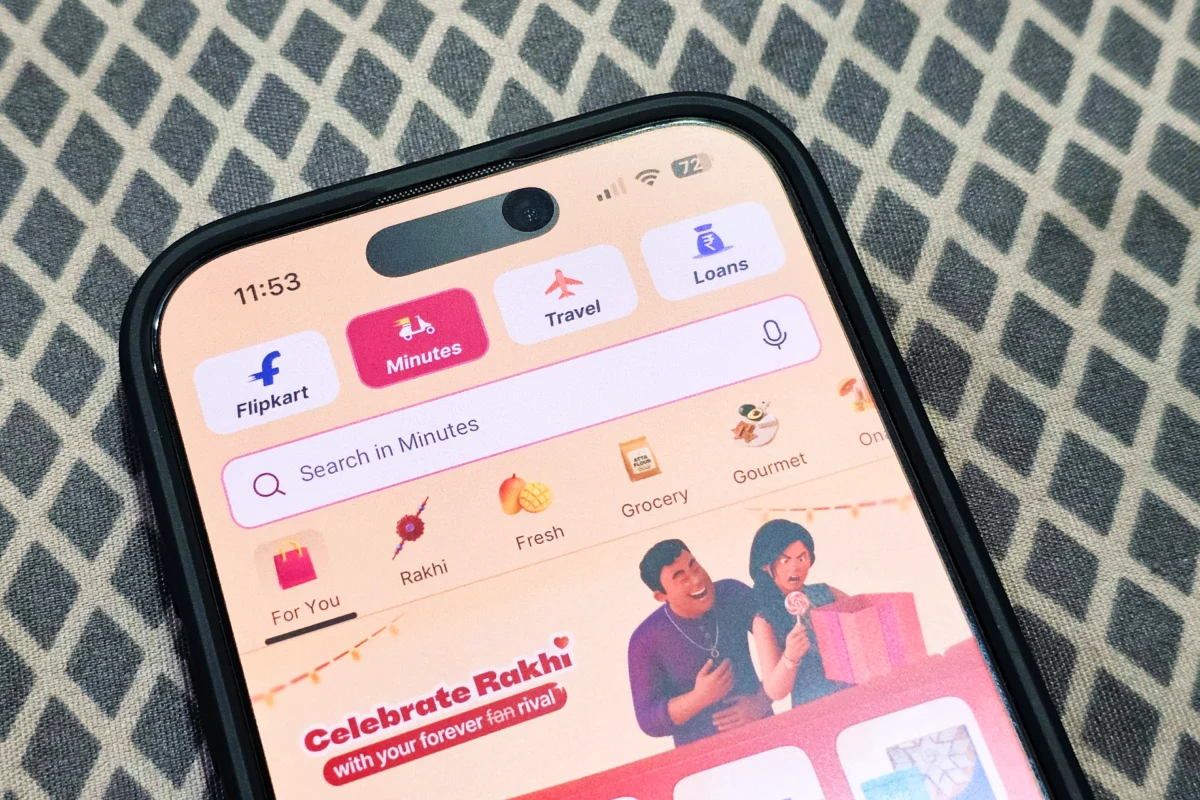
At the center of this transformation is Flipkart, the Walmart-owned e-commerce titan. Having entered the fray relatively late, the company is now mounting a blistering expansion to catch up with early pioneers like Blinkit, Zepto, and Swiggy Instamart. With its service, "Flipkart Minutes," reporting a surge in daily order volumes, the battle for the Indian household has officially reached a fever pitch, forcing global incumbents like Amazon to accelerate their own instant-delivery strategies.
The Chronology of Convenience: From E-commerce to Instant Gratification
To understand the current obsession with quick commerce, one must look at the evolution of the Indian digital retail market. The journey began in earnest with the rise of online grocery platforms.
- 2013: Grofers (the predecessor to Blinkit) launches, introducing the concept of online grocery ordering to a nascent Indian internet market.
- 2020: The COVID-19 pandemic acts as a massive accelerant. Swiggy, leveraging its existing food-delivery logistics network, launches Instamart.
- 2021: Zepto arrives, marketing itself specifically as a "10-minute delivery" app, effectively creating the standard that all competitors are now forced to emulate.
- 2022: Grofers undergoes a strategic rebranding to "Blinkit," pivoting entirely to the quick-commerce model. Zomato acquires the company shortly after, integrating instant delivery into its massive food-tech ecosystem.
- 2024: After years of observing from the sidelines, Flipkart launches "Flipkart Minutes" in August, signaling that the era of experimentation is over and the era of total market capture has begun.
This timeline reveals a critical reality: while Flipkart entered the market late, it possesses a unique structural advantage—a massive, pre-existing customer base and the deep pockets of its parent, Walmart.
The Data Behind the Velocity: A Market in Hyper-Growth
The numbers behind the current surge are staggering. According to industry insiders, Flipkart Minutes has scaled its operations at an unprecedented pace. In November 2023, the service was handling roughly 390,000 to 400,000 orders per day. By late 2024, that figure has ballooned to 1.1 million to 1.2 million orders daily.
This rapid ascent places Flipkart within striking distance of Swiggy’s Instamart, which currently averages approximately 1.4 million orders per day. However, the market remains dominated by two clear leaders: Blinkit, which commands a massive 3.4 million to 3.6 million daily orders, and Zepto, which holds its ground with 2.4 million to 2.6 million.
Micro-Fulfillment: The Engine of Growth
The secret to this growth lies in the "dark store"—small, hyper-local warehouses optimized for speed rather than inventory depth. Flipkart has been aggressive in its infrastructure build-out:
- January 2024: 600 micro-fulfillment centers.
- Late 2024: Over 1,020 centers, with an addition rate of approximately 100 new facilities per month.
- The Target: A network of 1,500 centers by the end of 2026.
This density is the only way to sustain the "minutes" promise. According to internal reports, Flipkart has managed to reduce its average delivery time from 13 minutes a year ago to 11 minutes today. As Satish Meena, an adviser at the market intelligence firm Datum, notes: "Flipkart is already a serious player. Once you open 1,000 dark stores and are doing a million orders per day, it is serious enough to dictate the terms of the market."
Consumer Behavior: The "Stickiness" of Speed
The data suggests that once a consumer experiences the convenience of 10-minute delivery, there is no going back to scheduled slots. Flipkart’s internal metrics indicate that roughly 65% to 70% of its monthly users are repeat buyers. Furthermore, the frequency of transactions per customer has jumped 50% to 60% year-over-year.
The average order value (AOV) currently sits between ₹400 and ₹500 (approximately $4.20–$5.20). While the basket starts with staples—fruits, vegetables, dairy, and meat—Flipkart is intentionally tilting its inventory toward higher-margin, artisanal, and gourmet products. By moving up-market, the company hopes to improve its unit economics, a common struggle for companies that prioritize delivery speed over profit margins.
The Global Response: Amazon’s "Now" Strategy
While Flipkart and the domestic players have dominated the conversation, Amazon is far from passive. The Seattle-based giant is utilizing its "Amazon Now" service to penetrate the instant-delivery market. During a high-profile visit to India in June, CEO Andy Jassy highlighted that "Now" is the fastest-growing business unit within the company’s Indian operations.
Amazon’s strategy mirrors that of its rivals: a massive build-out of over 1,000 micro-fulfillment centers across 300 cities. Unlike the pure-play quick-commerce apps, Amazon is leveraging its global expertise in logistics and its "Prime" ecosystem to integrate instant delivery with its broader retail catalogue. The company is currently doubling its order volumes every quarter, signaling that the competitive pressure on Flipkart, Swiggy, and Zepto will only intensify.
Official Stances and Industry Responses
Despite the intense scrutiny from analysts and the media, the major players have largely remained tight-lipped. Requests for comments sent to Flipkart, Amazon, Swiggy, and Blinkit’s parent company, Eternal, did not yield direct statements.
However, the silence is punctuated by public filings and investor presentations. Swiggy, for instance, recently noted that it is aggressively working toward profitability, with 45% of its dark-store network already achieving positive contribution margins. This suggests that the phase of "burning cash for growth" is transitioning into a phase of "operational efficiency." The companies are no longer just fighting for market share; they are fighting to prove that the quick-commerce model can be a sustainable, profitable business.
The Implications: Why Speed is a Defensive Necessity
The aggressive expansion into quick commerce is as much about defense as it is about offense. As Satish Meena emphasizes, the shift in consumer psychology is permanent: "Can you go back to scheduled delivery now in grocery? No. You will not go back."
For platforms like Flipkart and Amazon, failing to offer 10-minute delivery is not just an opportunity cost—it is an existential risk. If these giants cannot provide instant gratification, they risk losing the "top-of-mind" share of the Indian consumer. Grocery and daily essentials are the "gateway" categories; once a customer is locked into an app for their milk and bread, they are far more likely to open that same app for electronics, apparel, and lifestyle products.
Furthermore, this trend arrives at a complex time for the Indian economy. While broader consumer demand showed signs of softening in mid-2024, the quick-commerce sector remained resilient. Bernstein analysts have pointed out that despite economic headwinds, the shift toward instant delivery has held steady, with monthly active users continuing to climb.
The Future of Retail
As we look toward 2026, the retail landscape in India will likely be defined by a "consolidation of convenience." We can expect:
- Increased Automation: With labor costs rising, companies will look toward robotics and AI-driven inventory management within dark stores to maintain speed while lowering costs.
- Inventory Expansion: The "quick" factor will expand from groceries to include beauty products, electronics, and even pharmacy items.
- Margin Pressures: The companies that survive will be those that manage to turn their delivery networks into profitable logistics hubs.
Ultimately, the battle for India’s shoppers is a testament to the country’s unique retail environment—a market where technology and traditional shopping habits have collided to create the world’s most competitive, high-velocity commerce landscape. Whether Flipkart can continue its rapid ascent or if the early pioneers maintain their lead remains to be seen, but one thing is clear: the clock is ticking, and for the Indian consumer, the delivery of the future is already here.
About the Author