As Iowans head to the polls for the crucial November 2026 midterm elections, the discourse surrounding the state’s political future is being overshadowed by a grim, pervasive reality. Across the cornfields and rural townships that define the American heartland, a singular, terrifying concern has eclipsed the traditional debates over the cost of living and national partisan control: an unprecedented surge in cancer rates.
Iowa now sits in the shadow of a public health crisis. According to data from the National Institute on Minority Health and Health Disparities, the state ranks second in the nation for cancer incidence. It stands as one of only three states—alongside Utah and West Virginia—where cancer rates are actively rising rather than plateauing or declining. For a state that serves as the bedrock of the American agricultural economy, this health trajectory has forced a long-overdue confrontation between the industrial farming complex and the well-being of its citizens.
The Convergence of Health and Politics
The ubiquity of the disease has transformed it from a private tragedy into a central campaign issue. Voters across the state, from the suburbs of Des Moines to the rural expanses of the southwest, are reporting a landscape where a cancer diagnosis is no longer an anomaly, but an expected life event.
"The road I live on, I think there’s only one family that has not dealt with some kind of cancer," says Seth Watkins, a longtime farmer in southwest Iowa. His sentiment is echoed in polling data, which now ranks cancer as the primary concern for the Iowa electorate.
In the race for the state’s open US Senate seat, the issue has become deeply personal. Democratic candidate Josh Turek, who battles health challenges he attributes to his father’s exposure to Agent Orange during the Vietnam War, has centered his campaign on health equity and environmental accountability. His opponent, Republican congresswoman Ashley Hinson, has focused her platform on broader health policy reforms. Meanwhile, the gubernatorial race between Republican Zach Lahn and Democrat Rob Sand has devolved into a contest over who can offer the most comprehensive plan to address the state’s toxic environmental footprint.
A Chronology of a Slow-Motion Crisis
To understand Iowa’s current predicament, one must look at the historical trajectory of the state’s environmental policies.
- Pre-2012: Iowa’s cancer rates largely mirrored national trends. The state followed established patterns of disease prevalence and management.
- 2012: The inflection point. Cancer rates began a steady, unexplained climb. Despite researchers and public health advocates noting the trend, the issue remained largely relegated to the margins of political discourse.
- 2022: The crisis reached a critical awareness threshold. National Institutes of Health data confirmed that Iowa’s cancer rate hit approximately 506 cases per 100,000 people, significantly higher than the national average of 442.
- 2023–2025: A period of public mobilization. The Iowa Environmental Council, in partnership with the Iowa Farmers Union and Drake University’s Harkin Institute, conducted a series of listening sessions. These meetings revealed that for years, citizens had felt silenced, viewing the link between industrial agriculture and public health as a "taboo" subject.
- 2026: The election year. Cancer is now the defining issue. A Supreme Court ruling in June—which restricted the ability of individuals to sue manufacturers over cancer-linked pesticides—further inflamed the debate, prompting candidates to adopt more aggressive stances against corporate chemical giants.
Supporting Data: The Cost of "Industrial Productivity"
Iowa is the undisputed titan of American agriculture, producing more corn and pork than any other state. This sector accounts for a third of the state’s economic output and one-fifth of its total jobs. However, this efficiency is built upon a foundation of intensive chemical use.
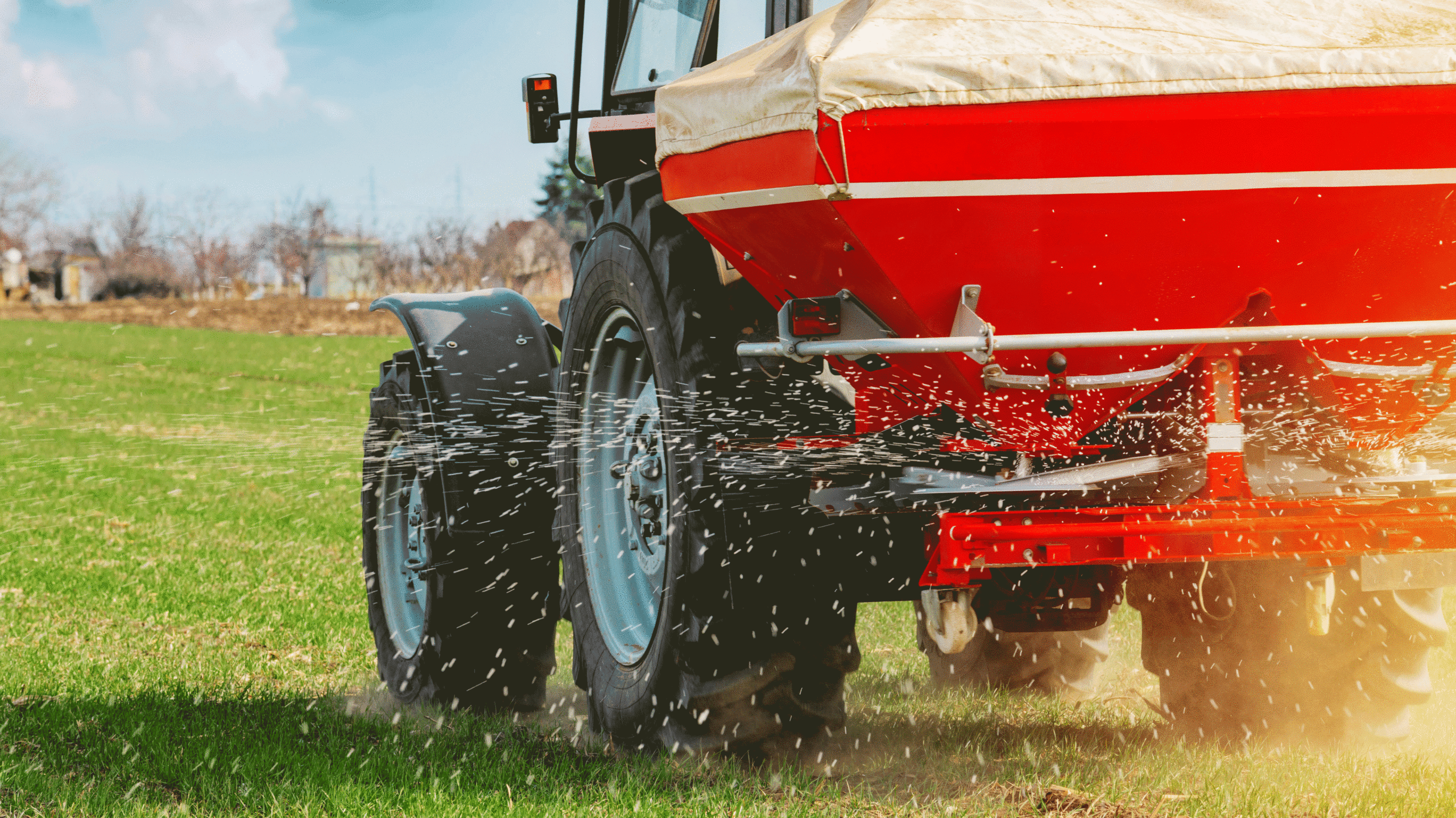
Iowa leads the nation in fertilizer application, a practice that directly contributes to the contamination of water supplies. Concentrated Animal Feeding Operations (CAFOs) serve as another primary point of concern; these facilities generate massive amounts of waste that frequently enter the watershed.
The Nitrate Problem
The impact is not limited to those working the land. In 2025 and again in 2026, the water utility serving Des Moines was forced to implement lawn-watering bans because nitrate levels in the local rivers—the primary source of drinking water—reached near-record levels. Nitrates, which are prevalent in agricultural runoff, have been linked in various studies to increased cancer risks.
The Glyphosate Link
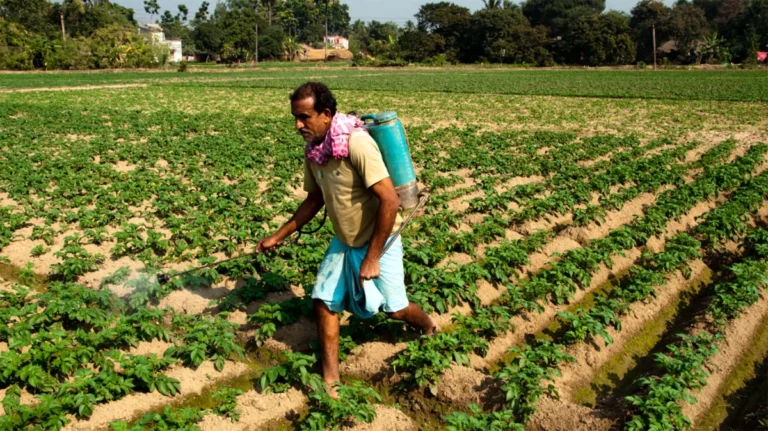
The state is also the primary consumer of glyphosate-based herbicides, such as Roundup. Scientific literature has consistently debated the carcinogenic potential of these chemicals, particularly concerning non-Hodgkin lymphoma and acute myeloid leukemia—both of which occur at elevated rates in Iowa.
Official Responses and the "Silence" of the Establishment
The political response to this crisis has been polarized. Critics argue that for too long, state leadership has prioritized the profits of "Big Ag" and "Big Pharma" over the health of its residents.
Sarah Green, executive director of the Iowa Environmental Council, notes that the "heads in the sand" approach by elected officials has become politically untenable. While the GOP-led legislature recently approved a $320 million investment in water quality, advocates argue this is a "drop in the bucket" that fails to address pollution at its source.
The most radical departure from the status quo comes from Chris Jones, the Democratic candidate for state agriculture secretary. A former researcher at the University of Iowa, Jones famously faced pressure—including threats to university funding—from Republican lawmakers for his vocal research on water quality. His platform is the most aggressive in the field, calling for a "strategic retreat" from corn production for ethanol and a wholesale zoning overhaul to mitigate the environmental impact of CAFOs.
In contrast, the incumbent agriculture secretary, Mike Naig—a Republican with a background as a lobbyist for Monsanto (now part of Bayer)—has remained largely insulated from the debate, failing to respond to numerous requests for comment on the industry’s role in the health crisis.
Implications: A New Era for the Heartland?
The implications of this election extend far beyond the ballot box. Whether or not the 2026 cycle produces immediate legislative changes, the "cancer crisis" has fundamentally altered the relationship between the Iowa farmer and the state.
A grassroots movement, led by self-described "Lobe Rangers"—a group of farmers from the fertile Des Moines Lobe—is already proving that profitable, sustainable agriculture is possible without the heavy reliance on chemicals that currently plagues the state. These farmers argue that the current model is not agriculture, but "mining"—the extraction of value from the land until the resource, and the health of the population, is depleted.
As Seth Watkins observes, the damage done to the soil, the water, and the people will not be reversed in a single election cycle. However, the recognition of the crisis marks a turning point. The citizens of Iowa are no longer willing to accept "business as usual" when the price of their economic success is being paid in the lives of their neighbors and children.
The 2026 midterms may not solve the cancer crisis, but they have undeniably forced the state to look into the mirror. The era of silence, where corporate profits and public health were treated as mutually exclusive, is coming to an end. For the people of Iowa, the road ahead is one of difficult transitions, as they attempt to reconcile their identity as the breadbasket of the nation with the urgent necessity of restoring their own health and environment.
About the Author