In a move that signals a seismic shift in the decarbonization of the American maritime supply chain, APM Terminals Elizabeth has announced a historic procurement agreement with Kansas City-based manufacturer Orange EV. The New Jersey seaport, a critical node in the global trade network, has ordered 96 fully electric terminal trucks, marking one of the largest single-site electrification commitments in the history of the North American port sector.
This transition from traditional diesel-powered "yard dogs"—the workhorses of port operations—to zero-emission electric vehicles (EVs) represents more than just a fleet upgrade; it is a fundamental restructuring of how container terminals manage their internal logistics. As the logistics industry faces increasing pressure from both environmental regulations and corporate sustainability mandates, this deal sets a high-water mark for the maritime sector.
The Core Facts: Precision Engineering for Heavy Lifting
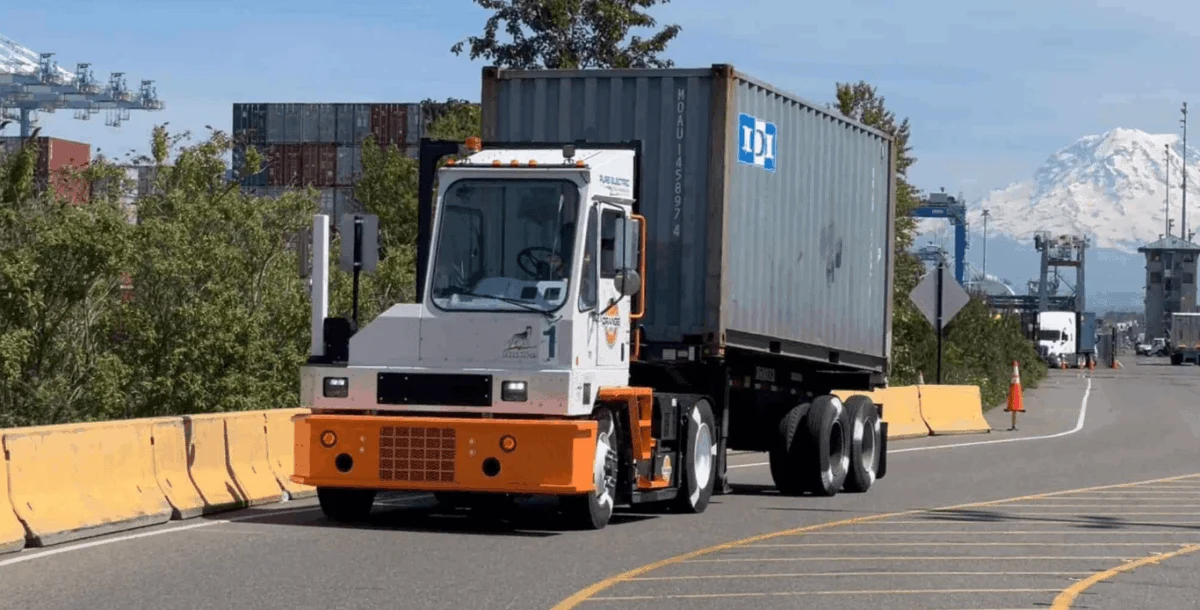
The order, confirmed by terminal leadership on Wednesday, centers on the acquisition of the Orange EV HUSK-e XP model. These vehicles are not merely converted standard trucks; they are specialized terminal tractors designed specifically for the punishing demands of port environments, where equipment is subjected to near-constant stop-start cycles, extreme heavy-load hauling, and continuous daily operations.
Technical Specifications
The HUSK-e XP is built to handle the logistical heavy lifting required at a facility as busy as Port Elizabeth. Key features include:
- Load Capacity: Each unit is engineered to move up to 180,000 lbs. of combined gross weight, ensuring they can handle standard 20-, 40-, and 45-foot containers without a decline in performance.
- Power Density: The fleet will utilize 310-kWh lithium iron phosphate (LFP) battery packs. This represents the most robust energy storage configuration currently offered by Orange EV, specifically chosen to ensure the trucks can complete extended shifts without the need for midday charging interruptions.
- Regulatory Compliance: A critical aspect of this procurement is its alignment with the "Build America, Buy America" (BABA) Act. By manufacturing these units in Kansas City, Kansas, Orange EV ensures that the investment remains tied to the domestic industrial base, a crucial factor for projects often supported by federal infrastructure grants.
Chronology: A Pattern of Rapid Adoption
The deal at Port Elizabeth did not emerge in a vacuum. It is the culmination of a deliberate strategy by Orange EV to penetrate the largest maritime hubs in the United States, building confidence through a "pilot-first" deployment model.
The Pier 400 Success Story
The trajectory for this record-breaking order began earlier this summer at APM Terminals Los Angeles (Pier 400). The path to full-scale adoption followed a three-phase approach:
- The Pilot: A one-year, 20-truck rental pilot program allowed operators to stress-test the vehicles against the rigorous demands of one of the busiest terminals in the Western Hemisphere.
- Performance Validation: Following the pilot, the terminal reported high uptime, reduced maintenance costs, and positive feedback from operators regarding reduced noise and vibration.
- The Expansion: Based on that success, APM Terminals expanded the fleet by an additional 40 trucks, bringing the total to 60. This success served as the proof-of-concept for the much larger New Jersey order.
Regional Momentum
The announcement also follows closely on the heels of another significant deal in the Mid-Atlantic region. Just last week, Greenwich Terminals—the operator of the Packer Avenue Marine Terminal in South Philadelphia—confirmed a 24-truck agreement with Orange EV. This rapid succession of deals suggests that terminal operators are reaching a "tipping point" where the total cost of ownership (TCO) for electric trucks has finally dipped below that of diesel alternatives.
Supporting Data: Why Electric is Winning the Yard
The shift to electric is rarely driven by environmental goals alone. In the hyper-competitive world of terminal operations, financial data is the primary driver of fleet renewal.
The Maintenance Advantage
Terminal tractors are notorious for their high maintenance requirements. Traditional diesel engines, which spend a significant portion of their operating time idling or moving at very low speeds, suffer from high rates of soot buildup, transmission stress, and frequent oil changes.
Orange EV’s electric units offer:
- Elimination of Internal Combustion: By removing the engine, transmission, and cooling systems of a diesel truck, the number of moving parts is reduced by roughly 70%.
- Regenerative Braking: This feature significantly extends the life of brake pads, a common failure point in heavy-duty yard equipment.
- Uptime Metrics: Preliminary data from the Los Angeles pilot suggests that electric units offer significantly higher availability, as they do not require the routine maintenance cycles that diesel engines demand.
Economic Viability
While the upfront capital expenditure for electric terminal trucks is higher than for their diesel counterparts, the gap is closing. When accounting for the significant reduction in fuel costs (electricity vs. diesel) and the avoidance of ongoing engine maintenance, the "payback period" for these 96 units is expected to be well within the operational lifecycle of the equipment.
Official Responses and Strategic Outlook
"The transition to electric is not just about meeting emission targets; it is about future-proofing our operations," a representative for the terminal operator noted during the announcement. "By integrating 96 HUSK-e XP units into our Port Elizabeth facility, we are significantly enhancing the efficiency of our yard while simultaneously improving the air quality for our workforce and the surrounding New Jersey community."
The partnership between APM Terminals and Orange EV is viewed by industry analysts as a symbiotic relationship. APM Terminals gains a scalable, reliable fleet that complies with increasingly stringent environmental regulations (such as those being implemented by the Port Authority of New York and New Jersey), while Orange EV gains a "flagship" account that validates its technology at a massive scale.
Implications: The Future of Port Logistics
The deployment of 96 electric trucks in New Jersey carries significant implications for the broader logistics industry.
Environmental Impact and Community Health
Ports have historically been significant sources of localized air pollution. The shift to electric power eliminates tailpipe emissions entirely. For communities located near the Port of Elizabeth, this is a major quality-of-life improvement. The reduction in noise pollution is also a benefit, as electric trucks operate near-silently compared to the constant roar of diesel engines.
Scaling the Infrastructure
The logistical challenge of this deployment is not just the trucks themselves, but the supporting infrastructure. A fleet of 96 trucks requires significant charging capacity. This order implies a major investment in on-site charging stations and the necessary electrical grid upgrades to support the power demand. This infrastructure will serve as a template for other ports looking to modernize, effectively creating a "blueprint for electrification."
The "BABA" Effect
The commitment to the Build America, Buy America Act requirements is a strategic move that positions the terminal and the manufacturer for future federal funding opportunities. As the U.S. government continues to emphasize the reshoring of manufacturing, companies that prioritize domestic supply chains will find themselves at a distinct advantage when competing for infrastructure grants and green-energy tax credits.
A Signal to the Market
Perhaps the most profound implication of this order is the signal it sends to competitors and peer organizations. By moving to such a large-scale electric fleet, APM Terminals is effectively setting a new standard for operational excellence. Competitors in the maritime sector can no longer view electrification as an experimental phase; they must now consider it a necessary component of long-term operational strategy.
As these 96 units begin to roll off the production line in Kansas City and arrive in New Jersey, the maritime industry will be watching closely. If the performance in Elizabeth mirrors the success seen in Los Angeles, it will likely trigger a domino effect of fleet renewals across the North American port system, marking the definitive end of the diesel era for terminal logistics.
About the Author