In a seismic shift for American environmental policy, the Trump administration has formally initiated the process to dismantle the 2001 Roadless Area Conservation Rule, a quarter-century-old protection that has served as the primary bulwark against industrial encroachment into the nation’s most pristine wildlands. The U.S. Forest Service, operating under the Department of Agriculture, announced on Tuesday that it has filed a proposal to rescind the regulation in its entirety, potentially opening approximately 45 million acres of national forest to road construction, large-scale logging, and mineral extraction.
The move marks the culmination of a long-standing ideological battle over the management of public lands. By targeting the Clinton-era mandate, the administration aims to fundamentally redefine the role of the federal government in the management of America’s vast forest holdings—shifting the emphasis from conservation and preservation toward "active" industrial management.
The Chronology of a Regulatory Shift
To understand the gravity of this decision, one must look back at the origins of the Roadless Rule. Established in the final days of the Clinton administration in 2001, the regulation was designed to end the era of sprawling road networks in national forests, which were often precursors to unsustainable clear-cutting. For 25 years, the rule has remained a flashpoint in the "timber wars," surviving numerous legal challenges and changing political tides.
The current administration’s path toward this rescission was signaled early in the previous year. Agriculture Secretary Brooke Rollins, tasked with overseeing the Forest Service, had been vocal in her opposition to the rule, publicly labeling it an "absurd obstacle" to economic development and regional forest management.
The timeline of this specific maneuver accelerated over the past 18 months, characterized by:
- Initial Rhetoric (Summer 2025): The Department of Agriculture signaled an intention to review "overly restrictive" policies, specifically citing the Roadless Rule as a barrier to forest health initiatives.
- Policy Formalization (Early 2026): Behind-the-scenes drafting of the rescission proposal took place, drawing criticism from environmental groups who warned that the "administrative review" was a precursor to a wholesale rollback.
- The Formal Filing (August 18, 2026): The Forest Service officially filed the proposal to strike the 2001 rule, initiating a mandatory public comment period that is set to close on September 21, 2026.
Supporting Data: Forests, Carbon, and Economics
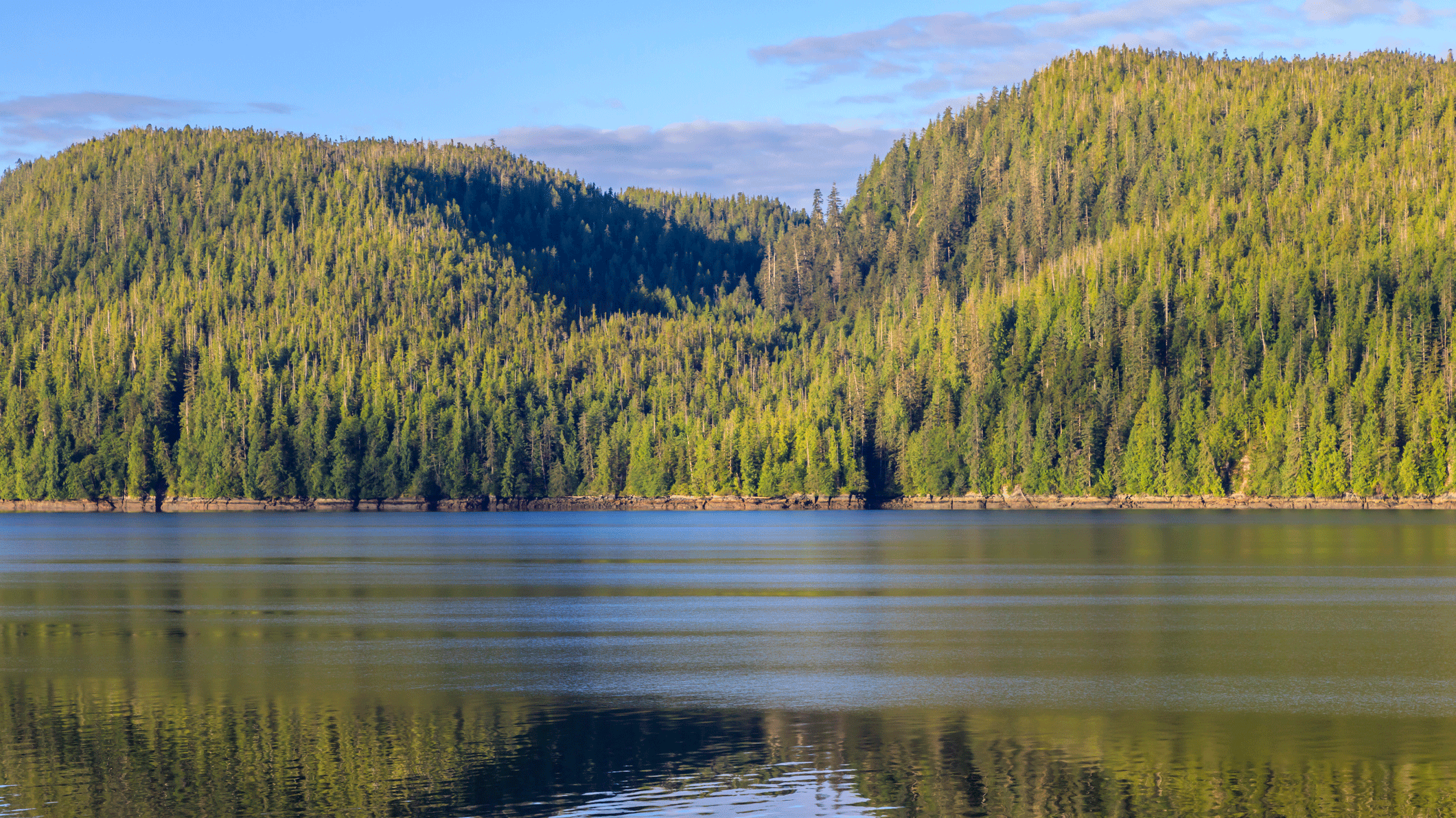
The 45 million acres at stake represent some of the most significant biodiversity hotspots in the United States. These include the expansive, carbon-sequestering temperate rainforests of Alaska’s Tongass National Forest, the rugged backcountry of the Sierra Nevada in California, and critical watersheds along the Appalachian Trail.
Data from the Forest Service and various independent environmental agencies paint a complex picture of these lands:
- Carbon Sequestration: Old-growth forests are among the most effective terrestrial carbon sinks. The Tongass, for instance, serves as a massive reservoir for carbon that would otherwise be released into the atmosphere if the forest were opened to industrial logging.
- Economic Value: Contrary to the administration’s focus on extraction, outdoor recreation and tourism associated with roadless areas generate billions of dollars annually. Conservationists point out that the value of these lands lies in their untouched state, supporting thriving fishing, hunting, and tourism industries that rely on a healthy, undisturbed ecosystem.
- Biodiversity: These areas serve as critical habitats for endangered and threatened species, including brown and black bears, wolves, and bald eagles. Fragmentation of these habitats through road building is widely considered by ecologists to be the most significant driver of biodiversity loss in North American forests.
Official Responses: A Clash of Philosophies
The administration’s rationale for the rescission centers on the argument that the Roadless Rule is an impediment to wildfire mitigation. Secretary Rollins and Forest Service Chief Tom Schultz argue that the inability to build roads prevents forest managers from accessing areas to conduct "hazardous fuels reduction"—essentially thinning out forests to prevent catastrophic fires.
"For too long, outdated restrictions have kept tens of millions of forested acres off-limits to the very treatments that improve forest health and reduce wildfire risk to our communities," Rollins stated during Tuesday’s announcement. Chief Schultz added, "More than 40 percent of inventoried roadless areas have high or very high wildfire hazard potential. We need to restore authority to local managers who know the land best."
Environmental organizations, however, have dismissed these claims as a cynical pretext for industry access. Alex Craven, the forest campaign manager for the Sierra Club, argued that the administration is "using wildfire as an excuse to open some of America’s most intact public forests to industrial exploitation." Craven noted that the existing rule already contains provisions for targeted actions to reduce wildfire risk, rendering the full rescission unnecessary. "Roads generally lead to more human-caused ignitions and result in more wildfires, not fewer," Craven added.
Implications: The Permanent Alteration of the Landscape
The broader implications of this decision extend far beyond the current political cycle. Once a road is cut into a previously untouched forest, the ecological damage is often irreversible. The fragmentation of the landscape allows for invasive species to enter, alters water drainage patterns, and destroys the quietude required for core wilderness species to survive.
The Threat to Public Lands
Critics argue that the move is an unprecedented attack on the concept of "public" in public lands. Maggie Rabb, executive director of the Southeast Alaska Conservation Council, characterized the process as a hollow exercise in bureaucracy. "It’s clear the processes required by the National Environmental Policy Act are being treated as merely boxes to check on the path to enacting an entirely political agenda to clear-cut the last remaining intact old-growth forests in America," Rabb said.
The Legal and Public Front
The Natural Resources Defense Council (NRDC) has already mobilized a campaign to flood the public comment portal with opposition. Meanwhile, legal experts anticipate a deluge of litigation if the rule is successfully rescinded. The legal challenge will likely hinge on whether the administration has adequately considered the environmental impact of such a broad policy change, as required by federal law.
Randi Spivak, public lands policy director at the Center for Biological Diversity, summarized the stakes for the American public: "Trump is pushing for the largest evisceration of public lands protection in American history and against what Americans want. Once you start bulldozing roads for commercial logging and industrial development, there’s no getting them back."
Conclusion: A Turning Point for Conservation
As the September 21 deadline for public comments approaches, the debate over the Roadless Rule serves as a microcosm of the larger national conversation about environmental stewardship versus industrial expansion. For those who view these 45 million acres as a vital inheritance for future generations, the next few months represent a final stand.
The Tongass, the Chugach, and the wild hinterlands of the West remain at the center of this controversy. Whether these landscapes remain "global treasures" or are transitioned into sites of extraction depends on whether the administration’s vision of "active management" overcomes the legal and public outcry that is currently mounting across the country. One thing is certain: the removal of these protections would irrevocably change the face of the American wilderness.
About the Author