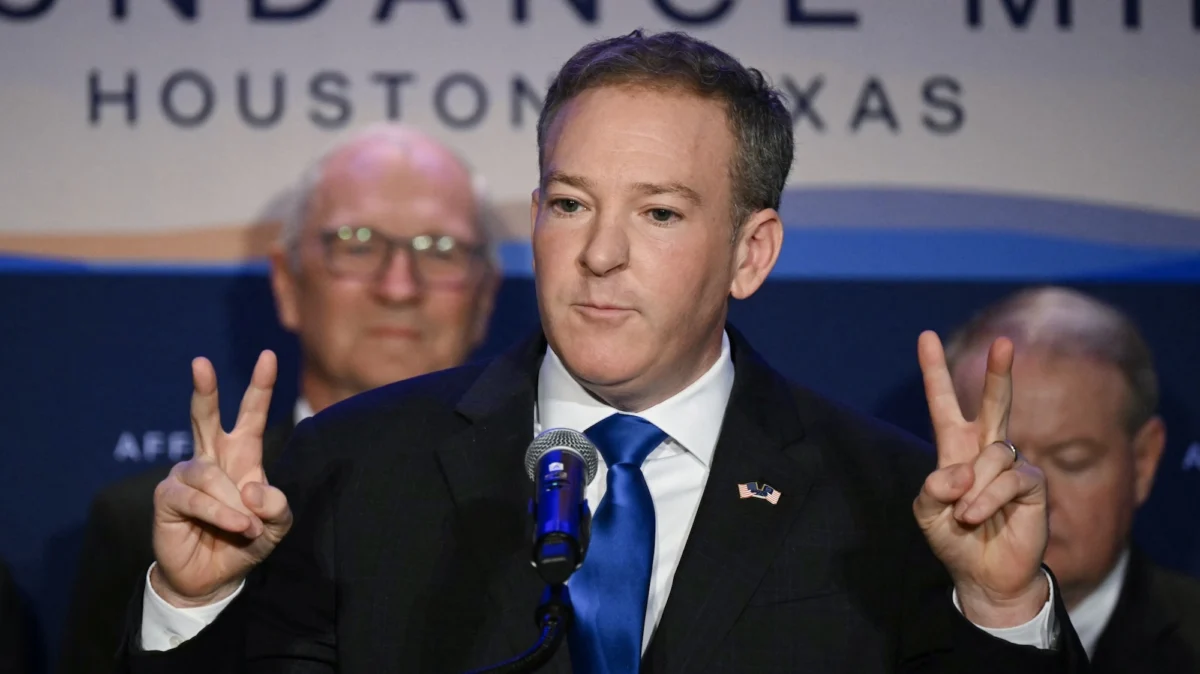
In a seismic shift that signals the total realignment of federal environmental priorities, Environmental Protection Agency (EPA) Administrator Lee Zeldin has announced a comprehensive rollback of climate pollution standards for fossil fuel-fired power plants. The announcement, delivered to a receptive audience of energy ministers at the G20 Ministerial meeting on Energy Abundance in Houston, Texas, marks the culmination of a broader, 18-month strategy by the Trump administration to dismantle the regulatory framework governing the American energy sector.
This deregulatory surge is running on a parallel track with an ideologically driven expansion of the agency’s investigative scope. Only days prior to his Houston address, Zeldin unveiled an expansive, high-profile scientific study tasked with auditing the nation’s drinking water for traces of abortion medication, hormonal contraceptives, and gender-affirming care pharmaceuticals.
Together, these initiatives define a new era for the EPA: one where traditional environmental protections—such as clean air and greenhouse gas reduction—are discarded in favor of a mandate that prioritizes “energy dominance” and the cultural objectives of the “Make America Healthy Again” movement.
The Chronology of Deregulation: Dismantling the Climate Agenda
The dismantling of federal climate policy has been methodical and relentless. Since the start of the administration, the EPA has moved to systematically strip away the foundations of the Biden-era environmental agenda.
- February 2025: The EPA began its aggressive pivot by rescinding critical vehicle emissions standards, effectively removing the pressure on the automotive industry to transition away from internal combustion engines.
- Spring 2025: The agency moved to dismantle the 2009 “endangerment finding,” the landmark legal ruling that formally recognized greenhouse gases as a threat to human health. By undermining this finding, the administration effectively stripped the EPA of its primary legal authority to regulate carbon emissions under the Clean Air Act.
- September 2026: In Houston, the capstone of this policy overhaul was reached. Zeldin confirmed the repeal of carbon emission standards for power plants, a move that critics argue provides a permanent “license to pollute” for the nation’s fossil fuel utility providers.
Zeldin framed these moves not as a retreat from environmental stewardship, but as a liberation from a “war on coal.” In his press statement, he claimed that previous administrations sought to “destroy reliable and affordable energy,” asserting that the current administration is merely returning to a model that ensures “the lights stay on.”
Supporting Data: The Cost of the Repeal
The scale of the environmental impact resulting from these policy shifts is profound. Power plants remain the second-largest source of carbon pollution in the United States, surpassed only by the transportation sector.
Under the previous regulatory regime, the EPA had projected that carbon pollution rules would have prevented the emission of 1.38 billion metric tons of CO2 by 2047. By nullifying these rules, the administration has removed the primary federal mechanism for curbing the greenhouse gases currently driving global temperature increases.
Furthermore, the impact is not limited to carbon. Power plants are significant sources of smog-forming nitrogen oxides, sulfur dioxide, mercury, and lead. The repeal of these standards removes federal oversight on localized pollutants that are directly linked to respiratory illnesses, neurological damage, and cardiovascular disease in communities located near power-generating facilities. Environmental legal experts point out that by rescinding these rules, the EPA is not only increasing the national carbon footprint but is effectively stripping vulnerable communities of federal safeguards against toxic air quality.
The “Water Audit”: A New Front in the Culture Wars
While the EPA retreats from regulating industrial pollutants, it is simultaneously expanding its surveillance of the water supply through a lens that critics describe as highly political. The new study, which seeks to identify over 1,000 medications and chemicals—including mifepristone and misoprostol—has been championed by anti-abortion groups as a major victory.
Kristan Hawkins, president of Students for Life, hailed the announcement as the culmination of years of advocacy. In a public statement, she framed the existence of these drugs in the water supply as a public health crisis, alleging that the FDA’s regulation of chemical abortion pills has resulted in “polluted water for 26 years.”
Scientific and Regulatory Skepticism
The scientific community and former EPA officials have raised significant alarms regarding the methodology and intent of this study. Betsy Southerland, a former career scientist at the EPA’s Office of Water, expressed concern that the study is being designed to produce a specific political outcome rather than a objective environmental assessment.
“If there is any detectable level of mifepristone or its metabolites, the anti-abortion groups will scream that we are unknowingly aborting fetuses by drinking public tap water,” Southerland told Politico.
The EPA has maintained that the study is intended to test for presence rather than concentration. However, experts note that in environmental toxicology, the presence of a chemical does not equate to a public health risk. Without a focus on toxicity thresholds, the data could be easily weaponized to create panic, even if the levels of medication are infinitesimally small and biologically inert.
Nathan Donley, environmental health science director at the Center for Biological Diversity, argued that the initiative is a transparent distraction from legitimate environmental threats. “There are legitimate water quality threats that we need to attack and rectify in a regulatory manner,” Donley noted. “And then there are things that are out in left field that just distract people.”
Official Responses and Political Implications
The Biden administration’s push for environmental regulation was grounded in the belief that climate change is a systemic threat requiring federal intervention. The current administration’s reversal is grounded in the belief that such regulation is an overreach that stifles economic growth.
The View from the Administration
Secretary of Health and Human Services Robert F. Kennedy, Jr., has been a vocal supporter of the water testing initiative, framing it as a matter of transparency. “It will give Americans the truth about what is in their water,” he has stated. This rhetoric aligns with the “Make America Healthy Again” coalition’s broader skepticism of federal regulatory bodies and the pharmaceutical industry.
The View from Environmental Advocacy
Environmental organizations are already preparing for a protracted legal battle. The Sierra Club, through its chief program officer Holly Bender, described the repeal of power plant standards as “full-throated climate denial” occurring in real-time.
Legal challenges are expected to focus on whether the EPA has the statutory authority to unilaterally dismantle decades of Clean Air Act protections. Legal analysts suggest that the administration is counting on a sympathetic federal judiciary to uphold these changes, essentially rewriting the interpretation of environmental law to favor industry deregulation over the “endangerment” mandate.
The Road Ahead: A Country Divided by Policy
The implications of this two-pronged EPA strategy are far-reaching. By aligning the nation’s environmental agency with the interests of the fossil fuel industry, the administration has effectively signaled that climate mitigation is no longer a federal priority. Simultaneously, by focusing on the chemical components of reproductive healthcare, the EPA has moved from a regulatory agency focused on industrial impact to a participant in the national debate over reproductive rights.
For environmental justice advocates, the dual approach represents a “betrayal of the American public.” They argue that the government is choosing to ignore the proven health risks of industrial pollution while focusing its resources on the ideological targeting of personal health choices.
As the legal challenges work their way through the courts, the reality on the ground remains: coal and gas plants are poised to increase their emissions, while the conversation surrounding the nation’s drinking water is becoming increasingly entangled with the partisan battles over abortion. For now, the EPA has set a new course—one that prioritizes the expansion of energy production and the satisfaction of a political base, regardless of the long-term environmental or scientific consequences.
About the Author