Welcome back to TechCrunch Mobility, your definitive source for the pulse of the future of transportation. As the autonomous vehicle (AV) sector shifts from a period of experimental hype to a phase of industrial scaling, the competition has moved beyond just software algorithms—it is now firmly rooted in hardware efficiency and geopolitical supply-chain security.
The Silicon Backbone: Waymo’s Move Toward Vertical Integration
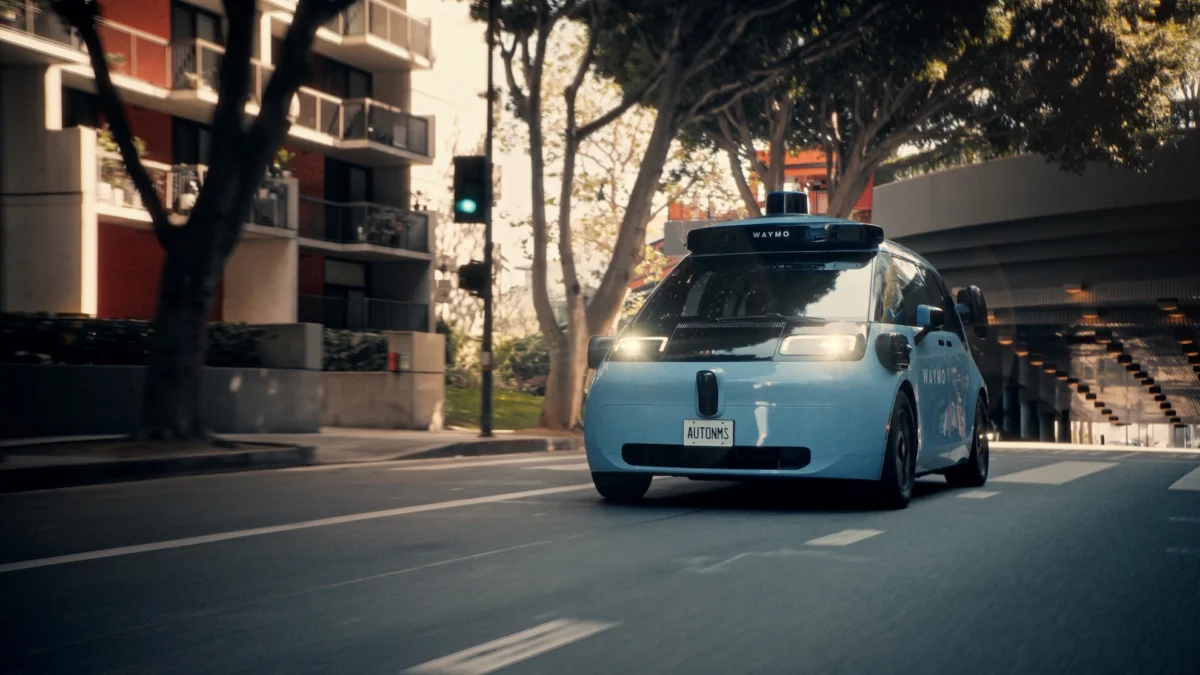
For years, Waymo has dominated the headlines through its rapid, methodical expansion into urban environments. However, the true story of its success lies under the hood. As the company opens its sixth-generation Ojai robotaxi service to all riders in Los Angeles, Phoenix, and San Francisco, it has pulled back the curtain on a critical strategic shift: custom silicon.
Waymo has officially unveiled its own 5nm ASIC (Application-Specific Integrated Circuit) chip, a feat of engineering designed to handle the astronomical data loads generated by the Ojai platform. With 13 high-fidelity cameras and a suite of auxiliary sensors, the Ojai vehicle generates a constant, heavy stream of raw data. To process this in real-time without the latency that could prove fatal in a dense city, Waymo developed this custom chip, capable of delivering over 1,000 TOPS (trillions of operations per second).
This puts Waymo in the same league as industry-standard hardware like Nvidia’s DRIVE AGX Thor. By designing its own silicon, Waymo is signaling that off-the-shelf components may no longer satisfy the power, efficiency, and performance requirements needed for mass-market profitability. The company is leaning on a massive supply-chain consortium, including giants like TSMC, Samsung, and AMD, to bring this vision to life.
The Logic of Vertical Integration
Why go to the trouble of designing a proprietary chip? In the world of AVs, performance efficiency directly correlates to the bottom line. A more efficient chip consumes less power, which extends the range of electric robotaxis, reduces thermal management costs, and minimizes the physical footprint of the vehicle’s onboard computer. For a company that must eventually transition from a high-burn research project to a profitable service provider, these incremental gains in hardware are the ingredients of viability.

A Growing Security Shadow: The Lidar Probe
While Waymo focuses on its internal architecture, a more ominous cloud is forming over the broader industry. Reports from the Idaho National Laboratory (INL) indicate an investigation into the security vulnerabilities of Chinese-manufactured lidar sensors.
Lidar, the "eyes" of the autonomous car, is the most critical piece of the perception stack. If these sensors contain backdoors or inherent security flaws, the risk to national security and consumer safety could be catastrophic. What makes this investigation particularly intriguing is its funding source: it is backed by a coalition within the private AV sector.
When TechCrunch reached out to industry leaders—including Rivian, Ford, General Motors, and Nuro—for comment, they claimed total ignorance of the probe. This creates a fascinating tension: the industry is clearly worried about the ubiquity of Chinese sensor hardware, yet none are willing to publicly admit to financing the research that might lead to a regulatory ban. The implications here are massive; if the US government uses this research to restrict Chinese lidar, it could force a massive, costly supply-chain reshuffle for nearly every major player in the autonomous space.
The State of the Market: Deals, Diversification, and Delivery
The mobility sector is seeing a flurry of capital movement, reflecting a maturing market that is finally picking winners and losers.
The "Also" Evolution
The startup "Also," which spun out of Rivian in March 2025, has successfully closed a $150 million Series D round. Its trajectory is a case study in how quickly business models must pivot to survive. Initially a micromobility company focused on e-bikes, it has rebranded into a high-end tech firm building autonomous small electric vehicles. Their partnership with DoorDash is a clear indication that the company is betting its future on the "last-mile" delivery economy.

The Serve Robotics Pivot
The story of Serve Robotics offers a cautionary tale for the industry: the risk of platform dependency. After Uber signaled a retreat from its partnership and sold its entire stake in the company, Serve had to scramble to diversify. Their quick shift to partner with Grubhub and expand their DoorDash footprint proves that in the gig-economy era, no partnership is permanent. For startups, the lesson is clear: if you are tied to a single major tech platform, you are living on borrowed time.
Global Trucking and Aerial Logistics
- Einride’s Massive Bet: The Swedish firm is doubling down on Tesla, purchasing 500 electric Semis to bolster its logistics fleet. This deal is a massive vote of confidence in Tesla’s manufacturing timeline, despite Tesla’s recent admission that it is pulling back on "volume production" promises for 2026.
- The Drone Ambition: Uber is making a bold play in the sky, partnering with Zipline with the goal of hitting 1 million deliveries per day by 2029. Meanwhile, Amazon is aggressively scaling its Prime Air service to reach nearly 500 US cities by the end of next year.
Implications for the Future of Mobility
As we look toward the horizon, the trajectory of the industry is being defined by three major forces:
- Hardware Sovereignty: Waymo’s move into custom silicon is the beginning of an "arms race" in compute hardware. Expect other AV leaders to follow suit as they chase the efficiency needed to make robotaxis a household utility rather than a luxury niche.
- Regulatory Scrutiny: The Idaho National Laboratory investigation into lidar is a harbinger of potential trade wars. If national security concerns lead to a "decoupling" of the AV supply chain, costs will spike, and the timeline for widespread robotaxi deployment could face significant delays.
- The "Robotaxi" Saturation: With Nevada issuing permits for up to 8,000 robotaxis to operate in Clark County, the "Las Vegas experiment" will provide the world with the first real-world data set on how high-density, multi-provider autonomous fleets interact with human drivers and pedestrians.
Regulatory and Legal Headwinds
The industry is not without its legal battles. Uber’s recent €825 million ($966 million) fine by the Dutch Data Protection Authority serves as a sharp reminder that the "move fast and break things" era of the tech industry is under intense scrutiny. Using automated systems to deactivate driver accounts without due process is no longer just a business practice—it’s a violation of fundamental rights.
Additionally, Waymo remains under the microscope of the National Highway Traffic Safety Administration (NHTSA) regarding a collision involving a child. The fact that their responses to the probe are heavily redacted highlights the friction between the need for industry transparency and the protection of proprietary "black box" algorithms.
Conclusion
The transition to an autonomous future is no longer a matter of "if," but "how." We are witnessing a shift from the era of prototypes to the era of industrial-scale infrastructure. Whether it is Waymo’s 5nm chips, the geopolitical war over lidar, or the race to dominate drone delivery, the winners will be those who can balance extreme technological performance with the demands of regulators and the realities of a globalized, yet increasingly fragmented, supply chain.

As always, keep your eyes on the road—or, increasingly, on the screens that guide them.
Got a tip for us? Reach out to Kirsten Korosec or Sean O’Kane at TechCrunch. Your insights are what keep this beat moving forward.
About the Author