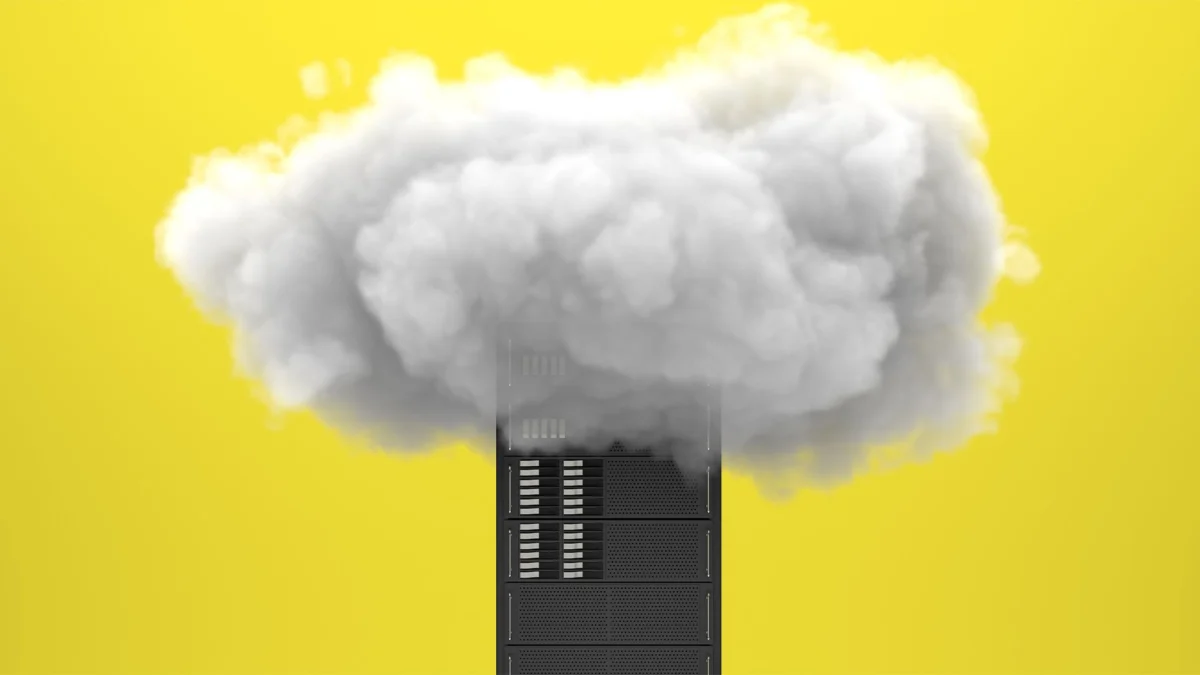
The rapid integration of artificial intelligence into the modern workplace has been hailed as a productivity miracle. From drafting complex emails and automating mundane administrative drudgery to crunching vast datasets, AI tools have become as ubiquitous as the office coffee machine. However, beneath the veneer of seamless efficiency lies a burgeoning environmental and operational challenge: a silent, massive surge in electricity consumption.
New research from Uswitch Business Energy reveals that British teams are collectively executing millions of AI prompts daily. While individual interactions—such as asking a chatbot to summarize a report—seem negligible in isolation, the cumulative scale of this adoption is transforming the energy footprint of the average UK business. As the digital economy pivots toward generative AI, the hidden cost of "intelligence" is emerging as a critical boardroom conversation.
The Scale of the Digital Tide: Main Facts
The data paints a picture of a nation deeply embedded in AI-assisted workflows. According to Uswitch, an average workplace team in the UK generates 24 AI prompts per day. When extrapolated across the broader workforce, the numbers become staggering. With approximately 32% of British employees utilizing AI tools, and considering an average team size of 12, the UK workforce is estimated to generate roughly 22 million AI prompts every single working day.
These prompts are not distributed evenly across the professional landscape. The IT and telecommunications sectors lead the charge, with an average of 35 prompts per team daily. Finance follows closely behind at 29, while the education and healthcare sectors—fields traditionally slower to adopt high-tech automation—are now processing 22 and 21 prompts per team, respectively.
Age demographics also play a significant role in adoption intensity. Workers aged 25–34 represent the most active demographic, averaging 30 AI-assisted tasks per team daily. This interest wanes slightly among the younger workforce (27 tasks) and drops significantly to 18 for those aged 55 and over, suggesting that the "AI-native" generation is currently driving the majority of the electricity-intensive demand.
A Chronology of the AI Energy Explosion
The journey from niche research project to an energy-guzzling global utility has been remarkably swift.
- 2022: The Inflection Point: The public launch of ChatGPT triggered a gold rush. For the first time, generative AI became accessible to the non-technical professional, moving the technology from specialized labs into the daily workflow of the average office.
- 2023: The Scaling Phase: Businesses began integrating LLMs (Large Language Models) into enterprise software. This period saw the normalization of "tokenmaxxing"—the practice of using AI for every possible task, regardless of necessity—which drove the first measurable spikes in server-side energy consumption.
- 2024: The Realization: As global data centers struggled to keep pace with demand, the conversation shifted from "capability" to "sustainability." Research began to surface regarding the massive energy requirements for both model training and, more significantly, the "inference" phase (running the queries).
- 2025: The Current Landscape: We are now in the era of accountability. Companies are beginning to view AI as an energy-consuming asset rather than a free resource. With rising costs and environmental reporting mandates, the focus has shifted toward efficiency and the economic reality of AI billing models.
Supporting Data: The Thermodynamics of a Prompt
To understand the environmental cost, one must look at the math behind the machine. Google’s internal estimates suggest that a single Gemini text prompt consumes approximately 0.24 watt-hours (Wh) of electricity. While a fraction of a watt seems insignificant, the aggregation is profound.
If British employees are generating 22 million prompts per day, the daily electricity consumption for these queries alone reaches 5.28 megawatt-hours (MWh). Annually, this equates to 1.37 gigawatt-hours (GWh)—a figure sufficient to power approximately 508 British homes for an entire year.
Crucially, this consumption occurs in data centers, far removed from the end-user’s office. There is a common misconception that the energy cost is tied primarily to training models—an energy-intensive process that can require 20–25 megawatts of power over three months, totaling up to 54 GWh. However, recent analysis from the MIT Technology Review challenges this narrative, suggesting that up to 90% of an AI model’s total energy footprint is actually consumed during the "inference" phase. Every time a worker prompts an AI to generate a chart, fix a spreadsheet, or write a summary, they are triggering a complex sequence of operations in a remote data center, drawing power from the grid to process that single request.
Official Perspectives: Expert Commentary
Ben Gallizzi, an energy expert at Uswitch, emphasizes that we are witnessing a fundamental shift in how businesses function. "AI has rapidly evolved from an emerging technology into an everyday business tool," Gallizzi stated. "As more organizations adopt AI to support tasks such as content creation, customer service, and administration, the cumulative energy demand from these tools will continue to grow."
The concern, according to Gallizzi, is not necessarily the individual query, but the sheer, unprecedented scale of adoption. "Although each prompt uses a relatively small amount of energy, the scale of adoption means businesses are collectively generating billions of AI interactions every week."
This sentiment is mirrored by the industry giants themselves. OpenAI has reported that ChatGPT alone was facilitating 2.5 billion queries per day as of late 2024. While a significant portion of these are personal rather than professional, the trend line is clear: as AI becomes the "engine" of the modern office, the energy grid will face increasing pressure to provide the power required to keep these virtual assistants running 24/7.
Implications: The Future of the "Intelligent" Office
The implications of this energy consumption are twofold: operational and strategic.
The Shift to Usage-Based Billing
For decades, businesses have treated software as a fixed-cost subscription. However, the energy reality of AI is forcing a change in business models. We are seeing a move away from flat-rate access toward usage-based billing. As providers like Microsoft and OpenAI pass on the costs of computing power, companies are beginning to curb "wanton" AI usage. The era of "tokenmaxxing"—using AI for trivial tasks that could be done faster by hand—is coming to an end. Businesses are now incentivized to be judicious with their AI credits, not just for cost-saving, but to manage their digital operational footprint.
Energy Transparency and Sustainability
Historically, businesses have carefully monitored energy consumption for heating, lighting, and physical equipment. The "invisible" energy use of cloud-based AI represents a new frontier in corporate sustainability. If a company claims to be "net-zero" or committed to carbon reduction, they can no longer ignore the energy cost of their digital tools. We may soon see organizations reporting their "AI energy consumption" as part of their annual Environmental, Social, and Governance (ESG) disclosures.
Infrastructure and Grid Resilience
On a macroeconomic level, the proliferation of AI places immense strain on national energy grids. If 22 million prompts a day in the UK alone contribute significantly to data center load, the total global demand will require massive investment in green energy and grid infrastructure. The "intelligence" of the future will be limited not by code, but by the ability to generate enough carbon-neutral electricity to power it.
Conclusion
The AI revolution is here, and it is here to stay. However, the "free lunch" of infinite digital assistance is being replaced by the reality of tangible, quantifiable energy consumption. As we move forward, the most successful companies will be those that learn to distinguish between AI use that adds genuine value and AI use that is simply consuming electricity for the sake of novelty.
The challenge for the next decade is not just how to build better models, but how to ensure that the "intelligence" we gain does not come at an unsustainable cost to the world we inhabit. Monitoring our digital footprint has become just as important as monitoring our physical one; the wattage behind every prompt is the true cost of our new, automated world.
About the Author