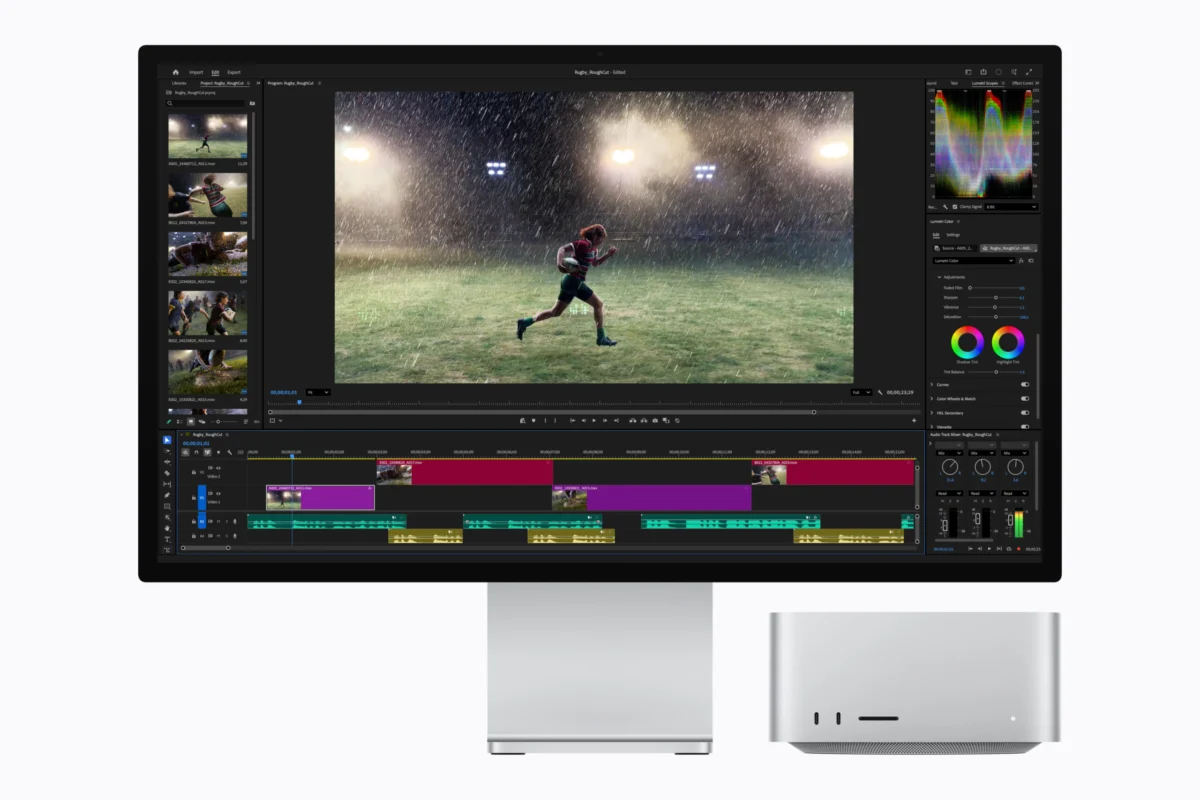
Apple has officially ushered in a new epoch for desktop computing, unveiling its latest iteration of the Mac Mini and Mac Studio. With a laser-focused commitment to on-device artificial intelligence, these machines are not merely incremental upgrades; they represent what the company calls an "extraordinary leap" in performance and AI compute capabilities. By integrating the cutting-edge M6 chip and the record-breaking M5 Ultra, Apple is positioning its professional desktop lineup as the definitive hardware for developers, creative professionals, and data scientists tasked with managing complex, agentic AI workflows.
The Core Transformation: A New Standard for Performance
At the heart of this announcement is a significant shift in Apple’s silicon architecture. Sri Santhanam, Apple’s vice president of the Silicon Engineering Group, underscored the gravity of the release, noting that these chips represent the most advanced engineering the company has ever produced for the desktop environment.
The M6 chip, manufactured on a sophisticated 2-nanometer process, serves as the engine for the new Mac Mini. This architecture allows for unprecedented density, enabling a 12-core GPU—two cores more than its predecessor—while ensuring that every core is equipped with a dedicated neural accelerator. The resulting efficiency gains are staggering: Apple reports a near 30% increase in GPU performance for AI-heavy tasks compared to the M5, and a remarkable eight-fold improvement over the original M1.
A Chronology of the Apple Silicon Evolution
To understand the significance of this launch, one must view it within the broader timeline of Apple’s transition away from Intel-based architecture.
- 2020: The M1 chip is introduced, fundamentally changing the landscape of consumer computing by proving that high-performance, low-power ARM-based silicon could outperform traditional x86 desktop chips.
- 2022-2024: Apple iterates rapidly through the M2, M3, and M4 generations, refining the "Unified Memory" architecture and cementing its dominance in performance-per-watt metrics.
- August 2026: The release of the M6 and M5 Ultra signals a departure from general-purpose performance toward specialized, high-compute AI functionality. This period marks the era of "local-first" AI, where data privacy and speed are prioritized by keeping models on-device rather than relying on cloud-based processing.
Under the Hood: Technical Specifications and Hardware Prowess
The hardware specifications released by Apple reveal a design philosophy centered on bandwidth and memory capacity—the two critical bottlenecks for modern Large Language Model (LLM) training and inference.
The M6 Mac Mini
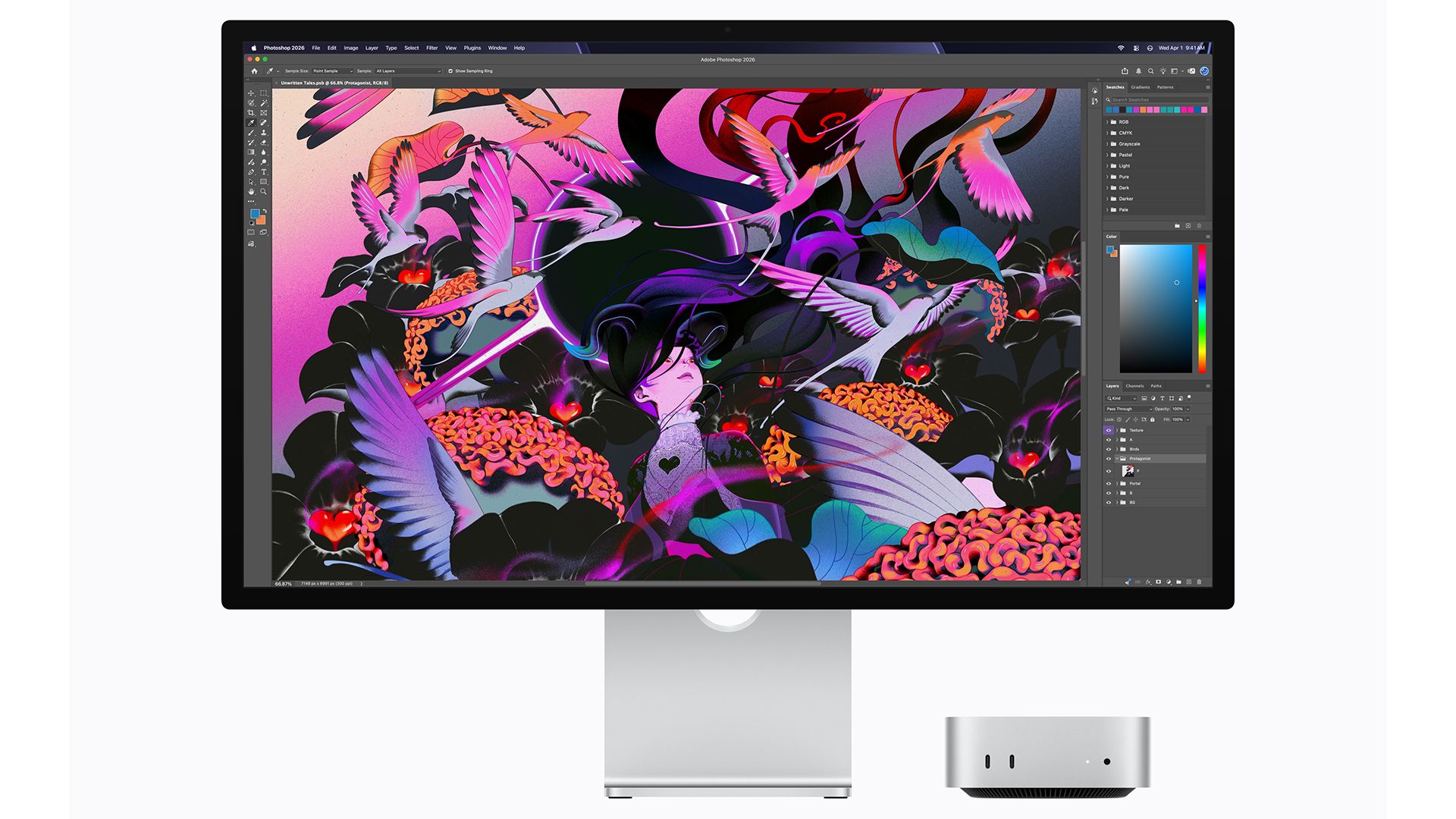
The entry-level powerhouse now supports up to 32GB of unified memory, featuring a memory bandwidth of 170GB/s—a 10% increase over the previous generation. This is specifically tuned to allow developers to load LLMs directly into memory for smoother, more efficient testing. The CPU architecture utilizes a tri-tiered approach: "super cores" for demanding single-threaded tasks, "performance cores" for parallelized workloads, and "efficiency cores" for background operations, maintaining the industry-leading performance-per-watt that Apple silicon is known for.
The M5 Pro Mac Mini
For those requiring more muscle, the M5 Pro configuration offers an 18-core CPU and a 20-core GPU. Targeted at VFX artists, 3D designers, and game developers, this machine supports up to 64GB of unified memory and a robust 307GB/s of bandwidth. It is designed to be an "always-on" desktop for AI agents, operating silently and efficiently even under sustained, heavy compute loads.
The M5 Ultra Mac Studio
The crown jewel of the announcement is the Mac Studio with the M5 Ultra chip. With up to 80 GPU cores—each featuring an integrated neural accelerator—this machine delivers 4.5 times the performance of the M3 Ultra and over six times that of the M1 Ultra. It incorporates second-generation Dynamic Caching, hardware-accelerated mesh shading, and third-generation ray tracing. With an astonishing 512GB of unified memory and 1.2TB/s of bandwidth, the M5 Ultra is purpose-built to handle massive datasets that were previously restricted to server-grade infrastructure.
Official Responses and Strategic Rationale
Apple’s official commentary highlights that this transition is a direct response to the needs of the modern developer. The company’s suite of development tools—including Core AI, Core ML, and Xcode—have been updated to "tap directly" into these chips.
"Apple’s developer tools and frameworks automatically optimize performance across the CPU, GPU, and Neural Engine," the company stated in its official press release. "This gives developers the ability to use Apple Foundation Models, App Intents, or their own proprietary AI models to build and run powerful AI workloads entirely on-device."

The focus on "local-first" AI is not just a marketing slogan; it is a strategic business pivot. By allowing developers to run and fine-tune models locally, Apple is removing the latency and privacy concerns associated with sending proprietary data to cloud providers like OpenAI or Google.
Implications for the Industry
The release of these machines sends a clear signal to both the high-end workstation market and the emerging "Mini PC" sector.
Challenging the Mini PC Landscape
The Mac Mini has long been considered the benchmark for small-form-factor computing. However, in recent years, companies like Geekom and Beelink have made significant inroads by offering high-performance, compact desktops at competitive prices. While these companies have successfully captured a segment of the market that values modularity and cost-efficiency, the release of the M6-powered Mac Mini creates a wide gap in capability. The integration of specialized neural hardware and the unified memory architecture gives Apple a distinct advantage that non-specialized chips struggle to replicate.
Empowering the Developer Ecosystem
The ability to run LLMs with hundreds of billions of parameters on a desktop device is a paradigm shift. For developers, this means faster iteration cycles, reduced operational costs, and greater control over the security of their models. The "agentic" workflow—where AI agents perform autonomous tasks on a machine—becomes a viable desktop reality rather than a futuristic concept.
Pricing and Availability
The cost of entry into this new ecosystem varies significantly based on the performance tier required:
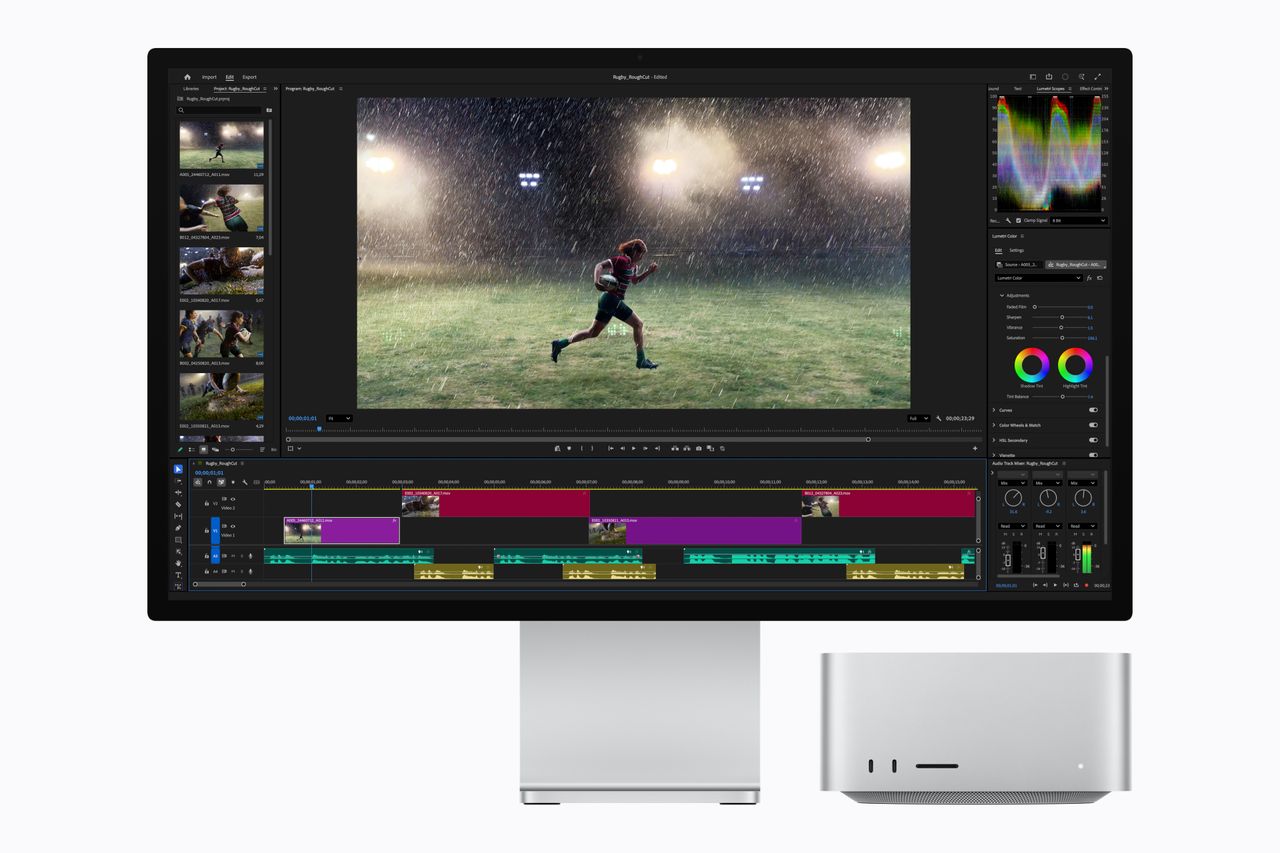
- Mac Mini (M6): Starts at $899 ($799 for education).
- Mac Mini (M5 Pro): Starts at $1,699 ($1,599 for education).
- Mac Studio (M5 Ultra): Starts at $5,499 ($5,099 for education).
Pre-orders for these devices commenced on August 25, 2026. While the price point for the Mac Studio is significant, it is positioned as a direct competitor to high-end enterprise workstations, suggesting that Apple is targeting creative studios and AI research labs that would otherwise spend significantly more on server-side hardware.
Conclusion: The Future of Desktop Computing
As the industry continues to grapple with the demands of artificial intelligence, Apple’s strategy has become clear: provide the most efficient, integrated hardware possible to make the desktop the center of AI innovation. By combining the 2-nanometer M6 chip with massive memory bandwidth and a mature software ecosystem, Apple is effectively future-proofing its professional lineup.
Whether the "adorable" form factor of the Mac Mini can maintain its charm while delivering this level of raw, industrial-grade power remains to be seen, but one thing is certain: the bar for professional desktop computing has been raised significantly. For developers and creators, the era of on-device, high-compute AI has arrived, and it is housed in the most compact machines Apple has ever produced.
About the Author