By Maria Rachal
Published: August 25, 2026
BENTONVILLE, AR – Walmart, the world’s largest retailer, has confirmed that it failed to achieve several of its ambitious 2025 private-label packaging sustainability targets, as detailed in its recently released FY2026 ESG Report. The report, covering activities from February 1, 2025, to January 31, 2026, attributes the shortfall to a multifaceted array of "trade-offs" encompassing product protection, food safety, cost, regulatory complexities, and the persistent challenge of securing sufficient recycled material availability.
While the retail giant acknowledged significant progress in specific areas, particularly in integrating post-consumer recycled (PCR) content into its plastic packaging, the overall trajectory for virgin plastic reduction and the widespread adoption of recyclable, reusable, or industrially compostable packaging fell short of the company’s stated goals. This revelation comes as a critical juncture for Walmart, which has previously signaled the inherent difficulties in meeting these targets and has since withdrawn from prominent industry initiatives like the U.S. Plastics Pact. The company maintains its commitment to advancing its packaging strategies through continuous measurement and reporting, emphasizing a focus on design optimization, waste reduction, and increased use of sustainable materials.
The transparency in Walmart’s reporting underscores the immense challenges faced by global corporations in decarbonizing their supply chains and transitioning to a circular economy, especially when balancing environmental aspirations with operational realities and consumer expectations. The company’s detailed analysis provides a stark reminder of the intricate interplay between economic viability, regulatory frameworks, technological limitations, and the fundamental need to ensure product integrity and consumer safety within a vast retail ecosystem.
Main Facts: Walmart’s Sustainability Shortfall
Walmart’s FY2026 ESG Report, published on July 29, 2026, officially confirmed the retailer’s inability to meet several critical private-label packaging sustainability targets set for 2025. These targets, which aimed to revolutionize the environmental footprint of its vast private brand portfolio, included commitments across recyclability, virgin plastic reduction, and the incorporation of post-consumer recycled (PCR) content.
Specifically, the report revealed the following outcomes against the 2025 targets for global private brand packaging:
- 100% Recyclable, Reusable, or Industrially Compostable Packaging: The target was missed, with the percentage of compliant packaging actually decreasing over the reporting period. From 68.2% in FY2024, it dipped to 66.1% in FY2025, and further to 64.3% in FY2026. This downward trend highlights the complexities involved in maintaining and expanding sustainable packaging solutions across a dynamic product range.
- 15% Reduction in Virgin Plastic (vs. FY2021 baseline): Instead of a reduction, Walmart reported an increase in virgin plastic use. The figures show an 8.17% increase in FY2024, followed by a 4.11% increase in FY2025, and a 4.12% increase in FY2026. This indicates a significant hurdle in curbing the reliance on new plastics, despite the company’s stated efforts. Walmart did, however, note a "lower virgin plastic packaging intensity," suggesting that while absolute virgin plastic use increased, it did so at a slower rate relative to net sales growth.
- 17% of Plastic Packaging Made from PCR (Global): While progress was made, the 17% target was not met. The percentage of PCR content grew from 7.4% in FY2024 to 7.6% in FY2025, reaching 10.7% in FY2026. This demonstrates a positive trajectory but underscores the persistent challenges in scaling up recycled content.
- 20% of Plastic Packaging Made from PCR (North America): Similar to the global target, the North American goal was also missed, though with consistent improvement. PCR content in North American private brand plastic packaging increased from 7.3% in FY2024 to 8.2% in FY2025, and further to 12% in FY2026.
The overarching reason cited for these shortfalls was a series of unavoidable "trade-offs" that dictated the feasibility and implementation of sustainable packaging initiatives. These included the critical imperatives of product protection and food safety, the economic realities of cost, the intricacies of navigating diverse regulatory requirements, the volatile availability of high-quality recycled materials, the complexities of managing evolving supplier portfolios, and the limitations posed by packaging formats that lack widespread recycling infrastructure.
Chronology of Walmart’s Packaging Commitments and Challenges
Walmart’s journey towards sustainable packaging is rooted in a broader corporate commitment to environmental stewardship that intensified in the mid-2010s. Like many global corporations, the retailer began setting ambitious targets in response to mounting public concern over plastic pollution, evolving consumer preferences for eco-friendly products, and increasing pressure from investors focused on Environmental, Social, and Governance (ESG) factors.
Setting the Stage (Pre-2020):
The initial 2025 packaging goals, while not explicitly detailed in the provided excerpt, were likely established around 2018-2020, a period when many large brands and retailers announced similar commitments under the umbrella of circular economy principles. These targets aimed to leverage Walmart’s immense purchasing power to drive systemic change within the packaging industry, influencing its vast network of suppliers and partners. The ambition was clear: to move away from linear "take-make-dispose" models towards a more sustainable approach for its private label brands, which include household names like Great Value and Sam’s Choice.
Anticipating Challenges (Early 2020s):
As the 2025 deadline approached, the intricate realities of transforming a global supply chain began to surface. The original article subtly hints at this, stating, "As Walmart had anticipated, it did not meet certain 2025 private-label packaging sustainability targets." This suggests that internal assessments and preliminary reports prior to the FY2026 ESG Report had already flagged the likelihood of missing these aggressive goals. Factors such as the COVID-19 pandemic, which disrupted global supply chains and shifted consumer purchasing habits, likely exacerbated existing challenges related to material sourcing and investment in new packaging technologies.
The FY2026 Report and Confirmation (July 2026):
The release of the FY2026 ESG Report on July 29, 2026, served as the official confirmation of these anticipated shortfalls. This report is particularly significant as its reporting period (February 1, 2025, to January 31, 2026) directly encompasses the critical 2025 target year, providing definitive data on the outcomes. By this point, Walmart had a full year’s data past its target deadline to analyze and present.

Evolving Strategies and Recent Initiatives (2026):
Despite missing the 2025 targets, Walmart has not abandoned its sustainability efforts. The report highlights ongoing initiatives, demonstrating a continuous, albeit recalibrated, commitment. One notable example cited is the rollout of label-free packaging for Great Value 40-pack bottled water. This initiative, launched in three distribution centers in 2026 with plans for broader scaling, is a direct response to the goals of reducing plastic use and enhancing recyclability. By eliminating labels, Walmart not only reduces material consumption but also simplifies the recycling process for consumers and facilities, as labels can often contaminate plastic recycling streams.
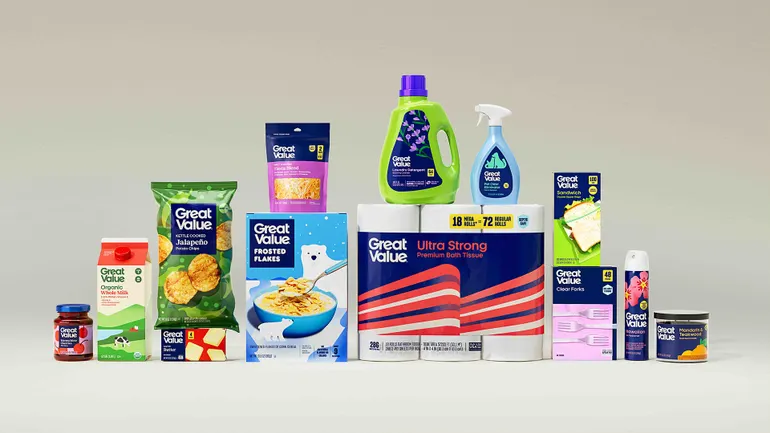
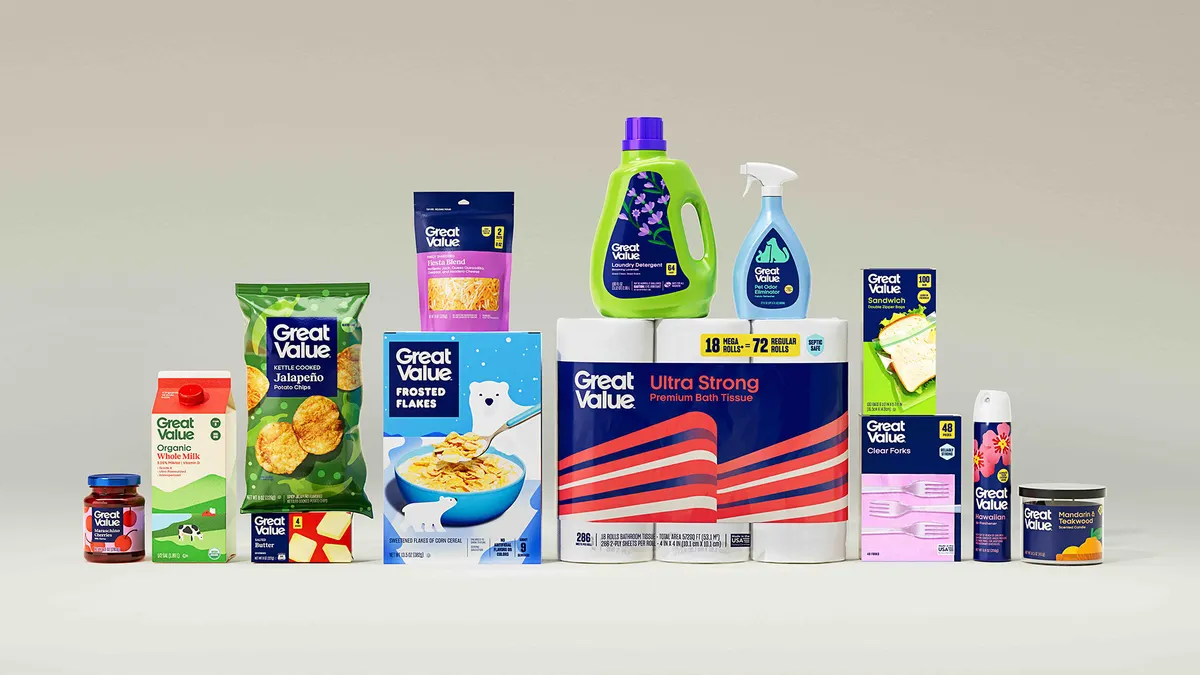
Furthermore, earlier in 2026, Walmart undertook a broader redesign of its Great Value private brand packaging. While the report indicates that the company "struggled to meet certain private brand packaging recyclability and recycled content targets pegged to 2025," this redesign effort underscores an ongoing focus on "design for recycling, eliminating unnecessary packaging and bolstering PCR." These initiatives, occurring in the immediate aftermath of the 2025 target year, represent a strategic pivot, learning from past challenges and implementing more focused, achievable changes.
Withdrawal from Industry Pacts:
Adding to the chronological context of Walmart’s sustainability journey is its notable withdrawal from major industry collaborations. Walmart is not currently listed as a signatory to the Ellen MacArthur Foundation’s 2030 Plastics Agenda for Business, a globally recognized initiative aimed at accelerating the transition to a circular economy for plastics. More significantly, Walmart previously exited the U.S. Plastics Pact, a collaborative group working towards specific plastic waste reduction and recycling goals in North America. These withdrawals, which likely occurred in the years leading up to the FY2026 report, suggest a shift in strategy from collective industry action to a more internally driven approach, potentially due to the difficulty in aligning diverse corporate interests and achieving common targets within the prescribed frameworks. This move could also reflect a preference for setting and pursuing its own, more tailored sustainability agenda.
Supporting Data: A Deeper Dive into the Metrics and Trade-offs
The raw numbers presented in Walmart’s FY2026 ESG Report paint a complex picture, revealing not just missed targets but also the underlying systemic challenges inherent in transforming a global retail supply chain. A closer examination of each metric and the "trade-offs" cited provides critical insights into these difficulties.
Analysis of Packaging Metrics:
-
100% Recyclable, Reusable, or Industrially Compostable:
- The Decline: Perhaps the most striking outcome is the decrease in the percentage of private brand packaging deemed recyclable, reusable, or industrially compostable, from 68.2% in FY2024 down to 64.3% in FY2026. This decline is counter-intuitive to the stated goals and warrants deeper analysis. Possible explanations include:
- Portfolio Evolution: Walmart’s vast private label portfolio is constantly evolving. The introduction of new products or changes in existing product formulations might necessitate packaging materials or formats that are not yet widely recyclable or compostable at scale.
- Shifting Definitions/Assessments: The criteria for what constitutes "recyclable" or "compostable" can evolve as recycling infrastructure and market capabilities change. What was considered compliant in FY2024 might no longer meet updated, more stringent definitions in FY2026.
- Supplier Challenges: With thousands of suppliers globally, ensuring universal adherence to packaging guidelines, especially for smaller or international suppliers, can be immensely challenging. Suppliers might introduce non-compliant packaging due to cost pressures, material availability, or differing regional standards.
- Implication: This metric highlights that achieving and maintaining high levels of recyclability is not a static goal but a dynamic process that requires continuous monitoring, innovation, and adaptation across the entire product lifecycle.
- The Decline: Perhaps the most striking outcome is the decrease in the percentage of private brand packaging deemed recyclable, reusable, or industrially compostable, from 68.2% in FY2024 down to 64.3% in FY2026. This decline is counter-intuitive to the stated goals and warrants deeper analysis. Possible explanations include:
-
15% Reduction in Virgin Plastic (vs. FY2021 baseline):

- The Increase: The reported increase in virgin plastic use (up 4.12% by FY2026) is a direct failure to meet the reduction target. This suggests that despite efforts, the overall volume of plastic required to package Walmart’s private brands grew faster than any reduction initiatives could offset.
- "Virgin Plastic Packaging Intensity": Walmart’s clarification that it "continued to lower virgin plastic packaging intensity" (weight per net sales dollar) is an important nuance. This means that while the absolute amount of virgin plastic increased, it did so at a slower rate than the company’s sales growth. In simpler terms, for every dollar of sales, less virgin plastic was used compared to previous years. This indicates some efficiency gains but underscores that absolute reduction is a much harder target, especially for a growing business.
- Drivers of Increase: Factors contributing to this increase likely include:
- Sales Growth: Increased product sales naturally lead to increased packaging requirements.
- Product Assortment Shifts: Changes in product mix, perhaps towards categories that are heavily reliant on plastic packaging (e.g., prepared foods, health and beauty products).
- Cost/Performance: In many cases, virgin plastic remains the most cost-effective and functionally superior material for product protection and shelf life.
-
PCR Content (Global and North America):
- Progress but Missed Targets: The consistent increase in PCR content (to 10.7% globally and 12% in North America) demonstrates tangible progress. This suggests dedicated efforts in sourcing and integrating recycled materials, especially in regions with more developed recycling infrastructures like North America.
- Challenges of Scale: Despite the progress, missing the 17% and 20% targets highlights the significant hurdles in scaling up PCR use. These include:
- Availability and Quality: The supply of high-quality, food-grade PCR material is often limited and subject to market volatility. Contamination, color variations, and inconsistent mechanical properties can make it difficult to use in certain applications, especially for food contact.
- Cost: PCR often comes at a premium compared to virgin plastic, adding to production costs.
- Regulatory Hurdles: Specific regulations govern the use of recycled content, particularly for food packaging, which can limit options and increase compliance costs.
Unpacking the "Trade-offs":
Walmart explicitly lists several critical "trade-offs" that influenced its ability to meet packaging goals. These are not mere excuses but fundamental operational constraints that many large retailers face.
- Product Protection: Packaging’s primary role is to protect goods from damage, spoilage, and contamination throughout the supply chain and on the shelf. Lightweight, innovative sustainable packaging solutions sometimes struggle to match the protective qualities of conventional materials, leading to increased product damage and waste.
- Food Safety: For food products, packaging is a critical barrier against pathogens, moisture, and oxygen, directly impacting shelf life and consumer health. Many sustainable materials, especially those with high PCR content or novel bioplastics, may not yet meet the rigorous food-grade safety standards or performance requirements of traditional plastics.
- Cost: Sustainable packaging materials, particularly those made from PCR or innovative compostable alternatives, often carry a higher price tag than their virgin counterparts. For a retailer like Walmart, built on a low-cost model, absorbing these increased costs or passing them on to consumers presents a significant economic challenge and could impact competitiveness.
- Regulatory Requirements: Walmart operates globally, meaning it must contend with a patchwork of diverse and often conflicting packaging regulations across different countries, states, and even municipalities. This complexity makes it incredibly difficult to implement standardized sustainable packaging solutions across its entire private brand portfolio.
- Recycled Material Availability: The market for high-quality recycled materials is still developing and can be highly volatile. Supply shortages, inconsistent quality, and insufficient processing infrastructure limit the amount and type of PCR that can be reliably sourced, especially for demanding applications like food-grade packaging.
- Evolving Supplier Portfolios: Walmart works with an enormous number of suppliers, each with their own operational capabilities, material sourcing networks, and cost structures. Influencing and coordinating packaging changes across such a diverse and constantly evolving supplier base is a monumental logistical and managerial undertaking.
- Changes in Packaging Formats Not Yet Recyclable at Scale: Innovation in sustainable packaging often outpaces the development of recycling infrastructure. Novel materials, multi-layer films, or specific flexible packaging formats may be technically recyclable but lack the widespread collection, sorting, and reprocessing capabilities needed for them to be truly "recyclable at scale" in many regions. This creates a disconnect between design intent and real-world recyclability.
These detailed challenges underscore that packaging sustainability is not a simple switch but a complex systemic transformation requiring coordinated efforts across the entire value chain, from material science and manufacturing to consumer behavior and waste management infrastructure.
Official Responses and Future Commitments
In the wake of its 2025 sustainability targets falling short, Walmart has responded with a posture of transparency and continued commitment, albeit with a clear recognition of the formidable challenges ahead. The FY2026 ESG Report serves as the primary official communication on these outcomes, providing both the data and the company’s perspective.
Acknowledgement and Progress:
The report explicitly states, "Although we did not achieve our 2025 packaging goals, we continue to make progress in some areas, for example, increasing the use of PCR content in private-brand plastic packaging." This statement highlights a nuanced reality: while headline targets were missed, underlying efforts yielded positive results in specific domains. The growth in PCR integration, as detailed earlier, is a testament to this incremental progress. This balanced acknowledgment is characteristic of modern ESG reporting, where companies are increasingly expected to report failures alongside successes.
Guiding Principles for Packaging Optimization:
Despite the setbacks, Walmart reiterated its strategic approach to packaging design, outlining three main guiding principles for optimizing its packaging. While the specific principles were not explicitly detailed in the provided excerpt, typical principles for packaging optimization in sustainability reports generally include:
- Reduce: Minimizing the overall amount of packaging material used.
- Reuse: Designing packaging for multiple uses or facilitating consumer reuse.
- Recycle: Ensuring packaging is designed for recyclability and contains recycled content, aligning with circular economy principles.
It is highly probable that Walmart’s principles revolve around these foundational pillars, emphasizing a hierarchy of solutions starting with material reduction.
Concrete Initiatives as Proof of Ongoing Effort:
Walmart’s commitment is not just articulated in principles but also demonstrated through ongoing projects. The example of rolling out label-free packaging for Great Value 40-pack bottled water in three distribution centers in 2026, with plans for scaling, serves as a tangible illustration. This initiative directly addresses two key sustainability goals: reducing plastic use (by eliminating labels) and improving recyclability (by simplifying the material stream). Such projects indicate a pragmatic approach, focusing on specific, actionable improvements within its vast product lines.
A Continued Commitment to Measurement and Advancement:
Concluding its remarks on packaging, Walmart affirmed, "We will continue measuring, reporting, and advancing our packaging strategies." This statement signals a sustained, long-term commitment rather than a retreat from its sustainability agenda. It implies an ongoing process of data collection, performance evaluation, and strategic adaptation, suggesting that while the 2025 targets may have been missed, the underlying objectives remain integral to the company’s operational framework. This continuous improvement model is crucial for navigating the rapidly evolving landscape of sustainable materials, recycling technologies, and regulatory pressures.
Strategic Shift: Internal Focus vs. Industry Pacts:
The decision to not be a signatory to the Ellen MacArthur Foundation’s 2030 Plastics Agenda and to have previously exited the U.S. Plastics Pact is also a significant aspect of Walmart’s official stance. This move suggests a strategic preference for an internally driven sustainability agenda over participation in broad, multi-stakeholder initiatives. While collective action can be powerful, Walmart may have found that the constraints and compromises inherent in large-scale pacts did not align with the unique complexities and operational realities of its business model. By opting out, Walmart gains greater flexibility to tailor its strategies and timelines, potentially allowing for more agile responses to its specific challenges, even if it means foregoing the reputational benefits of being part of a larger industry coalition. This independent approach places a greater onus on the company to demonstrate its progress and accountability through its own reporting mechanisms.
Implications of Walmart’s Missed Targets
Walmart’s acknowledgment of missing its 2025 packaging sustainability targets carries significant implications, not only for the retail giant itself but also for the broader industry, consumers, and the ongoing global efforts toward a circular economy.
Implications for Walmart:
- Reputational Scrutiny: Despite the transparency in reporting, missing key sustainability targets can invite criticism from environmental advocacy groups, ethical investors, and consumers increasingly attuned to corporate responsibility. While Walmart’s commitment to continued efforts may mitigate some backlash, the headline "missed targets" can cast a shadow on its overall ESG performance.
- Operational Realignment: The detailed "trade-offs" cited by Walmart (food safety, cost, material availability, regulatory hurdles) will necessitate a deeper operational realignment. This means greater investment in R&D for new packaging solutions, enhanced collaboration with suppliers on material innovation, and potentially a re-evaluation of product portfolios to prioritize those compatible with sustainable packaging.
- Financial Impact: Achieving sustainability goals often involves significant capital expenditure. The challenges encountered suggest that future investments in sustainable packaging, supply chain modifications, and material sourcing will need to be carefully strategized to balance environmental impact with financial viability. The cost factor, explicitly mentioned, will remain a critical constraint.
- Strategic Review of Targets: Walmart will likely need to conduct a comprehensive review of its future sustainability targets, potentially recalibrating them to be more realistic and achievable given the complexities highlighted. This might involve setting interim milestones, refining measurement methodologies, or shifting focus to areas where more immediate progress is feasible.
Implications for the Retail Industry and Brands:
- A Reality Check: Walmart’s experience serves as a stark reality check for the entire retail sector and consumer goods industry. If a company with Walmart’s scale, resources, and influence struggles to meet such targets, it underscores the systemic nature of the challenge. This may lead other brands to reassess their own ambitious sustainability commitments, potentially opting for more conservative or phased approaches.
- Shared Challenges: The "trade-offs" cited by Walmart are universal across the industry. Issues like limited PCR availability, cost pressures, and the lack of scalable recycling infrastructure affect all brands. This could spur greater industry-wide collaboration on infrastructure development, standardized definitions, and joint R&D to overcome shared bottlenecks.
- Focus on Transparency: Walmart’s transparent reporting, even of failures, sets a precedent. Other companies might face increased pressure to be equally candid about their progress and challenges, fostering a more honest dialogue about the difficulties of sustainability transitions.
- Innovation Imperative: The struggle to reduce virgin plastic and increase recyclability will further intensify the demand for innovative packaging solutions. This could drive investment in novel materials, advanced recycling technologies, and refill/reuse models across the industry.
Implications for Consumers:
- Trust and Perception: Consumers, especially those prioritizing sustainability, may view these missed targets with disappointment. This could influence their purchasing decisions, potentially driving them towards brands perceived as more successful in their environmental commitments.
- Cost vs. Sustainability: The mention of "cost" as a trade-off implies that sustainable packaging might sometimes lead to higher prices. Consumers may face choices between more affordable, conventionally packaged products and more expensive, sustainably packaged alternatives, influencing market dynamics.
- Education and Awareness: The complexities highlighted by Walmart underscore the need for greater consumer education about what constitutes truly sustainable packaging, the limitations of current recycling systems, and the shared responsibility in driving change.
Implications for the Circular Economy Movement:
- Systemic Barriers: Walmart’s report highlights that achieving a circular economy for packaging is not solely a corporate responsibility but requires fundamental shifts in infrastructure, policy, and material science. The "non-scalable packaging formats" and "recycled material availability" points underscore the need for significant public and private investment in recycling and reuse infrastructure.
- Policy Pressure: The challenges related to "regulatory requirements" and "recycled material availability" could intensify calls for more harmonized and supportive government policies, such as Extended Producer Responsibility (EPR) schemes, mandates for recycled content, and investment in recycling technologies.
- Recalibration of Expectations: The global movement towards a circular economy may need to recalibrate its expectations regarding the pace of change, particularly for large, complex industries. While ambition is necessary, the practical realities of transitioning away from deeply entrenched linear systems are proving more arduous than initially anticipated. This doesn’t diminish the goal but emphasizes the marathon, not sprint, nature of the journey.
In conclusion, Walmart’s experience serves as a crucial data point in the ongoing global effort to make packaging more sustainable. It underscores that while corporate commitments are vital, the path to a truly circular economy is fraught with economic, technological, and logistical hurdles that require sustained effort, transparent reporting, and collaborative solutions across all stakeholders. The retailer’s continued commitment, even after missing its initial targets, suggests an evolution towards a more pragmatic, yet persistent, approach to environmental stewardship.
About the Author