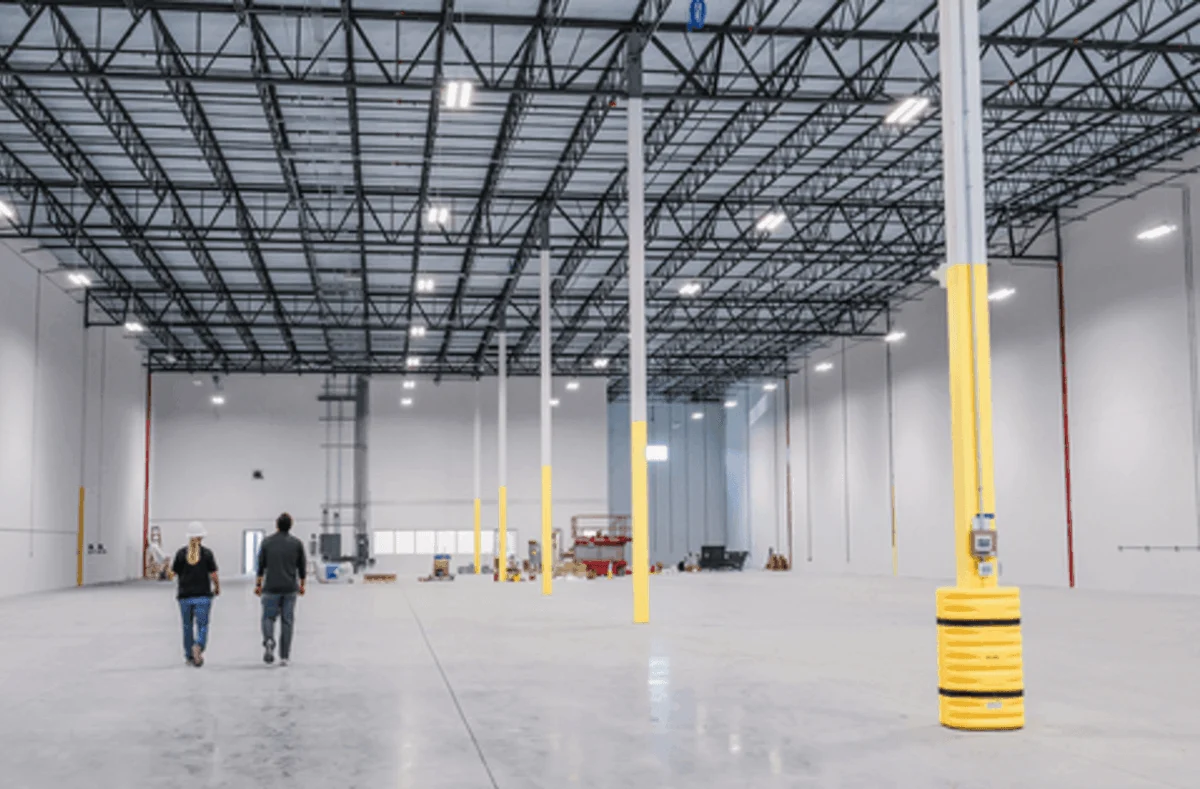
In an era where supply chain resilience and technological integration define market leadership, the Kenco Group—a prominent third-party logistics (3PL) provider—has announced a significant escalation in its research and development capabilities. On Tuesday, the company unveiled plans to launch an expansive 30,000-square-foot Innovation Lab in its headquarters city of Chattanooga, Tennessee. This new facility, scheduled to open its doors on September 10, marks a substantial tripling of the company’s previous 10,000-square-foot footprint, signaling a new chapter for the firm’s commitment to logistics automation and supply chain modernization.
The Strategic Shift: Moving from Concept to Reality
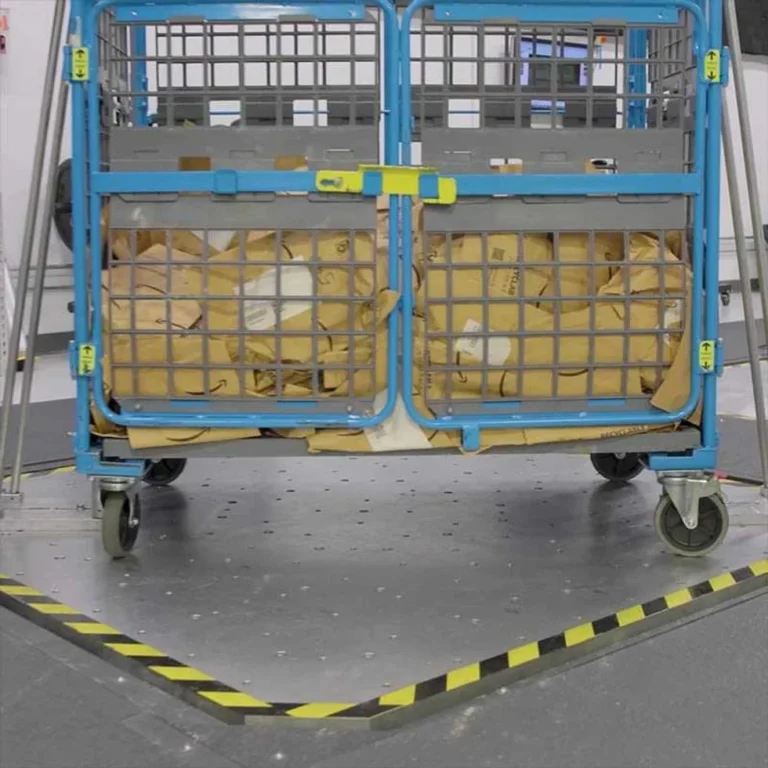
The transition from a 10,000-square-foot pilot facility to a 30,000-square-foot powerhouse is not merely a change in geography or size; it represents a fundamental shift in how Kenco approaches the challenges of modern warehousing. The new lab is designed as a "living laboratory," engineered to mirror the precise, high-pressure conditions of modern industrial warehouses.
By creating an environment that simulates real-world operations, Kenco aims to bridge the gap between theoretical software development and physical warehouse execution. This facility will serve as a sandbox for testing, benchmarking, and validating emerging supply chain technologies—ranging from autonomous mobile robots (AMRs) and sophisticated warehouse management systems (WMS) to AI-driven predictive analytics tools.
Chronology: The Evolution of Kenco’s Innovation Journey
Kenco’s focus on innovation is not a recent phenomenon. To understand the significance of this expansion, it is helpful to look at the timeline of the company’s technological evolution:
- Foundation Years: Long before the rise of Industry 4.0, Kenco established its reputation as a customer-centric 3PL, focusing on process improvement and foundational logistics excellence.
- The Initial Lab Launch: Several years ago, Kenco recognized that the rapid pace of logistics technology—specifically robotics and automation—required a dedicated physical space for testing. The launch of the original 10,000-square-foot facility was a pioneering move for a 3PL of its size, allowing the company to evaluate vendor claims objectively.
- The Maturation Phase (2020–2024): As e-commerce demand surged and the labor market tightened, the demand for automation increased. The original lab became a hub for proof-of-concept projects, helping Kenco navigate the "hype cycle" of logistics tech.
- The September 2024 Expansion: The announcement of the 30,000-square-foot facility marks the transition from "experimentation" to "industrial-scale simulation." This expansion is designed to accommodate larger, more complex robotic systems that were previously too cumbersome to test in a smaller environment.
Supporting Data: Why Scale Matters in Logistics Tech
The logistics industry is currently facing a "paradox of choice." There are thousands of startups and established OEMs offering various automation solutions, but for a 3PL provider, the risk of implementing unproven technology is immense. Downtime, integration failure, or under-performance can cost millions of dollars.
Kenco’s decision to triple its footprint is backed by the necessity of Objective Data Acquisition. The primary function of the lab is to act as a "vendor-neutral" zone. In an industry where vendors often present "best-case scenario" performance data, the Innovation Lab allows Kenco to collect its own metrics:
- Throughput Benchmarking: Measuring the true picks-per-hour of a robotic system under variable lighting, floor conditions, and packaging types.
- Integration Stress-Testing: Evaluating how easily a new piece of hardware communicates with existing WMS and ERP software architectures.
- Human-Machine Interaction (HMI) Analysis: Assessing how warehouse associates interact with automated systems, ensuring that safety and ergonomics remain at the forefront of the technological transition.
By conducting these tests in a controlled environment, Kenco effectively "de-risks" the deployment of new technologies for their clients. This allows customers to explore the benefits of advanced automation without the prohibitive costs of direct capital investment in unproven systems.
Official Responses and Strategic Vision
Ainsley Williams, Vice President of Automation & Innovation at Kenco, has been the primary architect of this expansion. Her perspective emphasizes that the lab is not just a tool for Kenco, but a collaborative ecosystem.
"The Innovation Lab has long stood as the convergence point for leading technologies and real-world applications, helping both manufacturers and customers identify and realize what’s possible," Williams stated in the company’s recent announcement.

The strategy behind the expansion rests on two pillars:
- OEM Collaboration: By providing a larger, more realistic environment, Kenco invites original equipment manufacturers (OEMs) to test their products in a live-fire scenario. This creates a feedback loop where manufacturers refine their products based on Kenco’s operational insights, while Kenco gains early access to cutting-edge solutions.
- Community Integration: Chattanooga has increasingly become a technology hub in the Southeast. The expanded lab will serve as a venue for broader collaboration with the regional tech community, fostering an environment where software engineers, robotics experts, and logistics managers can cross-pollinate ideas.
Implications for the Logistics Industry
The opening of this facility has several implications for the broader 3PL landscape:
1. The Rise of the "Consultative 3PL"
Historically, 3PL providers were judged on their ability to move goods from point A to point B efficiently. Today, they are increasingly being judged on their ability to act as technology consultants. Kenco’s investment signals that the future of 3PL is not just about labor, but about intellectual property and the ability to integrate complex, automated ecosystems.
2. Standardizing Vendor-Neutrality
In the current market, many automation companies only show their tech in a showroom or a highly curated demo video. Kenco’s vendor-neutral stance provides a necessary "truth-check" for the industry. When a 3PL can say, "We have tested this robot in our lab and it works under these specific conditions," it provides a level of assurance that few other providers can offer.
3. Addressing the Labor Crisis
Automation is no longer a luxury; it is a response to the chronic shortage of warehouse labor. By expanding its lab, Kenco is essentially creating a training and development pipeline. The insights gained in the lab regarding how to effectively deploy cobots (collaborative robots) alongside human workers will be vital in helping the industry manage labor shortages while maintaining, or even increasing, service levels.
Looking Ahead: The Future of the Chattanooga Hub
As September 10 approaches, the industry’s eyes will be on Chattanooga. The facility is expected to host tours for key stakeholders, potential clients, and technology partners, solidifying the city’s reputation as a leader in industrial logistics innovation.
However, the 30,000-square-foot facility is not just a physical structure; it is a manifestation of a mindset. The logistics sector is currently undergoing a "technological reset." The days of relying solely on manual labor or basic conveyer systems are ending. In their place is a complex, data-driven environment where machines and humans must work in harmony.
Kenco’s investment proves that they are not content to wait for the future to arrive—they are building it. By creating a space where the risks of innovation are borne by the lab rather than the client, Kenco is setting a new standard for what a modern 3PL provider should look like.
Whether it is through testing the next generation of AI-enabled inventory management or perfecting the deployment of high-speed sorting robots, the new Chattanooga Innovation Lab will undoubtedly serve as a critical crucible for the supply chain solutions of the next decade. As the facility opens its doors, it invites not just technology, but a new way of thinking about how goods are stored, processed, and delivered in an increasingly complex global economy.
About the Author