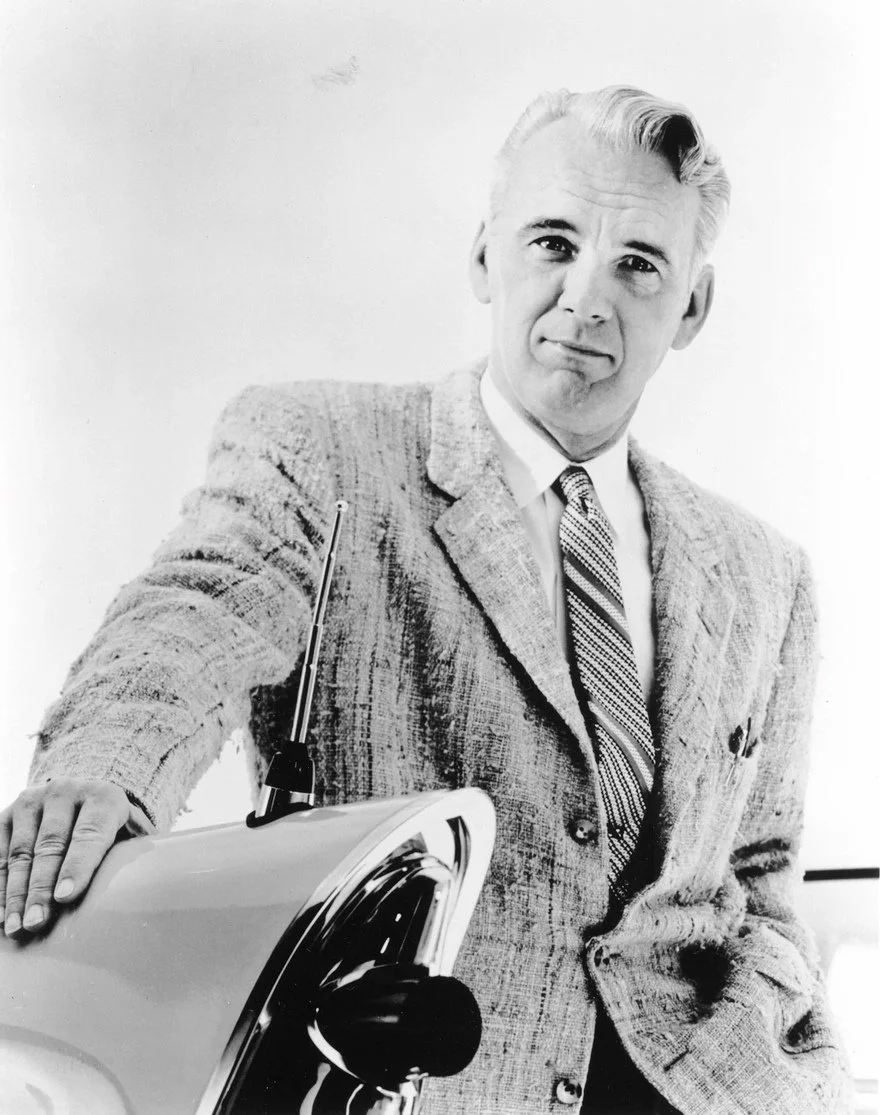
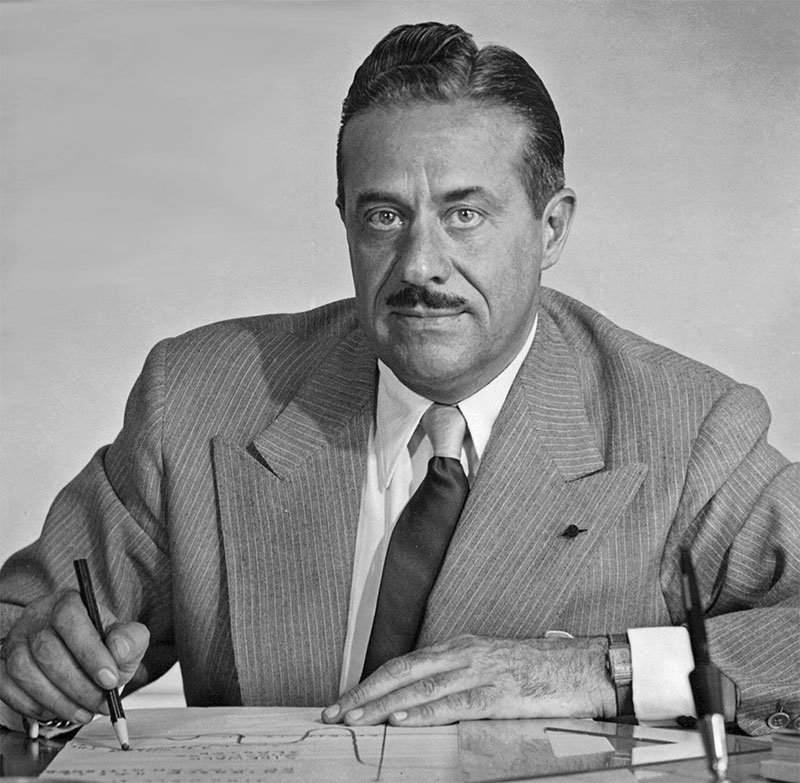
In the annals of industrial design, few rivalries possess the narrative weight and professional toxicity of the relationship between Raymond Loewy—the man who arguably invented the profession of industrial design—and Virgil Exner, the visionary stylist who would eventually transform Chrysler into an automotive powerhouse.
The story of their falling out is more than a petty office dispute; it is a microcosm of the tension between the "star architect" model of the early 20th century and the emerging power of the internal corporate stylist. As U.S. automakers scrambled to transition from the machinery of war to the machinery of consumer desire, the friction between these two giants helped define the trajectory of the American automobile.
The Post-War Vacuum: A Race Against Stagnation
To understand the stakes of this feud, one must look at the state of the American automotive industry in 1945. Following the cessation of hostilities in World War II, the "Big Three" (General Motors, Ford, and Chrysler) and independent manufacturers like Studebaker found themselves in a precarious position. For nearly four years, civilian production had been effectively halted to facilitate the war effort.
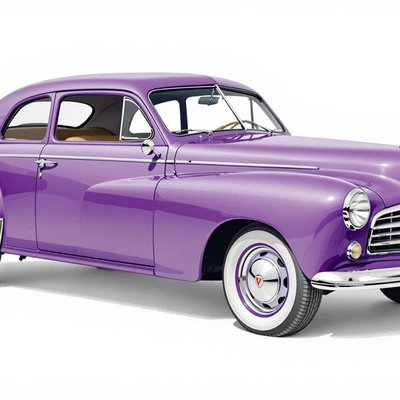
When the factories pivoted back to consumer goods, they were essentially building "reheated" 1942 models—vehicles that were technically obsolete before they even rolled off the assembly line. The market was starved for innovation. The public was eager for a symbol of a new era, a "post-war" car that looked like the future. Studebaker, a smaller, scrappy independent player, realized that if they could beat the industry giants to the punch with a truly modern design, they could secure a massive slice of the market. They turned to the legendary Raymond Loewy Associates (RLA) to achieve this feat.
The Protagonists: Two Titans of Style
Raymond Loewy was a titan, a marketing genius who understood that a product’s aesthetic was its primary currency. His name was synonymous with modern elegance, from the Coca-Cola bottle to the Pennsylvania Railroad’s locomotives. However, his business model was built on a "star system." As the principal, Loewy claimed credit for every design iteration produced by his studio, a practice that rankled the younger, highly talented designers under his employ.
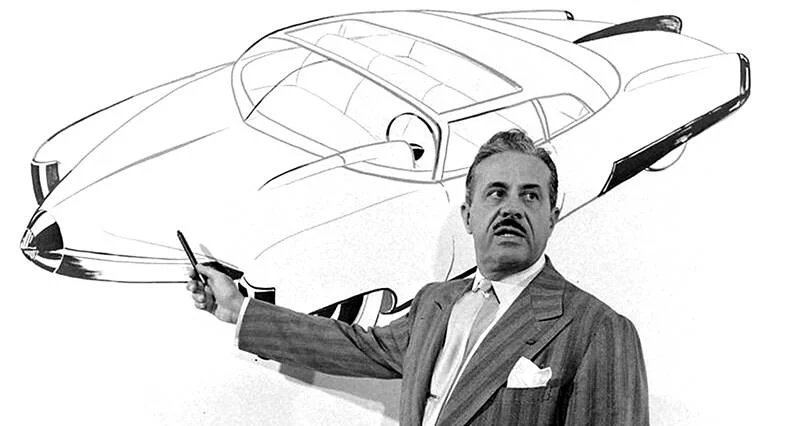
Virgil Exner, meanwhile, had "cut his teeth" at General Motors under the legendary Harley Earl. He was a protégé of the American school of styling—bold, sculptural, and deeply concerned with the "long, low" look that would eventually define the 1950s. When Loewy brought Exner into the fold at RLA, he likely saw a brilliant tool for his firm’s expansion. Exner, however, saw a stifling environment where his creative contributions were subsumed by the Loewy brand.
Chronology of a Corporate Divorce
The fracture between Loewy and Exner was not an overnight occurrence; it was a slow-motion collision of incompatible egos and conflicting corporate interests.
- 1945: Studebaker commissions RLA for a revolutionary post-war vehicle. Exner is assigned to the project.
- 1946: The tension between Loewy and Exner peaks over credit and design direction. Studebaker executives, sensing the internal dysfunction at RLA, approach Exner behind Loewy’s back.
- 1946 (The Secret Design): Harold Vance and Roy Cole, Studebaker’s top brass, task Exner with developing an alternative design at home. They prefer his more pragmatic, production-friendly approach over Loewy’s radical, often difficult-to-engineer concepts.
- 1947: Loewy discovers the "shadow" project. Enraged by the perceived breach of contract and personal disloyalty, he fires Exner on the spot.
- 1947 (The Pivot): Studebaker immediately hires Exner as their Chief Stylist, effectively transitioning him from an external consultant to an internal asset.
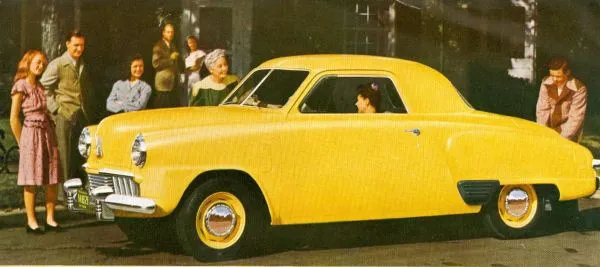
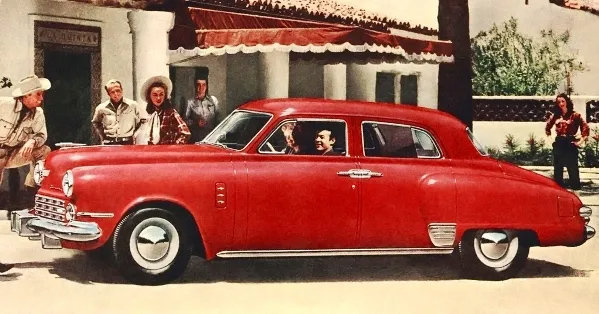
- 1947 (The Launch): The Studebaker Champion/Commander arrives. It is widely hailed as the first true post-war car.
- 1955: Robert Bourke, who replaced Exner at RLA, follows in his predecessor’s footsteps, leaving Loewy to join Studebaker’s internal styling department, signaling the end of an era for RLA’s automotive dominance.
Supporting Data: Design Influence and The "Wraparound" Mystery
The 1947 Studebaker remains a subject of intense debate among automotive historians regarding the "wraparound" rear window—a signature element of the car’s profile. Because the design period was marked by constant iteration, attributing specific features to either man is difficult.
Proponents of Loewy point to his penchant for avant-garde shapes, while those who favor Exner highlight his engineering-centric approach to visibility. The reality is likely a synthesis of the two, but the "wraparound" became a point of contention that underscored their inability to share a success. The historical record shows that while Loewy took the spotlight, the car’s market success gave Exner the leverage he needed to escape the shadow of his former mentor.
Official Responses and Personal Animosity
The professional relationship was never repaired. In later years, the bitterness remained palpable. Exner’s son famously recounted his father’s blunt assessment of his former boss, stating they "loathe each other."
From Loewy’s perspective, Exner’s actions were an act of corporate treason—a violation of the loyalty owed to a firm principal. From Exner’s perspective, he was merely serving the client’s best interest by providing a design that was actually viable for mass production. This disagreement highlights a fundamental shift in the design world: should the designer be loyal to the studio head, or to the final product and the client’s commercial reality?
Implications for the Industrial Design Profession
The fallout from this rivalry had profound implications for how corporations manage design talent.
1. The Death of the "Solo Star" Studio
The Exner-Loewy conflict served as a cautionary tale for the limitations of the "Great Man" theory of design. As the automotive industry grew more complex, it became clear that successful car design required deep integration between the styling studio and the manufacturing floor. When Loewy tried to maintain his "gatekeeper" status, he alienated the very talent that made his firm successful.
2. The Rise of In-House Styling
The subsequent exodus of talent from RLA—first Exner, then Robert Bourke—demonstrated that corporations were no longer content to outsource their identity to external consultancies. By 1955, the era of the external styling consultant had begun to wane in favor of massive, internal design bureaucracies at GM, Ford, and Chrysler.
3. The Definition of "Credit"
The dispute over the Studebaker design set a precedent for the ongoing battle regarding intellectual property and creative credit in industrial design. Even today, the question of whether a product is the work of a firm principal or the lead designer remains a contentious issue in high-stakes creative environments.
Conclusion: A Legacy of Irony
There is a profound irony in the fact that Loewy’s firm was the primary architect of the very internal styling departments that would eventually make his own firm redundant in the automotive sector.
The feud between Raymond Loewy and Virgil Exner was, in many ways, the inevitable byproduct of the maturation of American industry. As the complexity of mass production increased, the individual designer became more important than the individual visionary. Exner went on to define the "Forward Look" at Chrysler, creating some of the most iconic tail-finned cars of the 1950s, while Loewy continued to pivot toward consumer goods and corporate branding.
While they never reconciled, their collective impact on the visual landscape of 20th-century America is undeniable. They were two men who fundamentally disagreed on how to design the future, yet together, they built the very vehicle that drove the American economy into the post-war era. The bitterness of their personal rivalry eventually faded into the rearview mirror, but the cars they fought over remain, forever frozen in chrome and steel as monuments to their colliding genius.
About the Author