NEW YORK CITY – A legislative storm is brewing in the heart of New York City, threatening to redefine the landscape of urban logistics and the burgeoning gig economy. At its epicenter is the proposed "Delivery Protection Act," a bill poised to compel e-commerce and delivery giants to directly employ their vast networks of last-mile drivers and warehouse staff, rather than relying on the prevalent contractor model. This ambitious legislation, backed by Mayor Zohran Mamdani and a coalition of worker advocates, aims to enhance labor protections, improve safety standards, and hold powerful corporations more directly accountable for their operations.
However, the bill faces fierce opposition from industry titans like Amazon, FedEx, and DoorDash, who warn of skyrocketing costs, operational inefficiencies, and the potential exodus of critical distribution infrastructure from the city. The debate encapsulates a broader national conversation about worker classification, the sustainability of the gig economy, and the balance between corporate flexibility and labor rights in an increasingly on-demand world. Should the Delivery Protection Act pass, its ripple effects could extend far beyond the five boroughs, potentially setting a precedent for major cities across the nation grappling with similar challenges.
The Last Mile Under Scrutiny: Main Facts of the Delivery Protection Act
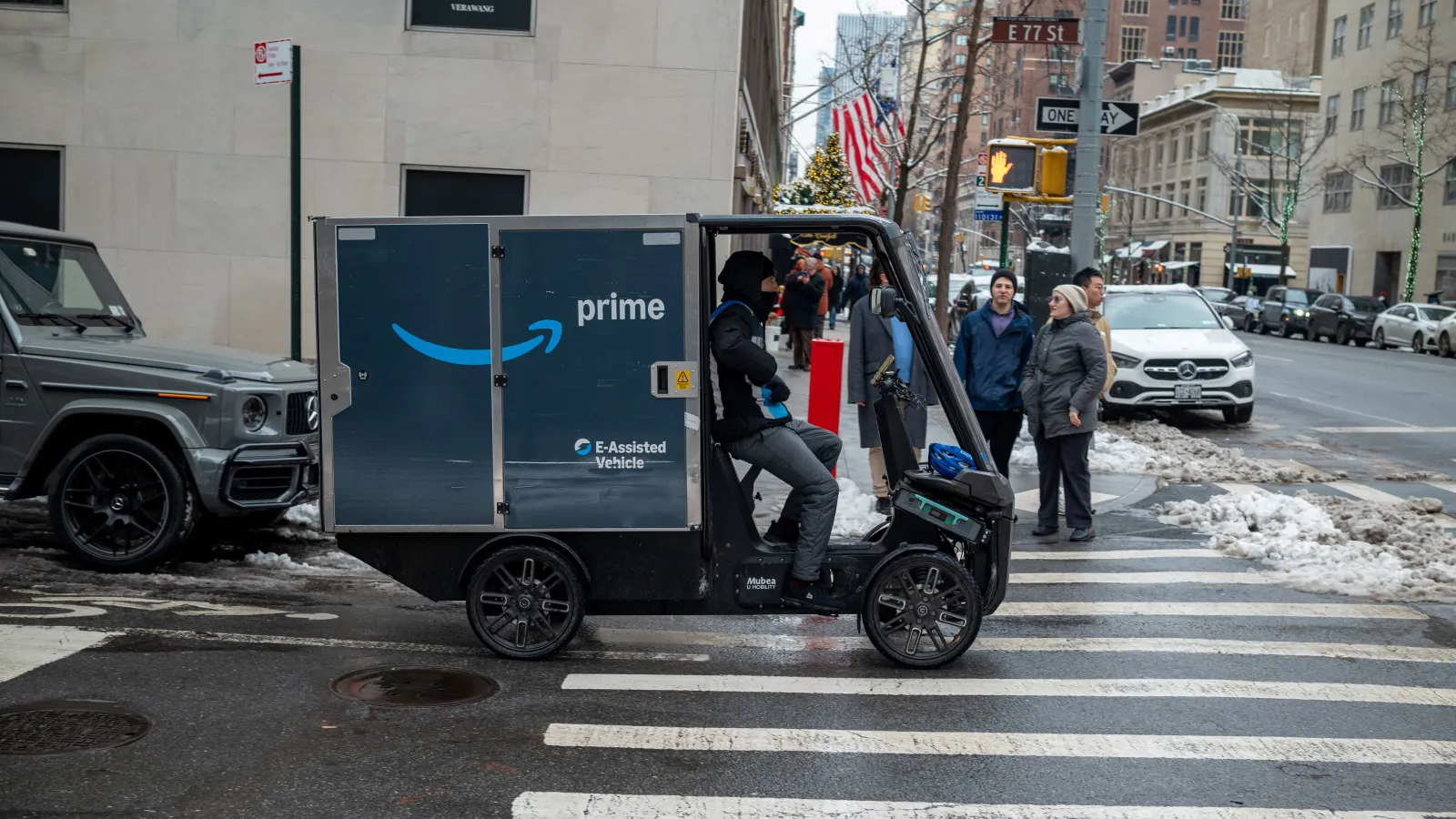
The core of the "Delivery Protection Act" (formally known as Intro 518) is a mandate for operators of last-mile warehouse and distribution facilities within New York City to transition from a contractor-based workforce to direct employment for their core delivery and warehouse personnel. This directly targets a business model widely adopted by companies like Amazon, which utilizes a network of "Delivery Service Partners" (DSPs)—independent businesses that operate Amazon-branded vehicles and employ drivers wearing Amazon attire, yet are not direct employees of the e-commerce giant. Similar models are employed by FedEx for its ground deliveries and by alternative carriers such as OnTrac and Gofo.
The proposed legislation is not merely about employment status; it encompasses a broader regulatory framework. Key provisions include:
- Direct Employment Requirement: Mandating that companies directly hire delivery and warehouse workers, effectively eliminating the current third-party contracting model for these core functions.
- Two-Year Grace Period: A transitional phase to allow businesses to adapt and comply with the new employment standards.
- Licensing System: Establishment of a new licensing framework for storage and distribution facilities, enhancing oversight and accountability.
- Enhanced Safety and Training Standards: Implementation of new protocols and training programs designed to improve worker safety, particularly concerning urban driving conditions, frequent stops, and pedestrian safety. This also includes guidelines on when and where drivers can safely make delivery stops on trafficked roads.
- Labor Standards: Establishment of clearer labor standards, addressing issues such as quotas, schedules, and routes, aiming to prevent perceived exploitation and ensure fair working conditions.
Proponents argue that this bill is essential to address a systemic imbalance. They contend that companies like Amazon exert extraordinary control over their contract drivers’ schedules, workloads, and even uniforms, without affording them the benefits and protections typically associated with direct employment, such as minimum wage, overtime, health benefits, and collective bargaining rights. Furthermore, the legislation seeks to combat "worsening traffic safety" tied to the high volume and often rapid pace of last-mile deliveries, by imposing stricter safety guidelines and making the primary corporations directly responsible for their drivers’ conduct.
A Legislative Journey: Chronology of the Bill’s Progress
The journey toward potentially transforming New York City’s delivery ecosystem has been unfolding over several months, reflecting a growing public and political focus on the gig economy and worker rights. The "Delivery Protection Act" (Intro 518) was formally introduced into the New York City Council.
Testimonies regarding the bill were submitted to the city’s Committee on Consumer and Worker Protection in April, providing an early platform for both proponents and opponents to voice their arguments and concerns. These submissions highlighted the stark divisions over the legislation’s necessity and its potential ramifications.
Earlier this month, Mayor Zohran Mamdani publicly voiced his strong support for the Delivery Protection Act. This endorsement from a prominent city official signaled a significant push for the bill’s passage, elevating its profile and lending it considerable political momentum. A news release from Mamdani’s office detailed the bill’s provisions and articulated the administration’s belief that it would rein in powerful corporations and improve conditions for workers and communities.
The bill is currently under review by the Committee on Consumer and Worker Protection. This phase involves detailed examination, potential amendments, and further public discourse before it can advance to a full Council vote. The pace of its progression remains uncertain, contingent on committee deliberations, stakeholder engagement, and the broader political climate within the city council.
However, the concept underpinning this legislation is not isolated to New York. The International Brotherhood of Teamsters union, a vocal supporter of the Delivery Protection Act, is actively advocating for a similar bill in Chicago, underscoring a broader, coordinated effort to address the contractor model in urban logistics nationwide. This parallel movement suggests that the legislative challenges faced by companies in New York could soon become a blueprint for other major metropolitan areas.
The Economic Equation: Supporting Data and Analytical Perspectives
The debate surrounding the Delivery Protection Act is heavily informed by economic analyses and operational data, painting a complex picture of potential costs and benefits. A June report from AKRF, an economic and transportation consultancy, prepared for the Five Borough Jobs Campaign (a coalition opposing the bill), provides a stark forecast of the economic impact.
According to the AKRF report, ensuring full compliance with the proposed legislation—primarily by converting contracted drivers to direct employees—would inevitably lead to a substantial increase in labor and operating costs for companies like Amazon. These increased costs would stem from higher wages, benefits, payroll taxes, and administrative overhead associated with direct employment.
Instead of absorbing these escalating costs, the report suggests that affected companies would likely choose to relocate a significant portion of their distribution activities. The most probable destinations for such relocations are facilities outside of New York City, particularly in nearby areas like New Jersey, where operating costs and regulatory burdens may be lower.
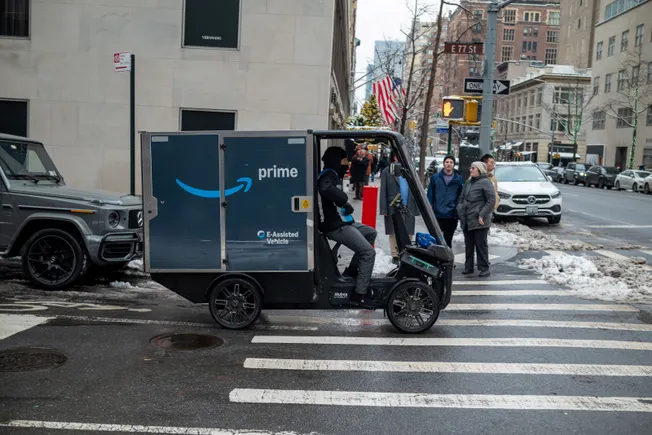
The consequences of such relocations, as outlined by AKRF, are far-reaching:
- Slower Deliveries: Longer travel times from external distribution centers to New York City routes and service areas would reduce network efficiency. This could eliminate dozens of stops per driver daily, directly translating to slower deliveries for NYC customers, particularly those in the outer boroughs.
- Curtailed Services: Same-day and next-day delivery services, which have become a cornerstone of modern e-commerce, would likely be curtailed or even eliminated. Product availability might also be adjusted as companies prioritize efficiency over speed.
- Higher Costs for Consumers: Households and small businesses in New York City could anticipate higher per-package delivery costs, although the precise magnitude of this increase would depend on the extent to which carriers relocate their operations and pass on costs.
- Impact on Parcel Volume: Approximately 36% of the current daily parcel volume in New York City is currently handled by contractor operations, putting a substantial portion of the city’s logistics infrastructure at risk from this legislation.
Further data from an April 9 report by the Committee on Consumer and Worker Protection reveals the scale of last-mile operations in NYC. Among the 50 last-mile delivery facilities in the city exceeding 50,000 square feet, Amazon operates nearly 30%, while FedEx and UPS run a combined 60%. The remaining facilities are managed by other logistics providers. This highlights that while Amazon is a primary target, the bill’s impact would extend broadly across the sector.
The bill’s provisions regarding safety, training, and labor standards also come with their own set of economic considerations. Implementing new training programs, such as those detailing safe delivery stops on trafficked roads and pedestrian safety protocols, would require significant investment in time and resources. While these are presented as benefits for worker and public safety, they represent additional operational costs for businesses.
Shawn Compton, chief logistics officer at DCL Logistics, emphasized the potential for the bill to set a national precedent. "This could have a much farther-reaching impact because nobody’s expecting it to stay just in New York City if it passes," Compton remarked in an interview, underscoring the broader implications for the logistics industry nationwide. The economic models used by companies are highly sensitive to regulatory changes, and a shift in NYC could force a re-evaluation of strategies across urban centers.
The Voices of Contention: Official Responses and Stakeholder Positions
The proposed Delivery Protection Act has ignited a fervent debate, drawing strong reactions from both its champions and its critics.
Proponents’ Stance: Accountability and Worker Protection
Mayor Zohran Mamdani, a vocal advocate for the bill, positioned the legislation as a crucial step to rein in powerful corporations. In a news release from his office, Mamdani stated that the bill would help New York City better regulate last-mile operations and ensure companies like Amazon are directly accountable for delivery drivers’ quotas, schedules, and routes. Beyond labor issues, the Mayor’s office highlighted the bill’s role in combating "worsening traffic safety" linked to the rapid expansion of delivery facilities.
Deputy Mayor for Economic Justice, Julie Su, echoed this sentiment, directly challenging the existing contractor model. "For years, Amazon has relied on a convoluted subcontracting system that denies last-mile drivers the protections other workers get, while maintaining extraordinary control over their schedules, workloads, and uniforms," Su asserted in Mamdani’s release. She emphasized that the Delivery Protection Act would "close this loophole, improve safety for drivers and communities and begin to correct the imbalance of power that massive corporations like Amazon have accumulated."
The International Brotherhood of Teamsters union has been a staunch supporter, actively campaigning for the bill’s passage in New York and pushing for similar legislation in other cities, like Chicago. Their support underscores a broader labor movement’s effort to organize and protect workers in the burgeoning gig economy, viewing direct employment as a fundamental right and a means to secure better wages, benefits, and working conditions.
Opponents’ Objections: Economic Fallout and Operational Disruption
On the other side, a powerful coalition of industry players, including Amazon, FedEx, Prologis (a major logistics real estate company), and several smaller logistics firms, has formed the "New York Delivers" campaign to actively oppose the bill. Their primary argument centers on the catastrophic economic and operational consequences they foresee.
Amazon, the primary target of the legislation, has been particularly outspoken. In testimony submitted to the Committee on Consumer and Worker Protection in April, the company stated that the Delivery Protection Act would effectively "prohibit agreements with the more than 40 local businesses it partners with" to make deliveries in New York City. Amazon highlighted its existing safety improvements within its operations and issued a stark warning: if the bill passes, it "could potentially relocate operations and delivery facilities outside of New York City to maintain service to customers."
"We’re trying to prevent that by working collaboratively with the City Council, and we’ve invited every member to visit our delivery stations and meet with these partners and their employees before voting on legislation that could eliminate their businesses and displace thousands of New Yorkers from their jobs," Amazon declared, emphasizing the potential for job losses among the very workers the bill purports to protect.
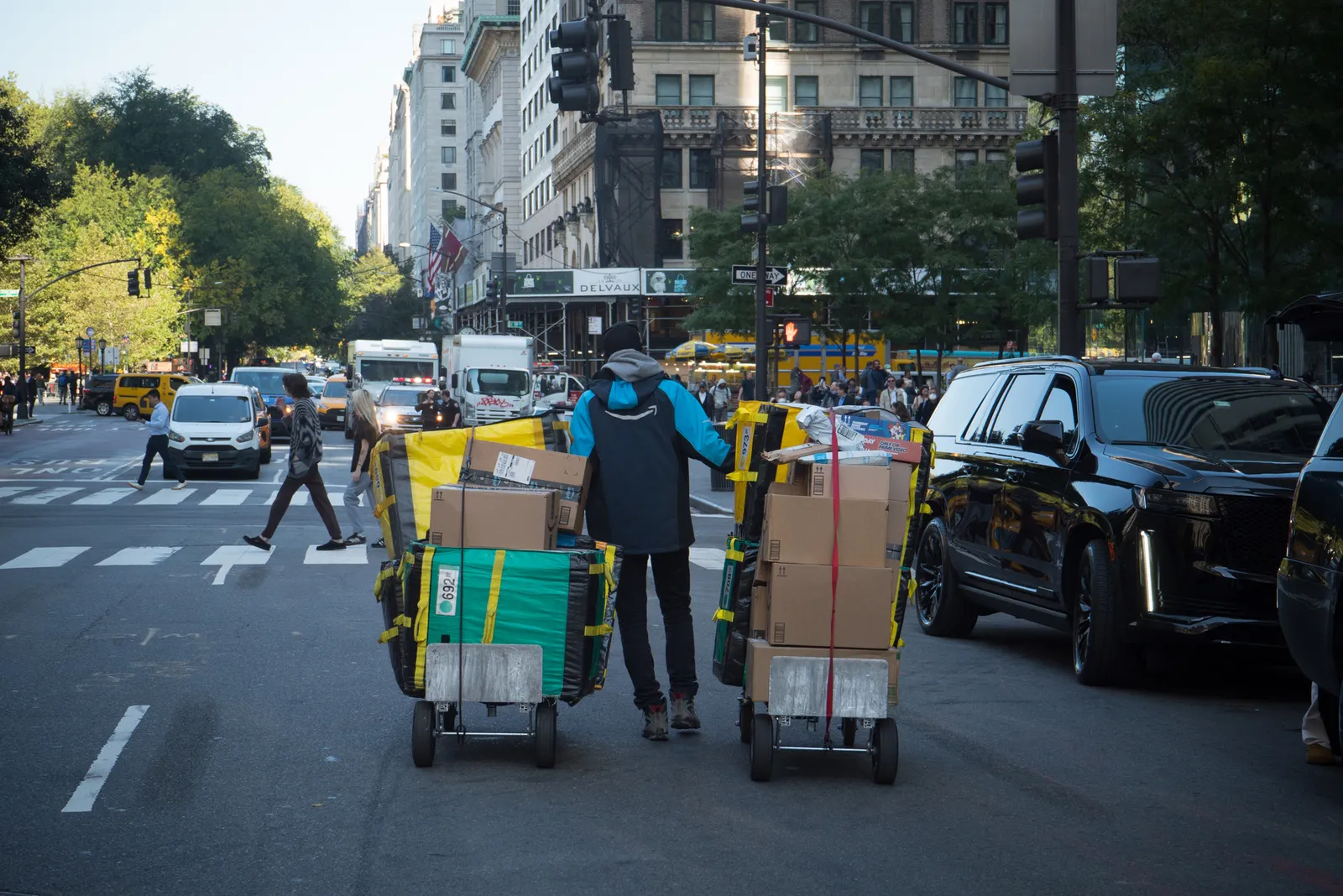
FedEx, which heavily relies on contracted service providers for its ground deliveries, also expressed deep concern. In an emailed statement, FedEx noted, "With the rise of e-commerce, last-mile delivery facilities for shipping and logistics businesses have become an increasingly essential part of the infrastructure that keeps New York City running," implying that disruptions to this model could harm the city’s economic vitality.
DoorDash, a prominent player in the on-demand delivery space, raised specific concerns regarding its "DashMart" operations. Ivan Garcia, DoorDash’s head of government relations for New York City, testified that the legislation "could make the company’s neighborhood-scale DashMart operations unviable" if a court or regulator determined its requirements applied to these locations. DashMarts, which function as virtual convenience stores serviced by independent gig workers (Dashers), could face insurmountable costs if forced to directly employ drivers who might only handle a few deliveries per month from these specific sites. Garcia warned that DoorDash "could curtail some operations and shutter others" to avoid these added expenses.
Jason Burns, founder of Last2First, a community platform for last-mile delivery professionals, while acknowledging the need to address issues with Amazon’s contractor model, suggested that "middle ground" approaches could be explored. Burns, a former owner of a last-mile delivery company, proposed solutions such as empowering contractors in their business dealings with Amazon and increasing Amazon’s accountability within the existing relationship, rather than a wholesale ban on contracting. "There’s probably some opportunities on the risk side, the safety side, the compliance piece," Burns noted, adding, "Some of the contractual terms that are in these agreements probably need to be revised so there’s more parity in these agreements."
Broader Implications and the Future of Urban Logistics
The potential passage of New York City’s Delivery Protection Act carries significant implications, not only for the city itself but also for the broader landscape of e-commerce, urban logistics, and the gig economy across the United States.
A National Precedent?
Perhaps the most far-reaching implication is the potential for New York City to establish a precedent for other major metropolitan areas. As Shawn Compton of DCL Logistics highlighted, "nobody’s expecting it to stay just in New York City if it passes." The fact that the Teamsters union is already pushing for similar legislation in Chicago underscores this possibility. If NYC successfully implements such a model, it could embolden other cities grappling with similar concerns about worker exploitation, traffic congestion, and corporate accountability, leading to a patchwork of varied regulations across different jurisdictions. This would create immense complexity for national logistics operators who thrive on standardization and efficiency.
Competitive Shifts in the Delivery Market:
The legislation could dramatically alter the competitive dynamics within New York City’s parcel delivery market. The AKRF report explicitly notes that parcel carriers already operating with a direct employment model, such as UPS and the U.S. Postal Service, could see significant volume gains. "UPS has been paying it forward in this regard already," Compton remarked. "They do hire their workers, and so they’re already poised for this." This shift could lead to a rebalancing of market share, potentially strengthening unionized carriers while weakening those reliant on the contractor model.
The Gig Economy Under Pressure:
The Delivery Protection Act is a direct challenge to the fundamental tenets of the gig economy model, where independent contractors or "gig workers" provide services without being classified as employees. While the bill specifically targets last-mile delivery and warehouse operations, its success could inspire similar legislative efforts in other gig sectors, such as ridesharing or food delivery. This could force a re-evaluation of the entire gig economy framework, potentially leading to more widespread reclassification of workers as employees, with all the associated benefits and costs.
Impact on Consumer Expectations and Urban Planning:
Consumers in New York City have grown accustomed to the speed and convenience of same-day and next-day delivery. If the bill leads to curtailed services, slower delivery times, and higher costs, it could fundamentally alter consumer expectations and shopping habits. Furthermore, the potential relocation of distribution facilities outside the city could impact urban planning, increasing vehicle miles traveled and potentially exacerbating traffic and environmental concerns as goods travel longer distances to reach their final destination.
The Search for a "Middle Ground":
As suggested by Jason Burns, the debate also highlights the need for potential "middle ground" solutions. Rather than an outright ban on the contractor model, legislators could explore avenues to strengthen the rights and protections of independent contractors, ensure greater transparency in contractual agreements, and hold primary companies more accountable for the working conditions of their extended workforce. This might involve setting minimum pay standards for contractors, requiring robust benefits packages, or establishing clearer grievance mechanisms, without fully transitioning to a direct employment model. Such approaches could offer a path to improved worker conditions while preserving some of the flexibility that proponents of the gig economy tout.
Legal and Implementation Challenges:
Even if the bill passes, its implementation is likely to face significant legal challenges from affected companies. Litigation could delay its enforcement for years, creating uncertainty for businesses and workers alike. The practicalities of converting tens of thousands of contractors to employees, establishing new licensing systems, and enforcing detailed safety standards within a two-year grace period will also present substantial administrative and logistical hurdles for the city.
In conclusion, New York City stands at a critical juncture, contemplating legislation that could profoundly reshape its economic and social fabric. The Delivery Protection Act represents a bold attempt to address perceived inequities and externalities of the modern logistics industry. Its outcome will not only determine the future of countless delivery workers and businesses in the city but could also serve as a harbinger for the broader evolution of labor practices in the digital age.
About the Author