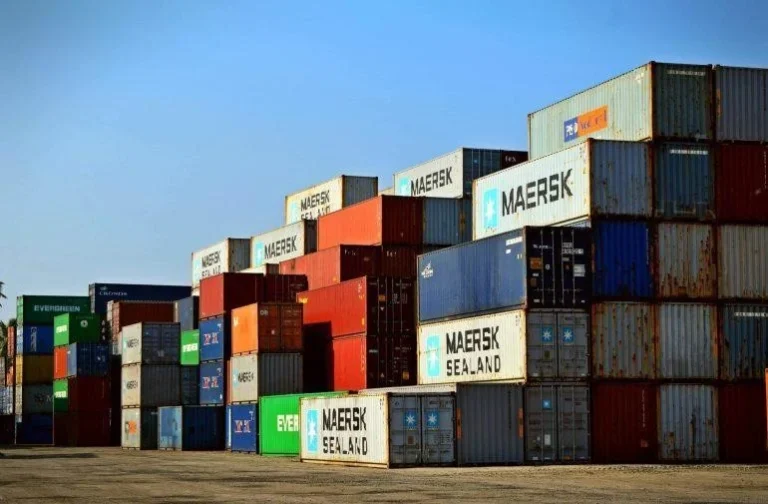
The fragile interconnectedness of the North American economy is currently facing its most significant stress test in decades. Following the sudden collapse of high-stakes trade negotiations, the United States and Canada have engaged in a retaliatory tariff spiral that threatens to upend the packaging industry. As both nations move toward implementing 50% duties on a broad spectrum of goods, companies ranging from containerboard manufacturers to aluminum can producers are bracing for a period of extreme volatility, inflated operational costs, and potential long-term structural shifts.
The Core Conflict: A Retaliatory Spiral
The current trade friction was ignited this past weekend when trade talks between Washington and Ottawa fell apart. In an immediate response to the breakdown, the Trump administration announced a suite of aggressive tariffs targeting Canadian imports. By Tuesday, Canadian Prime Minister Mark Carney retaliated with equivalent force, unveiling duties of up to 50% on a wide array of U.S.-made materials and finished goods.
This escalation is particularly alarming given the sheer scale of the bilateral relationship. According to U.S. Census Bureau data, Canada remains the United States’ second-largest trading partner, trailing only Mexico. Because the packaging sector—which provides the fundamental logistical backbone for nearly every other industry—is deeply integrated across this border, the ripple effects are expected to be both immediate and profound.
Chronology of the Trade Breakdown
The swift deterioration of trade relations can be traced through a rapid succession of events that caught market analysts and industry leaders off guard:
- Early August: In earnings calls, major players such as Cascades and Ball Corporation began publicly airing concerns regarding potential tariff impacts, signaling that the corporate sector was already monitoring the political climate with trepidation.
- The Weekend of the Collapse: Trade negotiations between U.S. and Canadian officials officially ended without a consensus. The Trump administration immediately announced 50% tariffs on key Canadian imports.
- Tuesday’s Retaliation: Prime Minister Mark Carney announced a matching set of 50% tariffs on various U.S. imports, targeting specific industrial inputs.
- The Sept. 8 Deadline: As the deadline for the implementation of these measures approaches, firms throughout the supply chain are weighing the viability of "frontloading"—the strategy of accelerating purchases and deliveries to beat the tariff implementation—though reports of widespread inventory hoarding remain scarce.
Supporting Data: An Intertwined Supply Chain
The packaging industry is uniquely vulnerable to these tariffs due to the specific materials targeted by both nations. Canada’s counter-tariffs explicitly target pulp, paper, aluminum, and steel. Conversely, the U.S. has focused on wood products and paper, which industry analysts interpret as including essential materials such as containerboard and boxboard.
The Aluminum and Steel Dependency
The reliance of the U.S. packaging industry on Canadian metal is a matter of logistical necessity. The Aluminum Association reports that Canada provides approximately two-thirds of the primary aluminum consumed within the United States. Despite U.S. efforts to pivot toward domestic production, the infrastructure required to meet current demand is lacking.
"The U.S. urgently requires aluminum, and we obtain most of it from Canada," noted President Trump in recent comments. While the administration frames this as a supply security issue, industry experts caution that the timeline for scaling domestic production is measured in years, not months. Domestic can makers, for instance, currently import nearly 80% of their tin mill steel, making them hyper-sensitive to any shift in trade policy.
The Fiber and Paper Ecosystem
The fiber sector, which includes pulp, paper, and corrugated packaging, is perhaps the most visibly integrated. Heidi Brock, president and CEO of the American Forest & Paper Association (AF&PA), describes the North American supply chain as "thoroughly interconnected." Disruptions here do not just affect the mills; they impact the laborers, the clients who rely on packaging to ship their goods, and the local communities that depend on these cross-border manufacturing flows.
Official Responses and Industry Concerns
Industry associations have become the primary conduits for dissent, as individual corporations remain largely tight-lipped, fearing further political backlash.
The Fiber Industry’s Plea
The Canadian Corrugated and Containerboard Association (CCCA) has expressed profound disappointment in the failure to secure a stable trade pact. Executive Director Serge Desgagnes highlighted that corrugated packaging is a "hidden" necessity; because nearly every consumer product relies on it, a disruption in the trade of corrugated materials will inevitably lead to inflationary pressure on everything from groceries to electronics. Furthermore, the CCCA warns that trade barriers could destabilize the recovered fiber markets, which are essential to the success of national recycling programs.
The Aluminum Association’s Perspective
Charles Johnson, president and CEO of The Aluminum Association, has called for a more nuanced approach. While the association agrees with the need to expand domestic aluminum output, they emphasize that a comprehensive strategy must acknowledge that importing primary metal is currently unavoidable. "These actions will adversely affect certain industry segments by restricting U.S. producers’ ability to compete in Canada," Johnson stated, urging a return to the negotiating table to reach a "fair and sensible deal."
The Glass Sector’s Precarious Position
Though glass was not explicitly mentioned in the latest tariff directives, it remains caught in the crossfire. The industry is still grappling with the effects of a Canadian boycott of U.S. alcoholic beverages that has persisted for roughly a year. According to the Glass Packaging Institute (GPI), the U.S. imported 348 million glass bottles and jars from Canada in 2025, valued at over $86 million. The imposition of tariffs on these goods—which previously crossed borders duty-free under the USMCA—would further strain an industry already facing declining sales.
Implications: A Looming Economic Shift
The implications of this trade war are multifaceted, extending far beyond the immediate increase in costs for packaging firms.
1. Inflationary Pressure on Consumer Goods
When the cost of packaging—the "box" that contains the product—rises by 50%, those costs are almost invariably passed down to the end consumer. As tariffs ripple through the supply chain, the cost of canned goods, beverages, and household staples is expected to rise.
2. Supply Chain "De-risking"
The unpredictability of the U.S.-Canada border is forcing companies to rethink their "just-in-time" supply chain models. Firms are now evaluating whether to localize production entirely, which would require massive capital investment and years of restructuring, or to diversify their supply bases away from the North American corridor—a move that would fundamentally alter the structure of the industry.
3. Regulatory and Geopolitical Uncertainty
The breakdown of negotiations suggests that the rules-based order that governed North American trade for decades is in flux. For packaging firms, the uncertainty is arguably more damaging than the tariffs themselves. Without a clear signal on whether these tariffs are a temporary negotiating tactic or a permanent shift in trade policy, companies are paralyzed, unable to commit to long-term contracts or capacity expansions.
Conclusion: The Path Forward
As the September 8 deadline looms, the packaging industry remains at a critical juncture. The call from trade organizations is clear: policymakers must recognize that the North American packaging supply chain is not a collection of isolated domestic industries, but a singular, integrated organism.
The current path of reciprocal escalation threatens to erode the competitive advantage of North American manufacturers on the global stage. As the trade dispute intensifies, the resilience of companies in the fiber, metal, and glass sectors will be tested as never before. Whether Washington and Ottawa can pivot from confrontation to negotiation before the Sept. 8 deadline remains the single most critical question for the industry’s future. For now, the sector remains in a state of high-alert, waiting for a signal that stability might return to the world’s most important trading relationship.
About the Author