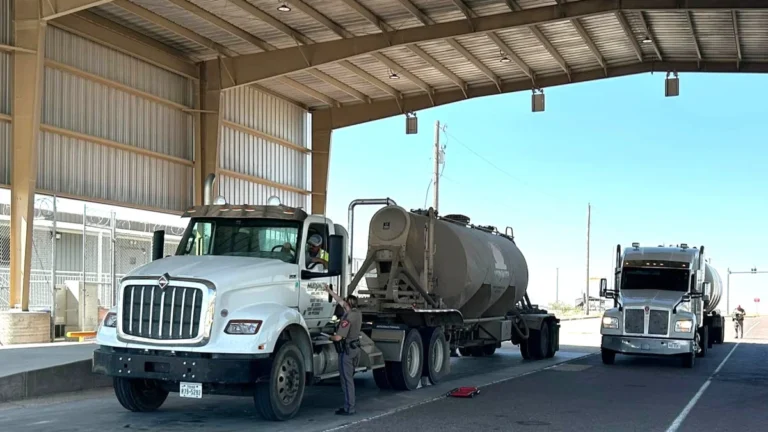
The landscape of American logistics is bracing for a potential transformation in how the nation’s long-haul workforce manages time behind the wheel. The Federal Motor Carrier Safety Administration (FMCSA) is officially advancing two high-stakes pilot programs designed to test the feasibility of increased flexibility within the rigid hours-of-service (HOS) regulations that have governed the industry for decades.
Launched in September 2025 as a cornerstone of Transportation Secretary Sean Duffy’s "Pro Trucker Package," these initiatives seek to determine whether granting drivers more autonomy over their rest periods and work-window interruptions can mitigate fatigue while simultaneously improving operational efficiency. However, the move has ignited a fierce debate between industry stakeholders—who argue that current rules are detached from the realities of the road—and safety advocates, who fear the erosion of critical protections against driver exhaustion.
The Core Initiatives: Testing Flexibility in Real-World Conditions
The FMCSA’s dual-pronged approach—the Split Duty Period Pilot Program and the Flexible Sleeper Berth Pilot Program—represents a departure from previous attempts to modify HOS rules, which often stalled during the public comment phase. Having successfully completed initial pre-testing phases in 2025, the agency is now preparing to scale these programs to include 512 total participants—256 for each pilot—by 2027.
The Split Duty Period Pilot
The most controversial of the two, the Split Duty Period Pilot, takes aim at the “14-hour clock.” Under current federal mandates, a driver’s 14-hour duty window begins the moment they start their day and cannot be paused, regardless of whether the driver is behind the wheel, waiting at a loading dock, or sitting in heavy traffic.
The pilot introduces a “pause button” for this window. Participating drivers are permitted to suspend their 14-hour clock for up to three hours per day, provided they are in a qualifying non-driving status—such as off-duty, in the sleeper berth, or waiting at a customer facility. The goal is to allow drivers to bypass peak congestion, wait out severe weather, or absorb the unpredictable delays often associated with detention at shipping and receiving facilities without sacrificing their available drive time.
The Flexible Sleeper Berth Pilot
The second initiative focuses on the mechanics of rest. Currently, the sleeper berth provision requires specific splits of off-duty time. The Flexible Sleeper Berth Pilot proposes a more modular approach: drivers would be allowed to divide their required 10 hours of off-duty time into two periods in any ratio, provided that at least one of those segments consists of a minimum of five consecutive hours in the sleeper berth. The intent is to provide drivers with the latitude to rest when their body dictates it, rather than adhering to a rigid schedule that may not align with circadian rhythms or personal recovery needs.
Chronology of the Pilot Programs
The path to these current pilots has been long and marked by previous regulatory stumbles. Understanding the timeline is essential to grasping the significance of the current momentum:
- 2017–2021: The FMCSA launched various iterations of sleeper berth pilots and attempted to ease 14-hour restrictions. These efforts largely stalled during the public comment stages due to intense opposition from labor unions and safety organizations.
- May 18 – July 17, 2025: The agency conducted the initial “pre-test” for the Split Duty Period pilot. Nine drivers across three carriers in Minnesota, Wisconsin, and Ohio participated in a six-week trial.
- April 1 – June 11, 2025: The pre-test for the Flexible Sleeper Berth pilot was conducted with a similar cohort of nine drivers across Ohio, Virginia, and Wisconsin.
- September 2025: Transportation Secretary Sean Duffy formally incorporates the pilots into the “Pro Trucker Package,” signaling a shift toward full-scale implementation.
- Late 2025 – 2026: The FMCSA analyzes data from the pre-tests to refine safety protocols, data collection methods, and participant requirements.
- 2027: The agency is slated to expand both programs to full capacity, enrolling 512 drivers across the country for four-month cycles.
Supporting Data and Participation Metrics
To ensure robust data collection, the FMCSA has structured the pilots with significant financial incentives and rigorous monitoring. Each of the 512 participants will be monitored over a four-month period. For completing all study requirements, including logging and biometric reporting, drivers are eligible to receive up to $1,600.
The agency’s decision to move forward follows the analysis of the 2025 pre-test data. While the sample size of the pre-tests was small (18 total drivers across both programs), the FMCSA maintains that the findings were sufficient to validate the feasibility of the logistics involved in tracking “split-duty” and “flexible rest” scenarios.
Furthermore, the agency has signaled a new focus on monitoring the behavior of shippers. A recurring criticism in the trucking industry is that drivers are often exploited at loading docks, where they are kept waiting for hours without compensation. The FMCSA has explicitly stated that during the Split Duty pilot, it will monitor whether the added flexibility leads to increased detention by shippers who might view the “paused clock” as an excuse to delay loading operations.
The Fault Lines: Industry Needs vs. Safety Concerns
The debate over these pilots reflects a fundamental tension in the transportation sector: the friction between the rigidity of federal law and the unpredictable nature of the supply chain.
The Case for Flexibility
Major carriers, including industry giant Werner Enterprises, have long argued that the current “one-size-fits-all” hours-of-service rules are inherently counterproductive to safety. According to proponents, when a driver is forced to adhere to a 14-hour clock regardless of traffic congestion or extreme weather, they are often incentivized to push through dangerous conditions or ignore signs of fatigue to reach their destination before their window closes.
By allowing a driver to pause the clock during a blizzard or a major highway gridlock, advocates argue that the driver can actually get more meaningful rest. This approach, they suggest, transforms the 14-hour rule from a source of stress into a tool for safety, allowing drivers to "reset" when the environment becomes hazardous.
The Case for Safety
Opponents, led by organizations such as Advocates for Highway and Auto Safety, view these initiatives as a dangerous rollback of hard-won protections. Their primary objection is mathematical: by allowing a driver to pause the 14-hour clock for three hours, the total time a driver remains on duty could effectively be extended to 17 hours.
“The agency should be examining problems with detention time instead of proposing this dangerous and misguided initiative,” the organization stated in a formal comment to the FMCSA. Their argument rests on the belief that extending the duty window—even with breaks—increases the cumulative risk of driver fatigue. Furthermore, safety advocates argue that the FMCSA is treating the symptoms of a broken system (inefficient scheduling and detention) rather than addressing the root causes: low pay, excessive wait times, and the systemic coercion of drivers by carriers and shippers to meet impossible deadlines.
Implications for the Future of Logistics
The significance of these pilots cannot be overstated. If the data gathered in 2027 suggests that flexible hours do not lead to a statistically significant increase in safety incidents, the FMCSA may have the political capital to permanently rewrite HOS regulations.
Such a change would represent the most substantial shift in federal trucking policy in over a decade. It would effectively signal a move toward “performance-based” regulation, where the focus shifts from clock-watching to actual driver alertness and environmental conditions.
However, the road ahead is fraught with complexity. The FMCSA must navigate the skepticism of Congress, the vocal opposition of road safety groups, and the logistical nightmare of ensuring that the "flexibility" granted to drivers isn’t ultimately exploited by the shipping industry to keep drivers on the road for longer periods without adequate compensation or rest.
As the agency prepares for the 2027 expansion, the eyes of the entire logistics sector are fixed on the dashboard. The outcome of these trials will likely determine whether the future of trucking is one of rigid, minute-by-minute compliance or one of modern, adaptable, and driver-centric management. For now, the FMCSA maintains that its priority remains the same: ensuring that the men and women behind the wheel of the nation’s supply chain arrive home safely, regardless of how the clock is structured.
About the Author