By [Your Name/Journalistic Staff]
This report is part of a collaborative investigation with Climate Desk and Capital B.
For generations, the Tangipahoa River served as the lifeblood of Roseland, Louisiana. For residents like 63-year-old Elbert McGee, the river was more than a geographical feature; it was a classroom, a pantry, and a sanctuary. Growing up in the 1960s, McGee spent his weekends walking the wooded paths to the water’s edge, teaching his father the rhythms of the land and the patience required to reel in bass, crappie, and catfish.
“We had a good, good life as children,” McGee reflects, his voice heavy with the weight of lost normalcy. “We grew up healthy and in community.”
Today, the paths to the river are shadowed by a haunting reality. On August 22, 2025, that sanctuary was irrevocably altered when Smitty’s Supply—an oil facility positioned at the heart of the majority-Black town—suffered a catastrophic explosion. The blast sent 12 million gallons of oily liquid and chemical waste cascading into the environment, painting homes, schools, churches, and playgrounds with a toxic, black film. One year later, the residents of Roseland are not just dealing with the physical cleanup; they are navigating the agonizing, intimate struggle of parenting in a landscape where the soil, air, and water have become, in the eyes of many, a source of quiet, persistent harm.

The Disaster: A Chronology of Neglect
The timeline of the Roseland crisis is one defined by sudden destruction followed by a slow, agonizing lack of accountability.
- August 22, 2025: The Smitty’s Supply facility suffers a major industrial failure, triggering an explosion that releases millions of gallons of oily chemical waste into the local ecosystem.
- Late August – September 2025: Residents begin reporting a pervasive, metallic smell. The black, oily sludge blankets local infrastructure. Families, including that of Elbert McGee, report sudden health issues, including severe, unexplained nosebleeds in children and respiratory distress.
- Late 2025 – Early 2026: Despite mounting public outcry and reports of dying wildlife, state and federal environmental agencies release assessments claiming there is "no imminent threat to public health."
- Early 2026: A secondary chemical spill from a facility linked to Smitty’s infiltrates the town’s drinking water supply, exacerbating the community’s distrust of local institutions.
- April 2026: Residents organize protests to demand transparency and health screenings. Parents like Candice Hart provide documentation of long-standing health concerns that officials continue to dismiss.
- August 2026: One year post-disaster, Smitty’s Supply issues a statement claiming it has met all remediation requirements under the existing CERCLA Consent Order with the EPA, leaving residents to continue the cleanup on their own dime.
The Physical and Psychological Toll
The health implications for Roseland’s youth are particularly harrowing. Toxicologists have long noted that children are uniquely vulnerable to environmental hazards. Because they have a higher respiratory rate and spend more time playing in dirt and soil, they absorb a higher concentration of pollutants relative to their body size.
Markel, McGee’s 15-year-old son, became the face of this vulnerability. A football player, Markel was back on the field, running and breathing deeply in the dust just days after the explosion. Shortly thereafter, the nosebleeds began—frequent and intense enough to cause him to miss significant school time. When McGee brought his son to local medical providers, he was met with dismissal, told that such symptoms were "normal," despite the fact that they had never occurred prior to the disaster.
This gaslighting—the refusal by authorities to acknowledge the correlation between industrial activity and community health crises—is a hallmark of environmental injustice. It forces parents into the roles of amateur toxicologists, medical advocates, and private investigators, all while they struggle to maintain their employment and pay their mortgages.

Environmental Injustice: The Data of Disparity
The tragedy in Roseland is not an anomaly; it is a manifestation of a systemic pattern. Research consistently demonstrates that Black communities in Louisiana are exposed to significantly higher concentrations of industrial pollution—sometimes seven to 21 times higher—than their white counterparts in similar economic brackets.
This "Cancer Alley" reality creates a cruel contradiction for many residents. For people like Elbert McGee, the very industries that poison their backyards are often the only sources of stable, middle-class income. McGee himself spends his days working at a chemical facility, a job he keeps to feed and clothe his children, even as he fears that the exposure he faces on the clock is merely compounding the environmental hazards he faces at home.
"I know I’m killing myself for a job, breathing in benzene and chemicals every day," McGee admits. "But I didn’t want my children exposed, too."
This struggle is mirrored across the country. Whether it is the families in Flint, Michigan, forced to purchase bottled water they cannot afford, or parents in Houston agonizing over whether a cough is a seasonal cold or the result of idling diesel trucks, the burden of environmental defense is disproportionately carried by Black parents. It is an "intimate form of vigilance" that never sleeps.

Official Responses and the Corporate Shield
The lack of government intervention has left the residents of Roseland feeling abandoned. The Louisiana Department of Environmental Quality has remained largely silent, failing to respond to repeated requests for comment.
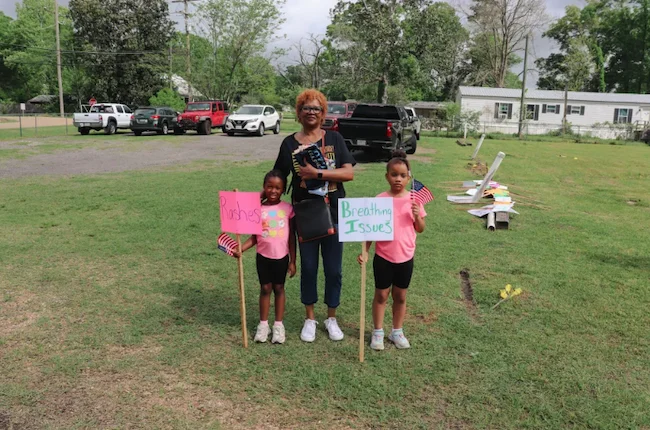
Smitty’s Supply, meanwhile, has taken a defensive posture. In a statement provided to investigators, the company asserted that it had fulfilled all obligations under the CERCLA Consent Order and that it had submitted a final report to the EPA. For a resident like Pam Bean, who has two granddaughters at the local elementary school, this response is "insulting."
"You always hear about politicians talking about rural America for votes," Bean said during a community gathering. "This is rural America, and look at how they really treat us."
The disparity in aid is stark. While white communities with comparable damage often see rapid state and federal mobilization, Roseland has been largely left to fend for itself. Many residents have spent thousands of dollars out of pocket—money they do not have—to replace contaminated soil, repair roof damage, and install new siding, all in a desperate attempt to create a safe harbor for their children.

The Future of a Displaced Generation
Perhaps the most damaging legacy of the Roseland explosion is the message it sends to the youth. When children grow up learning that they cannot trust the water from their tap, that they cannot safely play in their own yards, and that the authorities will ignore their pleas for help, they learn that their home is not a place of security, but a place of danger.
For Markel, the explosion effectively ended his childhood. He now expresses a clear desire to leave Roseland, and potentially Louisiana, as soon as he graduates. This is not merely the wanderlust of a teenager; it is a survival strategy. He has seen the institutions meant to protect his community fail, and he has witnessed his father, a man who worked hard to provide, be forced to fight for basic safety.
"I just want to make it to 70," McGee says, looking over the patch of dead grass in his backyard where his own father once raised hens and grew vegetables. "I don’t think I can make it here this long and I’m doing all of this while trying to take care of the children in my house."
The tragedy of Roseland serves as a sobering reminder that environmental disasters do not end when the smoke clears or the oily puddles dry up. They continue in the long-term health problems of the children, the financial ruin of the parents, and the loss of the generational connection to the land. For the families of Roseland, the fight for justice is not just a political struggle—it is an act of love, a daily, exhausting defense of the next generation against an industrial system that sees them as expendable.
About the Author