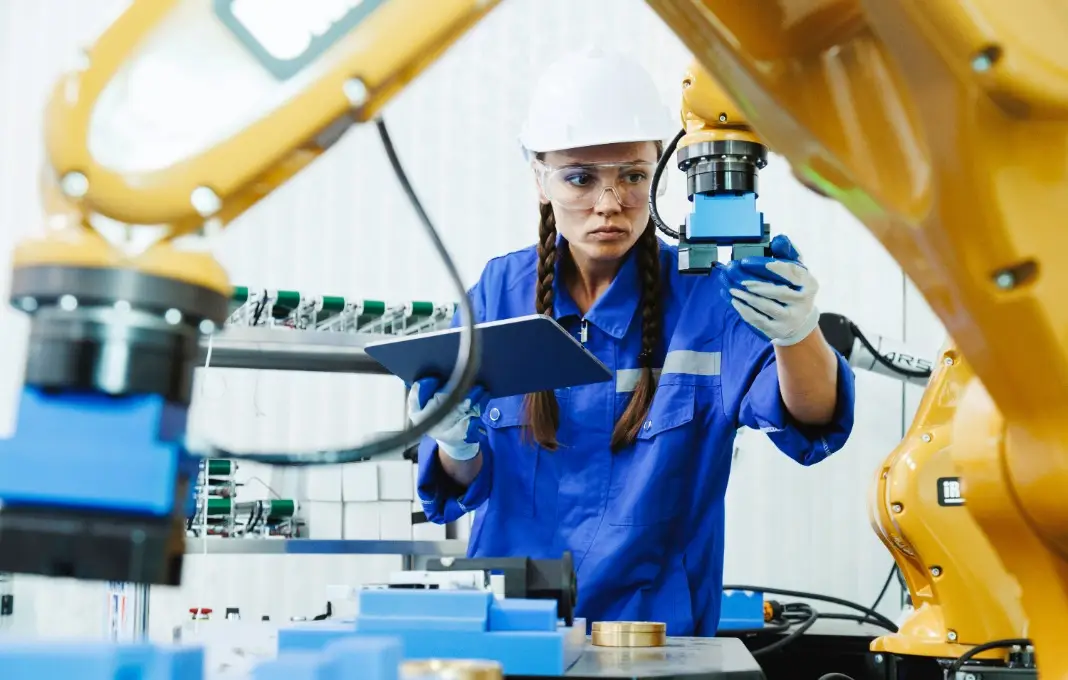
The narrative surrounding American manufacturing has long been tethered to a nostalgic vision of the past—a landscape of heavy machinery, repetitive manual labor, and the promise of restoring the high-volume employment sectors of the mid-20th century. However, as the industry moves through the midpoint of the decade, a stark reality has emerged: the future of U.S. manufacturing will not be defined by the resurrection of yesterday’s jobs, but by the cultivation of a workforce capable of orchestrating the advanced, hyper-intelligent tools of tomorrow.
Following a period of intense global volatility, the domestic manufacturing sector has entered a phase of strategic recalibration. Companies are no longer merely looking to recover from supply chain disruptions; they are aggressively pivoting toward "smart manufacturing." This transition marks a fundamental departure from traditional operations, prioritizing data-driven precision, artificial intelligence (AI), and automated infrastructure. Yet, as this technological revolution accelerates, it has birthed a complex employment paradox: while investment in digital solutions is hitting record highs, the sector is simultaneously grappling with a significant loss of traditional manufacturing roles.
Chronology: A Sector in Flux
The trajectory of the last 18 months underscores the growing pains of a sector undergoing a digital metamorphosis.
- Early 2025: Facing lingering economic uncertainty, high tariff barriers, and soft demand, manufacturing firms began a massive push toward operational efficiency. The industry-wide consensus shifted toward "smart" investments to insulate operations against future disruptions.
- Mid-2025: A surge in capital expenditure saw manufacturers dedicating increasingly larger portions of their budgets—in many cases, 20% or more—to AI, IoT (Internet of Things) integration, and digital twin technology.
- January 2026: The Bureau of Labor Statistics (BLS) and industry trackers reported a sobering milestone: the U.S. manufacturing sector shed approximately 103,000 jobs over the preceding 12 months. This decline was not merely a sign of contraction, but a reflection of a structural shift in how work is performed on the factory floor.
- Current Outlook: The industry is currently moving into a phase where the "human element" is being redefined. The debate has shifted from "How do we replace labor with robots?" to "How do we integrate labor with AI?"
The Employment Paradox: Productivity vs. Headcount
The tension between technological adoption and job security is perhaps the most significant challenge facing industrial leaders today. According to a 2025 Deloitte industry survey, 92% of manufacturing executives view smart manufacturing as the primary driver of their long-term competitiveness. These leaders are betting that AI-augmented infrastructure will provide the necessary buffer against global market fluctuations.
However, the data suggests that these gains in efficiency often come at the cost of traditional manual roles. The 103,000-job deficit recorded by early 2026 is a direct byproduct of a transition where automated systems have begun to outpace the need for manual, repetitive labor. Yet, this is not a zero-sum game of "machines versus men." Instead, it is an evolution of task complexity.
As manual roles decline, a vacuum is opening for "AI-augmented maintenance," "quality assurance data scientists," and "process automation technicians." The promise of smart manufacturing is immense: early adopters are reporting 10–20% improvements in total production output and 7–20% boosts in employee productivity. These metrics are not simply the result of better machines; they are the result of better utilization of those machines.
Supporting Data: The Efficiency Multiplier
The economic argument for smart manufacturing is overwhelming, provided the workforce can keep pace. Data indicates that for every dollar invested in smart infrastructure, the potential ROI is maximized only when the "human-in-the-loop" ratio is optimized.
| Metric | Improvement Range |
|---|---|
| Production Output | 10% – 20% |
| Employee Productivity | 7% – 20% |
| Unlocked Operational Capacity | 10% – 15% |
These figures demonstrate that technology serves as a force multiplier. However, the data also carries a warning: the "skills gap" is widening. While the technology is ready for deployment, the workforce is often hampered by a lack of digital literacy. If the talent pool does not evolve, the very investments intended to streamline operations will become stranded assets—expensive machines operating at a fraction of their potential because the operators lack the advanced training to calibrate them.
Official Responses and Strategic Perspectives
Industry analysts and economic policymakers are increasingly calling for a "skills-first" approach to manufacturing policy. The consensus among leading voices is that the government and private sector must move beyond training programs designed for the industrial era.
"The goal is no longer to return to the job density of the 1970s," says one industrial policy consultant. "The goal is to foster a workforce that is tech-fluent. We are seeing a shift where the frontline worker is becoming a ‘systems operator.’ They are no longer just building the product; they are monitoring the telemetry of the assembly line to ensure the AI is optimizing correctly."
Manufacturers are responding by moving away from traditional vocational training toward "continuous learning models." Recognizing that the shelf-life of a technical skill is shrinking, companies are embedding post-deployment training into their quarterly business cycles. This ensures that as AI software updates, the workforce updates alongside it.
The Path Forward: Closing the Skills Gap
To address the persistent unfilled roles—aggravated by an aging workforce and the retirement of skilled baby boomers—manufacturers must adopt a three-pronged strategy:
1. The "Human-in-the-Loop" Integration
Automation is not yet capable of autonomous, error-free production across the board. AI excels at processing data and identifying inefficiencies, but it lacks the nuance of human intuition in complex, non-linear scenarios. Manufacturers are finding that the most resilient factories are those where AI reduces the "cognitive load" of the worker, allowing them to focus on high-level decision-making rather than rote observation.
2. Redefining Frontline Roles
Frontline staff must be trained not just to use tools, but to understand the logic behind the tools. Training programs are shifting to include:
- Data Literacy: Understanding how to interpret dashboards and performance metrics.
- Systems Troubleshooting: Identifying when an automated process is deviating from optimal performance.
- Strategic Application: Knowing when to override automated systems to ensure quality control.
3. Building an Industrial Talent Pipeline
No single company can solve the skills crisis in isolation. The most forward-thinking manufacturers are forming "Knowledge Coalitions." By partnering with universities, technical colleges, and even local competitors, firms are creating standardized curricula that ensure a baseline level of digital competence across the labor market.
Implications for the Future of American Industry
The implication of this shift is clear: the manufacturers that win in the coming decade will be those that view their workforce as a tech-stack component rather than a variable expense.
The successful factory of the future will be defined by its "industrial data infrastructure." This layer allows for seamless communication between the factory floor, the supply chain, and the executive suite. However, this infrastructure is only as effective as the people who manage it. The "smart" manufacturer of 2030 will not necessarily be the one with the most robots; it will be the one with the most adaptable, digitally-proficient human talent.
As we look toward the remainder of the decade, the narrative of "job loss" must be replaced with a narrative of "job evolution." We are not witnessing the end of American manufacturing; we are witnessing its maturation. By prioritizing the human element—upskilling, continuous education, and collaborative partnerships—the United States can secure its position as a global leader in high-value, tech-integrated production. The machinery of the future is already here; it is time the workforce was fully empowered to lead it.
About the Author