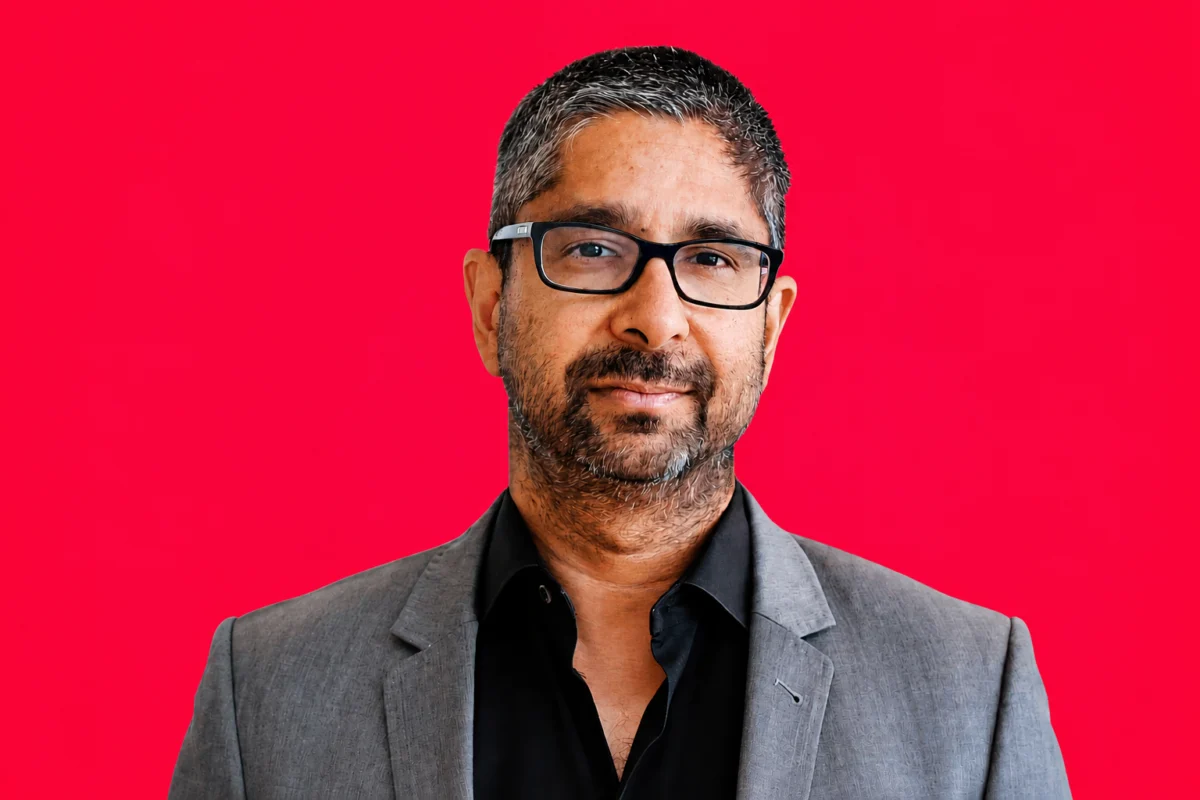
For over a decade, Vijay Pande was the titan of the "bio-tech" crossover. As a Stanford chemistry professor who gained early fame for building Folding@home—a distributed computing project that turned home PCs into a global supercomputer for disease research—Pande became the face of Andreessen Horowitz’s (a16z) aggressive entry into life sciences. When Marc Andreessen and Ben Horowitz decided to pivot their firm toward the healthcare sector, they handed the keys to Pande. He didn’t just open the door; he built a multi-billion-dollar practice, managing nearly $4 billion in assets and fundamentally changing how Silicon Valley views the intersection of silicon and biology.
Then, in June of last year, Pande did the unthinkable: he walked away. He left the massive machinery of a16z to launch VZVC, a boutique firm co-founded with longtime investor Zach Werner. It is a radical departure from the venture capital status quo. VZVC makes only a handful of concentrated bets annually, employs zero associates, and leverages AI for its own internal operations. It is a firm designed to be as lean as the technology it bets on.
The Chronology of a Visionary
Pande’s trajectory reflects the maturation of the AI-biotech industry itself. His career has been defined by three distinct phases:
- The Academic Foundation (Early 2000s): Pande built his reputation at Stanford, focusing on the computational aspects of molecular dynamics. His work on Folding@home demonstrated that massive, distributed computing could solve problems that had previously stumped traditional supercomputers.
- The Scaling Phase (2012–2023): Recruited by a16z, Pande helped bridge the gap between computer science and biology. During this period, the industry moved from skepticism ("AI will never work for medicine") to full-scale adoption. He oversaw investments in companies like Genesis Therapeutics and Insitro, guiding them through the notoriously difficult regulatory and scientific hurdles of the drug discovery process.
- The Boutique Pivot (2023–Present): With VZVC, Pande is experimenting with a new model of venture capital. By eschewing the "spray and pray" strategy of larger funds, he is returning to the hands-on, high-conviction roots of early-stage investing, augmented by AI-driven efficiency.
Supporting Data: Why Biology is Different
The central tension in Pande’s current work involves a unique limitation of the AI revolution. In the world of Large Language Models (LLMs), AI thrives on massive, internet-scale datasets. However, as Pande points out, "Biological data can’t be scraped off the internet."
This creates a significant hurdle:
- Walled Gardens: Because medical data is private, regulated, and proprietary, every startup is forced to build its own "walled-off" dataset.
- The Predictive Gap: Historically, drug development has relied on animal models, which are notoriously bad at predicting human responses. The failure rate for drugs moving from Phase 1 to Phase 3 of clinical trials is an abysmal 80%.
- The Economic Reality: A single clinical trial can cost hundreds of millions of dollars. If 80% of these trials fail, the amortized cost of drug development becomes astronomically high, driving the high price of medicine.
Pande argues that AI is not a magic wand that eliminates the need for clinical trials, but it is a tool for better "target selection." By replacing flawed animal models with superior AI-driven human biological simulations, the industry can increase the probability of success, which is the only way to meaningfully lower drug costs.
Official Perspectives: The Future of Precision Medicine
In our recent conversation with Pande, he emphasized that we are moving from a "science of discovery" to a "science of engineering."
"For a long time, precision medicine was limited to genomics," Pande noted. "But your genome is just the blueprint for your house on day one. Your house changes over time." Today, through advancements in proteomics and robotic automation, we can measure the body as it exists in the present, not just as it was coded at birth.
On the "Silo" Problem
One of the most profound implications of Pande’s vision is the potential for AI to break down the territorial silos of medicine. In current healthcare, an oncologist and an endocrinologist rarely sync their data. "What is really intriguing about AI," Pande says, "is that it can, in principle, be a specialist in everything." By synthesizing information across disparate medical domains, AI could act as a permanent, collaborative team of the world’s best doctors, analyzing patient data in ways no single human could.
The Rise of Open-Source Biology
While many founders want to keep their data locked behind a gate to maintain a competitive advantage, Pande believes the future lies in "biological atlases." He predicts that the same shift seen in the software world—where open-source LLMs began to compete with and often outperform closed, corporate models—will happen in biology. "As foundation models in biology become more common, I think we’ll see open-source versions having a very broad impact."
Strategic Implications: The VZVC Model
The design of VZVC is a direct critique of the "venture scale" mentality. By capping their investments at around five companies a year, Pande and Werner are prioritizing depth over breadth.
The "Associate-Free" Fund
Perhaps the most striking aspect of VZVC is its reliance on AI agents rather than human associates. Traditionally, venture firms hire associates to source deals, perform due diligence, and handle the administrative load. Pande and Werner have found that their custom-built AI tools handle these tasks with equal or greater efficiency, allowing them to remain a lean, two-man team.
Selecting the Right Founders
When asked what he looks for, Pande’s criteria are notably human-centric, despite his focus on AI. He prioritizes:
- Integrity: A long-term commitment to the mission, rather than a desire to "beat" others.
- Go-to-Market Brilliance: Pande admits that early in his career, he focused too heavily on the "cool factor" of the technology. He now tells his founders that the go-to-market strategy is often more difficult and more important than the science itself.
- Long-term Alignment: "Adding a company to a portfolio is like adding a Facebook friend," Pande says. "For Zach and me, it’s more like wanting to have another child. It’s a big deal."
Conclusion: The Myth of the "Cure-All"
Pande remains grounded in the face of AI hype. He is quick to clarify that the industry must be wary of claims that AI will "cure everything." The bottleneck is not the sophistication of the algorithms—which are already incredibly advanced—but the availability and quality of the data.
"When the data is simply not there, AI can’t magically solve that problem," he warns.
However, by focusing on high-integrity founders and using AI to solve specific, high-stakes problems like clinical trial design and healthcare delivery, Pande is positioning VZVC to be a quiet, powerful force in the next decade of medical innovation. He has moved away from the spotlight of a massive firm to focus on the nuance of the craft, proving that even in the age of automation, the most successful bets are still made on the human capacity for long-term, collaborative vision.
About the Author