As the mercury climbs in an era of unprecedented global heating, the subterranean veins of New York City have transformed into a sprawling, sweltering furnace. For the four million daily riders who rely on the Metropolitan Transportation Authority (MTA), the transit experience has shifted from a mere convenience to an endurance test. In the deep, concrete canyons of Manhattan, a new, visceral reality has taken hold: the subway is no longer just a way to get around—it is a public health hazard.
The Guerrilla Thermometer: Mapping the Heat
Jack Klein, a 31-year-old construction site manager, has spent the last two years documenting this descent into chaos. An Ohio native, Klein brought a fresh, outsider’s perspective to the city’s transit infrastructure. Unlike long-time New Yorkers who rely on a mix of stoicism and "suck it up" attitude to survive the summer, Klein viewed the rising temperatures as an anomaly that demanded quantification.
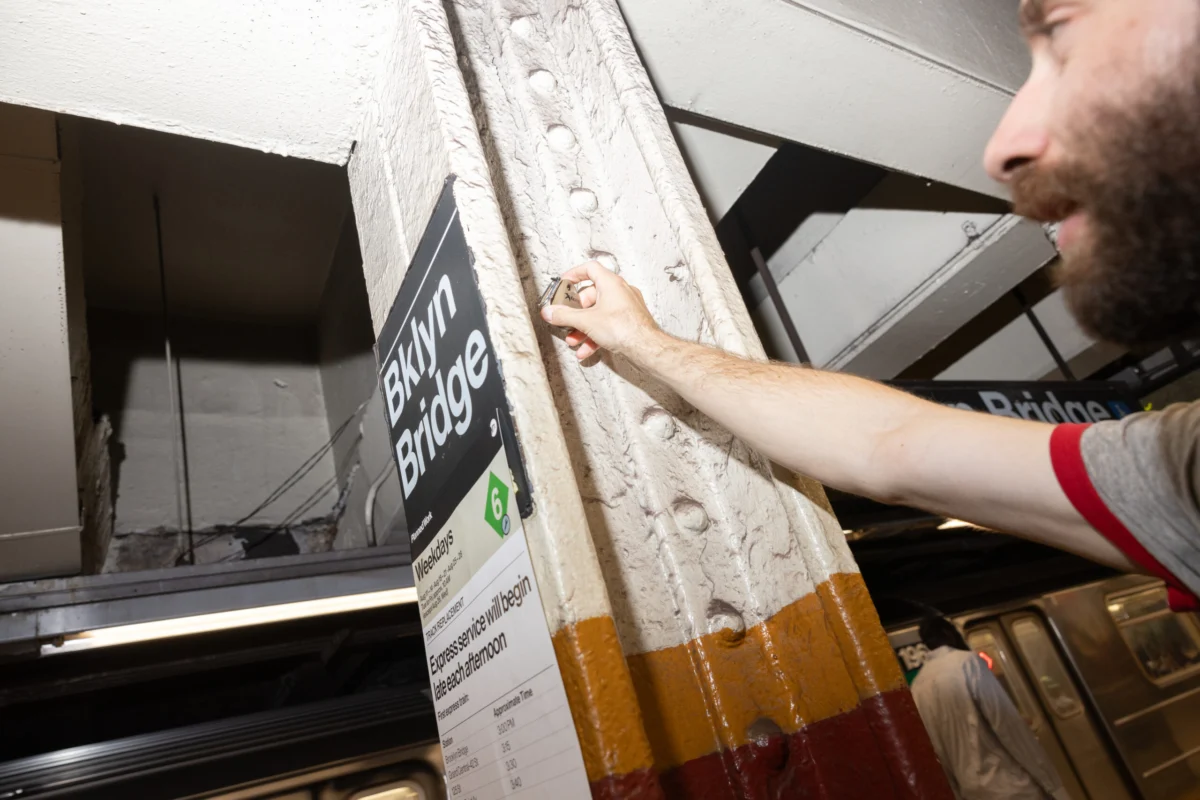
Acting as a guerrilla heat operative, Klein has spent his summers attaching teardrop-shaped sensors to the steel beams of seven of Manhattan’s most notorious stations. His findings have been as consistent as they are alarming. On a recent August afternoon at the 14th Street-Union Square station—a critical hub for the 4 and 5 lines—his monitors registered a staggering 99°F on the platform, a temperature ten degrees higher than the already scorching ambient air at street level.
However, the temperature is only half the story. When factoring in New York’s signature suffocating humidity, the "real feel" or heat index reached a delirious 132°F. "It’s been worse—I’ve seen it get to 120 on the thermometer," Klein noted, gesturing toward police officers whose heavy tactical gear appeared to be weighing them down in the stagnant, humid air. For the commuters navigating these "Hades-like" conditions, the experience is not merely uncomfortable; it is physically debilitating.

Chronology of a Crisis
The evolution of the subway’s thermal profile is a multi-generational tale of design versus climate reality.
- Early 20th Century: The system was built using a piston-effect ventilation design, intended to move air through the tunnels as trains passed. It was a functional solution for an era before widespread air conditioning.
- 1993: A turning point in transit history occurred when the last of the city’s subway cars were finally retrofitted with air conditioning. While this cooled the interior of the trains, it created a thermodynamic irony: the units dump their exhaust heat directly onto the platforms, further warming the stations.
- 2024–2026: As global temperatures shattered records—with July 2026 marking the hottest month ever recorded in the United States—the "leaky" nature of the stations became a fatal flaw. Unlike a sealed submarine, the open stairwells and subway grates make traditional climate control nearly impossible.
- August 2026: The current peak of the crisis, leading to high-level governmental intervention as public outcry reaches a boiling point.
The Science of the "Hot Box"
The physics of the subway station is simple, yet catastrophic. A station is essentially a thermal battery, soaking up heat from the city’s concrete and steel during the day and radiating it back out at night. Every braking train generates friction-based heat, and every commuter—of which there are millions—contributes approximately 100 watts of body heat to the environment.
Giorgia Chinazzo, an environmental engineer at Northwestern University, has spent years studying the correlation between transit design and passenger distress. Her research confirms that underground environments are heating up at a rate that outpaces the surface. "The underground is overheating more than aboveground, which is creating these extreme temperatures," Chinazzo explains. "This summer is a clear sign that we are facing a climate crisis and our built environment isn’t designed for it. In older systems like London and New York, the metro systems just can’t deal with this."
Official Responses and the "Thermal Battery" Strategy
Recognizing that the status quo is unsustainable, the Metropolitan Transportation Authority (MTA) is beginning to pivot from passive acceptance to active mitigation. Janno Lieber, the MTA’s chief executive, has been candid about the limitations of the current infrastructure. "The subway isn’t a submarine, it’s not an enclosed environment," Lieber stated. "We know this is no fun for New Yorkers. It’s brutal underground in the summertime, and every year is getting hotter because of climate change."

In response, a new, ambitious plan is emerging: the creation of a thermal energy network. The proposal involves capturing the excess heat from stations like the Brooklyn Bridge-City Hall complex and redirecting it. Using a series of liquid-filled pipes, the heat would be drawn away from the platforms and funneled into storage boreholes drilled up to 600 feet underground. This captured heat could then be utilized to warm municipal buildings—including City Hall—during the winter months.
New York City Mayor Zohran Mamdani has championed this initiative, framing it as a way to "make what is old new again." At a press conference held at the Chambers Street station—which he famously dubbed a "chamber of horrors"—Mamdani argued that this investment would not only lower energy costs but provide a blueprint for other global cities grappling with aging, overheated transit systems.
The Human and Economic Implications
The human cost of this crisis is borne disproportionately by those who spend the most time in these environments: maintenance workers, cleaners, and the millions of daily commuters. The Transport Workers Union (TWU) Local 100 has repeatedly flagged the conditions as hazardous, citing a lack of mandatory rest breaks and adequate drinking water for staff.
Furthermore, the economic burden is immense. The proposed upgrades, while promising, will require billions of dollars and years of complex construction across a network of 472 stations. As the world faces an era of climate adaptation, the cost of inaction is increasingly being measured not just in dollars, but in lives lost to heat-related illness.

Klein, meanwhile, continues his advocacy with a dash of irony. His latest project is the construction of an actual wooden sauna on the 14th Street-Union Square platform. It is an art piece intended to hold a mirror to the city: if the commute already feels like a sauna, why not embrace the absurdity of the situation?
A Path Forward?
Experts like Alessandro Rotta Loria, who collaborated on the Northwestern University study, believe that the technology to solve this problem exists. "Extracting the heat and moving it away is a rational approach," he notes. "You can deploy this universally, in New York City, London, Rome, wherever you are. The only issue is space restraints and the expertise and willingness to install it."
As New York stands at the crossroads of a cooling revolution, the question remains whether the political will can match the physical necessity. Until these grand engineering feats move from study to installation, the millions of New Yorkers descending into the tunnels each morning will continue to face the reality of a changing planet, one sweat-drenched, sweltering commute at a time. The goal is no longer to make the subway "cool" in the colloquial sense, but to ensure that the city’s lifeblood doesn’t literally boil over in the heat of a new, warming world.
About the Author