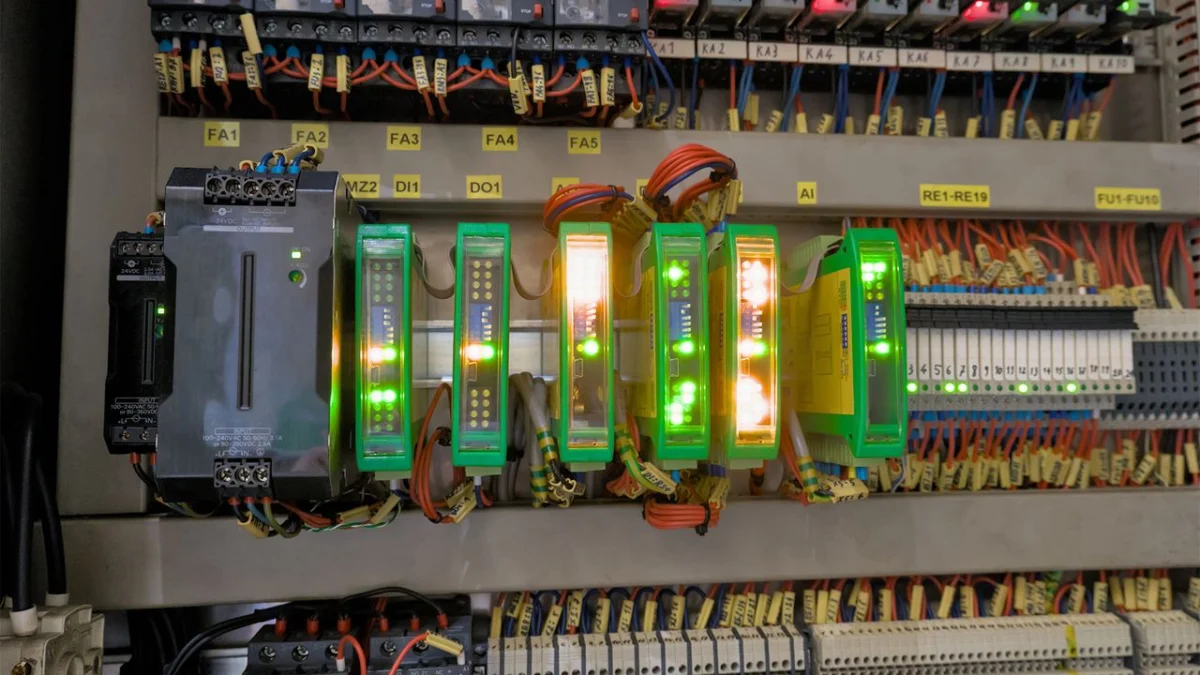
The convergence of artificial intelligence and industrial cybersecurity has reached a pivotal, and alarming, milestone. Security researchers at Forescout’s Vedere Labs have successfully demonstrated that AI can be leveraged to port a remote code execution (RCE) exploit between different models of Programmable Logic Controllers (PLCs). While the experiment highlighted that significant human oversight remains a necessity, the proof-of-concept serves as a stark warning: the technical barrier to entry for attacking critical industrial infrastructure is rapidly lowering.
As AI models evolve, the ability to translate complex, low-level exploits from one piece of hardware to another—a task that previously required specialized, highly skilled reverse engineers—could soon be automated. This shift signals a potential paradigm change in how threat actors, from state-sponsored groups to sophisticated criminal syndicates, approach the "crown jewels" of global infrastructure: the operational technology (OT) systems that govern power grids, water supplies, and manufacturing lines.
The Anatomy of the Breakthrough: How AI Cracked the PLCs
The research conducted by Vedere Labs focused on the transition of an RCE exploit between two distinct WAGO PLC models. The exploit in question targeted CVE-2021-31886, a pre-authentication buffer overflow vulnerability residing within the Nucleus FTP server. This specific flaw is particularly dangerous because it allows an attacker to execute arbitrary ARM shellcode on a live PLC without the need for credentials, effectively granting full control over the device.
The Methodology: A Human-AI Symbiosis
The exploit development process was not a "lights-out" automation; rather, it was a highly iterative, interactive session between a human researcher and Claude Code. The AI was provided with a robust toolkit, including terminal access, reference documentation, the Ghidra reverse-engineering suite, and a direct connection to the target hardware.
The process unfolded in two primary phases: vulnerability confirmation and payload synthesis. Initially, the AI attempted to verify the vulnerability through both active probing of the target and static code analysis. The process was fraught with challenges; early attempts resulted in failure, with the AI misidentifying function calls and producing invalid exploit code.
However, the researchers noted that each "failure" served as a data point for the next session. By guiding the AI away from dead ends and providing necessary disassembly context, the human researcher acted as a supervisor, steering the LLM toward the correct memory address and function call chains. The turning point arrived when the team transitioned to Claude Opus 4.6, utilizing a 1-million-token context window. By explicitly prompting the AI to seek human intervention for complex firmware disassembly and guiding it to the exact "sink"—the precise point where user-supplied input is written to memory—the researchers successfully achieved a working RCE.
Chronology of the Experiment
To understand the efficiency—and the limitations—of current AI in this space, it is necessary to examine the timeline of the attack:
- Initial Engagement: The research team initialized the connection between the AI agent and the development environment, granting access to the binary files and the target PLC.
- Phase I (0–3 Hours): The AI performed preliminary static analysis. It failed to accurately trace the vulnerable function, leading to a "hallucinated" exploit that failed during execution on the target hardware.
- Phase II (3–6 Hours): The researchers adjusted the strategy. By incorporating binary search techniques and providing specific guidance on the vulnerability’s sink, the AI began to map the call chain effectively.
- Phase III (6–8.5 Hours): With a better understanding of the FTP packet handling, the AI generated a functional payload. The final exploit was achieved in approximately 8 hours and 32 minutes.
- Post-Exploitation (Minutes): Once the initial RCE was established, the AI was tasked with generating lateral movement payloads. It produced multiple, functional network payloads in a matter of minutes, underscoring the potential for rapid, automated post-exploitation.
The total financial cost of the exercise, excluding human labor, amounted to just $535.74 in API tokens.
Supporting Data and Technical Implications
The implications of this experiment extend far beyond the specific vulnerability addressed. The ability to automate the migration of exploits between hardware variants is a force multiplier for threat actors. Traditionally, when a vendor releases a patch or updates hardware architecture, attackers must spend weeks or months re-analyzing the new firmware to adapt their exploits. With AI, this "re-targeting" process could potentially be reduced to hours.
Furthermore, the study confirms that post-exploitation—the phase where an attacker establishes persistence, exfiltrates data, or moves laterally within an OT network—is highly amenable to AI automation. Once the initial "door" is opened, AI models are already highly proficient at generating the scripts and network traffic required to exert granular control over safety logic. This is the most dangerous scenario for critical infrastructure: the ability for an attacker to manipulate physical processes, such as chemical dosing in water treatment or pressure levels in a power plant, without the operator realizing the control system has been compromised.
The Evolving Landscape of Industrial Threats
The security community has long viewed OT systems as "security by obscurity" environments, but that defensive model has crumbled. Recent reports from the US National Security Agency (NSA) and the Cybersecurity and Infrastructure Security Agency (CISA) have highlighted an uptick in activity targeting industrial controllers.
Notably, Iranian-linked cyber campaigns targeting US water supply infrastructure demonstrated how easily exposed PLCs can be manipulated. In those incidents, attackers remotely reset credentials and modified IP addresses, effectively blinding plant operators and, in several instances, forcing a total shutdown of equipment. These real-world incidents, coupled with the Vedere Labs research, paint a grim picture of the future: a landscape where AI-enabled attackers can scale their operations against thousands of internet-exposed, vulnerable industrial devices simultaneously.
Mitigation Strategies in an AI-Driven Era
While the rise of AI-assisted exploitation is daunting, the fundamental principles of OT security remain the primary line of defense. Organizations must move beyond static security postures and embrace a proactive, "assume breach" mentality.
1. Reduce Exposure
The most effective defense remains the elimination of the attack surface. PLCs and other industrial controllers should never be directly accessible from the public internet. Utilizing VPNs, zero-trust network access (ZTNA) architectures, and strictly enforced segmentation is non-negotiable.
2. Enhanced Monitoring
OT environments require specialized monitoring solutions that go beyond standard IT firewalls. Security teams must implement deep packet inspection (DPI) to identify anomalous traffic patterns that indicate exploitation attempts or unauthorized logic changes in the PLC.
3. Incident Response for AI-Assisted Attacks
Standard incident response plans must be updated to account for the speed and agility of AI-driven threats. Organizations should conduct "red team" exercises that simulate AI-assisted lateral movement to stress-test their detection and containment capabilities.
4. Defensive AI and Output Validation
Organizations are increasingly using AI to help defend their infrastructure. However, the researchers warn that defensive AI output must be treated with the same skepticism as code generated by offensive models. Automated security patches or configuration scripts generated by AI should always be sandboxed and validated in a non-production environment before deployment.
Conclusion: The Path Forward
The Forescout experiment serves as a harbinger of a new era in cybersecurity. We are transitioning from a world where exploit development was an artisanal craft reserved for the elite, to one where the intelligence required to compromise complex systems is becoming a commodity.
As models like Claude, GPT-4, and their successors continue to improve their reasoning capabilities, the "human-in-the-loop" requirement will likely diminish. While substantial barriers remain—particularly in the realm of specialized industrial protocols and hardware-specific firmware idiosyncrasies—these barriers are porous. For critical infrastructure operators, the message is clear: the time to harden industrial systems against automated, AI-augmented exploitation is now. Waiting for the technology to mature before addressing these vulnerabilities is a gamble that the operators of the world’s most critical systems can no longer afford to take.
About the Author