SAN FRANCISCO – The Moscone Center has once again become the epicenter of the enterprise software world as Salesforce kicked off Dreamforce 2026. With the atmosphere electric, the opening day served as a definitive declaration that the industry has moved past the initial hype cycle of generative AI and into the pragmatic, high-stakes era of autonomous agents.
Led by CEO Marc Benioff, the keynote event did not merely present software updates; it unveiled a structural shift in how businesses interact with technology. Central to this year’s theme is the transition from "human-in-the-loop" interfaces to "agentic" workflows, headlined by two major innovations: AIforce and the Koa reasoning model.
The Core Transformation: Moving Beyond the UI
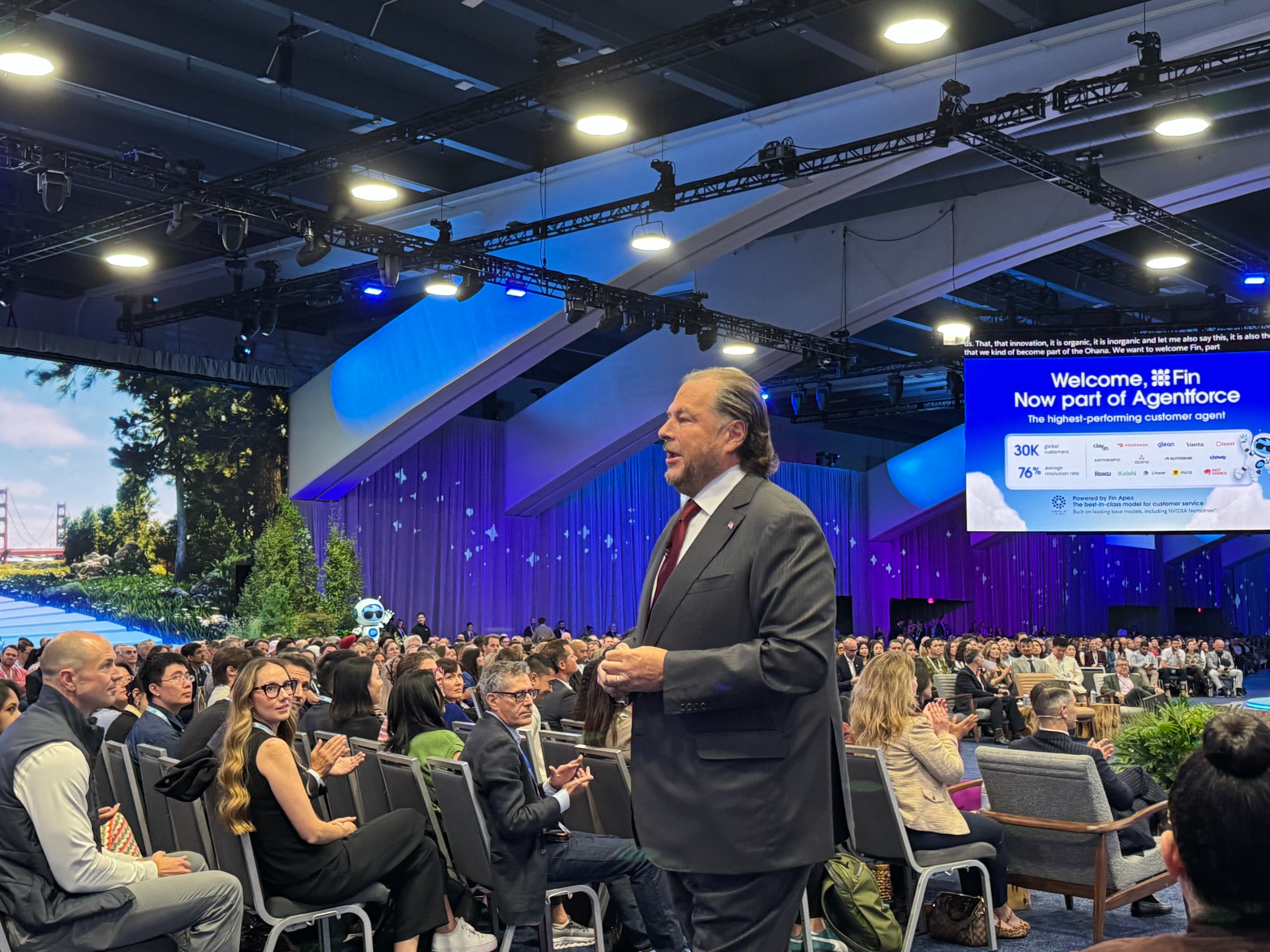
The defining narrative of this year’s conference is the death of the "rigid" user interface. Benioff opened the keynote by challenging the status quo of enterprise software, arguing that while previous decades focused on command-line and graphical interfaces, we have now entered the "AI interface era."
"AI doesn’t herald the end of software, just the end of software that makes the humans do all the work," Benioff declared to a packed auditorium.
To facilitate this, Salesforce introduced AIforce, a new "live interface layer." Rather than forcing employees to jump between fragmented applications, AIforce sits atop the entire Salesforce product estate. It acts as a semantic and connective tissue, allowing enterprises to build custom interfaces on the fly. By leveraging AI to orchestrate data, apps, and workflows, Salesforce aims to dismantle the silos that have traditionally hampered productivity.
Chronology of Day One: From Keynote to Collaboration
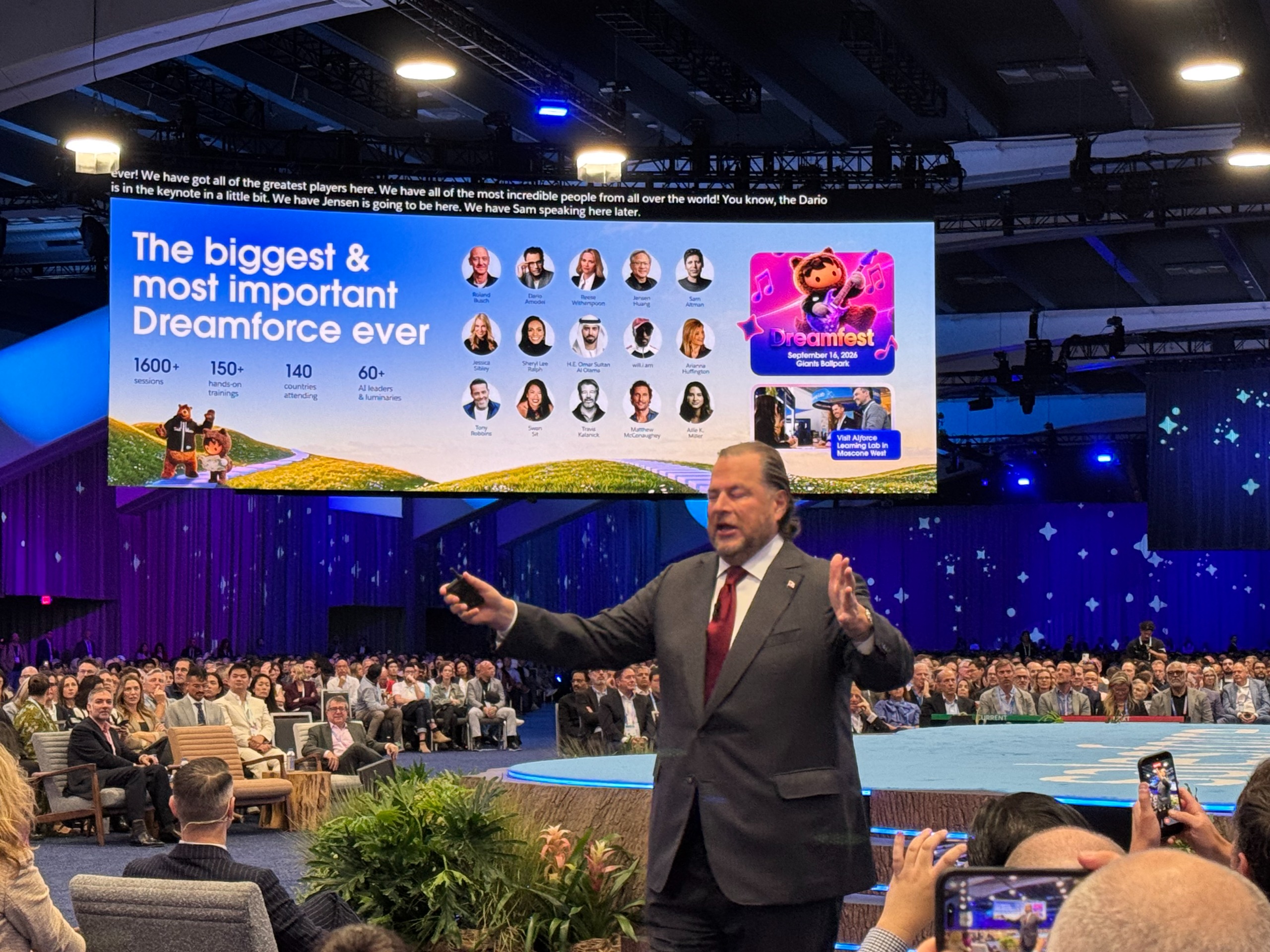
The day began with the familiar, high-energy pageantry of Dreamforce, including a performance by Gwen Stefani and a nod to the 23 million "Trailblazers" globally. However, the substance of the day quickly pivoted to the technical and strategic alliances defining the future of the company.
- 10:00 AM PST: Marc Benioff takes the stage, setting the tone by distinguishing between "dabbling" in AI and true enterprise-wide deployment. He noted a "significant unevenness" in global adoption, urging companies to move past the initial phase of skepticism.
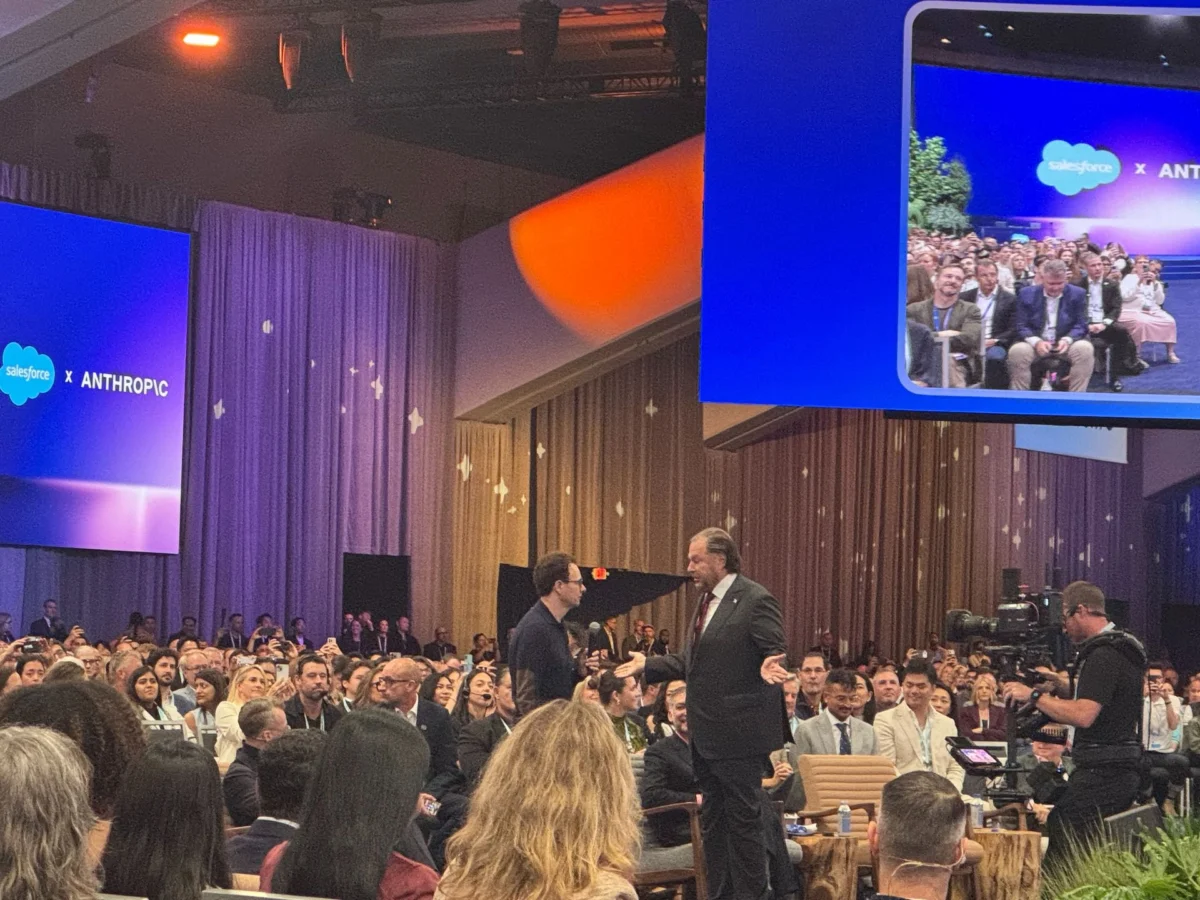
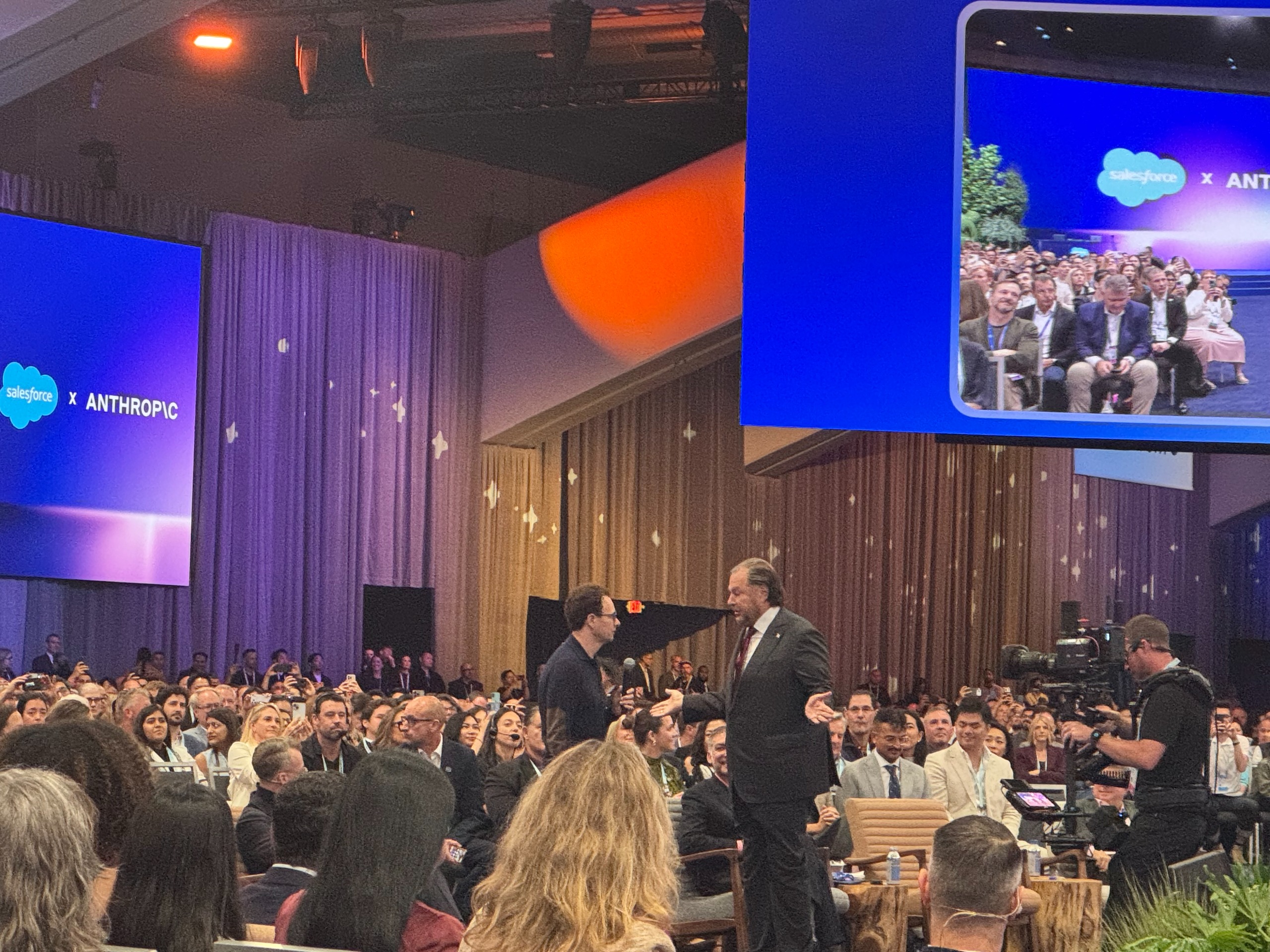
- 10:30 AM PST: The introduction of Claudeforce. Building on the strategic partnership with Anthropic, Salesforce announced that Claude’s capabilities will be deeply embedded into the core product suite.
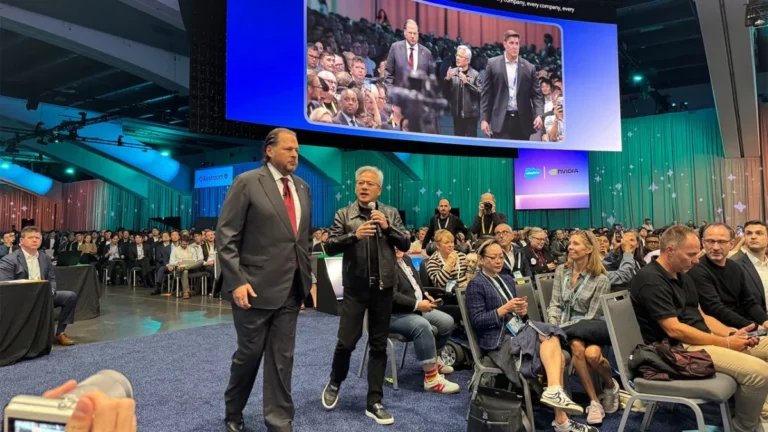
- 11:00 AM PST: A high-profile appearance by Nvidia CEO Jensen Huang. The duo took a walk through the theatre, emphasizing the hardware-software synergy required to power modern AI.
- 11:30 AM PST: Siemens CEO and President, Roland Busch, joined the stage to demonstrate real-world, large-scale implementation of agentic AI.
- 1:00 PM PST: The afternoon session focused on industry-specific agents, including new capabilities for Sales, Marketing, and Field Service Clouds.
Koa and the Nvidia Partnership: The Reasoning Engine
Perhaps the most significant technical reveal of the day was Koa, a dedicated CRM-focused reasoning model. Developed in collaboration with Nvidia, Koa is built upon the chipmaker’s open-weight Nemotron model family.
Koa represents a strategic move to solve the "reasoning gap" in CRM software. By utilizing a model specifically tuned for the nuances of customer relationship management, Salesforce is attempting to provide a level of accuracy and logic that general-purpose LLMs struggle to maintain in enterprise environments.
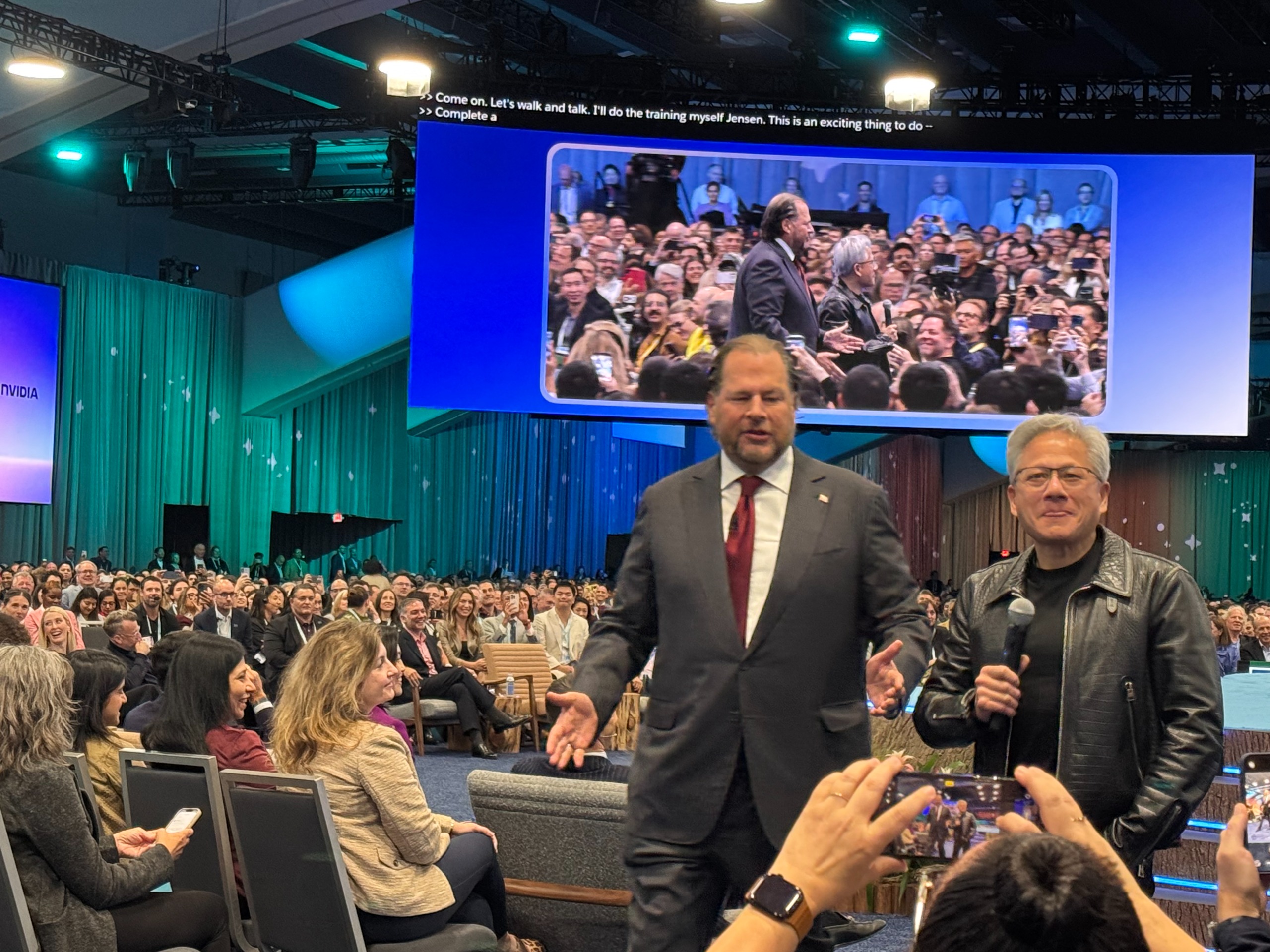
Jensen Huang, during his guest appearance, noted the unprecedented rise of open-source and open-weight models, which have surged from 30% to 70% of the market in just one year. "Every single software company is now an AI company," Huang stated, reinforcing the importance of Salesforce’s decision to integrate custom-built reasoning engines like Koa directly into its platform.
Real-World Impact: The Siemens Case Study
To prove that these aren’t just abstract concepts, Roland Busch of Siemens provided a masterclass in industrial AI application. Siemens, which oversees one-third of the world’s manufacturing lines, is using Salesforce’s Agentforce as the "backbone" of its supplier and client interactions.
The demonstration showcased two key agents:
- Piper: An inbound sales agent capable of handling voice-based natural language queries to convert leads into sales, providing real-time insights on commercial models.
- Marshall: An agent specialized in supplier onboarding. Historically a process taking weeks of human labor, Marshall reduced the onboarding cycle to just 90 minutes by learning business rules within an SAP sandbox environment.
Busch highlighted that the goal is "redefining products," from advanced CTR scanners to the very manufacturing processes that power global supply chains.
Supporting Data: The Productivity Surge
The evidence for the efficiency of these agents is mounting. Adecco Group CEO Denis Machuel shared compelling metrics regarding the integration of agents across their business.
According to Machuel, the integration of AI agents has been a critical "growth engine," resulting in the placement of 20,000 additional people this year alone. By automating time-intensive recruitment workflows, the agents allow human recruiters to focus on high-value human connections, rather than administrative hurdles.
Furthermore, the data regarding model consumption supports the broader market shift:
- Token consumption rates for closed-source models have surged 25x over the last year.
- Open-model market share has hit 70%, indicating that enterprises are moving toward building custom, specialized AI systems rather than relying on a single "one-size-fits-all" model.
Official Responses and Strategic Philosophy
The keynote was marked by a surprising consensus among industry leaders regarding safety and regulation. Anthropic CEO Dario Amodei and Nvidia’s Jensen Huang both took a measured stance on the pace of AI development.
Amodei noted that the rapid growth of the ecosystem has been a surprise, but he explicitly stated that he is not calling for a "freeze" on the frontier of AI. Instead, he emphasized the need for "responsible development" and the creation of standardized test environments.
Huang echoed this sentiment, arguing that regulation should not be the primary focus. Rather, he framed safety as an "engineering problem." If a company cannot guarantee the functionality and safety of its model in a test environment, it has a responsibility to "pace itself" before market deployment. This philosophy—that safety is the responsibility of the developer—was a recurring theme throughout the day.
Implications: The "Agentic" Future
As Dreamforce 2026 continues, the implications of these announcements are clear. We are witnessing the maturation of the AI market. The focus has shifted from "Can we build a chatbot?" to "How do we build an autonomous system that can handle complex, multi-step business logic?"
1. The Death of the Traditional SaaS Workflow
By moving toward a "live interface" model, Salesforce is signaling that the era of clicking through dozens of screens to update a record is coming to an end. In the future, the interface will be a conversation—or a silent, background process managed by an agent.
2. The Rise of the AI-First Enterprise
Companies like Siemens and Adecco are not just using AI as a "bolt-on" feature. They are integrating agents into the core of their business operations. This signals a competitive divide: those who successfully "agentify" their business will see exponential gains in efficiency, while those who remain attached to traditional, manual workflows will struggle to maintain margins.
3. The New Power Dynamic: Hardware and Data
The partnership between Salesforce and Nvidia highlights that the future of enterprise AI is not just about code; it is about the intersection of proprietary business data and high-performance computing. The ability to fine-tune reasoning models like Koa on specific, private enterprise data will become the primary moat for the world’s most successful corporations.
As we look toward the remainder of the week at the Moscone Center, the challenge for the Salesforce ecosystem will be adoption. With the technology now available, the focus turns to the human element—"bringing people along," as Machuel put it. If the energy on the ground is any indication, the industry is more than ready to take the leap.
Stay tuned to our live feed throughout the week for deeper dives into product sessions, expert interviews, and the ongoing saga of the Agentic Era.
About the Author