The narrative of 2026 has been defined by a singular, pervasive anxiety: the "SaaSpocalypse." Across the corridors of Silicon Valley and the trading floors of Wall Street, a chilling consensus began to form—that the era of Software-as-a-Service (SaaS) was reaching its terminal phase. The rise of autonomous, agentic artificial intelligence, capable of performing complex workflows once reserved for human operators, was heralded as the death knell for the subscription-based applications that have powered global enterprise for the last two decades.
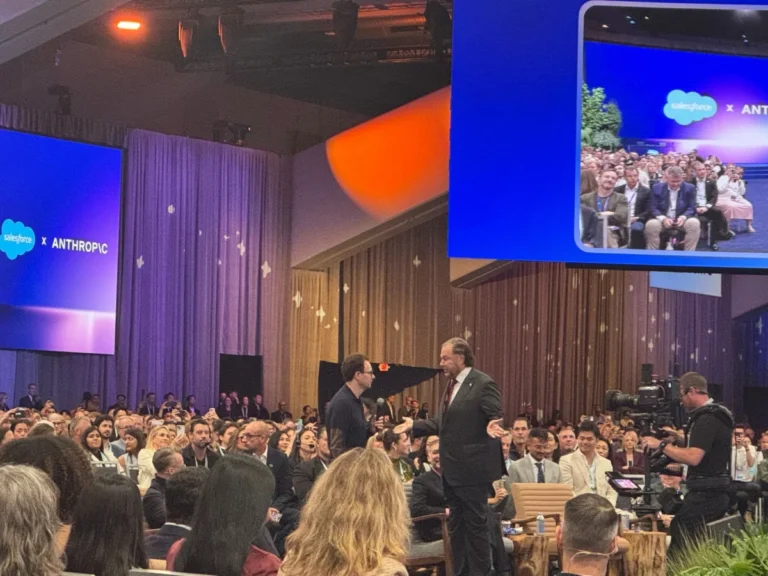
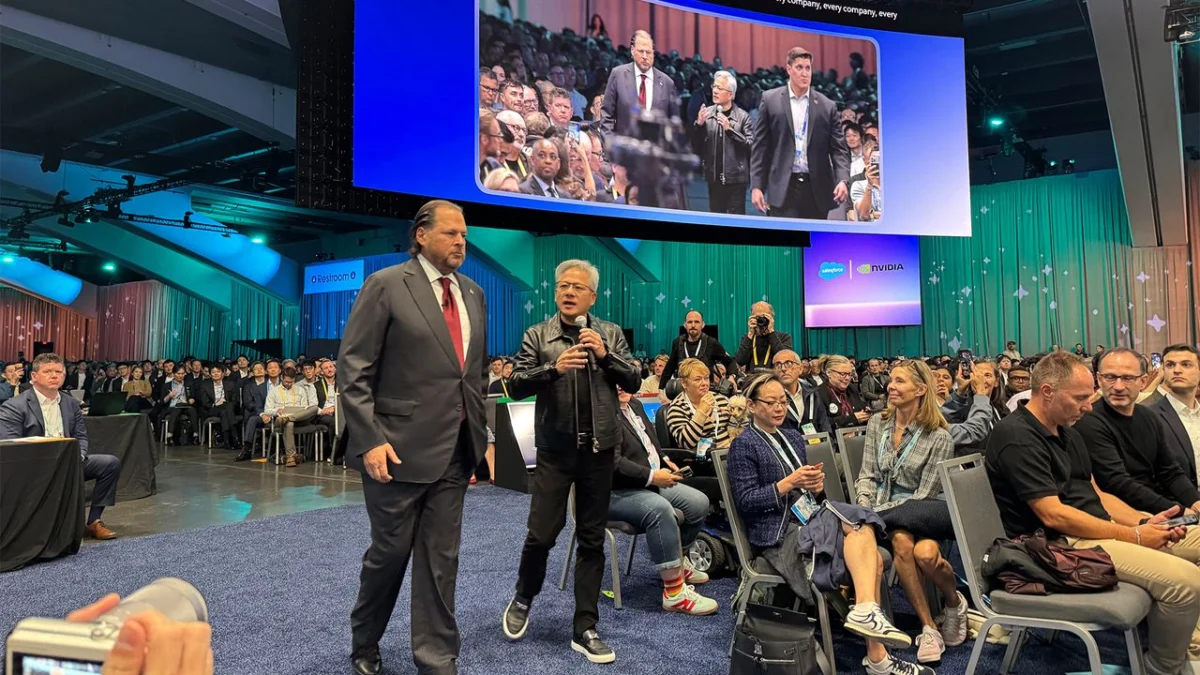
However, during the opening keynote of Dreamforce 2026, two of the most influential figures in technology—Salesforce CEO Marc Benioff and Nvidia CEO Jensen Huang—pushed back forcefully against this apocalyptic rhetoric. Their message was clear: SaaS is not dying; it is being fundamentally redefined.
A Chronology of the ‘SaaSpocalypse’ Panic
The hysteria surrounding the potential obsolescence of SaaS did not emerge in a vacuum. It was sparked by a rapid sequence of technological breakthroughs and market reactions that rattled investor confidence.
The catalyst for this fear was the release of Anthropic’s Claude Cowork earlier this year. Unlike previous iterations of AI that functioned as mere chatbots or copilots, Claude Cowork introduced the concept of highly specialized, agentic workflows. These agents could autonomously navigate enterprise environments, execute tasks, and make decisions without constant human intervention.
The market response was immediate and severe. In early February, the S&P 500 Software and Services index plummeted by nearly 5%. In a matter of mere days, approximately $830 billion in market value evaporated as investors panicked, fearing that traditional software companies would lose their utility—and their subscription revenue—to a new generation of autonomous agents that might render legacy interfaces obsolete.
For months, industry analysts debated whether the "subscription economy" had finally hit a ceiling. The fear was that if AI agents could do the work, the need for dozens of individual SaaS licenses—for CRM, ERP, project management, and communications—would collapse into a single, agent-driven interface, stripping software vendors of their primary revenue stream.
The Huang-Benioff Rebuttal: Defining the "Agentic Layer"
During their high-profile dialogue at Dreamforce, Jensen Huang and Marc Benioff sought to dismantle the gloom-and-doom narrative. Huang, whose hardware is currently the backbone of the AI revolution, offered a pragmatic view of how the industry is shifting.
"I was the first CEO to come out—not in the software industry—to say the end of software is nonsense," Huang declared. "This is going to be a layer on top of software. This new layer on top of software is going to be agentic. It’s going to make software so much better."
Huang’s perspective emphasizes a symbiotic relationship rather than a destructive one. He posits that AI will act as an intelligent orchestration layer that enhances the value of existing software platforms. By automating the friction points of traditional software, AI increases productivity, making the underlying software more valuable to the enterprise, not less.
Benioff, standing alongside him, echoed these sentiments, labeling the ongoing market panic as "crazy nonsense." For Benioff, the "SaaSpocalypse" is a misnomer. "We realize that the SaaSpocalypse isn’t about the end of software, but it may be about the end of software that makes humans do all the work," he noted.
Benioff’s argument is that the shift is one of user experience. The "work" is being automated, but the "platform" remains the source of truth, data, and logic.
Supporting Data: Why the Giants Remain Confident
Despite the market volatility witnessed in February, Salesforce’s own performance suggests that the "death of SaaS" may be greatly exaggerated. The company’s Q2 earnings, released in August 2026, served as a definitive riposte to critics.
Reporting its strongest Wall Street performance since 2020, Salesforce demonstrated that it has not only weathered the storm but is thriving within it. A significant driver of this success has been the rapid adoption of its AI-centric product lines. Revenue in segments such as Agentforce and Data 360 reached nearly $3.9 billion, representing a staggering 210% year-over-year increase.
These numbers provide a critical data point: customers are not cancelling their subscriptions; they are upgrading them. They are moving away from passive software and toward agentic platforms that promise to reduce manual labor. This suggests that the enterprise market is hungry for AI-integrated solutions, provided they are built on robust, secure, and established software foundations.
Implications for the Future: A Changing Landscape
While the "SaaSpocalypse" may be a myth, the transition of the software industry is very real. Industry leaders, including AWS CEO Matt Garman, have previously noted that while the fears are overblown, the landscape is undergoing a permanent transformation.
The Death of the Traditional Dashboard
The primary shift is away from the traditional, rigid user interface. In the past, a user had to log into a CRM to update a lead or check a record. In the future, that task will be performed by an agent, perhaps mediated by an AI interface.
Salesforce’s introduction of AIforce—a "live interface layer" that sits atop its ecosystem—is a direct response to this. AIforce allows users to interact with Salesforce data through third-party agents, such as Claude, effectively decoupling the service from the traditional browser-based dashboard. This acknowledges a fundamental shift: the software is becoming the "engine," while the "interface" is becoming fluid and conversational.
The "Agentic Arbitrage" Challenge
Research from Gartner suggests that the industry must be wary of "agentic arbitrage"—a phenomenon where autonomous agents render middle-man services obsolete. Gartner estimates that up to $234 billion of application spending is exposed to this risk. If an agent can perform the functions of five different software tools, companies will inevitably consolidate their tech stacks.
For software vendors, the implication is clear: those who do not integrate agentic capabilities into their core offerings will be the ones who truly face an "apocalypse." The winners will be those who successfully transition from selling "seats" to selling "outcomes" delivered by agents.
The Competitive Horizon
The competitive landscape is no longer defined by who has the best features, but by who has the most reliable agents. As Matt Garman noted earlier this year, providers must work harder to secure and maintain market share. The barrier to entry for new AI-native startups is lower than ever, forcing legacy giants to innovate at a pace previously unseen.
Conclusion: The Renaissance of Software
The panic that defined early 2026 was a symptom of a transition period, not a death sentence. The "SaaSpocalypse" is transforming into an "AI-augmented Renaissance."
The industry is moving past the phase of manual data entry and static reporting. By embracing agentic AI, software companies are creating systems that are more proactive, more intuitive, and ultimately, more essential to the modern enterprise. As Marc Benioff and Jensen Huang demonstrated, the software isn’t going anywhere—it is simply evolving into an invisible, autonomous partner that handles the heavy lifting, allowing humans to focus on higher-level strategy.
For the IT decision-maker, the takeaway is clear: the threat is not the technology itself, but the failure to adapt to a world where software no longer waits for a human click to take action. The future of software is agentic, and for those who embrace this new layer, the potential for growth is unprecedented.
About the Author