In the high-stakes world of digital infrastructure, the narrative has shifted. For years, the data center industry was defined by the sheer volume of capital deployed—a "build it and they will come" mentality fueled by the rise of cloud computing. Today, however, that paradigm has been dismantled by the insatiable, power-hungry requirements of artificial intelligence.
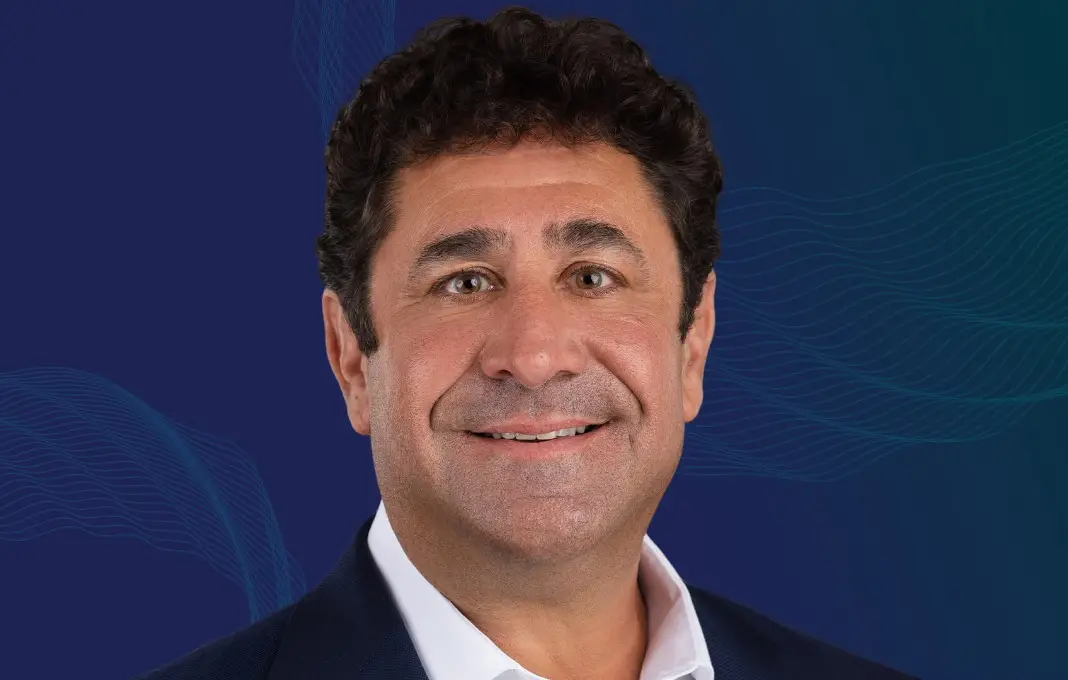
Dave Ferdman, a titan of the data center industry and co-founder of Primary Digital Infrastructure (PDI), argues that the era of simple capital allocation is over. As billions of dollars flood into the sector, the industry is hitting a "hard ceiling" defined by grid constraints, supply chain bottlenecks, and the sheer technical complexity of high-density computing. For investors and developers, the question is no longer who has the most money, but who has the operational rigor to navigate a market where power is the new currency.
The Evolution of a Sector: From Cloud to Compute
To understand the current state of the market, one must look at the historical trajectory of the data center. In the early 2000s, when Ferdman co-founded CyrusOne, the focus was on connectivity and basic reliability. Over the next two decades, the industry scaled exponentially, supporting the migration of enterprise workloads to the cloud.
Ferdman’s career serves as a roadmap for this evolution. Having led CyrusOne from its inception in 2000 through its 2011 IPO and returning to navigate its $15 billion take-private transaction with KKR and Global Infrastructure Partners in 2021, Ferdman has witnessed every cycle of the industry’s growth.
"We are operating at a moment where AI is driving one of the largest digital infrastructure investment opportunities in decades," Ferdman says. "But capital alone can’t shorten an interconnection queue, secure a transformer, or reposition a decade-old facility for next-generation compute."
Chronology of an Infrastructure Shift
- 2000–2010: The "Reliability Era." Data centers focused on uptime and basic colocation services to support early internet adoption and enterprise server migrations.
- 2011–2020: The "Scale Era." The rise of hyperscalers (AWS, Google, Azure) forced data centers to grow in size and geographic footprint, focusing on massive, standardized deployments.
- 2021–Present: The "Constraint Era." The generative AI explosion creates a demand for high-density compute that legacy infrastructure cannot handle. Power grid limitations and transformer supply chain shortages become the primary gatekeepers of growth.
The PDI Approach: Bridging the "Execution Gap"
Primary Digital Infrastructure (PDI) was formed with a thesis that the current market requires a hybrid approach. As an independent investment and advisory platform, PDI operates at the intersection of technical engineering and institutional finance.
"PDI is built for this environment," Ferdman explains. "We bring more than 200 years of collective operating experience alongside a disciplined investment strategy. Our focus is on assets that can perform today and evolve over time—aligning capital with the long-term realities of AI and cloud demand."
The Dual Perspective Advantage
PDI’s business model is unique because it sits on both sides of the table. By acting as an advisor to some of the world’s largest hyperscalers and as an investor in its own right, the firm gains a bird’s-eye view of market frictions before they hit the headlines.
"On the advisory side, we’re engaged with the largest hyperscale companies as well as data center owners," Ferdman notes. "This provides real-time insight into how capital is flowing and where constraints are emerging. When you see the same supply chain bottlenecks across multiple portfolios, you gain a level of foresight that pure financial players simply don’t have."
Supporting Data: The Anatomy of a Constraint
The data center industry is currently facing a "Triple Threat" that differentiates this cycle from any previous infrastructure boom:
- Grid Constraints: The demand for power is now outpacing the utility industry’s ability to upgrade infrastructure. In key markets like Northern Virginia, Silicon Valley, and emerging hubs, the wait time for grid interconnection can span several years.
- Supply Chain Bottlenecks: The lead times for critical components—specifically high-voltage transformers and switchgear—have stretched from months to years, creating a massive barrier to entry for new developments.
- Density Requirements: Legacy data centers, designed for rack power densities of 5kW to 10kW, are physically incapable of supporting the 50kW+ per rack requirements of modern AI clusters without total mechanical and electrical overhauls.
These constraints have created a secondary market: the "recapitalization and repositioning" of existing assets. PDI is leveraging this by identifying older facilities that possess the one thing that cannot be manufactured: grid-connected power capacity. By acquiring these sites and upgrading them, PDI bypasses the interconnection queue, offering a faster path to market for high-density AI compute.
Official Perspective: The Stargate Abilene Milestone
One of the clearest indicators of the efficacy of PDI’s strategy is the Stargate Abilene project in Texas. A collaboration between PDI, Crusoe, and Blue Owl, the project is frequently cited as a benchmark for modern, large-scale infrastructure deployment.
"The Stargate Abilene data center is one of the most ambitious hyperscale projects in the world," Ferdman states. "We hit major milestones within the first year alone. That speed is only possible when you have the operational experience to anticipate permitting, engineering, and supply chain hurdles before they become roadblocks."
This project exemplifies the "alignment of capital" that Ferdman advocates. By combining the financial weight of institutional partners like Blue Owl with the specialized operational expertise of PDI and the technological vision of partners like Crusoe, the project moved from concept to reality in a timeframe that would be impossible for traditional, siloed developers.
Implications for the Future of Enterprise IT
As data centers transition from a "real estate" play to a "core enterprise utility," the role of the investment firm must also evolve. The days of treating data centers as simple warehouses for servers are gone; they are now sophisticated, high-performance engines that require constant technical optimization.
Strategic Integration
The implications for the broader market are twofold:
- Operational Alpha: Investors will no longer be able to rely on market beta (general industry growth). Future returns will be driven by "operational alpha"—the ability to source power, manage supply chains, and deliver complex, high-density environments on time.
- The Rise of the Strategic Partner: As complexity increases, the relationship between capital providers and developers will move away from transactional financing toward long-term strategic partnerships. Investors will increasingly seek firms that can act as both an advisor and an operator to mitigate the risks associated with AI infrastructure.
Conclusion: The Art of Alignment
"Creating this alignment is an art, not a science," says Ferdman. In a market characterized by high demand and limited supply, the winners will be those who recognize that the infrastructure of the future cannot be built on the logic of the past.
As we look toward the next decade of digital growth, the data center industry is moving into a phase where the "hard" assets—power grids and transformer stations—are the true limiters of AI capability. PDI’s model suggests that in this environment, the most valuable commodity is not capital itself, but the seasoned, technical, and strategic experience required to make that capital work in the real world.
For the enterprise, for the hyperscaler, and for the investor, the path forward is clear: success will be found by those who can successfully navigate the intersection of power, compute, and execution. As Dave Ferdman puts it, we are no longer just building buildings—we are building the foundation of the digital economy, and there is no room for error in the execution.
About the Author