As the global technology industry converges on Berlin for IFA 2026, Lenovo has positioned itself at the vanguard of the next computing revolution. At the Lenovo Innovation World event, the company unveiled a robust ecosystem of hardware specifically engineered to handle "agentic AI"—the next generation of autonomous software capable of performing complex, multi-step tasks with minimal human intervention.
By debuting a new family of ThinkCentre desktops and ultra-portable ThinkBook laptops, Lenovo is betting that the future of enterprise productivity lies in localized, high-performance computing power that keeps sensitive AI workflows on the device rather than in the cloud.
The New Frontier: Agentic AI Desktops
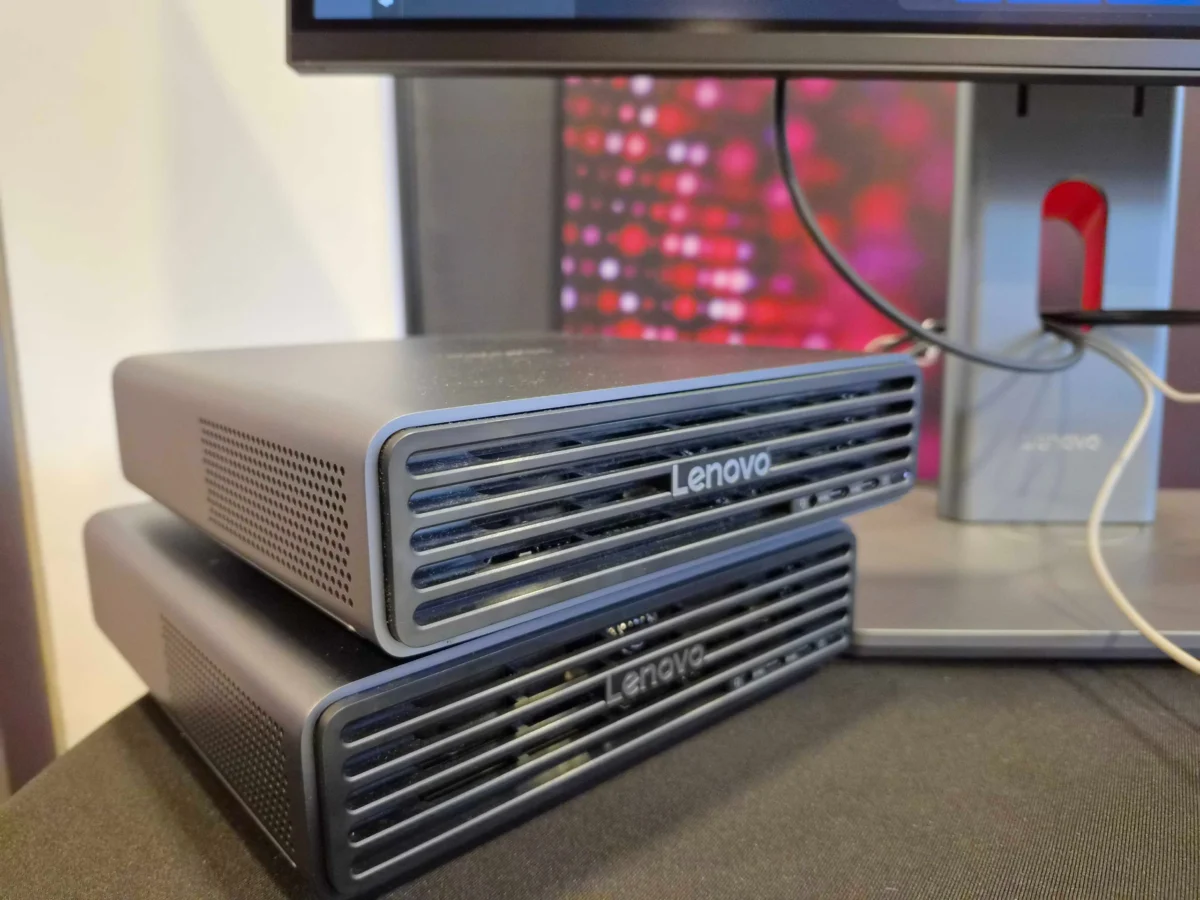
The centerpiece of Lenovo’s announcement is the ThinkCentre X Ultra, a device that represents a radical departure from traditional workstation design. Despite its diminutive 1.6-liter chassis, the X Ultra is being marketed as a powerhouse for the agentic AI era.
Powering the Agentic Era
At the heart of the ThinkCentre X Ultra lies the AMD Ryzen AI Max+ Pro 495 chipset. This silicon is purpose-built to handle the heavy lifting required for AI agents—software that can autonomously navigate files, execute code, and manage workflows. To ensure that these demanding processes do not lead to system throttling, Lenovo has overhauled the thermal architecture of the X Ultra, implementing a whisper-quiet cooling solution that maintains peak performance even under sustained high-load AI tasks.
The Power of the Cluster
Perhaps the most innovative feature of the X Ultra is its "cluster-ready" architecture. Understanding that the most sophisticated AI models require vast compute and memory resources, Lenovo has enabled the ability to link up to four X Ultra units into a unified platform. This distributed computing approach allows organizations to scale their hardware as their AI requirements grow, supporting larger parameter models, expanded context windows, and complex multi-agent collaborative workflows that would typically require expensive server-side infrastructure.
Chronology of the Innovation World Announcements
The lead-up to IFA 2026 has been defined by a strategic shift toward "AI Everywhere." The rollout at Lenovo Innovation World followed a carefully structured timeline of hardware integration:
- Pre-event Tease: Lenovo hinted at a major shift in SMB (Small and Medium-sized Business) hardware, focusing on the intersection of portability and AI-ready local processing.
- The Desktop Unveiling: The ThinkCentre series took center stage, with the X Ultra leading the charge as the flagship "Agentic AI" workstation.
- The Portfolio Expansion: Following the high-end desktop reveal, Lenovo shifted focus to the ThinkCentre M75s Gen 6, addressing the mid-tier market with the Ryzen AI Pro 400 series.
- The Mobility Reveal: The event concluded with the introduction of the ThinkBook 14 Gen 9 and 14x Gen 2, targeting the mobile workforce that requires edge-AI capabilities on the move.
Supporting Data and Technical Specifications
Lenovo’s new lineup is not merely about aesthetic redesigns; the specifications reveal a significant leap in TOPS (Trillions of Operations Per Second) and architectural efficiency.
ThinkCentre M75s Gen 6
Targeted at businesses that need reliable, compact hardware, the M75s Gen 6 features the Ryzen AI Pro 400 series, providing up to 50 TOPS of local AI performance. This ensures that essential security and productivity tools can run locally without relying on network latency or cloud-based subscriptions.
The ThinkBook Evolution
Lenovo has also revamped its ThinkBook line to cater to the mobile developer.
- ThinkBook 14 Gen 9: Powered by the Snapdragon X2 Plus processor, this model hits a significant milestone with 80 TOPS of localized AI performance, all housed in a standard 14-inch chassis. This makes it an ideal candidate for developers who need to run localized large language models (LLMs) while on-site with clients.
- ThinkBook 14x Gen 2: This model pushes the boundaries of engineering. With a thickness of just 12.9mm and a weight of 990g, it stands as the thinnest and lightest notebook at IFA 2026. Despite the form factor, it packs an Intel Core 7 processor, proving that mobility no longer requires a sacrifice in compute power.
Official Perspectives: The Philosophy of Seamless Integration
The strategy behind these releases is rooted in the philosophy that AI should be invisible, not intrusive. Eric Yu, Senior Vice President of the SMB Segment and Commercial Product Center at Lenovo, emphasized that the goal is to enhance current human workflows rather than disrupt them.
"The value of AI isn’t measured by how many features it adds, but by how naturally it fits into the work people are already doing," Yu stated during the keynote. "Our latest ThinkBook and ThinkPad portfolio brings AI into devices businesses already trust, helping small-and-medium-sized organizations embrace new capabilities without disrupting the way their teams prefer to work."
Lenovo’s commitment to integration is further solidified by its partnership with the AMD Ryzen AI Developer Center. The X Ultra, in particular, arrives with preconfigured AI tools, models, and workflows that are compatible with both Windows and Linux environments, significantly lowering the barrier to entry for developers looking to deploy agentic software.
The Broader Implications for Enterprise IT
The shift toward "Agentic AI" hardware has profound implications for how IT departments will structure their investments over the next five years.
1. Data Sovereignty and Security
By moving AI workloads to local devices, Lenovo is addressing the primary concern of the enterprise: data privacy. When AI agents process data locally, sensitive proprietary information does not need to traverse the public internet or reside on third-party cloud servers. For industries such as finance, healthcare, and legal, this hardware-level security is a massive competitive advantage.
2. The Decentralization of Compute
The "cluster-ready" capability of the ThinkCentre X Ultra suggests a move away from centralized, monolithic servers. If businesses can achieve enterprise-grade AI performance by clustering small-form-factor desktops, it could lead to a massive reduction in data center costs and a more flexible, modular approach to scaling infrastructure.
3. Empowerment of the SMB Sector
Historically, high-performance AI development was the domain of massive corporations with the budget for custom cloud infrastructure. By bringing high TOPS performance to the ThinkCentre M75s and the ThinkBook series, Lenovo is democratizing AI. Small businesses can now run complex analytics, local chatbots, and automated agent workflows, putting them on a level playing field with larger competitors.
4. The Future of Work
As IFA 2026 progresses, the conversation is shifting from "what AI can do" to "how AI lives in our hardware." Lenovo’s focus on thin, light, and powerful devices suggests a future where the "computer" is no longer just a display for software, but an active participant in the creative process. Whether it is a developer in a cafe using a 990g ThinkBook 14x to debug code, or a financial analyst using a four-node ThinkCentre cluster to stress-test market models, the hardware is finally catching up to the ambition of AI software developers.
Conclusion
Lenovo’s announcements at the 2026 Innovation World event signal a maturation of the AI hardware market. By focusing on thermal efficiency, local processing power, and scalable architecture, Lenovo has provided the scaffolding upon which the agentic AI era will be built. As these devices begin to ship, the focus will undoubtedly shift to the software developers who will utilize these high-performance, edge-ready tools to redefine the limits of human-machine collaboration.
For the IT decision-maker, the message is clear: the era of purely cloud-reliant AI is coming to an end. The future of enterprise intelligence is being built on the desk, in the laptop bag, and increasingly, right at the edge of the network.
About the Author