Despite leading the world in recycling efforts, new data reveals a significant and often overlooked environmental and economic inefficiency across Europe: the pervasive use of unnecessarily large transport packaging. A stark disparity in box sizes between Nordic countries and major continental economies like France and Germany is shedding light on a hidden problem that the upcoming EU Packaging and Packaging Waste Regulation (PPWR) aims to rectify.
Main Facts: Europe’s Packaging Paradox
Europe has long been lauded for its robust waste management systems and ambitious recycling targets. According to Eurostat, countries such as Germany and the Nordic nations consistently achieve high recycling rates for packaging waste, with Germany alone recycling approximately 70%—already nearing the EU’s ambitious 2030 goal. This commendable performance often positions Europe as a global leader in circular economy initiatives.
However, beneath the surface of these impressive recycling figures lies a less sustainable reality. Fresh insights from Raja, Europe’s largest packaging distributor, indicate that many businesses across the continent are heavily reliant on standardized packaging formats that are frequently far larger than required for the items they contain. This widespread practice of "shipping air" contributes significantly to material waste, increased transportation emissions, and elevated operational costs, even before the packaging enters the recycling stream.
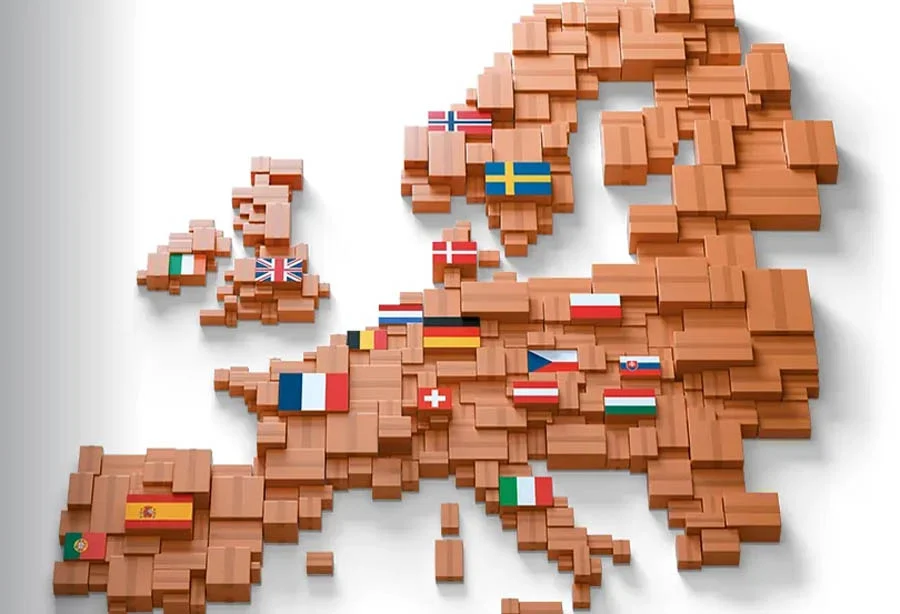
The core of the problem is a dramatic difference in the average volume of transport boxes used across the continent. While customers in France and Germany, for instance, commonly purchase transport boxes with volumes averaging up to 48 liters, the equivalent average in Sweden is a mere 3.3 liters. This staggering disparity means that the most common packaging formats in some European regions can be up to 14 times larger than those used in others, highlighting a critical area for improvement in sustainable logistics.
Chronology: The Impending Regulatory Shift
The European Union is not oblivious to this inefficiency. Recognizing the environmental and economic burden of excessive packaging, the EU is preparing to implement the landmark Packaging and Packaging Waste Regulation (PPWR), set to come into force in August 2026. This comprehensive regulation marks a pivotal moment for the packaging industry and the broader supply chain across all member states.
The PPWR’s objectives are multifaceted, aiming to reduce packaging waste, promote reusable packaging solutions, and ensure that all packaging on the EU market is recyclable or compostable by 2030. Crucially, for the issue of oversized packaging, the regulation introduces stringent requirements for e-commerce packaging. Specifically, it mandates that the void space within e-commerce packages must not exceed 50%. Furthermore, common void-fill materials such as bubble wrap, foam peanuts, and air cushions will now be counted towards this void space limit, forcing businesses to rethink not just the size of their boxes but also their internal protection strategies.
This regulation is a direct response to the growing environmental concerns associated with packaging waste and the inefficiency inherent in current logistical practices. It represents a clear legislative push towards greater resource efficiency and a more genuinely circular economy, moving beyond mere recycling to address the upstream issue of packaging design and optimization. The August 2026 deadline provides a two-year window for businesses to adapt their packaging strategies, supply chains, and operational processes to comply with the new mandates.
Supporting Data: Regional Disparities and Their Roots
The data from Raja paints a vivid picture of the divergent packaging cultures within Europe. The average 48-liter box in France and Germany versus Sweden’s 3.3-liter average isn’t just a statistical anomaly; it reflects deeply ingrained logistical practices and consumer habits.
Continental Europe’s Legacy of Volume:
The prevalence of larger packaging in countries like France and Germany is partly attributable to historical and industrial factors. For decades, large manufacturing industries on the continent have set the standard for logistics systems, prioritizing the efficient transportation of goods on standard pallets (such as the Euro pallet). This has led to the widespread adoption of packaging dimensions that are optimized for palletization and bulk transport in traditional B2B (business-to-business) supply chains. Companies often choose standard box sizes that fit neatly onto these pallets, even if the individual contents do not fill the entire volume of the box.
"In countries with a strong industrial heritage and large traditional retail networks, the emphasis has historically been on robust, standardized packaging that can withstand complex supply chains and be efficiently stacked for bulk delivery," explains Rémi Colas, Head of Sustainable Packaging Initiatives at Raja Group. "This approach, while effective for certain types of distribution, has inadvertently led to a culture where package size is often dictated by pallet dimensions rather than the actual product volume."
Furthermore, home delivery has remained the most common delivery method in these regions. Without the pressing constraints of limited space found in parcel lockers, businesses have faced less economic pressure to minimize package dimensions. The cost of ‘shipping air’ has often been absorbed into broader logistics budgets, without being directly itemized or penalized in a way that would drive significant change.
Nordic Efficiency: Driven by E-commerce and Parcel Lockers:
In stark contrast, the Nordic countries, particularly Sweden, have pioneered a more compact and efficient approach to packaging. This efficiency is largely driven by their highly developed and mature e-commerce markets. The Nordics have enthusiastically embraced parcel lockers ("pakkebokse" in Danish), which offer consumers convenience and flexibility for receiving online orders.
"E-commerce has evolved significantly in the Nordics, placing high demands on compact packages," Colas elaborates. "The space within parcel lockers is inherently limited and is often priced accordingly. This directly incentivizes—or even forces—Nordic e-retailers and distributors to minimize the size of their packages to optimize costs and ensure their products fit into the allocated locker compartments."
This direct economic pressure, coupled with a consumer expectation for efficient and often environmentally conscious delivery, has fostered an ecosystem where packaging innovation focuses on right-sizing. Retailers actively seek out or design packaging solutions that are tailored to their products, minimizing void space and reducing overall package dimensions. This strategy not only saves on packaging materials but also reduces shipping costs (especially where dimensional weight pricing is applied) and improves the efficiency of last-mile delivery.
Official Responses: Industry Adaptation and Expert Outlook
The EU’s PPWR is not merely a suggestion; it’s a binding regulation that will necessitate significant changes across all sectors involved in packaging. The 50% void space limit, in particular, will force a paradigm shift in packaging design and logistics.
Industry’s Path Forward:
Businesses operating in countries accustomed to larger packaging will face considerable challenges and opportunities. They will need to:
- Re-evaluate Packaging Portfolios: Conduct thorough audits of their current packaging solutions, identifying areas where void space can be reduced. This might involve adopting a wider range of box sizes or exploring more flexible packaging options.
- Invest in Packaging Technology: Companies may need to invest in automated packaging machines that can create custom-sized boxes on demand or systems that optimize product placement within a given package.
- Optimize Void Fill: Traditional void-fill materials like bubble wrap and foam peanuts will need to be used judiciously or replaced with more compact, sustainable, and less volume-intensive alternatives. The regulation’s counting of void fill towards the 50% limit makes this a critical area.
- Re-train Staff: Warehouse and logistics personnel will require training on new packaging protocols and the importance of minimizing void space.
- Collaborate with Suppliers: Brands will need to work closely with their packaging suppliers and logistics partners to develop compliant and efficient solutions.
Rémi Colas of Raja Group views the PPWR as a necessary catalyst for change. "While home delivery remains prevalent in countries like Germany and France, companies there haven’t experienced the same acute pressure to save space during delivery," he notes. "This has often resulted in more empty space per box. But in line with the new EU regulations, the rest of Europe must now move in the same direction as the Nordics."
Colas anticipates that Raja, as a leading distributor, will play a crucial role in assisting businesses with this transition. "We are already seeing increased demand for expert advice on packaging optimization, right-sizing solutions, and sustainable alternatives. The PPWR will accelerate the adoption of these practices across the continent, driving innovation in packaging materials and design."
The regulation is also expected to foster greater collaboration within the industry, as companies share best practices and collectively seek solutions to meet the new standards. It may also spur the development of new packaging technologies, such as intelligent packaging that adapts its size to its contents, or fully compostable and dissolvable void fills.
Implications: Environmental, Economic, and Consumer Impact
The shift mandated by the PPWR carries profound implications for the environment, the economy, and consumer experience across Europe.
Environmental Impact:
The most direct environmental benefit will be a significant reduction in packaging material consumption. Less material means fewer natural resources extracted, less energy consumed in manufacturing, and a smaller carbon footprint from production.
Furthermore, reducing package volume has a substantial positive impact on transportation emissions. Trucks, vans, and cargo planes will be able to transport more actual goods and less ‘air,’ leading to fewer journeys, reduced fuel consumption, and lower greenhouse gas emissions per delivered item. This efficiency gain ripples throughout the entire logistics network, from warehouses to last-mile delivery. Even if packaging is recycled, generating less waste in the first place is always the superior environmental option.
Economic Impact:
For businesses, the economic implications are a mix of initial investment and long-term savings. While there will be upfront costs associated with auditing current practices, redesigning packaging, and potentially investing in new equipment, the long-term benefits are considerable:
- Reduced Shipping Costs: Many carriers use dimensional weight pricing, where the cost is based on the package’s volume rather than just its actual weight. Smaller packages directly translate to lower shipping fees.
- Lower Material Costs: Using less packaging material reduces procurement expenses.
- Optimized Storage: Smaller packages take up less space in warehouses and distribution centers, leading to reduced storage costs and more efficient inventory management.
- Increased Efficiency: Streamlined packaging processes can lead to faster packing times and improved throughput.
- Competitive Advantage: Companies that proactively embrace sustainable and efficient packaging can enhance their brand image and attract environmentally conscious consumers, potentially leading to increased market share.
Conversely, non-compliance with the PPWR could result in fines and reputational damage, posing a significant economic risk.
Consumer Impact:
Consumers are also likely to benefit from these changes:
- Reduced Waste at Home: Receiving a package that is perfectly sized for its contents means less packaging waste to dispose of, making household recycling efforts easier and more effective.
- Improved Delivery Experience: More compact packages can facilitate easier handling, fitting into smaller spaces (like letterboxes or smaller parcel lockers), and potentially leading to fewer missed deliveries.
- Enhanced Brand Perception: Consumers increasingly value sustainability. Brands that demonstrate a commitment to reducing packaging waste can foster greater trust and loyalty.
- Potential for Cost Savings: While not guaranteed, the economic efficiencies gained by businesses could, in some cases, translate to more competitive pricing for consumers.
Challenges and Opportunities
The transition will not be without its challenges. Large-scale industrial players and traditional retailers in continental Europe, with deeply embedded logistical systems, may find it more complex and costly to overhaul their packaging strategies. The sheer diversity of products, from tiny electronics to bulky household goods, presents an ongoing challenge for universal "right-sizing." Moreover, ensuring product protection while minimizing packaging remains a delicate balance.
However, these challenges also present significant opportunities for innovation. The PPWR is set to drive a wave of creativity in packaging design, material science, and logistics automation. Companies that embrace this shift early can position themselves as leaders in sustainable commerce. The development of advanced algorithms for packaging optimization, on-demand box-making machines, and eco-friendly void-fill alternatives are all areas ripe for growth.
Conclusion: Towards a Smarter Packaging Future
Europe’s journey towards a truly circular economy is evolving. While its recycling achievements are commendable, the new data from Raja and the impending EU Packaging and Packaging Waste Regulation highlight that efficiency in packaging design and size is the next critical frontier. The stark contrast between Nordic compactness and continental bulk underscores the vast potential for improvement.
The August 2026 deadline for the PPWR is not merely a regulatory hurdle; it is a catalyst for transformative change. By forcing businesses to confront the hidden costs of oversized packaging—both environmental and economic—the EU is pushing the continent towards a more resource-efficient, sustainable, and ultimately smarter future for packaging. The lessons learned from the Nordics, driven by e-commerce innovation and the pragmatism of parcel lockers, will serve as a crucial blueprint for the rest of Europe as it embarks on this essential journey of optimization. The era of shipping air is rapidly drawing to a close, paving the way for a leaner, greener packaging landscape.
About the Author