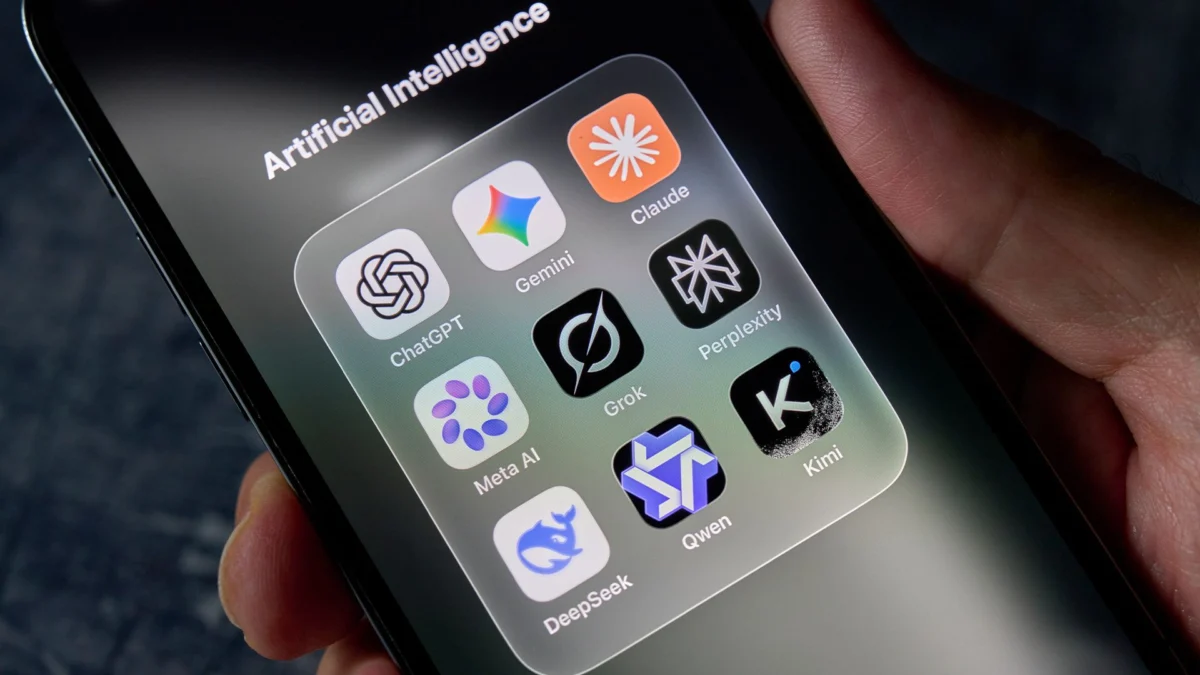
The landscape of modern enterprise technology has shifted seismically over the last eighteen months. What began as a period of experimentation with generative AI has rapidly evolved into a new era of "AI-first" business operations. However, the veneer of invincibility surrounding the industry’s primary model providers—OpenAI, Anthropic, and xAI—was stripped away on September 3, when a near-simultaneous service disruption affected all three platforms.
For the better part of three hours, the engines powering thousands of automated customer service desks, software development pipelines, and data analysis workflows sputtered to a halt. While the services were restored within a relatively short window, the incident has served as a profound catalyst for a new conversation in boardrooms and IT departments: How much risk are organizations assuming by tethering their critical infrastructure to a handful of frontier AI providers?
A Synchronized Collapse: The Morning of September 3
The disruption began in the early hours of September 3, creating a domino effect that caught many organizations off guard. Starting at approximately 6:23 am Pacific Time, users across the globe began reporting errors, latency, and total failures when attempting to access the web interfaces and API endpoints of the industry’s most popular large language models (LLMs).
The sequence of events unfolded as follows:
- 6:23 am PT: Anthropic was the first to sound the alarm, confirming "elevated errors" across its suite of models, including Mythos 5.1, Claude Fable 5.1, and Claude Opus 5.
- Approx. 6:30 am PT: OpenAI users began reporting widespread outages, with the company later confirming elevated error rates across its core products, including ChatGPT and its developer-focused tool, Codex.
- Concurrent Window: xAI’s Grok platform also began reporting significant service degradation, marking a rare, near-total blackout of the major players in the generative AI space.
The resolution of these issues was as staggered as the onset, yet the total recovery time for the industry remained within a two-to-three-hour window. Anthropic marked its systems as fully functional by 9:16 am PT, with OpenAI following closely at 9:15 am PT. xAI concluded its recovery efforts slightly later, confirming full restoration at 10:05 am PT.
The Mystery of the "Root Cause" and the SpaceX Connection
In the immediate aftermath of the outage, the tech community was rife with speculation. Given that three distinct organizations—each with its own independent infrastructure—experienced issues within the same timeframe, initial theories pointed toward a massive failure at a foundational layer, such as a major cloud service provider (CSP) or a backbone network provider.
However, the major cloud giants—Amazon Web Services (AWS), Microsoft Azure, and Google Cloud—all maintained that their systems remained operational throughout the period. Cloudflare, a vital component of internet infrastructure, also issued a statement denying any systemic disruptions, effectively distancing itself from the chaos.
The narrative took a turn when SpaceX, through a statement on its social media channels, acknowledged an internal issue. The company revealed that a power or operational failure at its Memphis data center had directly impacted the compute resources used by Grok. Because Anthropic has a significant, multi-billion-dollar compute partnership with SpaceX—specifically utilizing the capacity of the massive Colossus 1 data center—the link between the providers became clear.
While the SpaceX outage explains the disruption for xAI and potentially for Anthropic, the reason for the simultaneous failure at OpenAI remains somewhat more opaque. OpenAI officials cited a "routing error" that began around 7:43 am PT, but the coincidence of the timing remains a point of contention among industry observers. Some analysts suggest that as users found themselves locked out of Grok and Claude, they may have collectively flooded OpenAI’s servers, potentially triggering a traffic-related overload that manifested as a routing failure.
The Macro-Economic Implications of AI Downtime
Charlie Dai, a VP and principal analyst at Forrester, believes this incident marks a transition point for the AI industry. "The near-simultaneous disruptions highlight that AI is increasingly becoming operational infrastructure rather than a productivity add-on," Dai noted.
For years, IT leaders treated AI as an experimental layer—an "add-on" that could be turned off if the connection dropped. Today, that is no longer the case. When AI is embedded into the core of customer service chatbots, automated software documentation, and real-time knowledge management systems, an outage is not merely a temporary annoyance; it is an operational failure that halts business momentum.
The consequences of this reliance are quantifiable. During the two-hour window on September 3, businesses likely faced:
- Lost Revenue: For e-commerce firms using AI to handle customer inquiries or provide real-time recommendations, every minute of downtime directly correlates to a loss in conversion.
- SLA Breaches: Many enterprise software providers now guarantee a certain level of performance to their customers. Relying on an upstream AI model that suffers an outage can lead to a breach of Service Level Agreements (SLAs), inviting penalties or contract termination.
- Cascading Operational Stalls: When a development team relies on an AI copilot to write, debug, or deploy code, an outage stops the production pipeline. In a globalized economy where teams work in shifts, a single outage can cause a ripple effect across multiple time zones.
Moving Beyond the "Single-Provider" Trap
The events of September 3 underscore the inherent danger of "vendor lock-in" within the AI sector. Most enterprises currently pick one "frontier model" and build their entire ecosystem around its API. When that provider goes down, the entire enterprise application goes down.
Analysts argue that the industry must move toward a more resilient architecture. This includes:
- Multi-Model Strategies: Enterprises should build their applications with an abstraction layer that allows them to switch between models (e.g., using OpenAI for complex reasoning but having a fallback to an Anthropic or open-source model like Llama for standard tasks).
- Fallback Workflows: Critical business processes must have a "manual" or "degraded" mode. If the AI agent that answers customer queries fails, the system should be designed to automatically route inquiries to human agents or a simplified, local-compute rules engine.
- Resilience Testing: Business continuity plans usually account for server outages or data center fires, but few currently include "AI model outage" scenarios. This must change.
The Call for Transparency
Perhaps the most troubling aspect of the September 3 incident was the lack of clear, actionable data from the providers themselves. While status pages were updated, the technical details were minimal. For enterprise risk managers, this "black box" approach is unacceptable.
"When multiple major providers experience overlapping failures without a clearly established common cause, enterprises cannot accurately assess systemic risk," Dai explains. The lack of transparency makes it impossible for a Chief Information Security Officer (CISO) or a Chief Technology Officer (CTO) to know if their own infrastructure is at risk of a recurring event.
As AI models become as ubiquitous as electricity or internet connectivity, the expectations for service providers must rise to match the expectations of the utility sector. This includes higher standards for uptime, more transparent reporting of "routing errors" and "compute failures," and, crucially, a clearer understanding of the interdependencies between AI providers and the massive, centralized data centers that house them.
Conclusion: A Wake-Up Call for the Future
The AI industry is still in its infancy, and growing pains are to be expected. However, the reliance on a few concentrated points of failure is a structural weakness that the industry cannot afford to ignore as it pushes toward wider adoption.
The September 3 incident was a shot across the bow. It proved that the AI ecosystem is fragile, interconnected, and, in many cases, unprepared for the demands of mission-critical enterprise environments. For organizations looking to integrate AI into the bedrock of their operations, the takeaway is clear: do not bet your business on the availability of a single model. True resilience, in the age of AI, will belong to those who build for the eventuality of failure, not the hope of constant uptime.
As we look toward 2026 and beyond, the winners in the enterprise space will be those who prioritize dependency mapping, vendor diversification, and robust continuity planning, ensuring that when the AI goes down, the business stays up.
About the Author