In the high-stakes world of industrial electrical equipment, the difference between a satisfied customer and a lost contract often comes down to the speed and accuracy of order fulfillment. For WEG Electric Corp., a global powerhouse in the manufacturing of motors, generators, and electronic drives, that reality became a logistical bottleneck at its U.S. headquarters in Duluth, Georgia. By 2025, the company found itself at a crossroads: its soaring inventory levels were rapidly outgrowing its physical footprint, and traditional manual picking methods were struggling to keep pace with the modern digital economy.
The resolution of this challenge—a strategic shift toward high-density automation—serves as a masterclass in how industrial firms can leverage technology to squeeze maximum performance out of existing infrastructure without the capital-intensive requirement of expanding a building’s physical walls.
The Bottleneck: When Success Strains Capacity
WEG Electric’s Duluth facility is more than just a warehouse; it is a critical hub housing engineering, sales, and distribution operations. As the company’s product catalog—ranging from complex variable frequency drives to sensitive electrical controls—expanded, so did the demand for floor space.
The "growing pains" at the Duluth site were not merely a matter of clutter; they represented a systemic limitation. The reliance on manual workflows, characterized by paper-based pick lists and the constant movement of forklifts across a congested floor, created an environment ripe for inefficiencies. As SKU counts rose, the "travel time" for order pickers increased exponentially. Workers were spending more time navigating aisles than actually fulfilling orders. Furthermore, the reliance on forklifts in high-traffic areas posed both safety risks and productivity hurdles.
WEG realized that "building out" was not a viable or cost-effective strategy. The company needed a solution that would densify its storage, reduce the physical footprint of its small-parts inventory, and transition from reactive, manual labor to a proactive, automated fulfillment model.
Chronology of Transformation: From Paper to Pixels
The journey toward automation for WEG was methodical, prioritizing integration and scalability.
Phase 1: The Diagnostic Phase. WEG leadership identified that their small-parts inventory was the primary contributor to warehouse congestion. By segmenting their inventory, they recognized that a large portion of their high-velocity, small-item orders could be optimized through vertical storage technology.
Phase 2: Partner Selection and Design. Recognizing the need for a sophisticated integrator, WEG turned to Kardex, a renowned global leader in automated storage solutions. Kardex’s proposal centered on the AutoStore system—a modular, cube-based storage and retrieval system that effectively turns a "flat" warehouse into a vertical grid of high-density storage.
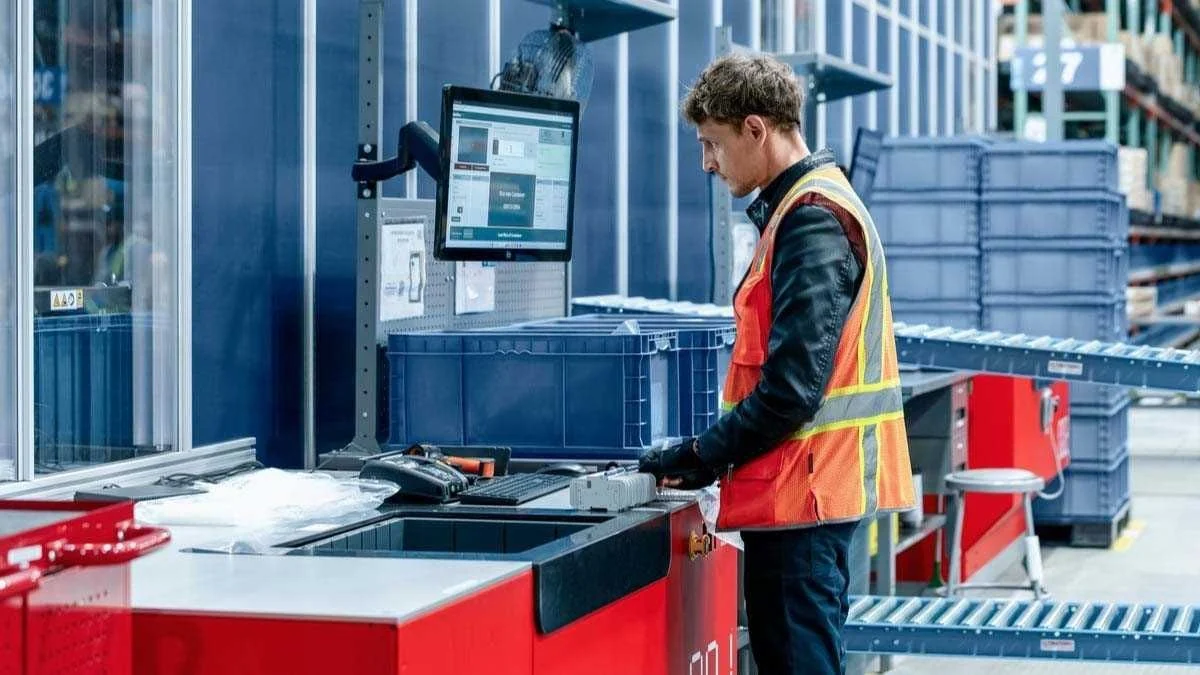
Phase 3: Integration and Implementation. The installation process was a complex feat of engineering. The team installed a high-density grid containing 13,938 storage bins. This grid was designed to be serviced by seven R5 AutoStore robots. To facilitate the human-machine interface, the system was equipped with three distinct picking ports: two CarouselPorts for high-efficiency picking and one ConveyorPort dedicated to streamlining inbound inventory.
Phase 4: Digital Orchestration. Hardware was only half the battle. To ensure the physical movement of goods matched the digital records in their Enterprise Resource Planning (ERP) system, WEG implemented the Kardex FulfillX Warehouse Execution System (WES). This software layer became the "brain" of the operation, managing real-time inventory storage, order sequencing, and workflow balancing.
Supporting Data: By the Numbers
The performance metrics following the implementation of the AutoStore system are striking. The facility has effectively doubled its small-parts picking speed. This isn’t merely a marginal improvement; it represents a fundamental change in the facility’s throughput capacity.
Beyond speed, the data reveals significant shifts in labor allocation and spatial efficiency:
- Labor Reallocation: Six employees who previously spent their shifts navigating the floor with paper lists have been redeployed to higher-value-added roles within the company. This shift highlights the "human-centric" benefit of automation—removing the drudgery of manual labor to allow staff to focus on quality control and customer service.
- Footprint Optimization: By centralizing small-parts storage within the AutoStore grid, WEG reclaimed a significant amount of floor space. This "found" space is now being utilized for pallet storage and other inventory categories, effectively increasing the facility’s overall capacity without changing the address.
- Operational Precision: The software-driven environment has led to a measurable increase in inventory accuracy. Because the WES tracks every item in real-time, the "hidden" costs of lost inventory or mis-picks have been dramatically reduced.
Official Perspectives: The Leadership View
The project has been heralded by WEG’s management as a resounding success, providing the company with the agility required to remain competitive in the U.S. market.
Scott Campbell, the logistics manager at WEG Electric, emphasized that the investment was not just about current needs, but about future-proofing the organization. "AutoStore has strengthened our distribution capabilities by increasing responsiveness, supporting scalable growth, and enabling faster fulfillment across our U.S. network," Campbell noted in an official statement.
Campbell highlighted three specific outcomes that have been transformative for the Duluth team:
- Enhanced Responsiveness: The ability to fulfill orders faster has elevated the service levels provided to WEG’s customers.
- Scalability: The modular design of the AutoStore system means that as WEG’s business continues to grow, they can scale the system by simply adding more robots, ports, or grid extensions.
- Space Efficiency: "It has enabled us to free up floor space and improve inventory accuracy, and it has given us the ability to store more SKUs without expanding the physical warehouse footprint," Campbell added.
Implications for the Material Handling Industry
The WEG Electric case study serves as a roadmap for other mid-to-large-scale manufacturers facing similar constraints. The implications of this project are twofold:
1. The Death of "Linear" Thinking
Traditionally, warehouse growth was synonymous with square footage. If you had more inventory, you needed more floor space. The AutoStore implementation proves that modern warehouse design is about "cube density." By utilizing vertical space and robotic retrieval, companies can store significantly more units in the same footprint, challenging the traditional necessity of building larger warehouses.
2. The Power of WES/ERP Integration
The success of this project was not solely dependent on the robots. It was the integration of the Kardex FulfillX WES with WEG’s existing ERP system that allowed for the seamless flow of data. The modern warehouse is becoming a software-led environment. The physical movement of a bin is now a data-driven event, reducing the margin for human error and providing stakeholders with complete visibility of the supply chain in real time.
3. Sustainability and Labor
There is also a sustainability angle to consider. By reducing the reliance on forklifts, WEG has lowered its energy consumption and reduced the wear and tear on the warehouse floor. Furthermore, in an era where labor shortages are a constant concern for logistics managers, the ability to automate repetitive tasks allows companies to retain their talent by moving them into more engaging, less physically taxing roles.
Conclusion
The transformation at WEG Electric’s Duluth headquarters is more than a technical upgrade; it is a strategic repositioning. By embracing high-density automated storage, the company has proven that industrial growth does not have to come at the expense of land use or operational complexity.
As the supply chain landscape continues to evolve, characterized by faster fulfillment expectations and rising real estate costs, the model implemented by WEG and Kardex provides a compelling blueprint. It is a future where the warehouse is not a static container for goods, but a dynamic, intelligent engine that works in tandem with human talent to drive business success. For WEG, the grid in Duluth is not just a storage system—it is the heartbeat of their future growth.
About the Author