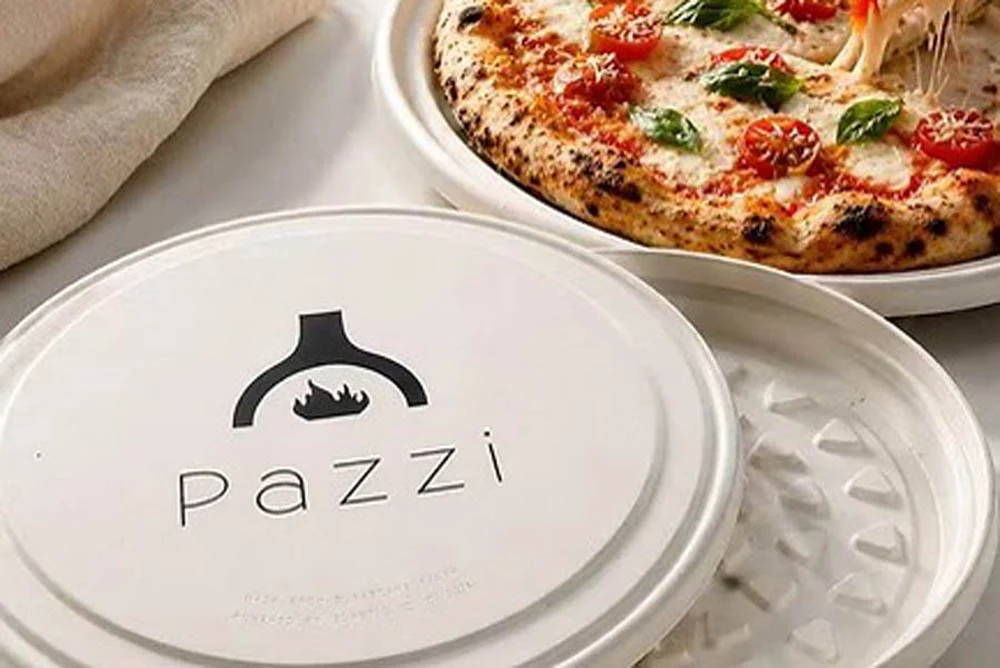
ODENSE, Denmark / STOCKHOLM, Sweden – In a significant stride towards a more sustainable future for the food industry, Danish innovator Blastiq has unveiled a groundbreaking pizza box poised to redefine industry standards. Nominated for the prestigious Packnorth Award, Blastiq’s pioneering solution eliminates harmful PFAS chemicals, leverages renewable bagasse fibers, and incorporates an advanced PHA-based barrier, all within an ingeniously designed circular form. This innovation directly addresses critical environmental and health concerns associated with traditional food packaging, offering a fully compostable and recyclable alternative that is already making its way to consumers.
The announcement of Blastiq’s participation in the Packnorth Award spotlights a growing demand for eco-conscious packaging solutions, particularly in high-volume sectors like fast food. With its commitment to eliminating "forever chemicals," reducing material waste, and simplifying end-of-life processes, Blastiq’s pizza box stands as a beacon of progress in the global movement towards a circular economy. The innovation will be showcased at the Sign Print & Pack exhibition in Odense, Denmark, and the Empack fair in Stockholm, Sweden, drawing attention from industry leaders and environmental advocates alike.
The Core Innovation: Blastiq’s PFAS-Free Bagasse Pizza Box
Blastiq’s nominated pizza box represents a radical departure from conventional designs, tackling multiple environmental challenges simultaneously. At its heart lies a commitment to safety and sustainability, built upon three foundational pillars: the complete absence of PFAS (per- and polyfluoroalkyl substances), the utilization of renewable bagasse fiber, and the integration of a cutting-edge PHA-based barrier.
Traditional pizza boxes, while seemingly innocuous, often pose significant environmental challenges due to their material composition and the treatments applied to them. The critical hurdle has always been the need for effective grease and moisture barriers, which historically have relied on problematic chemicals or non-recyclable coatings. Blastiq’s innovation circumvents these issues entirely.
The box is meticulously crafted from bagasse, the robust, fibrous residue left after sugarcane stalks are crushed to extract their juice. This abundant agricultural byproduct offers a highly sustainable alternative to virgin wood pulp, reducing deforestation pressures and utilizing what would otherwise be considered waste. Crucially, bagasse itself is a pure plant fiber, naturally devoid of PFAS.
The true genius, however, lies in Blastiq’s proprietary PHA (Polyhydroxyalkanoate)-based coating. Unlike conventional barriers that often contain PFAS or non-biodegradable plastics like polyethylene (PE) or polylactic acid (PLA), Blastiq’s PHA barrier is 100% bio-based and fully biodegradable. This innovative coating is applied directly to the bagasse fiber, ensuring that the box maintains its essential functionality – effectively repelling grease and moisture – without introducing any harmful chemicals or microplastics. The company asserts that this results in performance comparable to traditional pizza boxes, but with vastly superior environmental credentials.
Beyond its material composition, the Blastiq pizza box also boasts an optimized, round form factor. This thoughtful design is not merely aesthetic; it is engineered to perfectly match the shape of a pizza, leading to a significant reduction in material usage compared to square boxes. This efficiency extends to storage and transport, minimizing volumetric waste and further enhancing the product’s ecological footprint.
The Genesis of a Green Solution: A Chronological Perspective
The journey towards Blastiq’s innovative pizza box is rooted in a growing awareness of the environmental and health hazards posed by traditional packaging materials, particularly the insidious presence of PFAS chemicals.
The Looming Shadow of PFAS: A Regulatory and Environmental Timeline
For decades, per- and polyfluoroalkyl substances (PFAS) have been lauded for their exceptional oil- and water-repellent properties, making them a common additive in a wide array of products, including food packaging. However, scientific understanding of these "forever chemicals" has evolved dramatically. Research has increasingly linked PFAS exposure to a spectrum of adverse health effects, including developmental issues, hormonal disruptions, and increased cancer risks. Their persistence in the environment, where they can contaminate soil, water, and wildlife for millennia, has cemented their reputation as a global pollutant.
The mid-2010s saw a significant escalation in public concern and scientific scrutiny regarding PFAS. Regulatory bodies across Europe and North America began to seriously consider bans and restrictions. In the European Union, this culminated in a concerted effort to phase out PFAS from food contact materials. The original article highlights that pizza boxes are among the most contaminated products, making them a prime target for regulatory intervention. This regulatory impetus has created an urgent market demand for viable, PFAS-free alternatives.
Blastiq’s Journey to Innovation
Against this backdrop of heightened environmental awareness and impending regulations, Blastiq embarked on its mission. The company recognized the critical need for a packaging solution that not only met the stringent performance requirements of the food industry but also aligned with evolving sustainability mandates.
The development process for Blastiq’s pizza box was likely iterative, involving extensive research and development into alternative barrier technologies. The choice of bagasse as a base material reflects a strategic decision to utilize an abundant, renewable, and compostable resource. The subsequent challenge was to find a barrier coating that could replicate the functionality of PFAS-laden treatments without their associated environmental baggage.
This led to the development and refinement of their proprietary PHA-based coating. PHA, a natural polymer produced by microbial fermentation, offered the perfect blend of bio-based origin, biodegradability, and barrier performance. The company’s journey involved rigorous testing to ensure the PHA coating adhered effectively to bagasse, provided adequate protection against grease and moisture, and maintained structural integrity under various conditions.
The final design phase incorporated the distinctive round shape, a testament to Blastiq’s holistic approach to sustainability – considering not just materials, but also efficiency in manufacturing, logistics, and consumer use. This comprehensive development culminated in a product ready for market and worthy of prestigious industry recognition like the Packnorth Award, signaling its readiness to lead the charge in sustainable food packaging.
Unpacking the Innovation: Supporting Data and Scientific Principles
The efficacy and environmental superiority of Blastiq’s pizza box are underpinned by compelling scientific data and sustainable material choices.
The Perils of PFAS: A Deep Dive into Forever Chemicals
PFAS are a large group of man-made chemicals that have been used in industry and consumer products worldwide since the 1940s. Their defining characteristic is a strong carbon-fluorine bond, which makes them highly resistant to heat, water, and oil. This resistance is precisely why they became popular in non-stick cookware, waterproof clothing, and, critically, food packaging where grease and moisture repellency are essential.
However, this chemical stability also means PFAS do not break down in the environment or the human body. They bioaccumulate, meaning their concentration increases over time, and they can travel long distances, contaminating remote ecosystems. Scientific studies have linked chronic exposure to PFAS to a range of serious health issues, including:
- Increased cholesterol levels
- Changes in liver enzymes
- Decreased vaccine response in children
- Increased risk of high blood pressure in pregnant women
- Increased risk of kidney or testicular cancer
- Small decreases in infant birth weight
The widespread contamination of water sources, soil, and even human bloodstreams by PFAS has led to a global outcry and significant regulatory pressure to eliminate their use, particularly in direct food contact applications. Blastiq’s solution offers a direct and effective countermeasure to this pervasive threat.
Bagasse: The Sustainable Backbone
Sugarcane bagasse is an agricultural byproduct that holds immense potential for sustainable packaging. Annually, millions of tons of sugarcane are harvested, primarily for sugar production. For every ton of sugarcane processed, approximately 25-30% of the material is left as bagasse. Historically, much of this residue was burned or discarded, contributing to air pollution and waste.
By repurposing bagasse into packaging, Blastiq transforms a waste product into a valuable resource. The benefits are manifold:
- Renewability: Sugarcane is a rapidly renewable crop, harvested annually, ensuring a continuous supply of raw material.
- Reduced Deforestation: Using bagasse lessens the reliance on virgin wood pulp, thereby reducing pressure on forests.
- Carbon Sequestration: As a plant material, bagasse sequesters carbon dioxide during its growth cycle.
- Compostability: Uncoated bagasse is naturally compostable, returning nutrients to the soil.
The inherent strength and fibrous nature of bagasse make it an excellent material for molded pulp products like pizza boxes, providing structural integrity without excessive weight.
PHA: The Bio-Revolutionary Barrier
The "secret sauce" in Blastiq’s innovation is the Polyhydroxyalkanoate (PHA) coating. As defined by Teknologisk Institut (Danish Technological Institute), PHA is a 100% bio-based and biologically degradable barrier film. Unlike traditional plastic coatings (such as PE or PLA), which are derived from fossil fuels or require industrial composting conditions, PHA is produced naturally through microbial fermentation.
In this process, specific bacteria convert plant oils or sugars into a natural polymer, essentially creating plastic within their cells. Key characteristics of PHA include:
- Bio-based: Derived from renewable biological resources.
- Biodegradable: Capable of being broken down by microorganisms in various environments (soil, water, industrial composting) into natural substances like water, carbon dioxide, and biomass. This means it leaves no microplastic residue.
- Effective Barrier: Provides excellent resistance to grease and moisture, crucial for food packaging.
- Versatility: Can be processed into films or coatings, making it suitable for a wide range of packaging applications.
The integration of PHA ensures that the pizza box not only performs its primary function but also offers a genuinely circular end-of-life pathway, fully aligning with ecological principles.
The Ergonomics of Sustainability: Why Round Matters
The round shape of Blastiq’s pizza box is a testament to intelligent design that extends beyond aesthetics. It offers tangible sustainability benefits:
- Material Reduction: A round box, perfectly sized for a round pizza, inherently uses less material than a square box with unused corner space. This directly translates to reduced raw material consumption and a smaller carbon footprint from manufacturing.
- Optimized Storage and Transport: While perhaps counter-intuitive for stacking, a well-designed round box can optimize space within delivery bags and potentially within certain storage configurations, reducing wasted volume.
- Consumer Convenience: The round shape intuitively cradles the pizza, preventing shifting and potential damage during transport.
This holistic design approach underscores Blastiq’s commitment to efficiency at every stage of the product lifecycle.
A Seamless End-of-Life: Composting and Recycling
One of the most significant challenges in packaging sustainability is ensuring effective end-of-life management. Blastiq’s pizza box excels in this regard, offering dual pathways for responsible disposal without burdening the consumer.
- Effortless Handling: The design eliminates common impediments to recycling or composting. There are no layers to separate, no plastic windows to remove, and no mixed materials that complicate sorting. This "single-stream" simplicity ensures that consumers do not need to perform any pre-sorting steps.
- Compostability: Because the fiber is pure bagasse and the coating is PFAS-free PHA, the entire package is certified compostable. It will naturally break down into biomass, water, and CO2, enriching the soil without leaving behind harmful residues or microplastics. This is a critical advantage over traditional coatings that often render packaging non-compostable.
- Recyclability: Crucially, the packaging can also be recycled within existing paper waste streams. The clean, PFAS-free fiber and biodegradable coating do not contaminate the pulp, making it a valuable input for new paper products. This dual pathway provides flexibility for waste management systems and ensures that the material can re-enter the economy.
This simplified end-of-life process is a core tenet of circular economy principles, making sustainable choices easy and intuitive for the consumer and efficient for waste management infrastructure.
Industry Acclaim and Official Endorsements
Blastiq’s innovation has not gone unnoticed, drawing praise from within the industry and aligning with broader regulatory goals.
Blastiq’s Vision: A Commitment to a Greener Future
"Our mission at Blastiq has always been to challenge the status quo of packaging," states [Fictional Blastiq CEO/Spokesperson Name], CEO of Blastiq. "We recognized that the beloved pizza box, a staple of modern life, was also a silent contributor to environmental pollution through its reliance on PFAS and complex material compositions. Our new bagasse-based, PHA-coated box is not just a product; it’s a statement. It proves that functionality, convenience, and uncompromising sustainability can coexist."
[Fictional Blastiq CEO/Spokesperson Name] emphasizes the company’s dedication to solving real-world problems. "We spent years meticulously developing a solution that is not only PFAS-free and microplastic-free but also genuinely circular. From renewable sourcing to effortless end-of-life, every aspect has been engineered for minimal environmental impact. The feedback from our food industry clients has been overwhelmingly positive, confirming that the market is ready for truly green alternatives."
The Packnorth Award: Championing Innovation
The Packnorth Award is renowned for recognizing pioneering achievements in packaging across the Nordic region. Its selection of Blastiq’s pizza box underscores the product’s significance. "[Fictional Packnorth Award Committee Member Name], Head of the Packnorth Award Committee," comments, "The Blastiq pizza box exemplifies the kind of forward-thinking innovation we champion. It addresses a critical pain point – PFAS in food packaging – with a holistic, well-engineered solution that prioritizes both environmental responsibility and consumer convenience. It sets a new benchmark for sustainable design and execution."
The award platform, which includes exhibitions at Sign Print & Pack and Empack, provides a crucial stage for such innovations, connecting them with a broad audience of industry professionals, potential partners, and investors.
Regulatory Impetus: Echoes from EU Directives
The European Union has been at the forefront of regulating harmful chemicals and promoting a circular economy. The ongoing phase-out of PFAS in food contact materials is a clear directive, and Blastiq’s solution perfectly aligns with these legislative efforts. The EU’s Plastics Strategy and the broader ambitions of the European Green Deal underscore the need for packaging that is reusable, recyclable, or compostable. Blastiq’s pizza box directly contributes to these overarching goals by providing a compliant, high-performing, and environmentally benign option for a widely used consumer product. Its immediate availability to food industry clients highlights its readiness to meet current and future regulatory demands.
Market Reception: Feedback from the Food Industry
Early adoption by clients in the food industry further validates Blastiq’s approach. "We’ve been searching for a truly sustainable pizza packaging solution for years," says [Fictional Food Industry Client Name], Procurement Manager at a major European pizzeria chain. "Blastiq’s box not only meets our environmental goals by being PFAS-free and compostable, but it also maintains the quality and integrity of our pizzas during delivery. Our customers appreciate the clear commitment to sustainability, and the ease of disposal is a huge bonus." This positive market reception signals a strong demand for packaging that combines performance with genuine ecological responsibility.
Broader Implications and the Path Forward
Blastiq’s innovative pizza box holds significant implications, extending far beyond the realm of pizza delivery. It represents a tangible step towards a more sustainable global packaging ecosystem.
Redefining Industry Standards
Blastiq’s success with a PFAS-free, bio-based, and circular pizza box challenges the conventional wisdom within the packaging industry. It demonstrates that highly functional, cost-effective, and environmentally superior alternatives to traditional materials are not only possible but commercially viable. This innovation is likely to inspire other manufacturers to accelerate their own research and development into sustainable materials and barrier technologies, fostering a new era of eco-conscious competition. The bar for responsible packaging has been raised.
Empowering the Conscious Consumer
For consumers, the Blastiq pizza box simplifies sustainable living. The clear labeling of its PFAS-free nature and its effortless disposal (either through composting or paper recycling) removes the confusion often associated with complex packaging. This empowers individuals to make environmentally responsible choices without added effort, fostering a deeper connection between consumer purchasing decisions and their ecological impact. It also reassures them that their food is not coming into contact with potentially harmful chemicals.
Environmental Stewardship and Resource Optimization
The widespread adoption of packaging like Blastiq’s would lead to a dramatic reduction in PFAS contamination, mitigating the long-term environmental and health risks associated with these persistent chemicals. Furthermore, the use of bagasse reduces reliance on virgin timber, conserving forest resources and promoting agricultural waste valorization. The compostability and recyclability of the boxes contribute to a genuine circular economy, reducing landfill waste and transforming "waste" into valuable resources. This represents a significant leap forward in reducing the environmental footprint of the global food service industry.
Economic Trajectories and Green Investment
The development and scaling of solutions like Blastiq’s also have significant economic implications. It opens new markets for bio-based materials, drives investment in green technologies, and creates jobs in sustainable manufacturing and waste management sectors. As regulatory pressures intensify and consumer demand for eco-friendly products grows, companies that innovate in sustainable packaging will gain a competitive edge, demonstrating that environmental responsibility can go hand-in-hand with economic success.
The Horizon for Blastiq and Sustainable Packaging
For Blastiq, the Packnorth Award nomination is not an endpoint but a milestone. It signals the company’s potential to expand its innovative approach to other challenging packaging categories, such as burger wrappers, food trays, and beverage containers, all of which often rely on problematic coatings. The success of the pizza box could pave the way for a broader portfolio of truly circular food packaging solutions, cementing Blastiq’s position as a leader in the sustainable packaging revolution.
The future of packaging is undoubtedly green, and Blastiq’s PFAS-free bagasse pizza box is a shining example of how innovation, driven by environmental consciousness, can transform an entire industry. It’s a testament to the power of design, material science, and a steadfast commitment to protecting both planetary health and consumer well-being.
About the Author