In the boardrooms of the world’s largest corporations, the traditional mandate for sustainability teams is undergoing a radical and perhaps painful transformation. For years, these departments functioned largely as historical record-keepers—measuring carbon footprints, auditing supply chains, and publishing glossy annual reports that looked backward at past performance. However, according to experts and emerging market trends, that era is over.
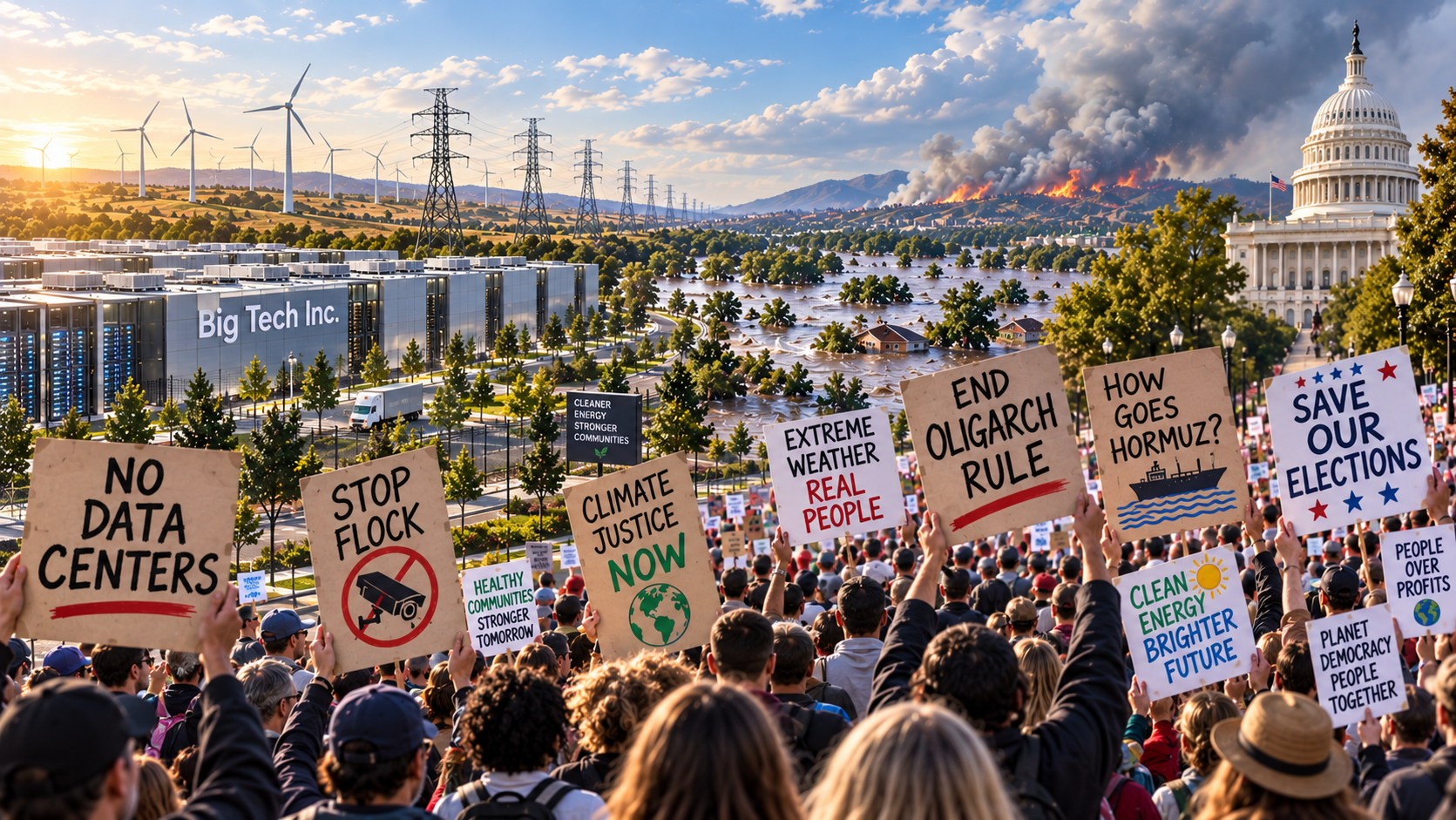
A potent cocktail of geopolitical instability, technological overreach, climate volatility, and surging wealth inequality is coalescing into a "polycrisis" that threatens the very "social license to operate" for major industries. From the sudden backlash against Flock license-plate cameras in American cities to energy-price shocks tied to conflict in the Middle East, the "wild cards" of the global economy are no longer isolated incidents. They are converging.
Main Facts: The Elements of the Emerging Movement
The current landscape is defined by several disparate but interconnected "wild cards"—unexpected, hard-to-model events that can reshape the business environment overnight.
1. The Energy-AI Paradox
The rapid expansion of Artificial Intelligence has triggered a massive push for data center construction. However, this "data center push" is meeting fierce local resistance as communities grapple with the immense energy and water requirements of these facilities. This tension is exacerbated by energy-price shocks tied to the ongoing conflict involving Iran, which has destabilized global fuel markets and increased the cost of living for the average consumer.
2. The Super El Niño Threat
Meteorological models for 2026 suggest the arrival of a "Super El Niño." Unlike standard weather patterns, a Super El Niño has the power to devastate global supply chains, destroy crop yields, and trigger inflationary spikes that businesses are ill-equipped to handle. This environmental wild card acts as a force multiplier for existing social unrest.
3. The Populist Backlash Against "Technofascism"
There is a surging anti-oligarch and anti-tech-bro sentiment sweeping through both the political left and right. This movement targets the perceived "technofascism" of Silicon Valley and the erosion of democratic norms. A primary flashpoint has been the proliferation of Flock license-plate cameras; once hailed as a tool for public safety, they are now drawing nationwide backlash over privacy concerns and the "surveillance state."
4. The Wealth Gap and "Late-Stage Capitalism"
Wealth inequality has reached levels comparable to Victorian Britain’s Chartist movement or the American Gilded Age. Among younger demographics—specifically creators in their late 20s and early 30s—the term "late-stage capitalism" is no longer a radical critique but a settled premise. This demographic shift is fueling a demand for a total rethinking of the capitalist structure.
Chronology: From Seattle to the Present Day
To understand the potential of the current moment, one must look at the history of unlikely alliances and how they shape policy.
- 1999: The Seattle WTO Protests. In what became known as the "Battle of Seattle," an unlikely coalition of labor unions and environmental activists ("Teamsters and Turtles") found common cause against corporate-led globalization. This convergence led to the formation of the BlueGreen Alliance, a nonprofit that successfully bridged the gap between industrial labor and environmentalism for over a decade.
- 2012–2014: The New York Fracking Ban. Initially, the movement to ban hydraulic fracturing in New York enjoyed broad, cross-partisan support. It was seen as a victory for local sovereignty and environmental health.
- 2015–2020: The Fragmentation. The fracking ban, once a unifying issue, was eventually recast by political opponents as a radical-left policy that harmed working-class communities by stifling job growth. This demonstrated how easily "unlikely alliances" can unravel when the narrative shifts.
- 2024–2026: The New Convergence. We are currently entering a phase where the "wild cards" are presenting themselves simultaneously. The convergence of AI-driven energy demand, geopolitical war, and a privacy-conscious public has created a more volatile environment than the anti-globalization era of the late 90s.
Supporting Data: The Statistics of Instability
The pressure on the "social license to operate" is backed by sobering data across multiple sectors.
Energy and Infrastructure
The International Energy Agency (IEA) recently noted that data centers, AI, and the cryptocurrency sector could see their electricity consumption double by 2026. In regions like Northern Virginia—the data center capital of the world—local pushback has moved from fringe environmental groups to mainstream local government, as residents fear for the stability of the local power grid and the rising cost of utility bills.
Climate and Economy
Historical data on "Super El Niño" events shows a direct correlation with a dip in global GDP. The 1997-98 event caused an estimated $5.7 trillion in global economic losses. With the 2026 forecast looming, insurance premiums in climate-vulnerable zones are already skyrocketing, further fueling the "anti-oligarch" sentiment as the working class feels priced out of basic protections.
Public Sentiment and Privacy
The backlash against Flock Safety, a company that operates a massive network of license-plate recognition (LPR) cameras, serves as a case study for "social license" withdrawal. Despite claims that the tech helps solve 10% of reported crimes in the US, city councils in diverse jurisdictions are suddenly pulling contracts. A 2025 survey indicated that 64% of Americans are "highly concerned" about the lack of regulation surrounding private-public surveillance partnerships.
Official Responses and Expert Analysis
Joel Makower, Chairman and Co-founder of Trellis Group, and his co-host Solitaire Townsend, have recently sounded the alarm on their Two Steps Forward podcast. Their analysis suggests that the traditional "sustainability" model is failing because it is too reactive.
"Sustainability teams have functioned as a company’s early-warning system in the past," Makower notes. "But more recently, they have been focused on measuring and reporting backward-looking data. They need to tune up their antennae."
The Concept of "Social License to Operate"
The "Social License to Operate" (SLO) was once a term reserved for the "extractive" industries—mining, oil, and gas. It refers to the ongoing acceptance and approval of an organization’s activities by its stakeholders and the general public.
Townsend argues that SLO is migrating across the entire economy. Tech giants, once the darlings of the stock market, are now being viewed through the same lens as tobacco or oil companies. "When a company loses its social license, it doesn’t just face protests; it faces a regulatory onslaught, a talent drain, and a plummeting valuation," Townsend explains.
The Role of Demographics
Townsend also points to a significant demographic wrinkle. The most influential political commentary regarding the "rethinking of capitalism" is coming from creators in their late 20s and early 30s. This cohort, having lived through the 2008 financial crisis, the COVID-19 pandemic, and now the AI revolution, views the current economic model as fundamentally broken. Their "late-stage capitalism" narrative is shaping the voting habits and consumer choices of Gen Z and Millennials, creating a permanent shift in market expectations.
Implications: How Companies Can Navigate the Storm
For corporations, the convergence of these wild cards means that "business as usual" is no longer an option. The implications are far-reaching and require a structural shift in how companies interact with society.
1. From Reporting to "Red-Teaming"
Sustainability professionals must move beyond ESG (Environmental, Social, and Governance) reporting and toward "Red-Teaming"—a practice where teams actively pressure-test their company’s strategies against "what-if" scenarios. What if a Super El Niño shuts down a key semiconductor hub? What if an anti-tech-bro movement leads to a windfall tax on AI companies? What if the "social license" for a specific product vanishes overnight due to a privacy scandal?
2. Building Resilient Alliances
History shows that alliances can form between unlikely groups, such as labor and environmentalists. Companies that want to survive the coming decade must find ways to become part of these alliances rather than their targets. This involves genuine community engagement, transparent data practices, and a demonstrated commitment to reducing wealth inequality within their own ranks.
3. Addressing the Wealth Gap
If wealth inequality is the "glue" holding this new movement together, then companies must address it directly. This means looking at executive-to-worker pay ratios, supporting living wages, and ensuring that the benefits of AI and automation are shared with the workforce rather than being hoarded by "oligarchs."
4. Anticipating the Regulatory Wave
The backlash against Flock cameras and data centers is a precursor to a broader regulatory wave. Companies that wait for legislation to change will be caught off guard. Proactive self-regulation—particularly regarding AI ethics, data privacy, and resource consumption—is the only way to maintain the "social license" before it is revoked by public demand.
Conclusion
The convergence of climate change, technological disruption, and social unrest is creating a new political and economic reality. Whether these issues will coalesce into a single, unified movement or remain a series of fragmented crises remains to be seen. However, for the modern corporation, the message is clear: the era of looking backward is over. To maintain their right to operate, businesses must look forward, anticipate the "wild cards," and recognize that their social license is a fragile privilege, not a permanent right.
As Makower and Townsend suggest, this is a moment for "tracking, red-teaming, and asking ‘what if’ before an issue arrives at your doorstep." The companies that survive the coming decade will be those that realize sustainability isn’t just about carbon—it’s about the very fabric of the society in which they function.
About the Author