The unprecedented surge of Cyclospora infections across the United States this past summer served as a stark and unsettling reminder of the profound vulnerabilities embedded within the nation’s intricate food supply chain. What initially appeared as isolated incidents quickly escalated into a widespread epidemic, sickening tens of thousands and underscoring the critical need for robust food safety protocols, transparent traceability, and adequately funded public health infrastructure.
While the immediate threat of the "summer of Cyclospora" may have receded, the echoes of its scale and the systemic weaknesses it brought to light continue to resonate. For restaurants, food manufacturers, and consumers alike, the outbreak forebodes a future fraught with increased risk unless fundamental changes are implemented to safeguard the food we eat. The sheer magnitude of this parasitic illness, which caused severe diarrhea and could linger for weeks, far surpassed typical annual rates, pushing public health agencies and industry stakeholders to confront complex challenges posed by a tenacious pathogen and a concentrated supply network.
Main Facts: A Summer of Sickness and Systemic Strain
The summer of 2023 witnessed an alarming explosion of cyclosporiasis cases, an illness caused by the microscopic parasite Cyclospora cayetanensis. Since May, tens of thousands of Americans have fallen ill, presenting with debilitating symptoms that included severe, prolonged diarrhea. The Centers for Disease Control and Prevention (CDC) reported up to 31,000 cases by the end of August, a figure that represents an astounding 26-fold increase over typical infection rates in a standard year. Experts, however, caution that the true scope of the outbreak was likely far greater, as many cases go unreported or undiagnosed. State health departments, operating with less conservative reporting criteria, recorded even more dramatic totals; Michigan, for instance, alone reported over 14,500 cases over the summer months.
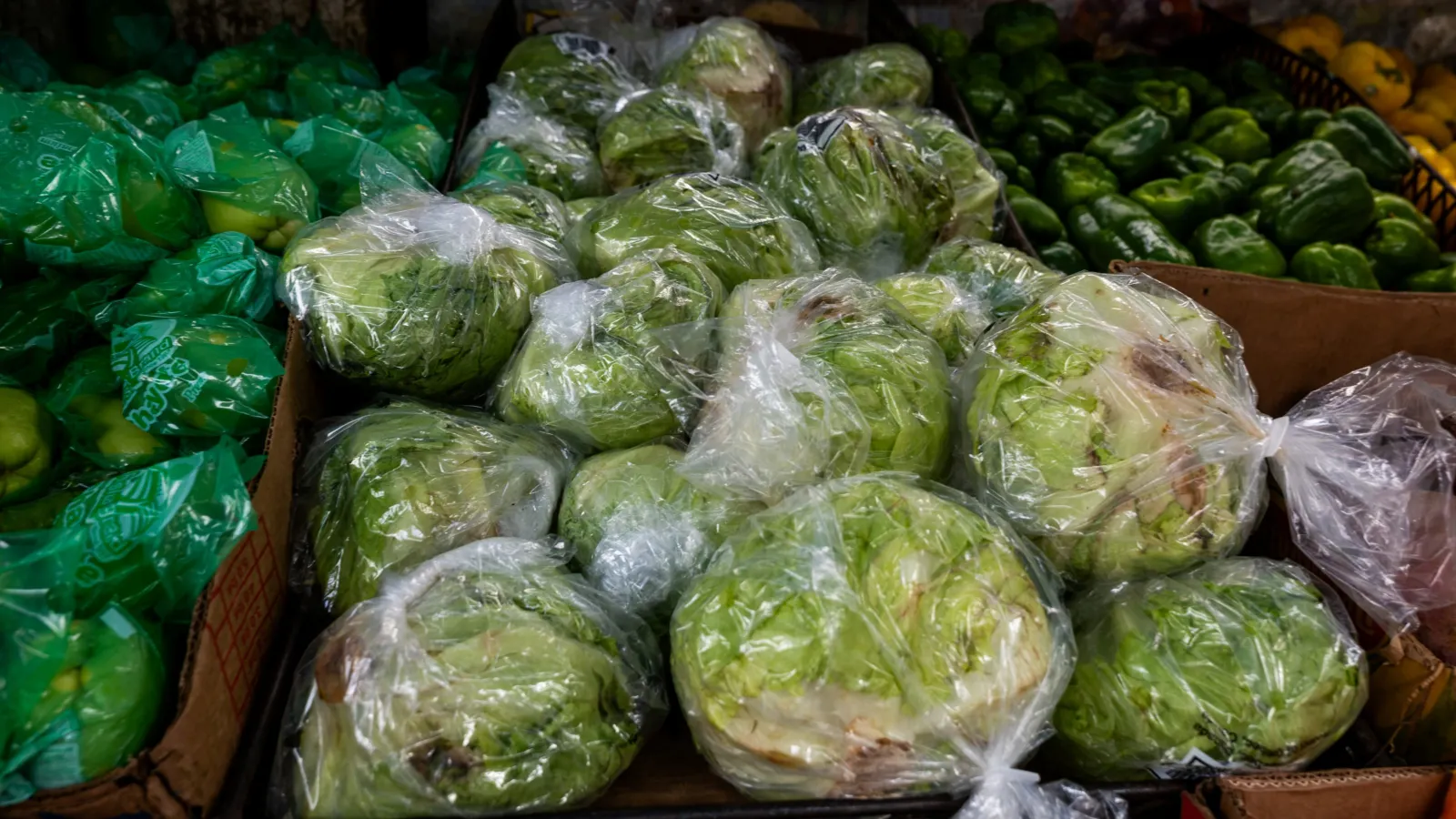
The common thread linking these myriad illnesses was contaminated food or water. Investigations quickly identified iceberg lettuce as a significant vector, with thousands of sickened individuals reporting having consumed meals at Taco Bell restaurants. Further tracing efforts by health authorities linked many of these cases back to iceberg lettuce distributed by Taylor Farms, a major produce supplier. However, the complexity of the outbreak was underscored by the fact that the CDC and the Food and Drug Administration (FDA) were simultaneously investigating at least four other epidemiologically distinct clusters of infections, suggesting multiple points of contamination or broader systemic issues.
This outbreak was not merely a localized event but a national crisis, distinguished from previous foodborne illnesses by its extensive scale and protracted duration. Food safety experts and supply chain analysts have characterized it as one of the most severe food safety incidents to impact the food and restaurant sector in years. The underlying problems that allowed for the Cyclospora surge—namely, the increasing consolidation within the food supply chain and the unique resilience of the Cyclospora parasite—are persistent and pose ongoing threats. This raises critical questions about the capacity of restaurants and food manufacturers to adequately protect themselves and their customers against future contamination events.
Chronology: Tracing the Outbreak’s Unfolding Trajectory
The insidious onset of the Cyclospora outbreak began subtly in the spring of 2023, with initial reports of scattered cases emerging in May. These early warnings, though concerning, did not immediately signal the colossal public health challenge that lay ahead. As the summer progressed, however, the trickle of individual cases rapidly transformed into a torrent, spreading across multiple states and overwhelming local health departments.
By late June and early July, the sheer volume of cyclosporiasis reports prompted heightened concern among public health officials. The CDC and FDA initiated comprehensive investigations, utilizing epidemiological data to identify common exposures among the growing number of sick individuals. It was during this period that the recurring link to specific food items, particularly various types of fresh produce, began to crystallize.
The connection to iceberg lettuce, and subsequently to Taco Bell restaurants, became a focal point of the investigations by mid-July. As thousands of individuals across multiple states reported similar symptoms after eating at the fast-food chain, public health officials moved quickly to gather more specific dietary histories. This painstaking "shoeleather epidemiology," as food safety attorney Bill Marler describes it, involved health investigators contacting thousands of sick individuals, asking detailed questions about their recent food consumption, dining locations, and even requesting receipts to establish precise timelines and potential common sources.
Simultaneously, traceback investigations by the FDA began to pinpoint specific suppliers. By early August, Taylor Farms was publicly identified as a distributor of iceberg lettuce implicated in a significant portion of the outbreak, particularly those cases linked to Taco Bell. This identification allowed for targeted interventions and recalls, though the widespread distribution of the product meant that contamination had already reached a vast consumer base.
Throughout August, despite the identification of primary sources, the number of reported cases continued to climb, highlighting the parasite’s prolonged incubation period and the challenges in containing such a widespread issue. State health departments, like Michigan’s, continued to update their dramatic case totals, underscoring the severe burden placed on local public health resources. The CDC’s final August tally of 31,000 cases reflected the peak of the outbreak’s reported intensity, although investigations into various epidemiologically distinct clusters continued well into the fall, indicating the persistent and multifaceted nature of the contamination. The protracted timeline from initial infection to diagnosis and then to source identification illustrated the inherent difficulties in combating a pathogen that is both resilient and challenging to trace through a complex, national food distribution network.
Supporting Data: The Science, The Supply Chain, and The Shortfalls
The Cyclospora outbreak was not merely a matter of scale; it illuminated fundamental scientific and systemic challenges that amplify food safety risks. Understanding these underlying factors is crucial for preventing future crises.
The Elusive Parasite: Why Cyclospora is a Formidable Foe
Unlike common bacterial foodborne pathogens such as Salmonella or E. coli, Cyclospora cayetanensis is a single-celled protozoan parasite. This distinction is critical because it means Cyclospora possesses a more complex cellular structure that renders it significantly harder to kill. Amira Roess, a professor of global health and epidemiology at George Mason University, explained that many standard food sanitation procedures effective against bacteria and viruses are simply not potent enough to eliminate Cyclospora. The parasite is notably resistant to common sanitizers and disinfectants used in food processing and preparation.
Furthermore, Bill Marler, a prominent food safety attorney, emphasized a chilling fact about Cyclospora: "It’s a human fecal parasite. Humans are the only animals that carry it. Essentially, human feces has gotten into our food supply." This direct link to human waste strongly suggests contamination through water sources. Produce, such as iceberg lettuce, is extensively watered during growth in irrigated fields and undergoes multiple washes during harvesting, processing, transportation, and preparation. Any lapse in water quality at any of these stages can introduce the parasite into the food chain, with devastating consequences.
The lifecycle of Cyclospora also complicates tracing efforts. Unlike bacteria or viruses that reproduce rapidly, parasites like Cyclospora have longer lifespans and unique developmental stages. This makes it more difficult to use rapid genetic testing techniques, which are often employed to quickly link bacterial outbreaks. Instead, health investigators are forced to rely on more labor-intensive "shoeleather techniques" – detailed interviews with sick individuals, meticulous mapping of their movements and food consumption – a process that is inherently slower and more resource-intensive, especially when dealing with thousands of cases spread across a wide geographic area. Marler noted the immense burden this places on state health departments, such as Michigan’s, when confronted with thousands of potential cases and the daunting task of sifting through reports, some of which may or may not be related to the core outbreak.
The Concentrated Supply Chain: Amplifying Risk
A major factor in the widespread nature of the Cyclospora outbreak is the increasing consolidation of the U.S. food supply chain. A handful of dominant firms, such as Taylor Farms, Chiquita, and Dole, control vast segments of produce distribution. As Roess pointed out, "If one of the products is contaminated, and it happens to be the product that a third of the country accesses, you have the reason for your national outbreak." This concentration means that a single point of contamination at a major supplier can rapidly disseminate a pathogen across an entire nation, transforming what might otherwise be a localized incident into a widespread epidemic. This extensive reach also makes traceback efforts more arduous, as public health authorities are challenged to connect disparate cases across numerous localities to a single, distant source.
The vulnerability of this concentrated supply chain has been highlighted in previous incidents as well. Marler noted that Taylor Farms itself has faced food safety issues in the past, including an E. coli outbreak linked to their products. Such a history underscores the ongoing need for rigorous oversight and accountability throughout the supply chain, particularly from the major players who hold significant sway over the safety of the food reaching millions of consumers.
Public Health Underfunding: A Crippling Blow
Adding another layer of vulnerability to the national food safety apparatus is the persistent underfunding of public health systems. Roess lamented the lack of sufficient disease surveillance in the U.S., a problem exacerbated by significant cuts to support positions within key federal agencies. Specifically, cuts made under the previous administration to the CDC’s dedicated Cyclospora surveillance lab were cited as a critical factor that hampered early detection and response efforts. These resource limitations, affecting both the FDA and CDC, meant that the agencies were less equipped to identify and halt the outbreak in its nascent stages, allowing it to grow to an unprecedented scale before comprehensive interventions could be fully mobilized. The ability to intervene effectively, even with known techniques and tools, is severely compromised when the resources to deploy them are insufficient.
Official Responses: Navigating a Crisis with Limited Resources
The official response to the Cyclospora outbreak was a multi-agency effort, albeit one frequently challenged by the scale of the crisis and the limitations of existing resources. Both federal and state entities played crucial roles in attempting to contain the spread, identify sources, and inform the public.
Federal Agencies: The CDC and FDA
At the federal level, the Centers for Disease Control and Prevention (CDC) and the Food and Drug Administration (FDA) spearheaded the investigation. The CDC’s primary role was epidemiological surveillance: tracking the number of reported cases, identifying common links among those affected, and issuing public health advisories. Their surveillance data, which recorded up to 31,000 cases by late August, was critical in quantifying the scope of the epidemic and informing public health interventions. However, as Roess highlighted, the effectiveness of the CDC’s response was hampered by previous cuts, notably to its specialized Cyclospora surveillance lab. This reduction in capacity meant that the agency’s ability to quickly identify and characterize the pathogen, and thus initiate a swift, targeted response, was diminished.
The FDA’s contribution focused on traceback investigations, working backward from points of consumption (restaurants) to distributors and then to farms to identify the contaminated food source. This intricate process involved analyzing supply chain data, conducting on-site inspections, and collaborating with state health departments. The FDA’s efforts eventually led to the identification of iceberg lettuce distributed by Taylor Farms as a significant source, particularly for cases linked to Taco Bell. The agency also maintained a public list of ongoing foodborne illness investigations, acknowledging the existence of multiple distinct clusters beyond the primary one, indicating the complexity of the contamination landscape.
State Health Departments: On the Front Lines
State health departments bore the immediate and heaviest burden of the outbreak. They were responsible for collecting case information from local healthcare providers, conducting patient interviews to gather detailed dietary histories, and coordinating with federal agencies. The experience in Michigan, where over 14,500 cases were reported, exemplifies the immense strain placed on these local entities. Health department staff engaged in countless "shoeleather epidemiology" interviews, painstakingly attempting to connect dots among thousands of sick individuals. This labor-intensive process, involving calls, questionnaires, and receipt collection, stretched already limited resources and personnel, often delaying the rapid identification of new clusters or precise sources. Their less conservative reporting criteria often provided a more immediate, albeit sometimes less precise, picture of the unfolding crisis than federal data.
Industry Response: A Mixed Bag
The food industry’s response varied. Restaurants implicated in the outbreak, such as Taco Bell, cooperated with investigations, often removing suspect ingredients from their menus as a precautionary measure. However, as food safety attorney Bill Marler pointed out, once a product is contaminated, there is little a restaurant can do to mitigate the risk. "You can’t wash these fecal pathogens off the lettuce, and you don’t cook lettuce, so there’s not a lot you can do," he stated, highlighting the upstream nature of the problem.
Some restaurant chains, like Cava and Sweetgreen, took proactive steps to reassure customers by publicly stating that they do not use iceberg lettuce, thereby attempting to distance themselves from the specific commodity linked to the outbreak. Suppliers like Taylor Farms also engaged with regulatory bodies, though the specifics of their internal investigations and corrective actions were not always immediately public.
Calls for Greater Investment
Across the board, the official response highlighted a critical systemic issue: underinvestment in public health infrastructure. Experts like Roess emphasized that while the techniques and tools for preventing and responding to foodborne illnesses exist, their effective deployment is severely constrained by resource limitations. This underfunding, affecting local health departments, the FDA, and the CDC, demonstrably undermined the country’s epidemiological response, leaving both the public and the food industry more vulnerable. The outbreak served as a potent, albeit painful, illustration of the consequences of neglecting the foundations of public health.
Implications: A Looming Threat and the Path Forward
The summer of Cyclospora was more than just a public health crisis; it was a potent stress test for the American food system, revealing deep-seated vulnerabilities with far-reaching implications for restaurants, food manufacturers, public health, and consumer trust.
Restaurants and Food Manufacturers: On the Hook
For restaurants, the outbreak underscored a harsh reality: they bear significant legal and moral responsibility for the safety of the food they serve, even when contamination originates far upstream in the supply chain. Bill Marler’s ongoing lawsuits against Taco Bell and Taylor Farms, representing plaintiffs sickened by the parasite, vividly illustrate this legal liability. Restaurants are caught in a precarious position: they cannot effectively eliminate Cyclospora from contaminated produce through washing or cooking, yet they are ultimately accountable to their customers.
Operationally, the outbreak exposed the limited adaptability of many restaurant concepts. Bo Davis, CEO of MarginEdge, a restaurant software company, explained that while a burger joint might easily offer a "no lettuce" option, a salad-focused concept would "take it on the chin for a while," facing significant menu disruptions and potential sales losses. Riding out such an epidemic demands exceptional operational dexterity, including proactive menu adjustments, transparent communication with customers about sourcing and safety practices, and thorough staff training. The proactive statements from chains like Cava and Sweetgreen about their avoidance of iceberg lettuce demonstrate a strategic response to mitigate category-wide sales hits and maintain consumer confidence.
Should a restaurant be directly linked to an outbreak, the implications are severe. Davis advises immediate action: discarding recalled items, deep cleaning to prevent cross-contamination, and seeking new suppliers. Beyond the operational response, the financial and reputational fallout can be devastating. Calling the insurance company is a critical first step, but transparency with consumers, despite the potential for brand diminution, is paramount. As Davis argued, "Nobody wants their brand diminished. I think in not [informing consumers] there’s probably legal liability, frankly, but there should be moral liability to not letting people know."
The Imperative of Supply Chain Management
The Cyclospora outbreak amplified calls for greater scrutiny and control over the food supply chain. Marler asserted that restaurant chains and major distributors must exert pressure on their suppliers to adhere to higher safety standards. "It doesn’t take a rocket scientist to look back just even over the last couple of years and see that Taylor Farms has had some issues," he said, advocating for robust questioning of suppliers about water testing, growing locations, and food safety plans.
While direct screening of suppliers might have limitations, Davis emphasized the critical importance of absolute clarity and traceability within the supply chain. Modern technology offers solutions, as evidenced by Chipotle’s successful use of an RFID traceability system during a Salmonella outbreak linked to jalapeños. This system allowed Chipotle to rapidly identify potentially contaminated shipments and collaborate effectively with health authorities, minimizing the impact and demonstrating a best-in-class response. Such investments in robust traceability systems are no longer a luxury but a necessity for major food players.
Preventing Cyclospora contamination specifically often boils down to preventing water contamination. Roess reiterated that the fundamental knowledge and techniques for ensuring water safety in food production exist. The challenge lies in consistently implementing these robust systems, ensuring that water used for irrigation, washing, and processing remains free of harmful contaminants.
A Call for Systemic Reform and Investment
Ultimately, the Cyclospora crisis serves as a powerful indictment of systemic underfunding and neglect within the broader public health infrastructure. The consolidation of food production and distribution, coupled with dwindling resources for local health departments, the FDA, and the CDC, has created a perilous environment. This "new state of things," as Roess termed it, leaves restaurants, food manufacturers, and the public profoundly more vulnerable to future large-scale foodborne illness outbreaks.
The implications are clear: without renewed, substantial investment in disease surveillance, epidemiological response, and regulatory oversight, such unprecedented outbreaks will likely become more frequent and severe. The expertise and the tools to ensure food safety are available, but they are rendered ineffective when constrained by resource limitations. The summer of Cyclospora was a wake-up call, demanding a concerted effort from government, industry, and consumers to rebuild and strengthen the defenses of the nation’s food supply against unseen, yet ever-present, threats. The health of the public and the resilience of the food industry depend on it.
About the Author