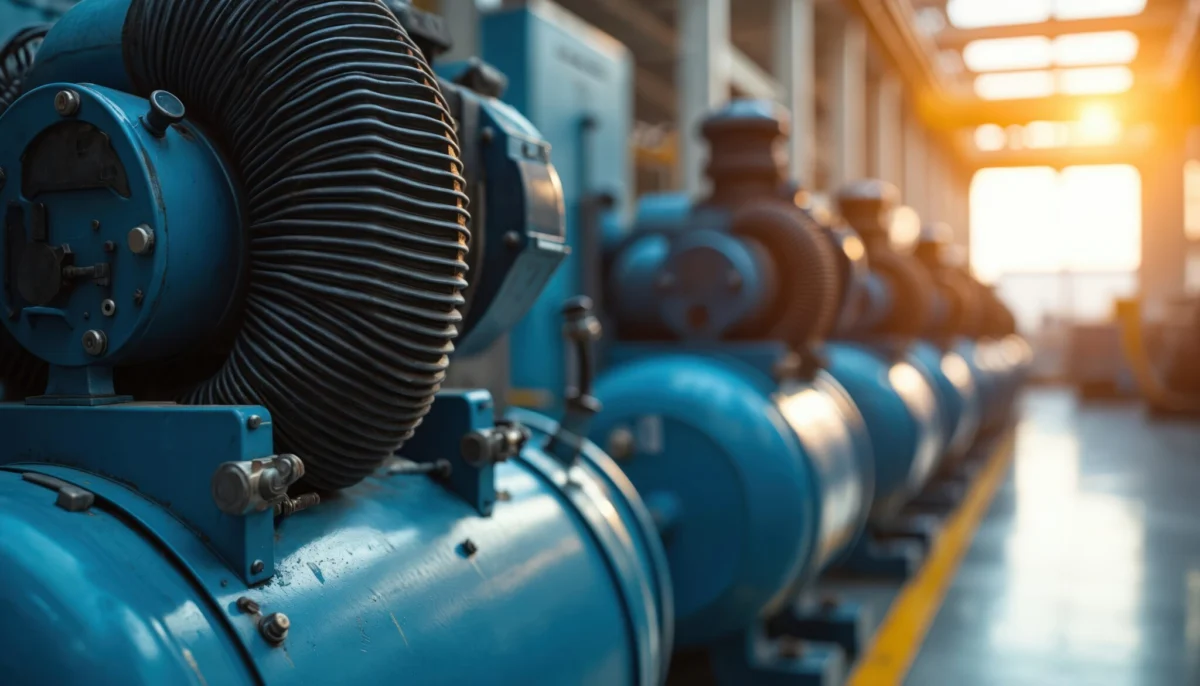
In the high-stakes environment of modern manufacturing, few utilities are as pervasive—or as frequently overlooked—as compressed air. It is the silent workhorse of the factory floor, powering everything from precision pneumatic actuators and automated assembly lines to material handling systems and food packaging machinery. Unlike electricity or municipal water, compressed air is a manufactured utility; it must be generated, treated, stored, and distributed on-site, creating a complex chain of operational dependencies.
When a compressed air system functions optimally, it is virtually invisible. However, when it fails, production grinds to a halt. Because compressed air can account for a significant portion of an industrial facility’s total energy consumption—often ranging from 10% to 30%—understanding its lifecycle, components, and efficiency metrics is no longer just a maintenance concern; it is a critical business strategy.
The Anatomy of an Industrial Utility
A compressed air system is a sophisticated network, not merely a single machine sitting in a corner. The process begins with atmospheric air, which is drawn into a compressor, reduced in volume, and elevated in pressure. However, the journey from intake to the point of use involves a rigorous sequence of transformation:
- Generation: The mechanical compression of atmospheric air.
- Treatment: Removing heat, moisture, oil aerosols, and solid particulates.
- Storage: Buffering the system to handle fluctuating demand.
- Distribution: Transporting the air through a piping network to the end-use point.
If any link in this chain is poorly engineered, the efficiency of the entire system collapses. A high-efficiency compressor, for example, will underperform if it is paired with undersized piping or inadequate filtration, leading to artificial demand, pressure drops, and excessive energy waste.
The Heart of the System: Compressor Technologies
Choosing the right compressor requires an analysis that extends far beyond horsepower. Facility managers must evaluate airflow (CFM), pressure (PSIG), duty cycles, and the specific nuances of their production environment.
Rotary Screw Compressors
The workhorse of modern industry, rotary screw compressors provide a continuous supply of air. These machines are ideal for facilities with steady, high-demand loads. Many modern units are now equipped with Variable Frequency Drives (VFDs), which allow the motor speed to adjust dynamically to real-time air demand, preventing the energy-intensive "unload" cycles common in older, fixed-speed models.
Reciprocating Compressors
Utilizing piston technology, reciprocating compressors remain relevant for specialized, intermittent-duty applications. They are often the preferred choice for smaller facilities or operations requiring very high-pressure bursts, offering a robust solution where high-volume, continuous flow is not the primary requirement.
Centrifugal Compressors
For large-scale industrial operations—such as chemical plants or automotive manufacturing—centrifugal compressors are the standard. By using high-speed impellers to impart kinetic energy to the air, these machines can move massive volumes of air with extreme efficiency, provided the demand remains consistent and sufficiently high to justify the capital investment.
The Physics of Performance: Pressure vs. Flow
One of the most common pitfalls in system design is the confusion between pressure and flow. While they are inextricably linked, they represent different requirements.
Pressure is the force per square inch that drives the pneumatic components. Flow is the volume of air delivered over time. A common mistake is "pressure boosting"—the act of increasing system pressure to compensate for poor distribution design. Operating a system at 110 PSIG when the equipment only requires 90 PSIG can increase energy costs by as much as 10% to 15% without providing any tangible benefit to the production process. Efficient system design prioritizes the pressure requirements of the most sensitive end-use equipment, ensuring that the central compressor does not work harder than necessary.
The Vital Necessity of Air Treatment
Atmospheric air is inherently "dirty." It contains water vapor, dust, and hydrocarbons. Once compressed, these contaminants are concentrated, creating a cocktail that can corrode internal piping, destroy pneumatic seals, and ruin sensitive end-products.
- Air Dryers: As air cools post-compression, water vapor condenses. Refrigerated, desiccant, and membrane dryers are utilized to lower the dew point, preventing liquid water from wreaking havoc on the distribution network.
- Filtration: The filtration strategy must be tailored to the application. In food processing, for instance, high-level oil removal and particulate filtration are non-negotiable. Conversely, in heavy metal fabrication, such extreme filtration may be an unnecessary expense that causes unwanted pressure drops.
Strategic Storage: The System Buffer
Air receivers (storage tanks) are often misunderstood as mere reservoirs. In reality, they are critical components for system stability. Strategically placed "wet" storage (upstream of the dryer) helps with moisture separation, while "dry" storage (downstream) acts as a buffer. By providing a reserve of air, receivers prevent the compressor from cycling on and off rapidly—a process that causes mechanical wear and consumes significant power during startup.

The Hidden Cost: Leaks and Distribution
Perhaps the most significant source of waste in any industrial facility is the humble leak. Because compressed air is "clean," leaks are silent, and because they are invisible, they are often ignored. A single 1/4-inch leak in a 100 PSI system can cost a facility thousands of dollars annually in wasted electricity.
Effective distribution systems rely on looped, rather than "dead-end," piping. A ring-main configuration allows air to reach any given point from multiple directions, significantly reducing pressure drop and allowing for maintenance on specific sections of the plant without shutting down the entire air supply.
Best Practices for Efficiency and Reliability
Achieving an "A-grade" compressed air system requires a shift in philosophy: from reactive maintenance to proactive management.
1. Implement a Leak Detection Program
A periodic audit using ultrasonic leak detectors can identify pinhole leaks that are impossible to hear over the din of a factory floor. Repairing these leaks is the highest-return investment a facility can make.
2. Optimize System Pressure
Conduct a "pressure drop study." If you can reduce the operating pressure of your system by even 2 PSI, you can see a direct, measurable reduction in the electricity bill.
3. Monitor and Analyze Data
Modern IoT-enabled monitoring systems provide real-time data on energy consumption, flow rates, and temperature. This data allows for "predictive maintenance"—identifying a failing filter or a wearing bearing before it causes a catastrophic shutdown.
4. Avoid "One-Size-Fits-All" Sizing
When designing a system, account for future expansion but avoid massive oversizing. An oversized compressor is forced into constant "load/unload" cycles, which is the least efficient way to operate the machine. If a facility has highly variable demand, a hybrid system—combining a large base-load unit with a smaller, highly responsive VFD-controlled compressor—is often the most efficient solution.
Implications for the Future
The modern manufacturing landscape is increasingly focused on sustainability and ESG (Environmental, Social, and Governance) reporting. In this context, compressed air systems are under the microscope. Reducing the energy intensity of compressed air is one of the fastest ways for a company to reduce its carbon footprint.
Furthermore, as "Industry 4.0" becomes the standard, the integration of compressed air systems into the "Digital Twin" of a facility allows for unprecedented control. We are moving toward a future where the compressed air system will "talk" to the production schedule, ramping up production only when the line is active and entering a low-power "sleep" mode during shift changes or breaks.
Conclusion: The Goal of Silence
The ultimate goal of any compressed air system is to be forgotten. When a system is engineered with precision, maintained with rigor, and monitored with modern technology, it simply works. It provides the steady, reliable pressure that keeps the assembly line moving, the food processed, and the metal fabricated.
By treating compressed air not as a static piece of equipment, but as a living, breathing utility, facility managers can turn a significant operational expense into a competitive advantage. The best-run factories are those where the air system does its job so quietly and efficiently that nobody—not the operators, not the maintenance team, and not the CFO—ever feels the need to think about it. That silence is the sound of success.
About the Author