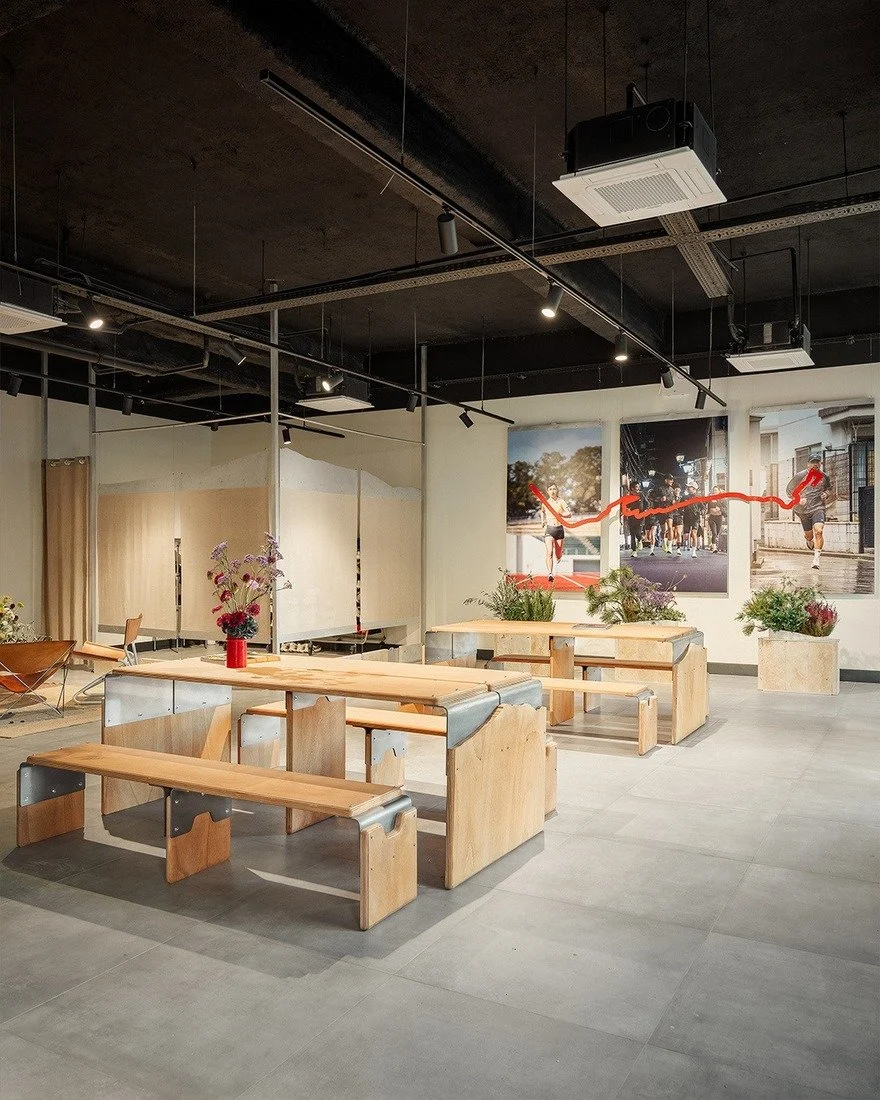
In the fast-paced world of retail design, pop-up spaces are often characterized by their disposability—structures erected with haste and dismantled without a second thought. However, Paris-based industrial designer Tom Ducarouge has challenged this paradigm with his recent project for New Balance. Designed for the "Marseille Running House," a temporary activation hub supporting athletes during the Marseille-Cassis half-marathon, Ducarouge’s collection of tables and display units marries brutalist-inspired utilitarianism with a poetic, site-specific narrative.
Main Facts: Materiality and Form
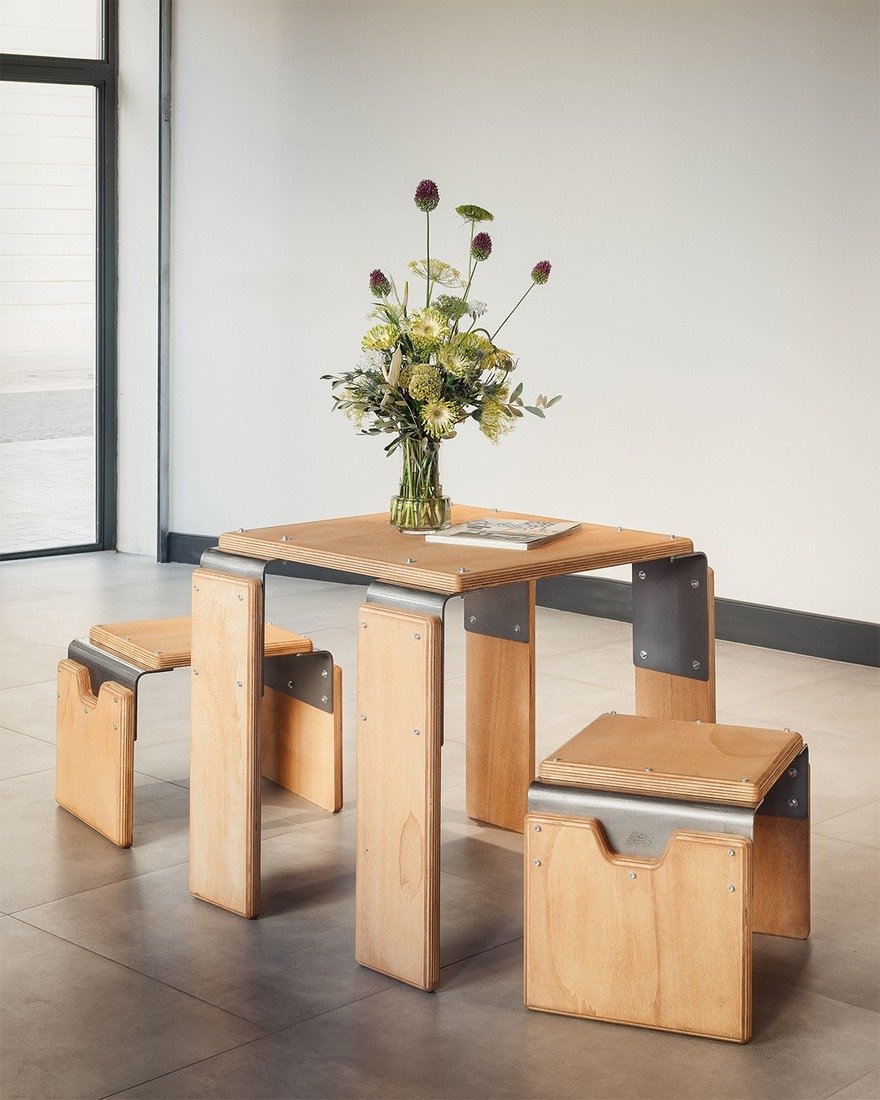
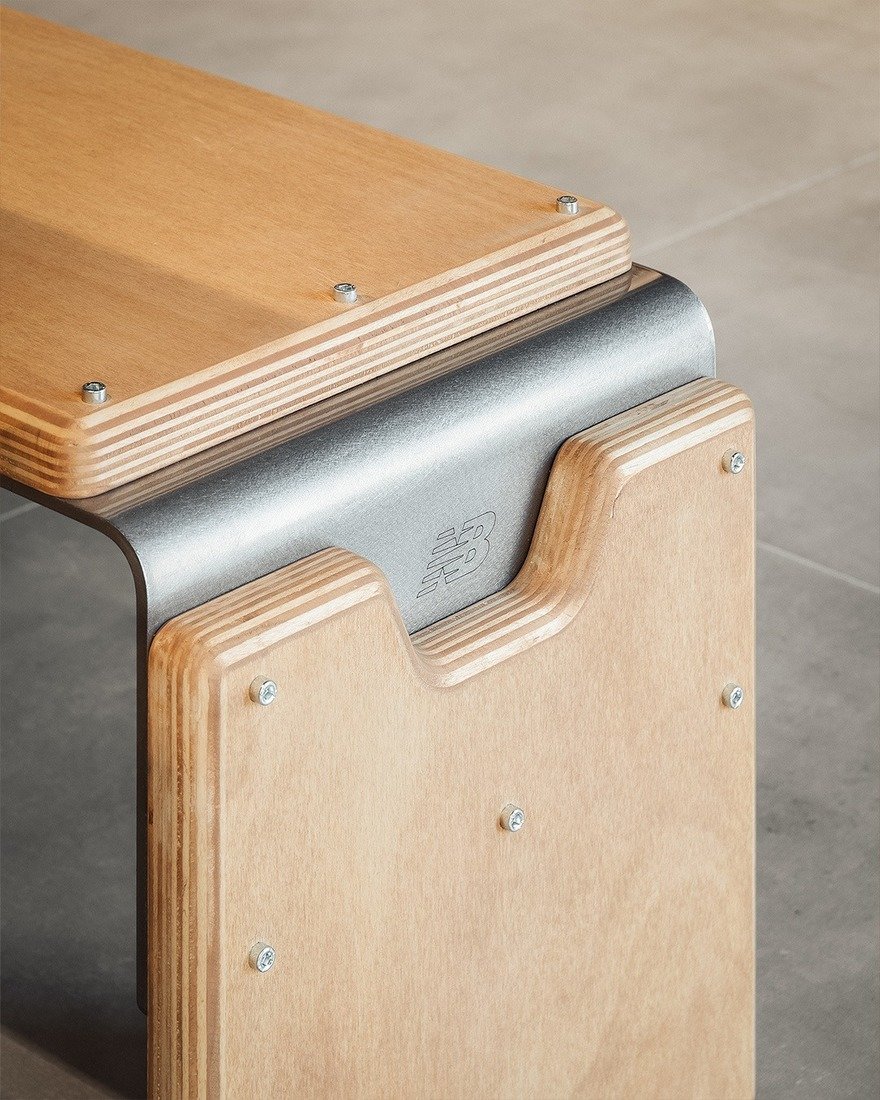
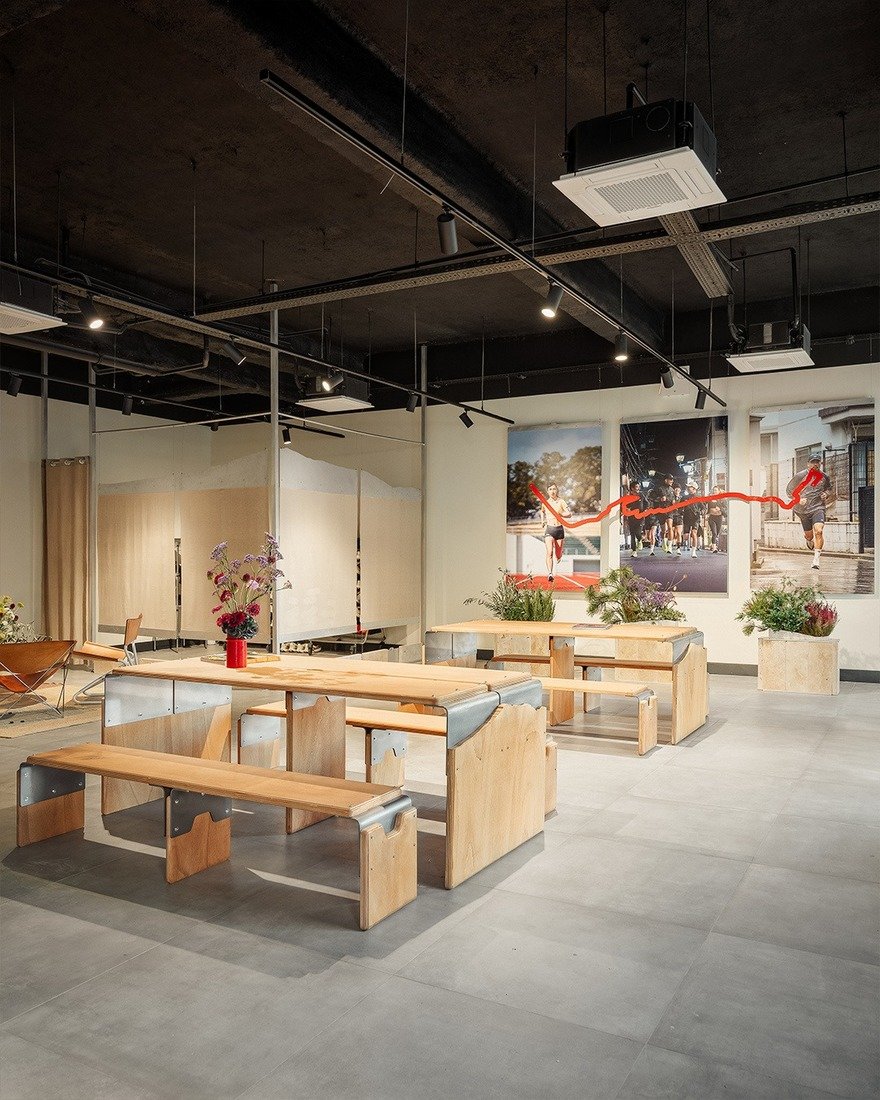
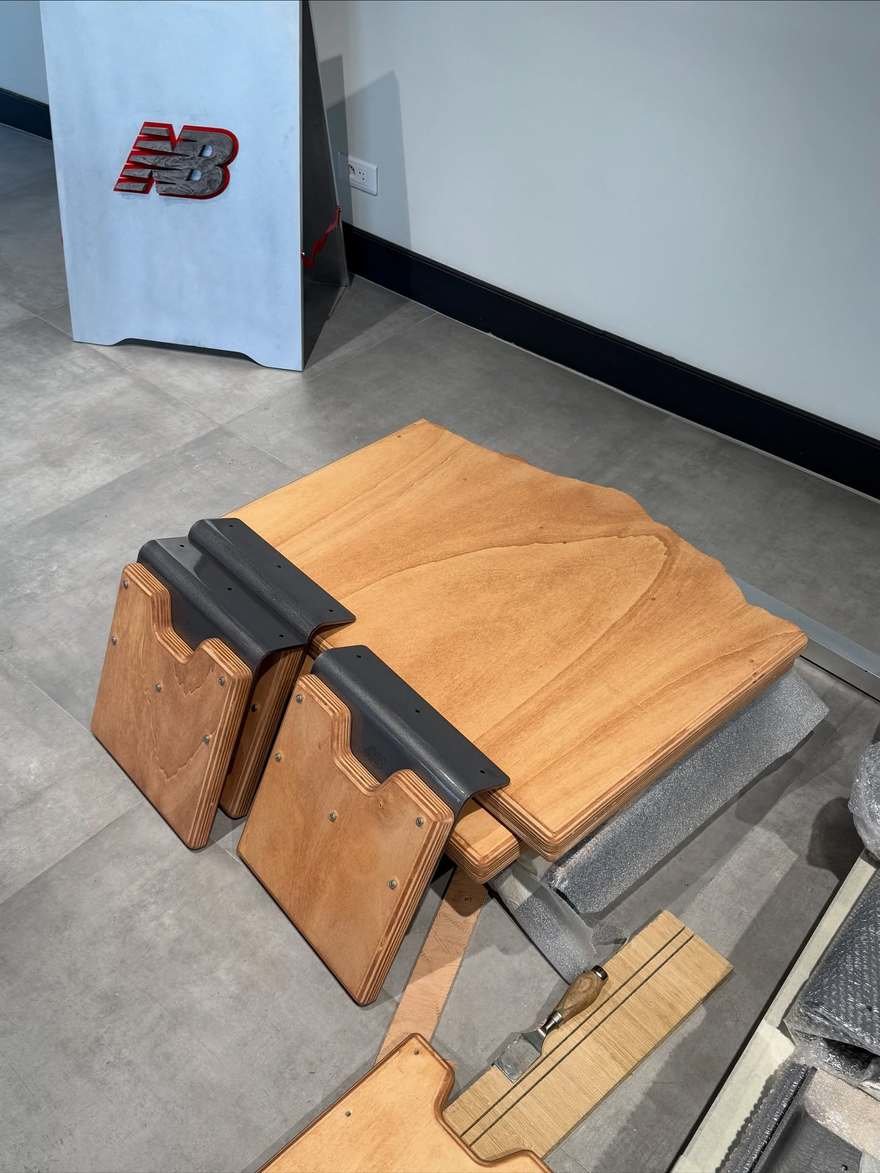
The collection is defined by a rigorous commitment to material honesty and structural clarity. At the heart of the design are sheets of 25mm Baltic Birch plywood, a material favored for its structural integrity and the aesthetic appeal of its multi-layered edge grain. Ducarouge has meticulously finished these edges with a gentle roundover profile, transforming what could be a harsh, industrial aesthetic into something tactile and inviting.
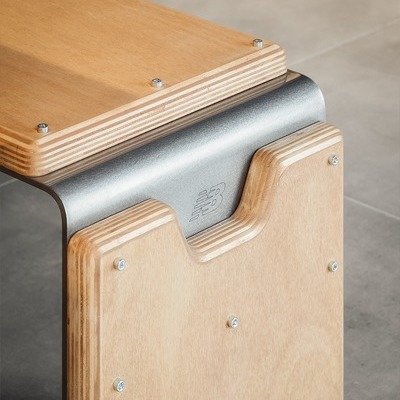
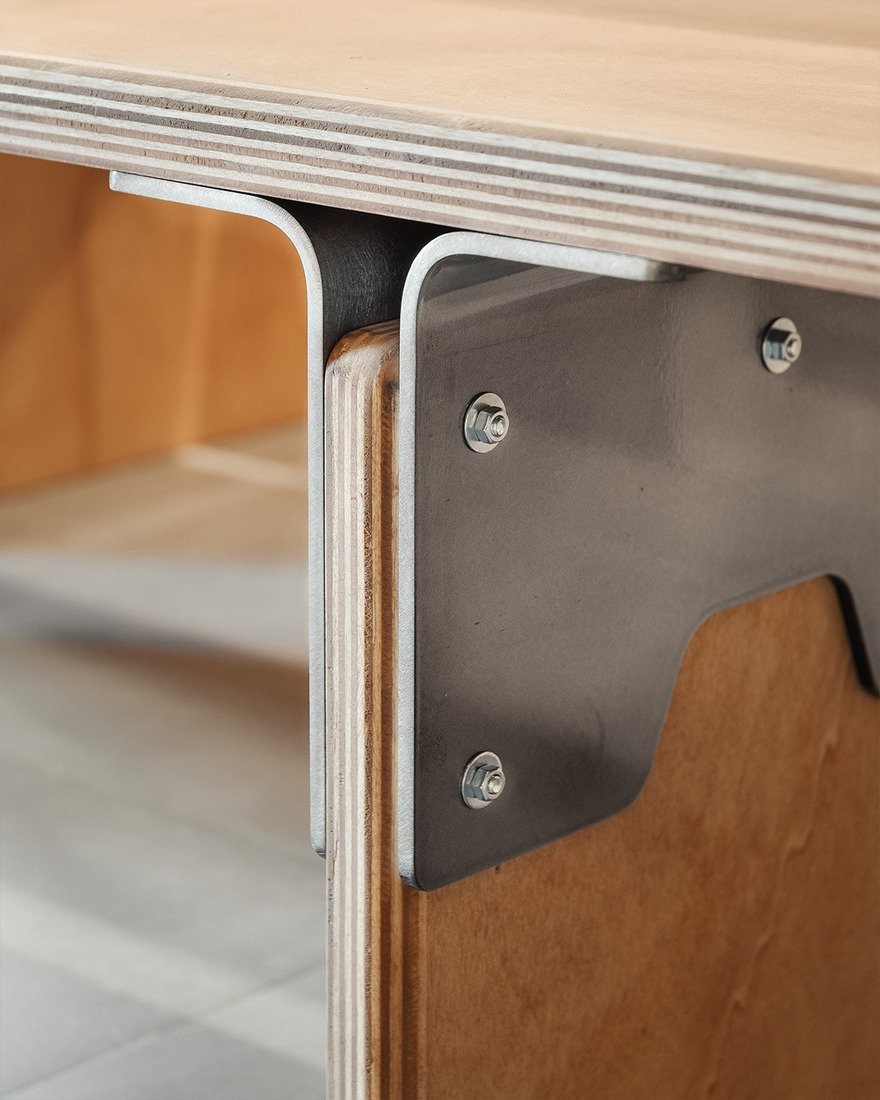
The structural skeleton of the furniture relies on 3mm metal brackets—likely fabricated from steel or brushed aluminum—that provide both a visual contrast and the necessary tension to hold the heavy-duty plywood components in place. The decision to leave the socket-head cap screws exposed is a deliberate design choice, emphasizing the "pop-up" nature of the furniture. By highlighting the fasteners, Ducarouge creates a system that suggests modularity and ease of assembly, reflecting the ephemeral requirements of the project while maintaining a sense of permanence and quality.
Chronology: From Concept to Marseille-Cassis
The Marseille-Cassis race is more than just a sporting event; it is a legendary route that traverses the rugged limestone terrain of the Provence region. When New Balance sought to create an immersive experience for the running community in Marseille, the brief required a design language that resonated with the intensity of the race and the local geography.
- Phase I (Conceptualization): Ducarouge began by analyzing the topography of the race route. The challenge was to translate the physical exertion of the climb and descent into a furniture language that felt stable yet kinetic.
- Phase II (Material Procurement & Prototyping): The selection of Baltic Birch allowed for rapid CNC milling, essential for the tight timelines of a retail activation. Prototypes were tested for weight-bearing capacity to ensure they could handle high-traffic public use.
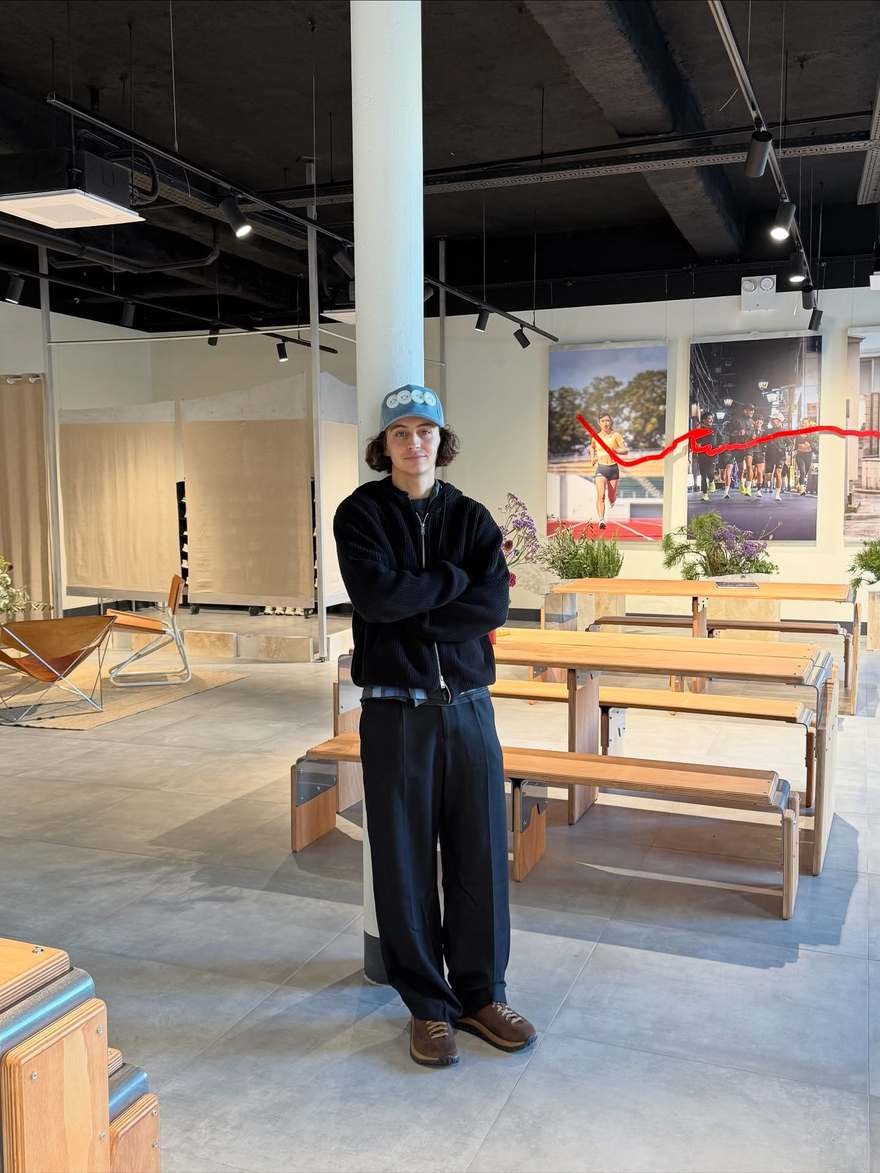
- Phase III (Assembly & Activation): The furniture was deployed at the Marseille Running House. The pieces served as the central infrastructure for the event, acting as product displays, seating, and community hubs for runners gathering before and after the race.
- Phase IV (Post-Event): Following the conclusion of the event, the modular nature of the design allowed for easy disassembly. Unlike many pop-up installations that end up in landfills, these pieces were designed for repurposing, potentially finding a second life within permanent New Balance retail outlets.
Supporting Data: Design Philosophy and Site-Specificity
The defining feature of this collection—and the element that elevates it beyond standard retail furniture—is the silhouette carved into the table legs. This jagged, mountain-like profile is not a random stylistic flourish; it is a direct topographical representation of the Col de la Gineste.
The Col de la Gineste is a limestone pass that serves as the most formidable obstacle for runners participating in the Marseille-Cassis race. By embedding the geometry of this ascent and descent into the legs of the furniture, Ducarouge has effectively grounded the interior design in the local environment. This is a masterful application of "narrative design," where the furniture acts as a silent storyteller, acknowledging the physical journey of the athlete without relying on explicit signage or graphics.
Furthermore, the choice of materials reflects a shift in industrial design toward circularity. Baltic Birch is a renewable, high-performance wood, and the use of mechanical fasteners rather than adhesives ensures that the furniture can be repaired, disassembled, and recycled at the end of its lifecycle. This aligns with modern sustainability goals—a critical factor for global brands like New Balance as they seek to minimize the environmental footprint of their temporary retail activations.
Official Responses and Industry Reception
While New Balance has not released a formal white paper on the collaboration, the industry reception among interior architects and industrial designers has been overwhelmingly positive. Critics have praised the project for its "unpretentious functionality."
In the retail sector, there is a growing trend toward "stripped-back" design. Brands are increasingly moving away from high-gloss, synthetic retail environments in favor of spaces that feel authentic, raw, and human-centric. Ducarouge’s work sits at the intersection of this trend. By utilizing standard industrial components—plywood and steel—and elevating them through thoughtful engineering, he has demonstrated that a "pop-up" does not have to look cheap or temporary.
Industry analysts point out that this style of furniture—often referred to as "kit-of-parts" design—is becoming the gold standard for global brands. The ability to ship flat-packed, durable furniture that can be assembled by retail staff in any city around the world is a significant logistical advantage, but the aesthetic success of the Marseille project proves that such functional systems can also be deeply evocative.
Implications: The Future of Retail and Modular Design
The work of Tom Ducarouge raises several questions about the future of commercial space design. If a temporary activation can house high-quality, long-lasting furniture that pays homage to the site it occupies, why are so many retail environments still dominated by low-quality, single-use materials?
The Shift Toward "Permanent Modularity"
The implication of the Marseille Running House project is that the barrier between "temporary" and "permanent" is blurring. Designers are now tasked with creating furniture that is mobile enough to be moved across continents, yet sturdy enough to withstand years of public use. Ducarouge’s use of exposed hardware is a signifier of this shift; it suggests that the object is not a monolithic sculpture but a functional tool that can be understood, maintained, and updated by the user.
Designing for Human Experience
By integrating the Col de la Gineste into the physical structure of the furniture, Ducarouge has moved beyond merely providing a surface for product placement. He has created a psychological link between the brand (New Balance) and the consumer (the runner). When a runner leans against a table and sees the profile of the hill they just conquered, the furniture becomes a bridge between their personal achievement and the brand’s identity. This is the hallmark of high-level industrial design—the ability to turn a simple utility into an emotional touchpoint.
Environmental Responsibility
Finally, this project serves as a template for responsible retail expansion. As cities tighten regulations on waste and environmental impact, the ability to build, disassemble, and reuse store fittings will become a competitive advantage. Ducarouge’s design provides a roadmap for how brands can embrace the "pop-up" model without contributing to the cycle of waste that has historically plagued the retail industry.
Conclusion
Tom Ducarouge’s contribution to the Marseille Running House is a masterclass in balance. He has successfully navigated the demands of a high-profile brand, the constraints of a temporary project, and the need for a compelling, site-specific narrative. By choosing to celebrate the rugged, industrial reality of the race through high-quality materials and thoughtful geometry, he has produced a collection that is as functional as it is conceptually rich.
Whether these pieces eventually find a permanent home in a New Balance flagship store or are retired to a design archive, their impact on the dialogue surrounding sustainable, narrative-driven retail design is significant. In an era where "fast design" often sacrifices substance for speed, Ducarouge reminds us that with the right materials and a clear vision, utility can indeed be handsome.
About the Author