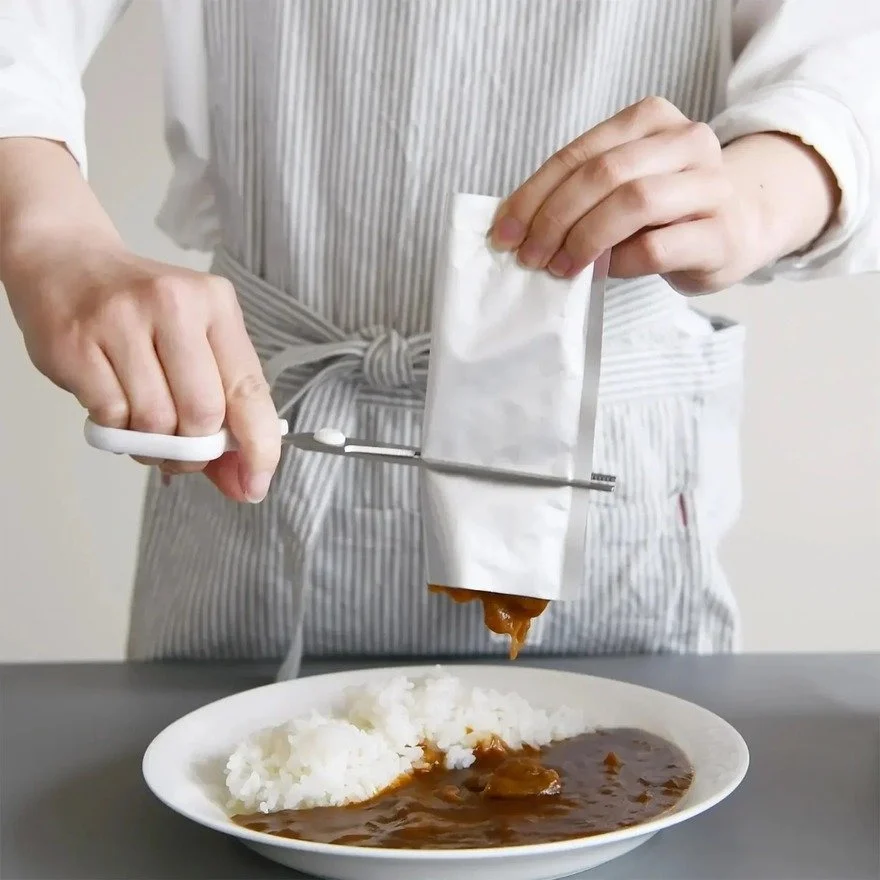
In the modern culinary landscape, convenience is often synonymous with packaging. From pre-marinated proteins to concentrated miso bases and artisanal curry pouches, the contemporary pantry is increasingly dominated by the foil-sealed packet. While these pouches offer shelf stability and ease of preparation, they present a persistent, minor frustration to the home cook: the struggle to open, extract, and discard them without mess, waste, or injury.
Japanese cutlery manufacturer Yaxell, renowned for its heritage in high-end blade production, has turned its attention to this ubiquitous household headache. Their latest innovation, the "Squeeze Scissors," represents a masterclass in User Experience (UX) design. By re-engineering the humble pair of kitchen shears to perform three distinct, non-traditional tasks, Yaxell has elevated a utilitarian tool into an essential kitchen companion.
Main Facts: A Three-Tiered Design Philosophy
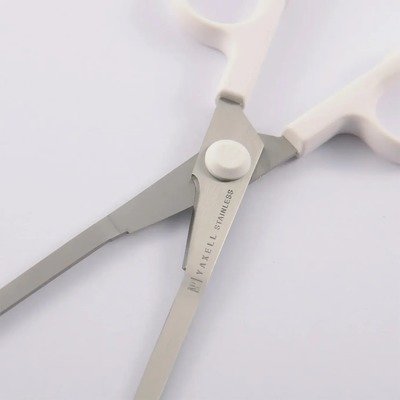
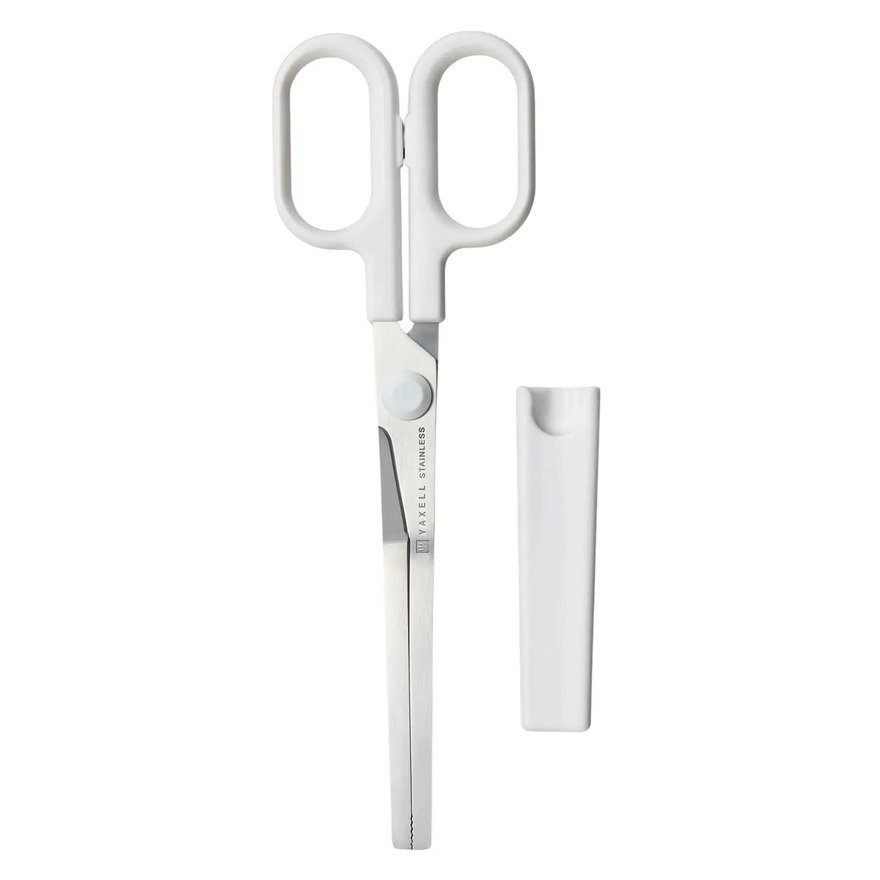
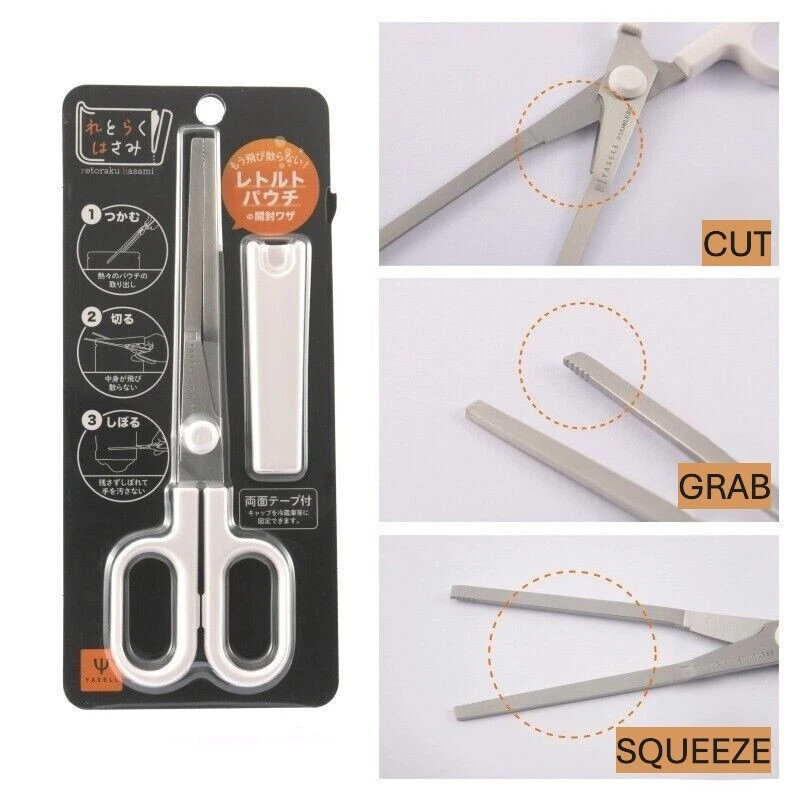
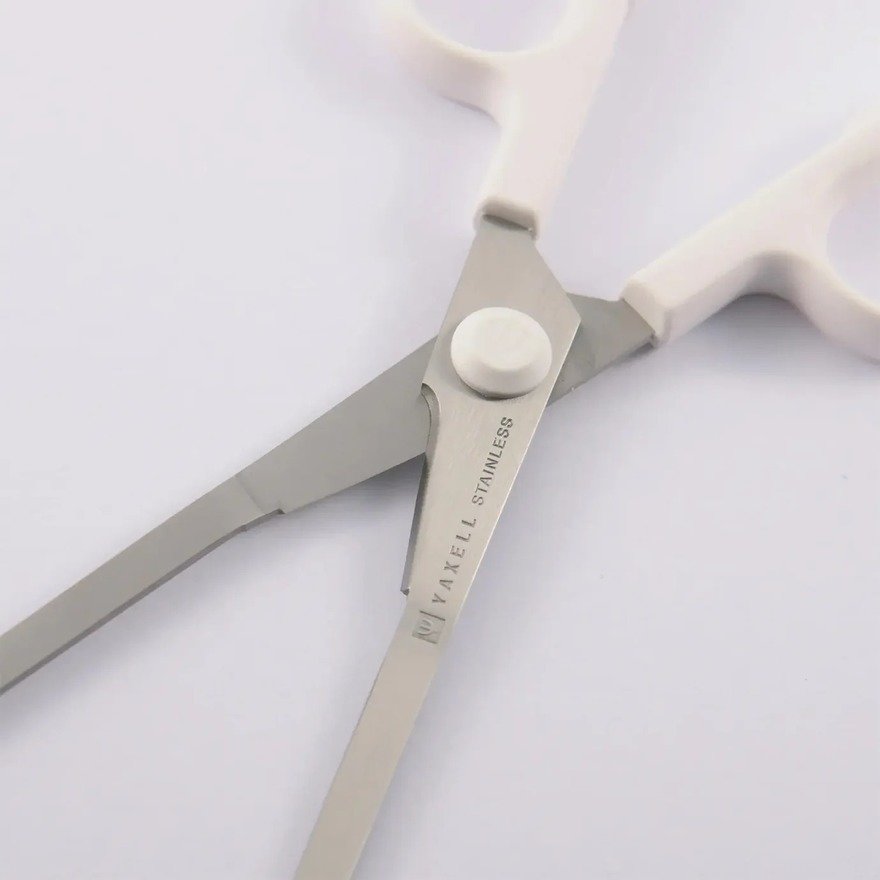
The Yaxell Squeeze Scissors are not merely a cutting tool; they are a multifunctional apparatus designed to address the entire lifecycle of a sauce packet. The genius of the design lies in the segmentation of the blades, which are divided into three distinct functional zones.
1. The Precision Cutter
Located closest to the handle, the sharpened edge serves as the primary cutting mechanism. By concentrating the cutting force near the pivot point—where leverage is highest—users can effortlessly slice through thick foil or plastic seals without the blade slipping or catching. This minimizes the risk of jagged edges that often lead to spills.
2. The Squeegee Mechanism
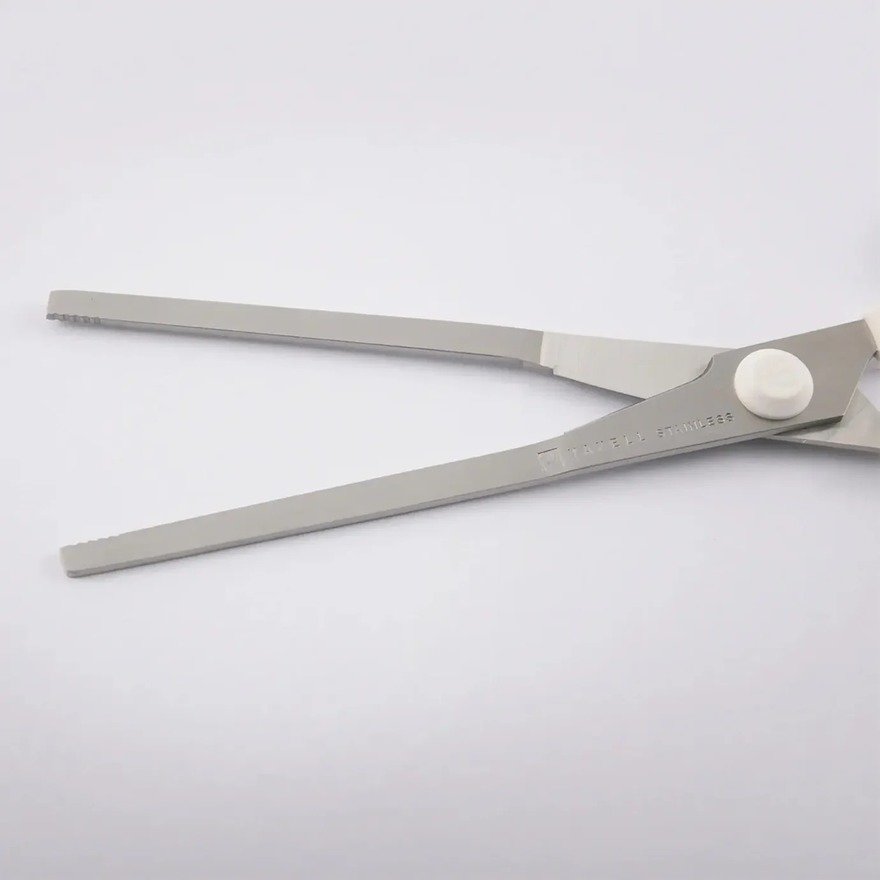
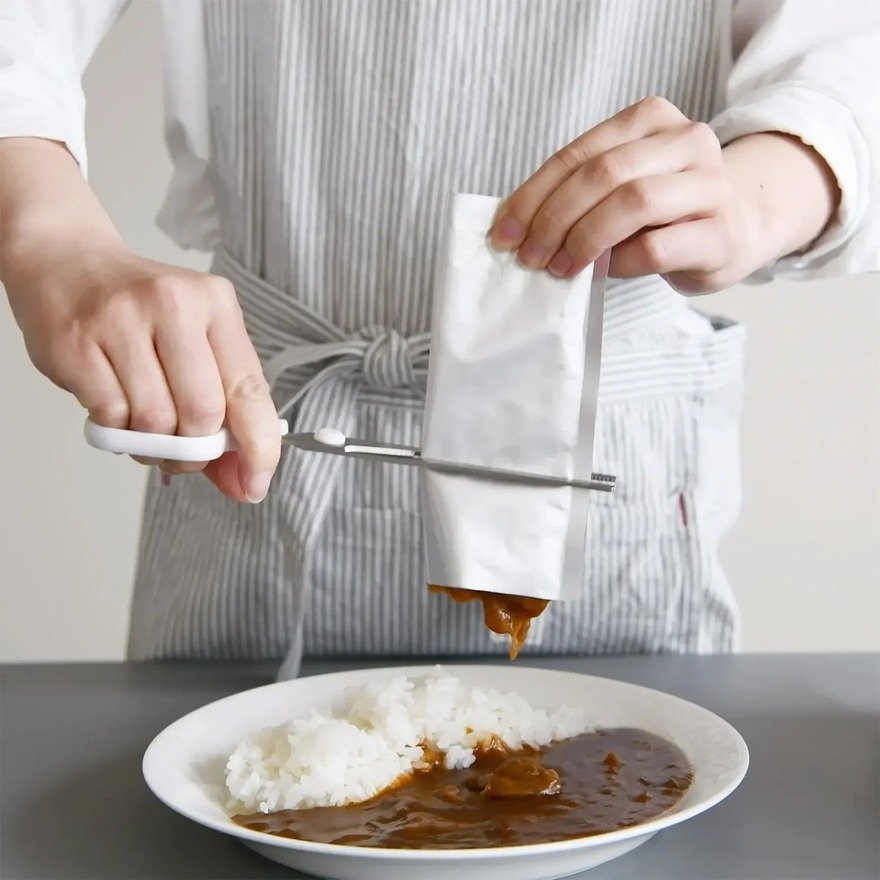
The middle section of the blades is completely devoid of a sharp edge. Instead, these blunt, contoured surfaces act as a precision squeegee. Once the pouch is opened, the user can slide the blades along the exterior of the packet, effectively compressing the sides to extract every milligram of sauce. This addresses the universal annoyance of "packet residue," ensuring that none of the product—which often serves as the flavor profile of the entire dish—is left behind.
3. The Thermal Gripper
The tips of the blades are serrated and designed to act as high-friction tongs. In Japanese cuisine, many sauces and pouches must be submerged in boiling water to heat the contents. Retrieving these pouches manually is a high-risk activity often resulting in minor burns. The serrated tips of the Squeeze Scissors allow the user to reach into a pot of boiling water and securely extract the pouch, providing distance from the heat source and a confident, slip-free grip.
Chronology: The Evolution of Kitchen Tooling
To understand why Yaxell’s innovation is so significant, one must look at the evolution of kitchen ergonomics in the 21st century.
- Early 2000s: The rise of "Retort Pouch" technology. As Japanese domestic life became faster-paced, major food conglomerates shifted toward shelf-stable, boil-in-bag meals.
- 2010s: The "Clutter Crisis." Kitchen manufacturers began focusing on modularity, attempting to reduce the number of tools required for daily tasks. However, many "multi-tools" failed because they were jacks-of-all-trades and masters of none.
- 2023: Yaxell initiates a "Pain Point Study." Recognizing that their high-end knife customers were still struggling with common household tasks, Yaxell’s design team spent months observing home cooks. They identified the "sauce packet struggle" as one of the most frequent sources of minor kitchen friction.
- 2024: The official release of the Squeeze Scissors in the Japanese market. The product was launched with a focus on simplicity and accessibility, retailing at an exceptionally low price point of ¥900 (approximately $5.75 USD).
Supporting Data: The Economics of Efficiency
While a pair of scissors might seem like a trivial product, the data surrounding domestic efficiency suggests otherwise. According to surveys conducted by home appliance researchers in Japan, the average urban household opens between 12 to 18 sauce or seasoning packets per week.
If one assumes that 10% of the contents of a pouch remain trapped in the corners or the seam—a conservative estimate based on the viscosity of curry and miso—a household loses approximately 60–90 milliliters of product per month. Over the course of a year, this amounts to over a liter of wasted ingredients.
Furthermore, the ergonomic data is compelling. The use of traditional shears to grip hot items is a leading cause of accidental burns in the kitchen, specifically among elderly populations who may have reduced grip strength. The Squeeze Scissors, by moving the fulcrum and enhancing the leverage of the handle, reduce the required hand force by roughly 30% compared to standard kitchen shears.
Official Responses and Industry Reception
The industry reaction to Yaxell’s design has been overwhelmingly positive, particularly from the design community, which has lauded the scissors as a "perfect example of UX in physical form."
"We didn’t set out to reinvent the scissor," a representative from Yaxell’s design department noted in a recent press brief. "We set out to solve a sequence of events. Most kitchen tools are designed for a single action—cutting. But the kitchen is a process-oriented environment. By mapping the process of a sauce packet—retrieving, opening, emptying—we realized that a single tool could facilitate the entire workflow."
Design critics have noted that the price point of $5.75 is a strategic decision. By keeping the cost low, Yaxell has ensured that the product is an "impulse buy" rather than a luxury investment. This democratization of high-end design has allowed the Squeeze Scissors to penetrate the mass market, moving beyond the niche of culinary enthusiasts and into the standard-issue kitchen drawer.
Implications: A New Standard for Kitchen UX
The success of the Yaxell Squeeze Scissors carries significant implications for the future of industrial design in the home.
1. The Shift Toward "Process Design"
We are moving away from the era of "Single-Task Tools." The modern consumer is increasingly interested in space-saving, high-efficiency tools that respect the flow of cooking. Future kitchen appliances will likely be judged not by their individual power, but by how well they integrate into the chronological steps of a recipe.
2. The Return of Tactile Engineering
In a world of smart kitchens and IoT-connected appliances, the Squeeze Scissors serve as a reminder that physical, tactile engineering remains the most effective way to solve basic human problems. There is no software update or touch-screen interface that can replicate the satisfaction of a well-engineered hinge or a perfectly serrated tip.
3. Universal Design Principles
The Yaxell design serves as a case study in "Universal Design." Because the tool does not require complex coordination or significant hand strength, it is accessible to a wider demographic, including children learning to cook and elderly individuals with dexterity issues. This inclusive approach to design is expected to become the baseline expectation for consumer goods moving forward.
4. Sustainability Through Consumption
While the scissors are a tool, their secondary effect is a reduction in food waste. By enabling the user to empty every drop of a product, Yaxell is inadvertently contributing to a broader sustainability initiative. If scaled across millions of households, the reduction in packaging waste and the improved efficiency of ingredient usage could have a measurable impact on household-level food security.
Conclusion: The Quiet Revolution
It is rare that a simple piece of stamped stainless steel manages to capture the zeitgeist of modern kitchen design. However, the Yaxell Squeeze Scissors succeed because they do not overcomplicate the solution. They recognize that the modern kitchen is a place of high-speed, high-volume repetitive tasks, and they offer a precise, affordable, and durable way to manage them.
As we look toward the future of culinary tools, we should expect more of this "process-centric" thinking. The kitchen of the future will not necessarily be filled with more gadgets; it will be filled with smarter, more thoughtful tools that understand exactly what we are doing—and how to make it just a little bit easier. In the case of the humble sauce packet, the revolution didn’t come in the form of a high-tech robotic arm or an AI-driven dispenser; it came in the form of a pair of scissors that simply knew how to do its job.
For the average cook, this means less time wrestling with foil, fewer burnt fingers, and a bit more of that precious curry sauce making it into the bowl rather than the trash. In the world of user experience, that is not just a win; it is a masterpiece of efficiency.
About the Author