For generations, the woodworker’s greatest struggle has been the delicate balance between security and accessibility. To hold a workpiece firmly in place, one traditionally relies on a cacophony of clamps, vises, and heavy-duty jigs, each requiring constant adjustment and repositioning. While industrial vacuum hold-down systems have existed for years, they have historically been the exclusive domain of large-scale CNC workshops, tethered to deafening air compressors that necessitated hearing protection and dedicated mechanical rooms.
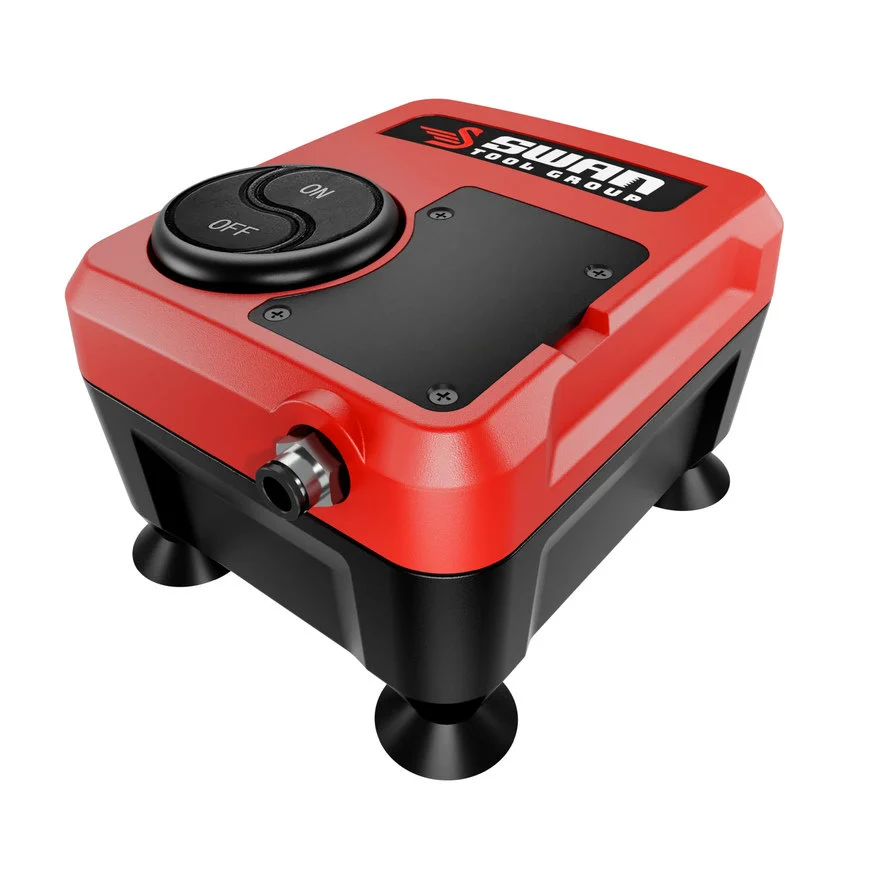
That era of industrial noise and cumbersome equipment is coming to an end. Inventor and woodworker Izzy Swan has unveiled the VacQube, a compact, whisper-quiet 12V vacuum pump designed to bring professional-grade hold-down capabilities to the hobbyist’s bench. By rethinking the geometry of suction, Swan has successfully miniaturized a technology that once required a room full of machinery into a device that fits in the palm of one’s hand.
The Evolution of the Hold-Down: A Chronology
The history of workholding is a history of constraint. From the primitive wooden wedges of the Middle Ages to the heavy iron vises of the industrial revolution, the goal has remained consistent: keep the wood still.
The Era of Mechanical Clamping
For centuries, the workbench was a battlefield of C-clamps and F-clamps. While effective, these tools often interfered with the workpiece itself, forcing woodworkers to stop their progress to move a clamp that was physically blocking the router or the plane. The "quick-release" vise revolutionized speed, but it was still limited by the geometry of the bench.
The Rise of Industrial Vacuum Systems
In the mid-20th century, the advent of vacuum clamping changed the landscape for manufacturing. By utilizing atmospheric pressure, these systems allowed for unobstructed access to the surface of a board. However, the barrier to entry was immense. High-CFM (cubic feet per minute) vacuum pumps were expensive, vibration-heavy, and—most importantly—incredibly loud. For the average garage-based woodworker, the infrastructure required for such a setup was simply unattainable.
The Swan Intervention
Izzy Swan, a long-time innovator in the woodworking space known for his inventive shop-built tools, recognized that the problem wasn’t the vacuum technology itself, but the delivery system. Over the past few years, Swan began experimenting with low-voltage DC motors and specialized seal materials. The result, the VacQube, marks the first time a truly portable, quiet, and affordable vacuum system has been engineered specifically for the individual maker.
Anatomy of the VacQube: Supporting Technical Data
The genius of the VacQube lies in its simplicity and its departure from traditional pneumatic standards.
The Hardware
At its core, the VacQube is a specialized 12V DC vacuum pump. Unlike the massive induction motors found in commercial CNC shops, the VacQube utilizes a high-efficiency pump that generates enough negative pressure to hold a workpiece securely without the need for a massive reservoir tank.
The Workflow: A Three-Part Ecosystem
The VacQube operates as a closed-loop system defined by three primary components:
- The Pump: The VacQube unit itself acts as the heartbeat, pulling air through a 1/4" airline.
- The Bench Integration: By drilling a small, unobtrusive hole in the workbench, the user creates an intake port. This removes the need for large, custom-fabricated vacuum tables.
- The VacQseal and VacQpod: The system is completed by the "VacQseal"—a specialized, high-friction gasket that encircles the hole—and the "VacQpod," a riser that allows the user to elevate the workpiece for edge-work, sanding, or inlay projects.
By creating a seal directly against the underside of the material, the system creates a localized vacuum zone. The atmospheric pressure (which is roughly 14.7 psi at sea level) does the heavy lifting, pinning the workpiece against the bench with surprising force.
Official Perspectives and Market Positioning
In a statement regarding the development of the VacQube, Izzy Swan emphasized the importance of workflow continuity. "The goal was never just to hold a board down," Swan noted. "The goal was to make the tool disappear. When you aren’t fighting with a clamp, or when you aren’t wearing earplugs just to run a vacuum system, you can actually focus on the craftsmanship. We wanted to lower the barrier so that every woodworker could have a ‘pro’ shop experience without the ‘pro’ shop noise."
The Economic Model
Currently, the VacQube is positioned as a disruptive entry-level product. At a pre-sale price of $80, it is priced competitively against a mid-tier set of traditional woodworking clamps. This pricing strategy suggests a deliberate attempt to capture the DIY market, transitioning users away from mechanical fasteners and toward integrated shop systems.
Implications for the Modern Workshop
The introduction of the VacQube carries significant implications for the future of DIY manufacturing and woodworking.
The Death of the "Clamp-Heavy" Workflow
If the VacQube performs as demonstrated, it fundamentally alters how we design furniture. Currently, many woodworkers create oversized parts just to ensure they have enough "clamping margin" to secure the piece during milling. With a vacuum hold-down, the workpiece can be held by the underside, allowing for edge-to-edge routing and sanding without the fear of hitting a metal clamp with a sharp bit.
Quiet Shops and Productivity
Noise pollution is a significant factor in the long-term health of woodworkers. By removing the need for a loud, external compressor to run a vacuum system, the VacQube contributes to a safer, more sustainable working environment. When a shop is quiet, concentration improves, and the risk of fatigue-related errors decreases.
The Democratization of CNC-Style Logic
The VacQube essentially brings "CNC-lite" functionality to hand-tool and power-tool users. The ability to swap workpieces in seconds—simply by toggling a switch—could drastically reduce the time spent on repetitive tasks. For the maker producing small batches of items, this shift in technology could represent a 20-30% increase in production efficiency.
Future Outlook: Where Does It Go From Here?
As the woodworking community begins to adopt the VacQube, the next phase will be observing how users integrate it into their existing benches. Will we see a surge in "modular" bench tops designed specifically for quick-change vacuum ports? Will other manufacturers attempt to replicate the technology, leading to an ecosystem of vacuum-ready accessories?
The VacQube is more than just a tool; it is a signal of a broader trend toward the miniaturization of industrial technology. In the same way that 3D printers and laser cutters have shrunk from factory-sized monoliths to desktop-friendly units, the VacQube proves that vacuum hold-down is the next logical step in the evolution of the home workshop.
For now, the project remains in its pre-sale phase, with early adopters eager to see if this compact pump can truly handle the rigors of heavy-duty shop work. If it succeeds, the sound of the modern workshop may change from the frantic ratcheting of metal clamps to the silent, invisible grip of air itself.
The VacQube invites woodworkers to stop fighting their benches and start working with them. In an era where precision is paramount, the ability to secure a project without damage, noise, or obstruction is not just a luxury—it is the hallmark of the modern, sophisticated maker. Whether you are a weekend hobbyist or a professional contractor, the shift toward vacuum-based workholding is one that promises to make the craft faster, quieter, and infinitely more precise.
About the Author