The global data center landscape is currently undergoing a structural transformation of unprecedented scale. As the artificial intelligence (AI) boom necessitates a radical expansion of compute capacity, billions of dollars are flowing into the sector. Yet, industry veterans are sounding a note of caution: in the current climate, capital is no longer the primary differentiator. Instead, the ability to navigate power grid constraints, volatile supply chains, and complex site repositioning has become the true arbiter of success.
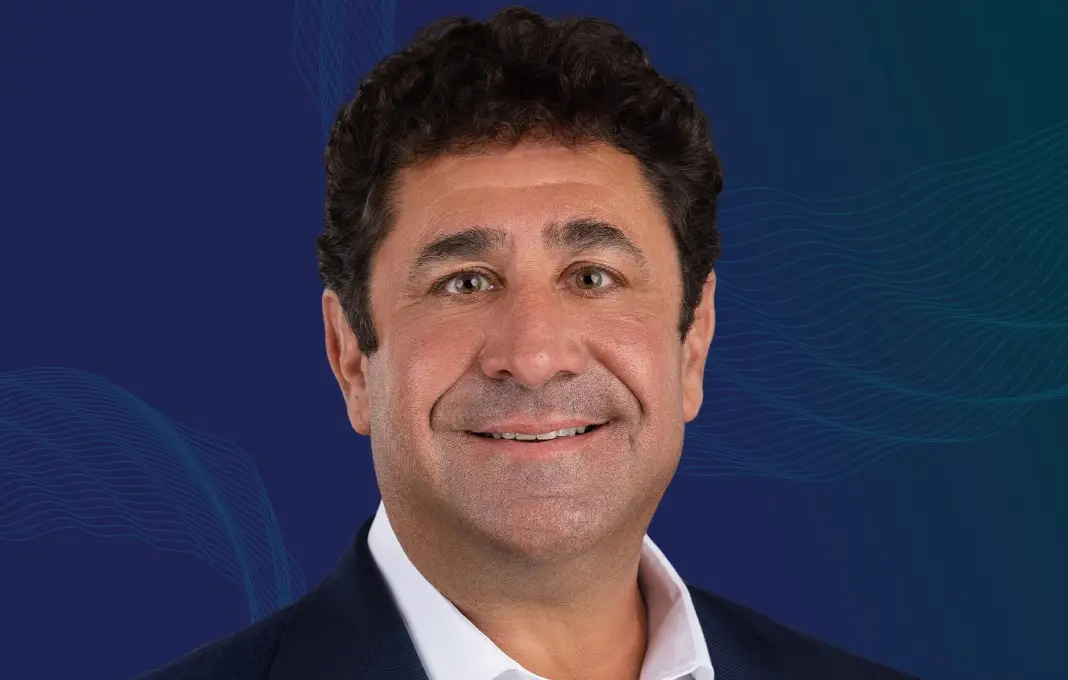
Dave Ferdman, the co-founder of CyrusOne and current president of Primary Digital Infrastructure (PDI), is at the forefront of this shift. Ferdman argues that we have entered an era where "money is easy, but execution is hard." For investors and developers alike, the ability to bridge the widening gap between massive capital availability and the physical realities of infrastructure deployment will dictate which projects become long-term assets and which become stranded liabilities.
The New Reality: Power and Constraints Over Capital
For years, the data center industry operated on a model where capital was the primary barrier to entry. If a firm could secure funding, it could build capacity. Today, that equation has been flipped on its head. The AI buildout requires power densities that legacy facilities were never designed to support, and the global power grid is increasingly unable to keep pace with this exponential demand.
"Demand for power, connectivity, and high-density computing is outrunning what existing facilities were designed to support," says Ferdman. "Hundreds of billions of dollars are moving toward new capacity, but capital alone cannot shorten an interconnection queue, secure a hard-to-find transformer, or reposition a decade-old facility for next-generation compute."
This environment has transformed data centers from a standard real estate asset class into a complex infrastructure play. Investors are finding that the most valuable sites are not necessarily the largest, but those with "ready-to-go" power availability and the physical flexibility to be upgraded as AI hardware evolves.
Chronology: From CyrusOne to PDI
To understand the current strategy of Primary Digital Infrastructure, one must look at the historical trajectory of Dave Ferdman’s career, which has mirrored the evolution of the data center industry itself.
2000–2011: The Foundation of Scale
Ferdman co-founded CyrusOne in 2000, during the nascent stages of the colocation market. As president and CEO, he oversaw the firm’s rapid expansion, establishing a footprint that spanned more than 50 data centers globally. This period provided him with a front-row seat to the transition from enterprise-owned server closets to massive, hyperscale-driven infrastructure.
2021–2022: The Exit and the Reset
After stepping away, Ferdman returned to CyrusOne in 2021 as interim CEO to lead the company through its $15 billion take-private acquisition by KKR and Global Infrastructure Partners. This transition marked a turning point in the industry, signaling that massive institutional players viewed data centers as essential, long-term infrastructure rather than speculative technology real estate.
2023–Present: The PDI Era
Following the exit, Ferdman co-founded Primary Digital Infrastructure (PDI) in Austin, Texas. PDI was conceived specifically to address the disconnect between the "wall of money" entering the space and the "ground-level" operational expertise required to turn that capital into high-performance compute environments.
Supporting Data: The Complexity Index
The data points surrounding the current infrastructure race tell a story of extreme friction:
- Interconnection Queues: In major markets, the wait time for grid interconnection has extended from months to several years.
- Supply Chain Bottlenecks: Lead times for critical components—specifically high-voltage transformers and switchgear—remain at record highs, often exceeding 100 weeks.
- Density Shifts: While traditional data centers were built for power densities of 5–10 kW per rack, AI-driven workloads now frequently demand 50–100+ kW per rack, necessitating a total redesign of cooling and power delivery infrastructure.
Ferdman’s strategy at PDI is built on the premise that these constraints are not temporary anomalies but the "new normal." By focusing on assets that can be repositioned or upgraded, PDI attempts to mitigate the risks associated with building from scratch in a supply-constrained environment.
Official Perspective: Bridging the Advisory-Investment Divide
PDI operates under a dual-model structure that is increasingly unique in the market. By acting as both an advisor to hyperscalers and an investor in physical assets, the firm maintains a comprehensive view of the entire value chain.
"Operating as both an advisor and an investor gives us a more complete view of the market," Ferdman explains. "On the advisory side, we’re engaged with some of the largest hyperscale companies as well as data center owners and operators. This provides real-time insight into how capital is flowing and where constraints are emerging."
Case Study: Stargate Abilene
A prime example of this operational focus is PDI’s involvement in the Stargate Abilene project in Texas, executed in partnership with Crusoe and Blue Owl. The project is widely regarded as one of the most ambitious hyperscale developments in the world. By aligning technical foresight with institutional funding, the project hit major milestones within its first year—an outlier in an industry often plagued by construction delays.
Implications: The Future of Infrastructure Investment
As data centers transition into the "core of enterprise growth," the role of the investment firm is undergoing a radical shift. The era of the "passive landlord" in the data center space is effectively over.
1. From Capital Provider to Strategic Partner
Investors who view themselves merely as financiers will likely struggle in the current market. The winners will be those who act as strategic partners—helping firms navigate the "art" of aligning infrastructure with long-term goals. Because every data center has a different physical reality and power profile, there is no "cookie-cutter" approach to investment.
2. The Rise of Operational Expertise
Complexity is now the defining factor of the asset class. As labor shortages, supply chain issues, and power grid limitations coalesce, the premium on operational experience has never been higher. Firms that possess deep technical knowledge can identify value in older, underutilized assets that generalist investors might overlook.
3. Long-Term Value vs. Headline Growth
The current "gold rush" mentality carries the risk of over-capitalization. PDI’s approach warns against "chasing growth for its own sake." Instead, the focus must shift to assets that are positioned at the intersection of power, capital, and compute. The goal is to create durable enterprise value that survives the inevitable cycles of the tech industry.
Conclusion: The Path Forward
The data center sector is currently in a state of hyper-evolution. While the influx of hundreds of billions of dollars is a testament to the essential nature of digital infrastructure, the ultimate winners will be determined by execution.
Dave Ferdman’s thesis is clear: the most successful firms in this cycle will be those that view infrastructure not as a financial instrument, but as an operational challenge. As the digital economy continues to scale, the ability to deliver power-dense, reliable, and future-proofed compute capacity will separate the leaders from the laggards. In the race to power the AI future, the most important asset is not the checkbook—it is the ability to connect the dots between grid capacity, technical design, and long-term operational excellence.
About the Author