Copenhagen, Denmark – [Date, e.g., October 26, 2026] – Roland DG, a leading manufacturer of wide-format inkjet printers and printer/cutters, has announced the global launch of its groundbreaking VersaObject RC-300 series. This innovative UV Helical direct-to-object printer is set to redefine possibilities in product customization and industrial decoration, particularly by opening unprecedented avenues for high-quality printing on challenging substrates like glass. With its sophisticated helical print technology, intelligent design, and a strong emphasis on user-friendliness, the RC-300 series positions itself as a pivotal advancement for businesses seeking to expand their offerings in personalized and specialized product markets.
The introduction of the RC-300 marks a significant leap forward in the capabilities of direct-to-object printing, moving beyond flat surfaces to seamlessly decorate complex three-dimensional objects. This development is poised to empower a wide array of industries, from premium packaging and promotional goods to industrial parts and consumer products, with unparalleled precision and versatility.
Main Facts: Unpacking the VersaObject RC-300’s Core Innovations
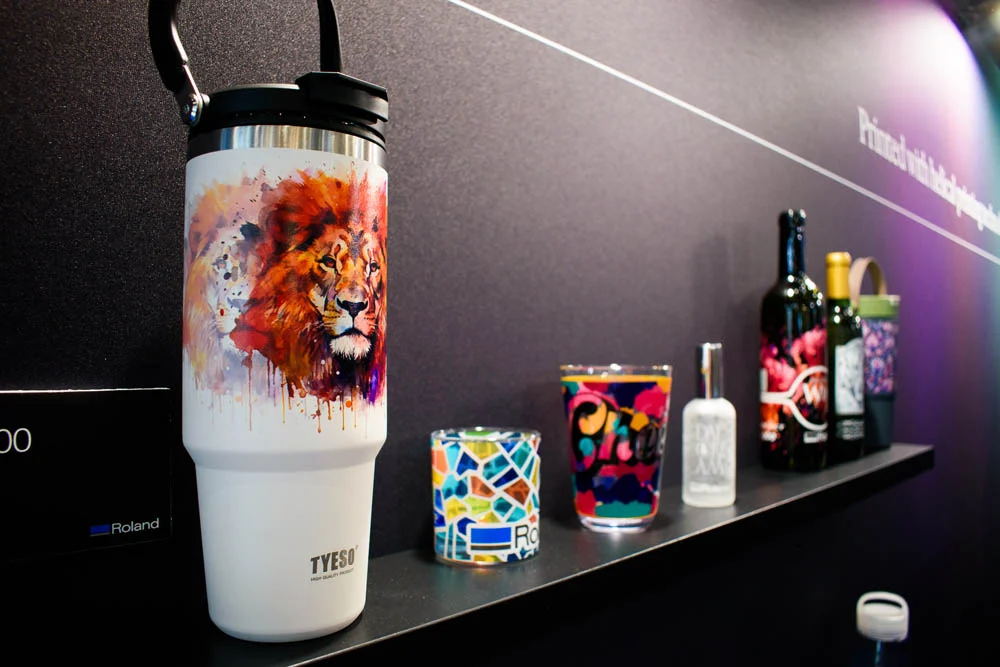
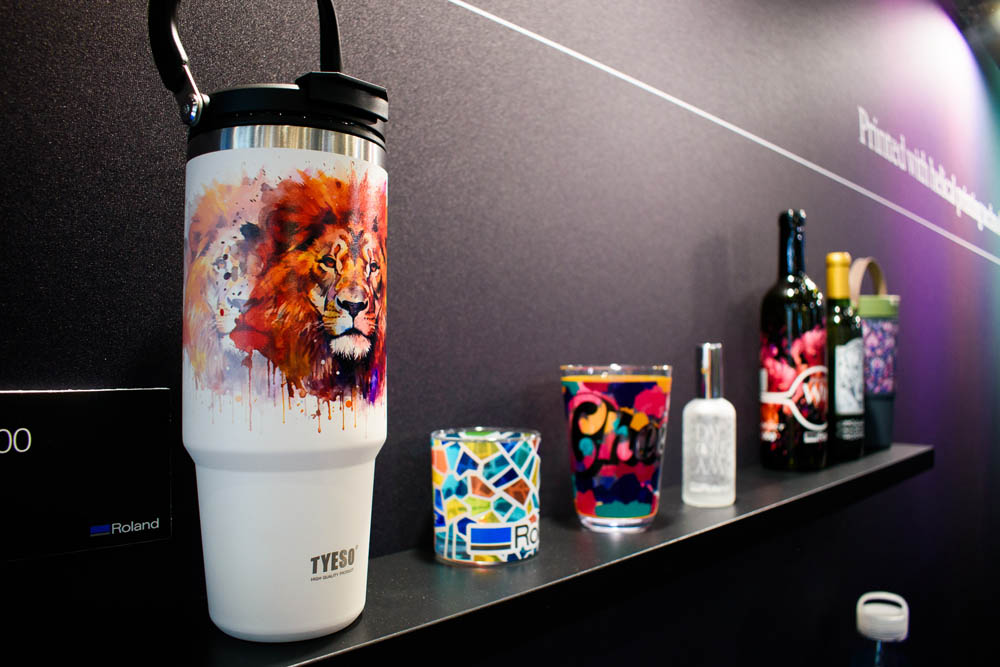
At the heart of the VersaObject RC-300’s appeal is its ability to deliver stunning, durable graphics on a diverse range of cylindrical, conical, and curved profile products. This includes everything from bespoke beverage bottles and cosmetic containers to industrial components and specialized packaging. The core innovation lies in its unique UV Helical print technology, a departure from traditional flatbed or rotational printing methods that often struggle with seamless coverage on non-planar objects.
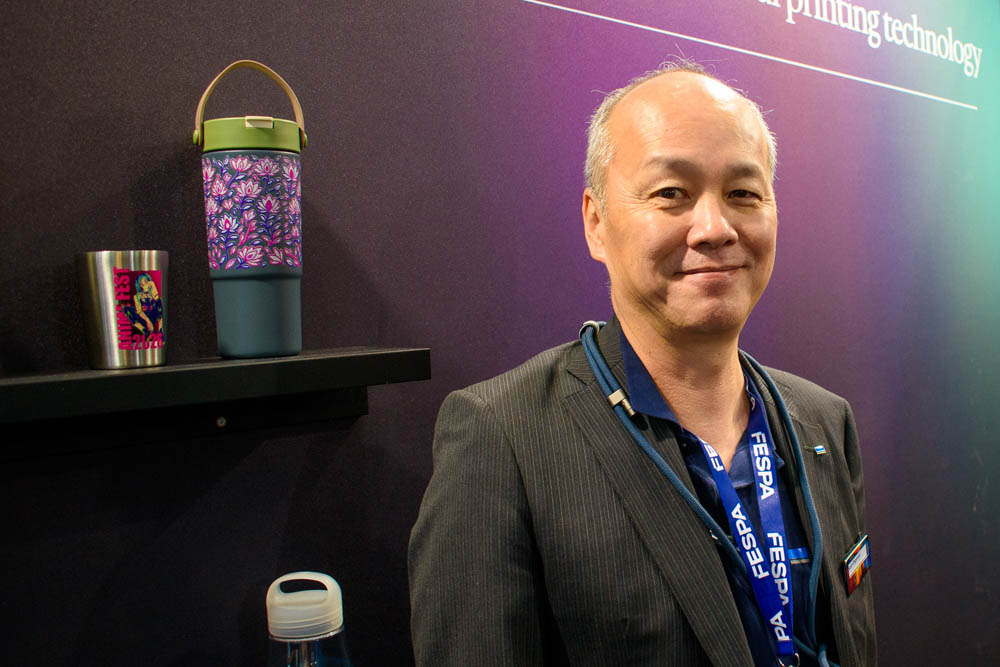
Kevin Shigenoya, a key figure at Roland DG, articulated the essence of this new offering: "The RC-300 features two piezo printheads and a sophisticated roller system that precisely rotates the object throughout the printing process." This synchronized movement of printheads and object rotation is fundamental to achieving the printer’s signature helical output.
Unlike conventional methods that might build an image in discrete strips, the RC-300 employs a continuous, spiral printing method. This means the image is printed seamlessly around the object as it rotates, eliminating visible seams or overlaps that can detract from the aesthetic quality of the final product. This helical approach ensures a smooth, unbroken graphic, critical for premium brand presentation and intricate designs.
Dual Model Versatility for Diverse Applications:
Roland DG has strategically launched two distinct models within the RC-300 series to cater to specific market needs:
- CMYK Model: This configuration is primarily aimed at printing on opaque or colored objects. For these applications, the UV curing lamp illuminates from below the object, ensuring optimal ink adhesion and rapid curing without interference from the object’s inherent color or opacity.
- CMYK + White + Primer Model: This extended configuration is designed for the more demanding task of printing on transparent objects, such as clear glass bottles or acrylic containers. To address the unique challenges of transparent media, the UV lamp illuminates from the side. As Kevin Shigenoya explains, "For transparent objects, we illuminate from the side so that light does not reflect back towards the printhead and thereby harden the ink in the printhead itself. This is why we have two different models." This thoughtful engineering prevents unwanted ink curing within the printheads, a common issue when printing on highly reflective or transparent surfaces with conventional setups. The inclusion of white ink allows for vibrant, opaque graphics on clear substrates, while the primer is crucial for enhanced adhesion.
This dual-model strategy underscores Roland DG’s commitment to providing tailored solutions that maximize efficiency and quality across the spectrum of direct-to-object printing requirements.
Chronology: Roland DG’s Legacy and the Evolution of Direct-to-Object Printing
The launch of the VersaObject RC-300 is not an isolated event but rather a culmination of Roland DG’s decades-long commitment to innovation in digital printing. Since its inception, Roland DG has consistently pushed the boundaries of what is possible with inkjet technology, from pioneering wide-format graphic production to developing robust industrial solutions.
A History of Innovation:
Roland DG’s journey began with a focus on cutting-edge plotting technology, swiftly transitioning into the burgeoning digital printing market. Over the years, the company has introduced numerous industry-firsts, establishing itself as a trusted name for reliability, precision, and user-centric design. Their VersaUV series, for instance, has long been a benchmark for UV-LED flatbed and hybrid printers, enabling businesses to print on a vast array of rigid and flexible materials. The VersaUV range paved the way for direct-to-object printing, demonstrating the potential for customization on items beyond traditional signage and apparel.
The Rise of Direct-to-Object Customization:
The market for personalized and customized products has experienced exponential growth in recent years. Consumers increasingly demand unique items, whether it’s a branded water bottle, a custom-designed candle holder, or a specialized industrial part. This demand has spurred the development of advanced printing technologies capable of decorating non-flat, three-dimensional objects. Early attempts often involved manual processes, complex jigs, or modified flatbed printers, which were labor-intensive, prone to errors, and limited in their ability to produce seamless, high-quality graphics on curved surfaces.
The challenge of printing on cylindrical and conical objects particularly highlighted the need for specialized solutions. While some rotational attachments existed, they often lacked the precision, speed, and seamless integration required for industrial-scale production or highly detailed graphics. Furthermore, materials like glass presented significant adhesion challenges, often requiring pre-treatment processes that were inconsistent or environmentally unfriendly.
The RC-300 emerges from this context, building upon Roland DG’s extensive R&D in UV printing and precision mechanics. It represents a direct response to market demands for greater versatility, higher quality, and simplified workflows in direct-to-object decoration. By integrating helical printing with advanced UV curing and an intelligent primer system, Roland DG is not just offering a new product but a comprehensive solution designed to address the most pressing challenges in this niche yet rapidly expanding segment of the printing industry. This launch signifies Roland DG’s continued leadership in identifying market gaps and delivering innovative, practical solutions that empower businesses.
Supporting Data: Technical Prowess, Market Dynamics, and User Experience
The VersaObject RC-300 is underpinned by a robust technical framework and designed to meet the evolving demands of the modern market, all while prioritizing an intuitive user experience.
Advanced Ink Technology and Material Compatibility:
The RC-300 series printers are compatible with an extensive range of materials, including notoriously challenging substrates. Its confirmed compatibility spans:
- Glass: A significant breakthrough, as glass traditionally poses adhesion difficulties for inkjet inks.
- PET (Polyethylene Terephthalate): Widely used in packaging for beverages and food.
- Aluminum: Common for bottles, cans, and industrial components.
- Steel: Durable material for various industrial and consumer goods.
- Rigid Plastics: A broad category covering countless product applications.
This broad material compatibility is largely attributable to Roland DG’s advanced EUV-H hard ink, supplied in convenient 1-liter bottles. This specialized ink formulation offers CMYK, white, gloss, and primer options, enabling durable production and first-class finishes without the need for specialized tools or extensive post-processing. The gloss option further enhances visual appeal, adding depth and protection to printed designs.
The Game-Changing Primer Application:
A standout feature of the RC-300 is its unique primer application system. As Kevin Shigenoya elaborated, "The primer is special because it helps us to print on materials like glass, which are normally quite difficult to print on. The primer is applied with a unique function. Many of our competitors offer manual application of primer, but ours is applied with the printhead. This means the primer is applied with the same ideal thickness and only where necessary."
This automated, printhead-applied primer offers several critical advantages:
- Precision and Consistency: Manual priming can lead to uneven application, affecting adhesion quality and print consistency. The RC-300’s automated system ensures uniform primer thickness across every object, guaranteeing optimal ink bonding.
- Targeted Application: Applying primer only where the ink will be laid minimizes material waste and reduces operational costs. It also streamlines the workflow by eliminating the need to prime the entire object.
- Enhanced Adhesion on Difficult Substrates: This specialized primer formulation, combined with precise application, is the key to achieving robust and long-lasting prints on non-porous and low-surface-energy materials like glass, which are notoriously difficult for inks to adhere to.
User-Centric Design and Operational Efficiency:
Roland DG has placed a strong emphasis on user-friendliness, recognizing that complex setup procedures can hinder productivity, especially in short-run customization environments.
"There are many Chinese suppliers offering similar systems," notes Kevin Shigenoya. "But our system is unique because we try to reduce the hassle for customers in setting up the machine and loading and unloading materials. There are 50 different presets that customers can save with the touch of a button. This reduces setup time. User-friendliness is one of the most important features of the system."
This focus on ease of use translates into tangible benefits for businesses:
- Reduced Setup Time: The ability to save and recall up to 50 job presets significantly cuts down on the time required to switch between different product types or designs. This is crucial for operations handling diverse customization orders.
- Lower Skill Barrier: An intuitive interface and automated processes reduce the need for highly specialized operators, broadening the talent pool and minimizing training costs.
- Increased Throughput: Faster setup and reliable operation directly contribute to higher production volumes and improved turnaround times.
- Minimized Errors: Automated processes and predefined settings reduce the likelihood of human error, leading to fewer misprints and less material waste.
Integrated Software Ecosystem:
The RC-300 is designed for seamless integration into Roland DG’s comprehensive software ecosystem, further enhancing its operational efficiency and versatility:
- Roland DG Connect Center: This graphics software provides powerful tools for design and file preparation, ensuring optimal artwork for the helical printing process.
- VersaWorks 7 (RIP Software): As Roland DG’s proprietary Raster Image Processor, VersaWorks 7 offers advanced color management, layout tools, and production management features, ensuring accurate color reproduction and efficient print queues.
- Roland DG Connect (Machine Monitoring Software): This invaluable tool allows users to monitor printer status, track ink levels, receive maintenance alerts, and access performance data, ensuring maximum uptime and proactive maintenance.
This integrated software suite provides a cohesive workflow from design to print, maximizing the potential of the RC-300 and streamlining operations for businesses. The fact that the new cylinder printers will be produced in Japan further underscores Roland DG’s commitment to precision engineering, quality control, and reliable manufacturing standards.
Official Responses: Roland DG’s Strategic Vision
Kevin Shigenoya’s statements throughout the announcement are not merely descriptive but reveal Roland DG’s strategic positioning for the VersaObject RC-300. His emphasis on user-friendliness directly addresses a critical pain point in the direct-to-object printing market, where complex setup and calibration often deter smaller businesses or those new to customization.
"Brugervenlighed er en af systemets vigtigste funktioner," (User-friendliness is one of the system’s most important features) highlights a core philosophy at Roland DG: technology should empower, not complicate. This is a clear differentiator in a competitive landscape. While acknowledging the presence of "many Chinese suppliers who offer similar systems," Shigenoya subtly positions Roland DG’s offering as superior through its refined engineering and customer-centric design. This isn’t just about printing capabilities but about the total cost of ownership and the operational ease that translates into profitability for the customer.
The meticulous engineering behind the dual models and the automatic primer application also speaks volumes about Roland DG’s commitment to solving real-world production challenges. By addressing the specific complexities of transparent and opaque substrates, and by perfecting adhesion on difficult materials like glass, Roland DG is not just selling a printer; they are selling a solution that expands market opportunities for their clients.
Shigenoya’s commentary underscores a strategic move to democratize advanced customization. By simplifying the process of setting up and operating a sophisticated direct-to-object printer, Roland DG aims to make high-quality, personalized product decoration accessible to a wider range of businesses, from small print shops looking to diversify to larger manufacturers seeking in-house customization capabilities. This vision aligns with the broader industry trend towards on-demand production and mass customization.
Implications: Reshaping Customization and Industrial Decoration
The launch of the Roland DG VersaObject RC-300 carries significant implications across various sectors, promising to reshape how businesses approach product customization, short-run production, and industrial decoration.
For Print Service Providers and Sign Makers:
The RC-300 presents an immediate opportunity for print service providers (PSPs) and sign makers to diversify their offerings and tap into lucrative new markets. With the ability to print on an expansive range of 3D objects, businesses can now offer:
- Personalized Promotional Items: Custom-branded water bottles, pens, power banks, and corporate gifts with seamless, high-quality graphics.
- Bespoke Packaging: Short-run production of customized packaging for craft beverages, cosmetics, and specialty foods, allowing brands to test market demand or offer limited editions.
- Industrial Labeling and Marking: Durable direct printing on components, tools, and equipment, eliminating the need for labels or engravings.
- Art and Craft Markets: Unique decorative items, glassware, and ceramic pieces for artists and artisans.
The enhanced user-friendliness and automated processes mean that existing print shops can integrate this technology with minimal disruption, opening new revenue streams without extensive retraining or specialized personnel.
For Manufacturers and Brands:
For product manufacturers and brand owners, the RC-300 offers the capability to bring customization in-house, fostering greater agility and control over their branding and product development.
- Prototyping and Product Development: Rapid creation of customized prototypes for design validation and market testing.
- Mass Customization: Offering personalized versions of their products directly to consumers, enhancing brand loyalty and perceived value.
- Supply Chain Optimization: Reduced reliance on external printing services for specialized items, potentially cutting lead times and costs.
- Premiumization: The ability to print on glass and other high-end materials allows brands to elevate their product aesthetics and offer premium-tier items.
For the Customization and Personalization Market:
The RC-300 will likely act as a catalyst for innovation in the broader customization market. Its ability to print seamlessly on curved surfaces and challenging materials at a high quality sets a new benchmark. This could lead to:
- New Product Categories: The feasibility of printing on glass and other unique materials could inspire entirely new product lines and decorative applications that were previously unachievable or cost-prohibitive.
- Increased Demand for Personalized Goods: As the technology becomes more accessible and versatile, it will fuel consumer expectations for personalized products across various categories.
- Competitive Advantage: Businesses that adopt the RC-300 early will gain a significant competitive edge by offering capabilities that differentiate them from rivals still relying on older, less versatile technologies.
Future Outlook and Environmental Considerations:
The VersaObject RC-300, with its UV-LED technology, also aligns with growing environmental consciousness. UV inks are generally considered more eco-friendly than solvent-based inks due to their instant curing (reducing energy consumption) and lower volatile organic compound (VOC) emissions. This makes the RC-300 an attractive option for businesses looking to enhance their sustainability profiles.
Looking ahead, the success of the RC-300 could spur further advancements in direct-to-object printing, including even faster speeds, broader material compatibility, and more sophisticated automation features. Roland DG’s commitment to producing these printers in Japan reinforces their dedication to quality and continuous improvement, ensuring the RC-300 series will be a reliable workhorse for years to come.
In conclusion, the Roland DG VersaObject RC-300 is more than just a new printer; it is a strategic tool that expands the horizons of product decoration and customization. By combining cutting-edge helical UV technology with intelligent design and a profound understanding of user needs, Roland DG has delivered a solution that is poised to empower businesses, foster creativity, and ultimately enrich the marketplace with a new generation of beautifully customized products.
About the Author