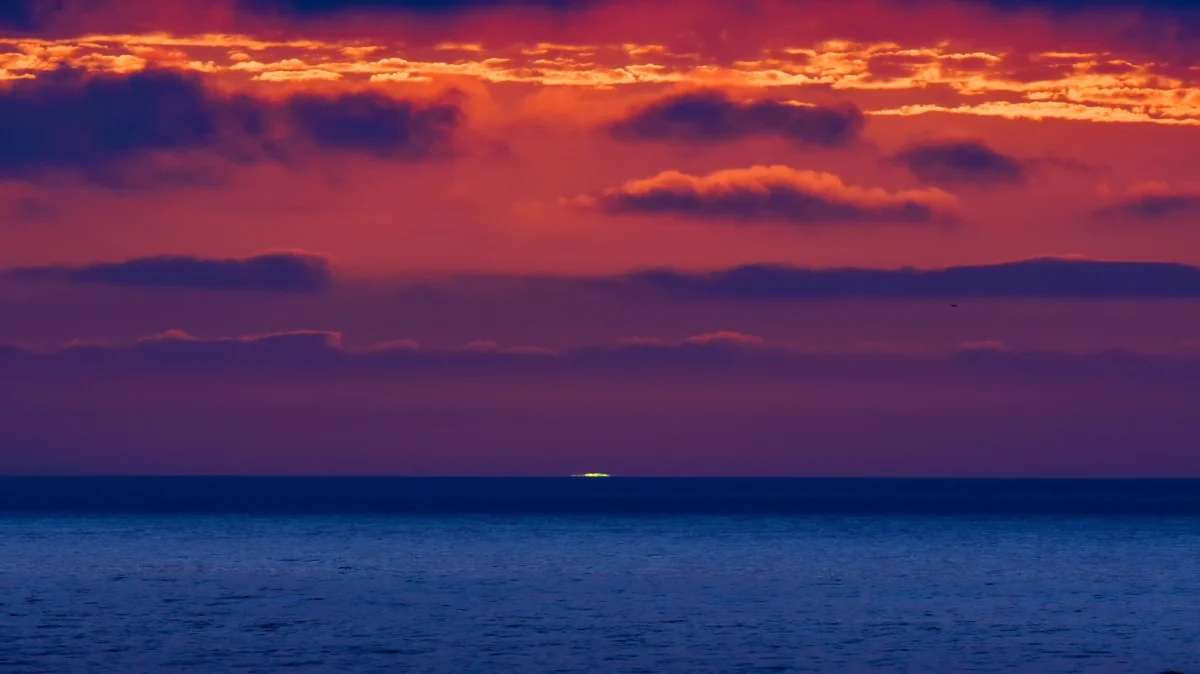
Across the globe, the world’s oceans—the planet’s ultimate thermal buffer—are running a fever. While headlines often focus on terrestrial heat records, a more profound and potentially irreversible transformation is occurring beneath the surface. From the temperate waters off the English coast to the vast, sprawling expanse of the Pacific, marine heat waves (MHWs) are not merely temporary anomalies; they are becoming the new baseline, permanently altering the structure of global marine ecosystems and the livelihoods that depend on them.
The Frontline: An Octopus Bloom in English Waters
The common octopus, typically a resident of the warm Mediterranean, has become an unlikely harbinger of this change. Last year, octopus larvae—carried by currents and hitchhiking on plankton—reached the English Channel. In a normal climate, these larvae would have perished in the cold northern waters. Instead, they thrived.
An intense marine heat wave off the coasts of Devon and Cornwall raised water temperatures by as much as 9 degrees Fahrenheit above the seasonal norm, creating a sub-tropical sanctuary in the North Atlantic. This year, the resulting octopus bloom is the largest observed in 75 years. While local fishers have enjoyed a 7,700 percent increase in landings compared to historical averages, the ecological trade-off has been stark. The influx has decimated populations of native scallops, lobster, and crab. Yet, the food web has shifted: the abundance of octopus has invited new, unexpected visitors, including bluefin tuna and sharks, which have returned to British waters for the first time in decades.
Bryce Stewart, a senior research fellow at the UK’s Marine Biological Association, notes that this event represents a fundamental shift. "It has completely shaken up the food chain," Stewart said. "In past surges, cold water would return and kill off the population. This time, the octopuses aren’t just surviving; they are reproducing."
Chronology of an Escalating Crisis
To classify a marine heat wave, scientists use a strict definition: ocean temperatures must exceed the 90th percentile of normal seasonal variation for at least five consecutive days. However, the frequency and intensity of these events have accelerated rapidly since the mid-20th century.
- 1940–2010: The baseline era, where anthropogenic warming began to manifest in ocean heat content, though extreme spikes remained relatively rare.
- 2013–2016: The era of "The Blob." A persistent high-pressure ridge in the Pacific reduced cool winter winds, allowing the sun to bake the surface waters of the eastern Pacific. At its peak, temperatures soared 7 to 10 degrees Fahrenheit above average, triggering an ecological collapse that spanned from Baja California to British Columbia.
- 2023–2025: The current era of global record-setting. Scientists estimate that 82 percent of the world’s oceans are currently experiencing some form of marine heat wave. This period has been characterized by "compounding" events, where the lingering damage of previous heat waves is exacerbated by new, intense spikes in temperature.
- 2026 and Beyond: A period of uncertainty defined by the most intense El Niño event in recorded history, which is currently fueling a "New Blob" in the Pacific, threatening to dwarf the impacts seen a decade ago.
Supporting Data: The Physics of an Overheating Ocean
The primary driver of this crisis is the ocean’s role as a heat sink. According to the National Oceanic and Atmospheric Administration (NOAA), the world’s oceans have absorbed more than 90 percent of the excess heat trapped by greenhouse gas emissions since the industrial era.
This absorption manifests in two ways: gradual warming and acute heat waves. While gradual warming allows some species to adapt, the acute nature of marine heat waves offers no such grace period. One recent study highlighted that since 1940, the number of days per year with extreme surface heat has tripled.
The geographic scale of these events is staggering. The current heat wave in the Pacific covers more than 24 million square miles—an area larger than the entire continent of North America. Catherine Gregory, a climate scientist at the University of Bern, emphasizes the severity of the situation: "We find it’s the most extreme July marine heat wave conditions for the Western Mediterranean, the Celtic Region, and for the Bay of Biscay and Iberian Peninsula."
Official Responses and Scientific Concern
The scientific community is increasingly vocal about the insufficiency of current climate policies. Global Climate Risks, a nonprofit dedicated to tracking ocean health, has issued urgent warnings regarding the 82 percent of the ocean currently affected by heat.
The consensus among experts—from those at the Scripps Institution of Oceanography to the Global Coral Reef Monitoring Network—is that we are nearing a series of ecological "tipping points." Coral reefs are the most visible victims. A bleaching event lasting from early 2023 to mid-2025 impacted over 84 percent of the world’s coral reefs. Researchers warn that the recovery windows between these bleaching events have narrowed to the point of extinction for many fragile reef systems.
Furthermore, the atmospheric impact cannot be ignored. The heat stored in the surface layer of the ocean is a primary fuel source for tropical storms and hurricanes. As ocean temperatures hit levels never seen in modern human history, the severity of these storms is expected to follow suit, creating a feedback loop of destruction that reaches far inland.
The Implications: A Cascading Collapse
The ripple effects of these heat waves extend far beyond the water’s surface.
The Loss of Underwater Rainforests
The collapse of kelp forests from Baja California to British Columbia serves as a cautionary tale. Kelp forests are among the most productive ecosystems on Earth, providing nurseries for juvenile fish and habitats for otters and abalone. During the original "Blob" event, Northern California lost 95 percent of its kelp canopy. Melissa Carter, a biological oceanographer at Scripps, notes the gravity of this loss: "The Pacific kelp forest has lasted for millions of years… but it has a specific temperature threshold where it falls apart. Everything that lives on the coast depends on that ecosystem."
The Food Web and Starvation
The disruption of the food web often begins at the smallest level. During the 2015 heat wave, researchers monitoring krill—the foundation of the marine food chain—found their sampling nets virtually empty. The lack of forage fish caused a cascade of starvation that saw the North Pacific humpback whale population drop by 7,000 individuals, or roughly 20 percent.
Similarly, the impact on seabirds has been catastrophic. In Alaska, 4 million common murres starved to death during the mid-2010s. Today, the cycle is repeating in Southern California, where researchers are observing cormorants, brown pelicans, and grebes dying on beaches in unprecedented numbers.
Toxicity and Algal Blooms
Perhaps the most dangerous byproduct of these heat waves is the proliferation of harmful algal blooms. The alga Pseudo-nitzschia thrives in warm, stagnant surface waters. It produces domoic acid, a potent neurotoxin that accumulates in the food chain. This toxin is currently responsible for the mass die-offs of sea lions, whales, and porpoises across the Pacific coast, signaling that the ocean’s chemical balance is becoming increasingly hostile to marine life.
Conclusion: A Prologue to the Future
As the world enters the second half of this decade, the state of the ocean serves as a grim reflection of our climate trajectory. We are no longer discussing the potential for future change; we are witnessing a permanent, systemic reconfiguration of the marine world.
The "New Blob" currently forming in the Pacific is not just a statistical anomaly—it is a warning. Scientists emphasize that the environmental damage recorded in the last decade is merely a prologue to what lies ahead if global temperatures continue their upward climb. The oceans are currently in a state of unprecedented stress, and as these heat waves become the standard rather than the exception, the biological, economic, and atmospheric stability of our planet hangs in the balance.
About the Author