In the high-stakes world of corporate leadership, performance under pressure is often mischaracterized as a product of innate heroism or singular genius. Yet, when the market turns volatile and the "storm" hits the boardroom, the difference between failure and survival rarely rests on last-minute brilliance. Instead, it is the bedrock of preparation, the simplification of critical systems, and the discipline of the pause that dictate the outcome.
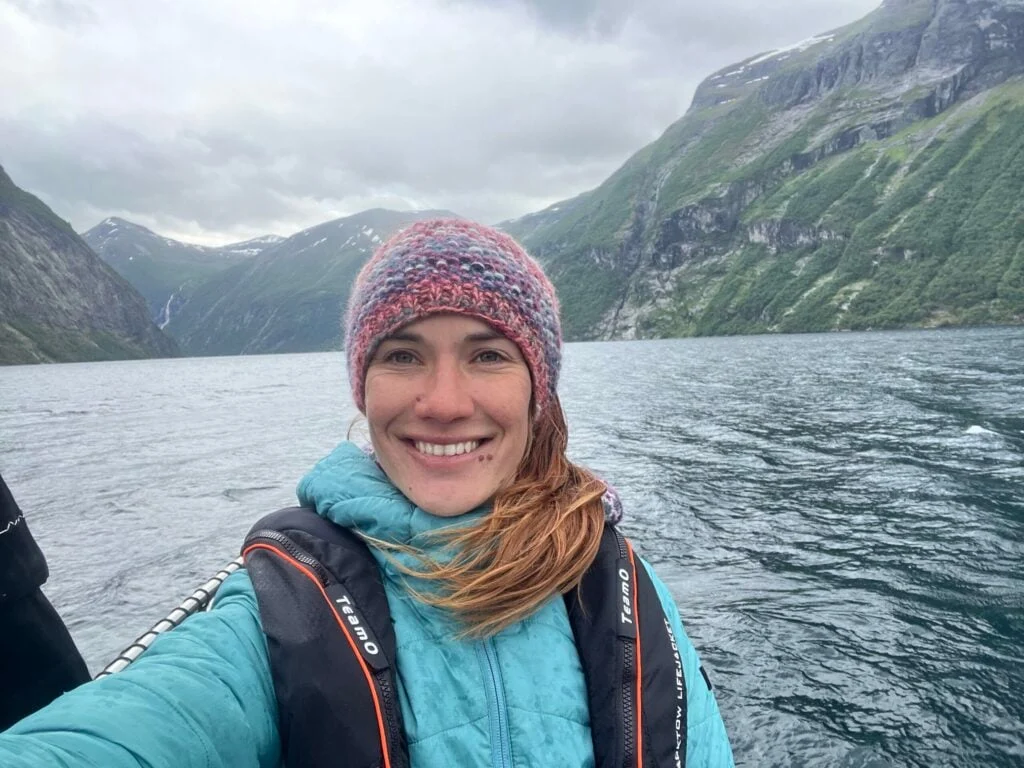
To understand how to lead when the pressure is at its peak, one might look to the open ocean. Laura Dekker, the Dutch sailor who became the youngest person to circumnavigate the globe alone at age 16, offers a blueprint that transcends sailing. Her 518-day odyssey aboard her boat, Guppy, provides a profound, practical framework for modern CEOs navigating the complexities of a globalized economy.
The Chronology of a Record-Breaking Voyage
Laura Dekker’s journey was not merely a feat of endurance; it was the culmination of a lifetime of deliberate practice. Born on a boat and raised amidst the currents of the sea, Dekker was sailing solo by age six. Her path to the record books, however, was far from smooth.
- 2009–2010 (The Legal Storm): Before she could even set sail, Dekker faced a monumental bureaucratic hurdle. The Dutch Child Protection Agency sought to block her journey, citing concerns over her age and safety. This triggered an international debate regarding the boundaries of youthful ambition and parental responsibility.
- August 21, 2010 (The Departure): After prevailing in court, Dekker departed from Gibraltar, officially beginning her solo circumnavigation.
- 2010–2012 (The Passage): Over the next 518 days, Dekker navigated the Atlantic, the Pacific, and the Indian Oceans. She dealt with equipment failure, severe weather, and the psychological weight of total isolation.
- January 21, 2012 (The Completion): Dekker docked in Sint Maarten, having successfully completed her journey. At 16, she had achieved what many experts once deemed impossible for someone of her age.
The Anatomy of Preparation: Building the Foundation
For a CEO, preparation is the insurance policy against the cognitive degradation caused by stress and sleep deprivation. Scientific literature, including studies curated by the National Library of Medicine, consistently demonstrates that sleep deprivation impairs executive function, risk assessment, and decision-making.
Dekker’s approach to this reality was rooted in "deep evidence." She spent a year preparing Guppy alongside her father, Dick. By physically touching and tightening every bolt, she developed an intimate understanding of her primary asset. When the pressure mounted at sea, she wasn’t relying on hope; she was relying on a system she had built with her own hands.
In a corporate context, this is the equivalent of "stress-testing" the organization. Leaders must identify the decisions that will be required during a crisis—be it a cybersecurity breach, a supply chain collapse, or a PR disaster—and build the checklists and protocols to manage them. By making these responses "second nature" through rehearsal, leaders reduce the need for their teams to invent solutions from scratch when they are at their most exhausted.
Rehearsing the Failure: Thinking in "What-Ifs"
One of the most valuable training techniques Dekker utilized was the "what-if" exercise. Her father would regularly introduce artificial chaos—feigning rudder failure, engine death, or GPS blackout—forcing her to adapt in real-time.
This is not a matter of predicting the future; it is a matter of building institutional adaptability. According to MIT Sloan Management Review, effective scenario planning is not about accurately forecasting the next market shift. Rather, it is about testing the "seaworthiness" of a strategy against a range of possible futures.
When Dekker’s front sail tore apart in the middle of the night near the treacherous reefs of the Torres Strait, she did not succumb to the frantic urge to act immediately. She paused. She assessed. She acted. This discipline is the difference between a reactive organization that burns through resources in a panic and a resilient one that methodically works through its contingency plans.
The Power of the "Strategic Pause"
In the corporate world, there is a pervasive illusion that speed is synonymous with success. However, research from Ahead Solutions suggests that under stress, the human brain often reverts to simple, readily available cues rather than complex, strategic thought. The first answer is rarely the wisest.
Dekker’s "crisis rhythm" is simple: pause, breathe, find the center, identify the absolute priority, and execute.

For the modern executive, this requires the creation of a "pause ritual." In the heat of a crisis, a leader should force a ten-second mental reset to ask three questions:
- What is actually happening, stripped of the emotional noise?
- What is the one thing that matters most right now?
- Could my immediate impulse make the situation worse?
This brief, disciplined interval can be the difference between a manageable setback and a catastrophic loss of capital or reputation.
Simplifying Systems for Human Reliability
Complexity is the enemy of resilience. Dekker, a proponent of extreme simplicity, notes, "The more we have, the more can break." Her reliance on fundamental mechanical skills—like navigating by the stars—ensured that she was never beholden to a single point of failure in her technology.
Corporate history is littered with the corpses of complex, fragile systems. When systems become too abstract or bloated with dependencies, they become incomprehensible to the people tasked with operating them. A prime example occurred in 2016, when a single power outage at a data center triggered a cascading failure at Delta Air Lines, leading to thousands of flight cancellations and an estimated $150 million loss.
Complexity hides danger. Leaders must actively work to simplify critical operations, ensuring that the team understands the "hull" of the business—the core competencies—before worrying about the "navigation technology."
The Human Element: Leadership Beyond the Helm
Perhaps the most overlooked aspect of Dekker’s leadership is her approach to human connection. Even in total isolation, she maintained a sense of empathy and humility. She is critical of leaders who hide behind a veneer of infallibility.
In the corporate arena, the most effective leaders combine calm, data-driven confidence with visible vulnerability. When the company faces a crisis, employees do not need a robotic savior; they need a leader who acknowledges the gravity of the situation while demonstrating the competence to guide them through it. Compassion—the recognition that the "crew" is also suffering under the pressure—is what maintains morale when the forecast looks grim.
Implications: Building the Wiser Self
Ultimately, Laura Dekker’s voyage was not about the destination or the record. It was a process of integration. As she stated, the voyage provided "the building blocks that I needed to become me."
For the CEO, the difficult years and the high-pressure crises are not merely obstacles to be navigated; they are the material from which character is forged. The truly resilient leader views every crisis not as a trophy to be displayed, but as a crucible that tests the integrity of the system and the depth of the team’s preparation.
As we look at the current global landscape—characterized by rapid technological change, economic volatility, and shifting geopolitical sands—the lesson is clear: we cannot control the weather. We can only control the boat, the crew, and our readiness to meet the storm. By preparing for the worst, simplifying our systems, and embracing the discipline of the pause, we move from mere survival to the mastery of the journey itself.
About the Author