It is a date etched into the collective consciousness of the modern world: September 11, 2001. For those who were adults at the turn of the millennium, the memory is not just a historical fact; it is a visceral, sensory experience. Twenty-five years ago, the world shifted on its axis, and the subsequent quarter-century has been defined by a relentless, compounding series of shocks that have tested the very foundations of global institutions and the individuals tasked with leading them.
As we reflect on this milestone, it becomes clear that the era following that fateful morning was not merely a sequence of isolated events, but a continuous epoch of volatility. From the collapse of the Twin Towers to the dawn of the artificial intelligence revolution, the modern leader’s job description has been rewritten by the necessity of constant crisis management.
A Chronology of Instability: The Anatomy of the Last Quarter-Century
The tragedy of 9/11 served as the prologue to a modern history defined by the "amplitude and aftershocks" of global instability. To understand the evolution of leadership, one must first recognize the sheer velocity of the challenges that have emerged since 2001.
- The Early 2000s: The Geopolitical Awakening. The immediate aftermath of the attacks launched the United States into prolonged conflicts in Iraq and Afghanistan. These wars fundamentally altered the global perception of American power and necessitated a new, military-industrial approach to organizational strategy.
- 2008: The Financial Contagion. The Great Recession did more than collapse markets; it shattered trust in the financial institutions that served as the bedrock of global capitalism. Leaders in the C-suite were suddenly forced to navigate a crisis of liquidity, ethics, and public perception simultaneously.
- 2020: The Pandemic Pivot. The arrival of COVID-19 tested the limits of global supply chains and human resilience. For the first time in a century, the entire world faced a singular, existential threat that forced businesses to move from long-term planning to immediate, day-to-day survival.
- The Mid-2020s: Geopolitical Fragmentation and Technological Disruption. From the invasion of Ukraine and the conflict in the Middle East to the rapid, often destabilizing rise of generative artificial intelligence, we have entered an era where physical security and technological transformation are intertwined.
Supporting Data: The Cost of Perpetual Uncertainty
The data regarding the modern leadership environment is telling. According to recent surveys on executive stress and organizational resilience, the "mean time between crises" for major corporations has plummeted. Where a CEO in the 1990s might have faced one "black swan" event in a decade, today’s executives are navigating a cycle of disruption that repeats every 18 to 24 months.
Economic volatility, measured by the VIX (Volatility Index) and global inflation markers, has shown that the stability of the mid-1990s was an anomaly rather than a baseline. Furthermore, internal organizational data suggests that employee burnout—driven by the persistent need for "resilience"—has become a leading risk factor for human capital retention. In a 2021 study, the concept of "resilience" shifted from a competitive advantage to a prerequisite for survival. Organizations that failed to integrate flexible, adaptive leadership models during the pandemic saw a 40% higher attrition rate among mid-level management compared to their more agile counterparts.
Official Responses and the Evolution of Governance
In the wake of these recurring crises, the role of the executive has evolved from that of a "strategist" to that of a "crisis shepherd." Governments and corporate boards have adjusted their governance structures to accommodate this reality.
Post-9/11, government response focused on the creation of the Department of Homeland Security and a massive restructuring of intelligence agencies. This top-down, centralized approach was mirrored in the corporate world by the rise of the Chief Risk Officer (CRO) as a standard fixture in the C-suite. No longer a peripheral role, the CRO now sits alongside the CEO and CFO in determining the long-term viability of the enterprise.
However, the most significant shift in official response has been in communication. Leaders are no longer expected to merely provide clarity; they are expected to provide emotional stability. In the face of supply chain collapses, cyber-attacks, and geopolitical volatility, the "official word" from the top is often the only thing standing between a functioning culture and institutional paralysis.
The Brenneman Doctrine: Absorb Fear and Exude Hope
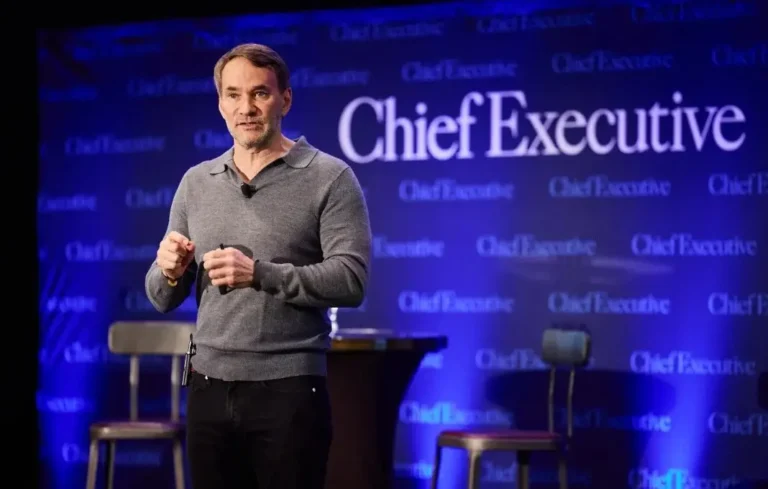
Amidst the noise of shifting policies and economic metrics, the most profound insight for modern leadership remains remarkably simple. Greg Brenneman, former CEO of Continental Airlines and a pivotal figure in the stabilization of Home Depot, offered a framework in 2022 that has since become a mantra for those navigating the current "polycrisis."
"You need to absorb fear and exude hope."
This is not a platitude; it is a functional requirement of leadership.
- Absorbing Fear: Leaders act as a shock absorber for their organizations. In times of radical change, the workforce is naturally susceptible to panic. The leader’s job is to take in the anxieties, the uncertainty, and the systemic pressures, process them, and prevent them from manifesting as organizational paralysis. It requires the leader to be a "human filter," ensuring that information flow is honest but never hysterical.
- Exuding Hope: Hope in a leadership context is not blind optimism; it is the strategic articulation of a future worth building. It is the ability to point toward a "north star" even when the path is obscured by fog. By exuding hope, a leader provides the psychological safety necessary for teams to continue innovating, even when the ground beneath them is shaking.
Implications for the Future: Leading Through the AI Age
As we look toward the next quarter-century, the challenges show no sign of abating. The rise of Artificial Intelligence is perhaps the most significant "displacement" event since the industrial revolution. It promises to be as thrilling as it is perilous.
The implications for leadership are profound. The future of work will be defined by the intersection of human empathy and machine efficiency. Leaders who rely solely on analytical prowess will find themselves obsolete, as AI models can process data and forecast outcomes faster than any human. However, the one area where AI cannot compete—and where the Brenneman doctrine remains vital—is in the realm of human leadership.
An AI cannot "absorb fear" in a way that provides comfort to a worried workforce. It cannot "exude hope" in a way that inspires loyalty and sacrifice during a difficult pivot. These are uniquely human qualities.
Conclusion: The Lesson of the Long Quarter-Century
If there is any overarching lesson from the last 25 years, it is that the world will never return to a state of predictable stillness. The era of the "business as usual" CEO is over. Today, leadership is a discipline of endurance.
Twenty-five years ago, a generation of American leaders—in government, business, and local communities—had to reclaim a sense of purpose from the ashes of terror. They did so by moving forward, step by step, fear by fear, hope by hope. As we look at the horizon, filled with the promise of new technology and the threat of new conflicts, we must remember that the most resilient organizations are those that cultivate a culture of stability.
We have learned that crises are not "events" to be waited out; they are the environment in which we operate. By absorbing the fear that accompanies uncertainty and exuding the hope that drives progress, we do more than just manage our organizations—we move forward together. That, ultimately, is the greatest contribution a leader can make to history.
About the Author