By Staff Reporter
September 19, 2026
Flock Safety, the high-profile surveillance technology firm once heralded as a transformative tool for law enforcement, has reached a critical inflection point. On Friday, the company initiated a "generous" voluntary buyout program for its 1,500-person workforce, a move that signals a desperate attempt to stabilize the organization following a summer of intense public scrutiny, legislative crackdowns, and a crumbling client base.
The announcement, first reported by Wired, suggests that the startup is attempting to preemptively manage its headcount to avoid involuntary layoffs. By offering what leadership has described as the most significant severance packages in the company’s history, Flock hopes to clear out staff disillusioned by the mounting controversies surrounding the firm’s license plate recognition (LPR) and vehicle-tracking technologies.
The Core Conflict: Surveillance Under Fire
At the heart of the current crisis is a fundamental debate over the reach and regulation of AI-powered surveillance. Flock Safety gained prominence by deploying a vast network of LPR cameras, marketed to police departments and private neighborhoods as a way to "eliminate crime." By leveraging machine learning to identify vehicle makes, models, and license plates, the company provided law enforcement with a powerful, real-time tracking tool.
However, the efficacy of the tool has been overshadowed by persistent reports of abuse. Critics, including civil liberties groups, have long warned that such widespread surveillance infrastructure creates a "panopticon effect," where the potential for abuse by those with access to the system far outweighs the security benefits. The events of the last several months have validated many of these fears, leading to a rapid decline in the company’s reputation.
Chronology of a Collapse: From Innovation to Investigation
The unraveling of Flock Safety’s public image did not happen overnight, but it accelerated sharply during the summer of 2026.
August 2026: The Breaking Point
The catalyst for the current crisis was an explosive investigation by The Washington Post in early August. The report cataloged 46 specific instances where police officers allegedly misused Flock technology. The allegations were harrowing: officers were accused of using the database to stalk estranged spouses, ex-girlfriends, and romantic partners. These revelations transformed the conversation from abstract concerns about privacy to concrete, criminal misuse of state-sponsored surveillance.
The Legislative Domino Effect
Following the Post report, the political landscape shifted rapidly. By mid-August, the company faced a systemic threat as state-level support began to crumble. Florida and Texas—two of the company’s largest markets—announced they would move to block or restrict the use of Flock cameras, citing urgent privacy concerns and the potential for civil rights violations.
The August Exodus
The loss of state-level support translated into a localized catastrophe for the company’s bottom line. Anti-surveillance advocacy groups tracked a massive abandonment of the technology, identifying 90 cities that terminated their contracts with Flock in August alone. This represents a fourfold increase from July, signaling that the "Flock model" of policing is no longer viewed as politically tenable by many local governments.
Supporting Data: The Erosion of Trust
The scale of the company’s decline is reflected in the metrics of public and governmental sentiment. The transition from a "must-have" security tool to a "liability" is best illustrated by the following data points:

- The 90-City Exit: The record-breaking number of contract terminations in August suggests that the momentum is no longer with the surveillance providers. When municipal governments—typically the slowest to move on tech procurement—begin cancelling contracts en masse, it indicates that the reputational cost of using the technology has surpassed its operational value.
- The Internal Morale Crisis: CEO Garrett Langley, in a recent appearance on the All-In podcast, attempted to frame the issues as a communication and morale problem. He admitted that the "biggest damage" caused by the recent backlash has been to the internal culture of the company. However, the decision to offer buyouts suggests that the issue extends beyond morale; it is a fundamental survival strategy.
- Workforce Sentiment: The reliance on voluntary buyouts indicates that the company is struggling to retain top talent who may be questioning the ethical implications of their work. By offering these packages, Flock is essentially paying for silence and attrition, hoping that those who remain are more aligned with the company’s new, more defensive posture.
Official Responses and Strategic Pivot
Flock Safety has remained largely insulated from direct media questioning, though their internal communications regarding the buyouts have leaked. The company’s internal memo, which described the packages as "generous," is clearly designed to frame the exit as an opportunity for employees rather than a forced reduction in force.
CEO Garrett Langley’s public rhetoric has shifted from the aggressive growth language of the past to a tone of defensive consolidation. In his All-In podcast appearance, he focused on the idea that the technology is being "misunderstood" and that the misuse by a small percentage of officers should not invalidate the tool’s utility in catching criminals. Yet, this argument has gained little traction with the public or regulators who argue that a tool that is so easily abused is, by definition, inherently flawed.
Implications: The Future of Surveillance Tech
The situation at Flock Safety holds profound implications for the broader surveillance industry.
The Normalization of Privacy Concerns
For years, tech companies in the surveillance space operated under the assumption that "safety" was a trump card that would always beat "privacy." The events of 2026 suggest this calculus has changed. The public is no longer willing to accept the trade-off, particularly when the surveillance technology is used by state actors against individuals.
A Regulatory Chill
The decisions in Texas and Florida are likely just the beginning. Other states are expected to draft legislation that mandates stricter audits, limits on data retention, and, in some cases, outright bans on non-consensual tracking of private vehicles. This creates a challenging business environment for any company whose business model relies on the mass collection of location and movement data.
The "Morale" Factor in Tech
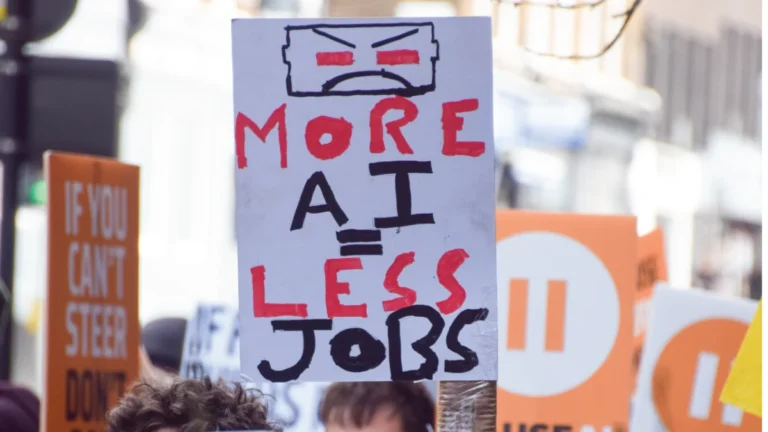
Flock’s struggle highlights a growing trend in Silicon Valley: the "ethical exit." Employees are increasingly demanding to know how their code is being used, and they are voting with their feet when they find the application of that technology objectionable. When a company’s mission becomes a subject of public protest—as seen in the image of protestors in Arlington—it becomes significantly harder to recruit and retain the engineering talent required to maintain complex AI systems.
Conclusion: A Turning Point
As Flock Safety moves forward with its buyout program, the company faces an existential crossroads. It must decide whether to continue its current trajectory, doubling down on its existing product line while attempting to implement more stringent oversight, or to fundamentally pivot its business model to account for the growing demand for privacy.
The "voluntary" nature of the current layoffs is a temporary reprieve. If the company cannot address the systemic failures that allowed police officers to stalk citizens with their technology, the next round of cuts may not be voluntary at all. The 90 cities that walked away in August are a warning: in the modern tech landscape, the social license to operate is just as critical as a signed contract.
For now, the industry watches with bated breath. The story of Flock Safety is no longer just about a company—it is a case study in the limits of technological intervention in public life. Whether the company survives the winter of 2026 depends on its ability to convince a skeptical public that its technology is a tool for security, rather than a weapon of intrusion.
About the Author