The global warehousing industry is currently navigating its most significant transformation since the invention of the automated storage and retrieval system (AS/RS). According to a landmark report released today by the research and advisory firm Gartner, Inc., the sector has officially reached a critical "inflection point" in AI adoption.
For decades, the warehouse was a bastion of manual labor and rigid, rules-based automation. Today, that environment is rapidly evolving into a dynamic, intelligent ecosystem. Gartner’s latest research identifies four "globally disruptive" AI trends that are poised to redefine how supply chain leaders manage inventory, labor, and infrastructure. This shift is not merely an incremental technological upgrade; it represents a fundamental change in the operational philosophy of global distribution centers.
The Triad of Transformation: What’s Driving the Shift?
The movement toward AI-integrated warehousing is not occurring in a vacuum. Gartner analysts point to a "perfect storm" of three converging forces that have rendered traditional operational models insufficient for the modern supply chain:
1. The Labor Constraint Crisis
The chronic shortage of warehouse labor is no longer a temporary hurdle; it is a structural reality. With aging workforces in developed markets and a global decrease in the willingness of workers to perform repetitive, high-stress warehouse tasks, automation has moved from a "nice-to-have" efficiency play to an absolute survival requirement.
2. The De-risking of Capital Models
Historically, warehouse automation required massive, multi-year capital expenditures (CapEx) with long return-on-investment (ROI) cycles. Today, the market has shifted toward "Robotics-as-a-Service" (RaaS) and more modular, scalable entry points. By lowering the barrier to entry, companies can now test and deploy AI-driven solutions without the crippling financial risks of the past.
3. Operational Maturity of AI
After years of hype, AI technologies—specifically machine learning, computer vision, and autonomous navigation—have reached a level of maturity where they can reliably operate in the chaotic, non-deterministic environment of a busy warehouse. These systems are now capable of navigating human workers, identifying inventory anomalies in real-time, and adjusting workflows based on fluctuating demand.
A Chronology of Warehouse Evolution
To understand where the industry is heading, one must look at how it arrived at this inflection point.
- 1990s – 2000s: The Era of Mechanization: Warehousing was defined by conveyors, sortation systems, and basic Warehouse Management Systems (WMS). These systems were "dumb" in the sense that they followed fixed logic and were incapable of learning from errors.
- 2010 – 2020: The Digitization Push: The rise of e-commerce fueled the adoption of mobile robots and automated picking technology. This decade was characterized by the digitization of data, though the "intelligence" behind that data remained largely human-led.
- 2021 – 2025: The Pilot Phase: Industry leaders began experimenting with machine learning for demand forecasting and predictive maintenance. However, many of these efforts remained siloed in small-scale pilot programs.
- 2026 and Beyond: The Intelligence Inflection: As Gartner notes, we are currently entering the era of "Operational Deployment." AI is no longer a siloed experiment; it is becoming the central nervous system of the facility.
The Four Dimensions of AI Maturity
Gartner’s research underscores that the path to success lies in balancing two critical dimensions: Action Orientation (the ability of the system to influence physical or digital outcomes) and Intelligence Sophistication (the complexity of the underlying AI models).
The research maps these dimensions across four categories, which form the roadmap for future supply chain investments. By aligning technology roadmaps with these categories, leaders can avoid "shiny object syndrome" and focus on tangible ROI.
Category 1: Predictive Analytics (The Foundational Layer)
This represents the traditional AI layer. Systems here analyze historical data to provide insights into labor forecasting and inventory slotting. While less "flashy" than autonomous robots, this remains the most critical foundation for operational success.
Category 2: Generative AI and Agents
This is the new frontier. Unlike traditional AI, which categorizes data, Generative AI can synthesize information to provide human-readable guidance, troubleshoot complex logistics issues, and manage task allocation autonomously.
Category 3: Physical AI Systems
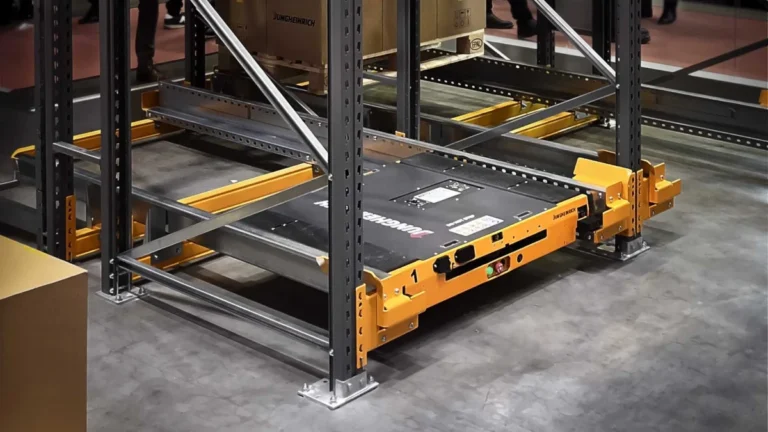
This category encompasses robots and drones that use computer vision to navigate the warehouse floor. These systems are becoming increasingly collaborative, working alongside human associates rather than replacing them in isolated, caged environments.
Category 4: Adaptive Systems
The final, most advanced stage of the framework. These systems possess the ability to self-correct in real-time. If a supply chain disruption occurs—such as a sudden influx of orders or a late-arriving inbound shipment—an adaptive system reconfigures the entire warehouse workflow autonomously to minimize disruption.
Official Perspectives: The Gartner Insight
Federica Stufano, Senior Principal Analyst in Gartner’s supply chain practice, emphasized that the transition to an AI-first warehouse environment is as much about culture as it is about technology.
"These four AI trends are interconnected and reflect the evolution of a more intelligent, adaptive, and resilient warehouse environment," Stufano said. "As labor pressures persist and AI technologies mature, organizations are moving beyond experimentation toward operational deployment."
Stufano offered a stark warning to those who believe AI will function as a "plug-and-play" solution. "Their success will depend on building trust through transparent AI decision-making, enabling effective collaboration between workers and intelligent systems, and applying these technologies in ways that address specific operational challenges."
The emphasis on "transparency" is significant. For AI to be accepted on the warehouse floor, floor managers and operators must understand why the system is making specific task assignments. When AI acts as a "black box," it often faces resistance from the very workforce it is intended to support.
Implications for the Future of Work
The rise of warehouse AI has profound implications for the human element of the supply chain.
Bridging the Productivity Gap
The primary implication is the augmentation of the human worker. By offloading monotonous tasks—such as cycle counting, long-haul pallet transport, and data entry—to AI agents and robotics, human associates can focus on higher-value tasks, such as quality control, exception handling, and process optimization. This shift is expected to improve job satisfaction and retention, effectively addressing the labor crisis from the inside out.
The Rise of the "Technological Manager"
The role of the warehouse supervisor is also undergoing a radical shift. In the past, a supervisor’s job was to manage the flow of people. In the future, the supervisor will be an orchestrator of systems. They will manage "fleets" of autonomous agents and use AI-driven dashboards to make strategic decisions rather than manual adjustments.
Building Resilience Against Volatility
Perhaps the most significant implication of this technological shift is resilience. The supply chain disruptions of the early 2020s proved that manual systems are brittle. An AI-enabled, adaptive warehouse is designed to flex. When a bottleneck occurs, the system identifies it in milliseconds, re-routes traffic, and updates the WMS to reflect new priorities. This elasticity is the key to maintaining customer service levels in an era of global instability.
A Pragmatic Path Forward
Gartner concludes its research by advocating for a pragmatic approach to digital transformation. For supply chain leaders, the temptation to jump straight into the most advanced AI solutions can be overwhelming. However, Gartner advises a phased evolution:
- Start with the "Low Hanging Fruit": Focus on proven use cases like labor forecasting and dynamic slotting. These areas provide the quickest ROI and build the foundational data sets required for more advanced AI.
- Invest in Human-Centric AI: Ensure that any system deployed has a clear interface for human operators. If the worker cannot understand or influence the AI, the system will likely fail in a live environment.
- Prioritize Continuous Evaluation: Because AI models evolve, the warehouse of today will look very different from the warehouse of three years from now. Leaders must foster a culture of continuous learning and evaluation, where new use cases are tested systematically.
- Maintain Human Oversight: As Stufano noted, AI should never be left entirely to its own devices. Maintaining a "human-in-the-loop" approach is critical to managing the edge cases that AI is not yet equipped to handle.
Conclusion
The "inflection point" described by Gartner is not the end of the warehouse as we know it, but rather the beginning of its next maturity cycle. The warehousing sector has long been characterized by incremental gains in speed and accuracy. With the integration of AI, the industry is now positioned to achieve exponential gains in resilience and adaptability.
As companies look toward the next decade, the winners will be those who move past the experimental phase and integrate AI into the very core of their operational strategy. By balancing the sophistication of their intelligence with the precision of their actions, supply chain leaders can finally turn the warehouse from a cost center into a strategic competitive advantage.
About the Author