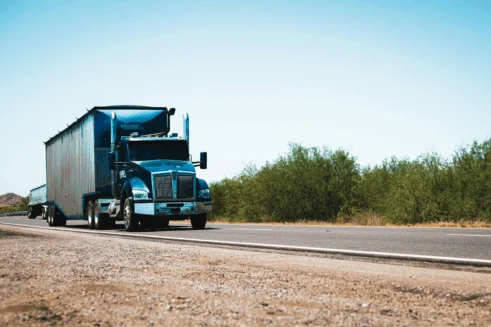
In the vast expanse of the American logistical landscape, the trucking industry serves as the lifeblood of the national economy. From consumer goods and groceries to industrial materials and hazardous chemicals, the vast majority of freight in the United States moves via commercial motor vehicles. However, this critical infrastructure operates under a complex, multifaceted web of oversight. Because the safety of the motoring public is paramount, the trucking industry is subjected to some of the most rigorous federal and state regulatory frameworks in the country.
For logistics companies, independent owner-operators, and fleet managers, understanding these regulations is not merely a matter of compliance; it is a matter of business survival. In an era where bankruptcy and labor volatility are reshaping the industry, the ability to navigate the shifting sands of federal and state law has never been more vital.
The Federal Mandate: The Role of the FMCSA
At the pinnacle of trucking oversight sits the Federal Motor Carrier Safety Administration (FMCSA), a specialized agency operating under the umbrella of the U.S. Department of Transportation (DOT). The FMCSA is tasked with a singular, high-stakes mission: to reduce crashes, injuries, and fatalities involving large trucks and buses.
Core Regulatory Pillars
The FMCSA’s jurisdiction is comprehensive, touching almost every aspect of commercial vehicle operations. Its regulatory authority encompasses:
- Hours of Service (HOS): To prevent driver fatigue, the FMCSA enforces strict limits on how many consecutive hours a driver may operate a vehicle and mandates mandatory rest periods.
- Size and Weight Restrictions: To preserve infrastructure and maintain road safety, the agency sets federal standards for vehicle dimensions and weight distributions.
- Hazardous Materials (HazMat): Specialized protocols govern the labeling, packaging, and transport of dangerous goods, requiring specific endorsements for drivers and rigorous documentation for carriers.
- Maintenance and Inspection: Federal law requires systematic inspections of braking systems, tires, lights, and steering mechanisms, with detailed records required to be kept on file.
Importantly, these regulations apply to more than just the massive 18-wheelers seen on interstate highways. Any vehicle with a Gross Vehicle Weight Rating (GVWR) of 10,001 pounds or more used for business purposes is classified as a commercial motor vehicle (CMV), bringing a wide array of smaller delivery vans and utility trucks under the federal regulatory umbrella.
The Jurisdictional Tug-of-War: Federal vs. State Laws
While the FMCSA provides a baseline, the American legal system allows for a "dual-layer" regulatory approach. States are permitted to impose their own rules, provided they do not conflict with federal mandates. This creates a challenging environment for interstate carriers who must shift their compliance strategies as they cross state lines.
Failure to comply with these industry regulations is rarely treated as a minor oversight. In the eyes of the law, non-compliance is frequently classified as negligence. When an infraction—such as a failure to log hours or improper cargo securement—contributes to a traffic accident, the legal and financial ramifications for the trucking company can be catastrophic, often leading to massive liability judgments and the potential loss of operating authority.
Chronology of Regulatory Evolution
The history of U.S. trucking regulation is marked by a steady progression toward increased safety and accountability.
- 1935: The Motor Carrier Act is passed, marking the first time the federal government regulated the trucking industry, largely focusing on economic oversight.
- 1966: The creation of the U.S. Department of Transportation shifts the focus toward safety standards for vehicle manufacturing and operation.
- 1999: The FMCSA is formally established as an independent agency within the DOT, focusing exclusively on commercial motor vehicle safety.
- 2012: The implementation of the Compliance, Safety, Accountability (CSA) program, which uses data-driven analytics to identify high-risk carriers.
- 2017: The federal mandate for Electronic Logging Devices (ELDs) goes into effect, replacing paper logs to ensure accurate, tamper-proof tracking of driver hours.
- 2020–Present: A surge in state-level environmental and labor laws, ranging from California’s zero-emission mandates to New York’s youth-oriented CDL training programs, highlights a growing trend of state-led innovation in policy.
Case Studies: State-Specific Regulatory Variations
The complexity of the industry is best illustrated by how individual states have tailored their laws to address local geography, industry needs, and social priorities.
Arizona: The Zero-Tolerance Approach to DUIs
Arizona maintains some of the most aggressive DUI penalties for commercial drivers. The state treats a first-time commercial DUI conviction as a severe breach of public trust. With penalties including a minimum of 10 days in jail and a 990-day license suspension, the state makes it clear that commercial operation is a privilege that evaporates upon the slightest hint of impairment. A third conviction results in an automatic felony charge, carrying multi-year jail sentences and permanent career-ending consequences.
Colorado: The High-Altitude Chain Law
In mountainous regions, winter weather is a constant threat. Colorado’s Chain Law is considered the gold standard for strictness. When winter conditions prevail, commercial vehicles must chain up their four drive tires. Enforcement is robust: failure to comply results in a $500 fine plus surcharges, while blocking a major highway due to lack of traction can result in fines exceeding $1,150. These laws apply to all state, federal, and interstate highways, leaving no "safe harbor" for unprepared truckers.
New York: Addressing the Labor Gap
The industry is currently facing a dual crisis: an aging workforce and a skyrocketing demand for freight. New York has moved to address this by lowering the age for Class A CDL holders. By allowing 18-to-20-year-olds to operate heavy trucks within state lines, New York is testing whether a younger generation can safely fill the ranks of a depleted workforce, a move that contrasts with the traditional "21-and-over" standard.
Washington and North Carolina: Cargo Securement
Cargo securement is a primary focus for state enforcement. Washington state treats the failure to properly secure freight as a gross misdemeanor, reflecting the severity of the risk posed by loose debris on public roads. Meanwhile, North Carolina has developed highly specialized securement laws, particularly regarding the transportation of race cars and heavy equipment associated with the NASCAR industry, demonstrating how local economic engines often dictate the nuance of state law.
California: The Vanguard of Emissions Policy
California remains the undisputed leader in environmental regulation. The California Air Resources Board (CARB) has pioneered "zero-emission" standards. The 2020 mandate requiring manufacturers to transition from diesel to electric, with a goal of 100% zero-emission new truck sales by 2045, is arguably the most significant regulatory shift in the history of the trucking industry. This move is not just a California policy; it acts as a bellwether for national environmental standards, forcing manufacturers and carriers to adapt their fleets to a post-diesel reality.
Supporting Data and Economic Implications
The impact of these regulations on the bottom line is profound. According to industry reports, the cost of regulatory compliance—including insurance premiums, ELD technology, specialized training, and equipment retrofitting—can account for as much as 10–15% of an average carrier’s operating budget.
Furthermore, the relationship between regulation and litigation cannot be overstated. Law firms specializing in "trucking accident law" have become sophisticated in using FMCSA data to prove negligence. When a trucking firm fails to maintain records or violates a state-specific law, that data becomes a "smoking gun" in the courtroom. This has driven a sharp increase in the costs of commercial auto insurance, further squeezing the profit margins of small to mid-sized trucking firms.
Official Responses and the Industry Perspective
Industry advocacy groups, such as the American Trucking Associations (ATA), generally support safety regulations but often lobby for "harmonization." The primary complaint from the industry is the lack of uniformity; when a driver must navigate 50 different sets of state laws on top of a federal mandate, the risk of accidental non-compliance increases exponentially.
From the government’s perspective, the regulations are non-negotiable. Officials argue that as the density of traffic increases and the size of vehicles remains substantial, the margin for error is non-existent. Recent official statements from the DOT emphasize that technology, such as automated braking systems and advanced telematics, will eventually make the "human error" component of the industry less of a factor, though until that technology is ubiquitous, the strict enforcement of current laws remains the primary defense against catastrophe.
Implications for the Future
As the trucking industry moves forward, three major trends are likely to redefine the regulatory landscape:
- Automation and AI: The rise of autonomous or semi-autonomous trucking will require an entirely new framework of regulations. Who is liable when a computer-driven truck fails? The shift from human-centered to software-centered compliance is already beginning to dominate discussions in D.C.
- Sustainability Mandates: California’s model is likely to be adopted by other states. Trucking companies should prepare for a future where internal combustion engines are restricted, if not entirely prohibited, in major metropolitan hubs.
- Data Transparency: With the advent of the ELD and smart-truck technology, the government now has real-time access to carrier data. This "always-on" regulatory environment means that carriers can no longer hide behind clerical errors.
Conclusion
The U.S. trucking industry is a complex, high-stakes ecosystem that demands constant vigilance. For stakeholders, the message is clear: ignorance of the law is no defense, and in an industry where lives are on the line, the cost of non-compliance is simply too high. Whether it is an 18-year-old driver in New York, a fleet manager navigating winter chains in Colorado, or a logistics company transitioning to electric vehicles in California, success is predicated on a deep, abiding commitment to the rules that govern the road. By keeping a close eye on the evolving intersection of federal and state mandates, industry players can ensure they not only survive the current wave of volatility but remain resilient in the face of future challenges.
About the Author