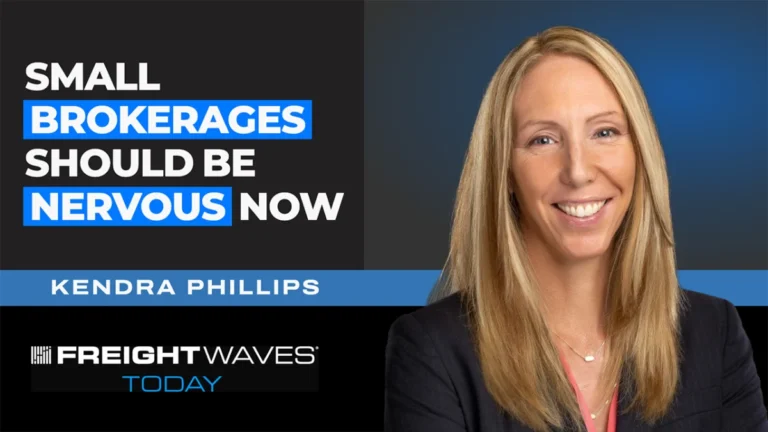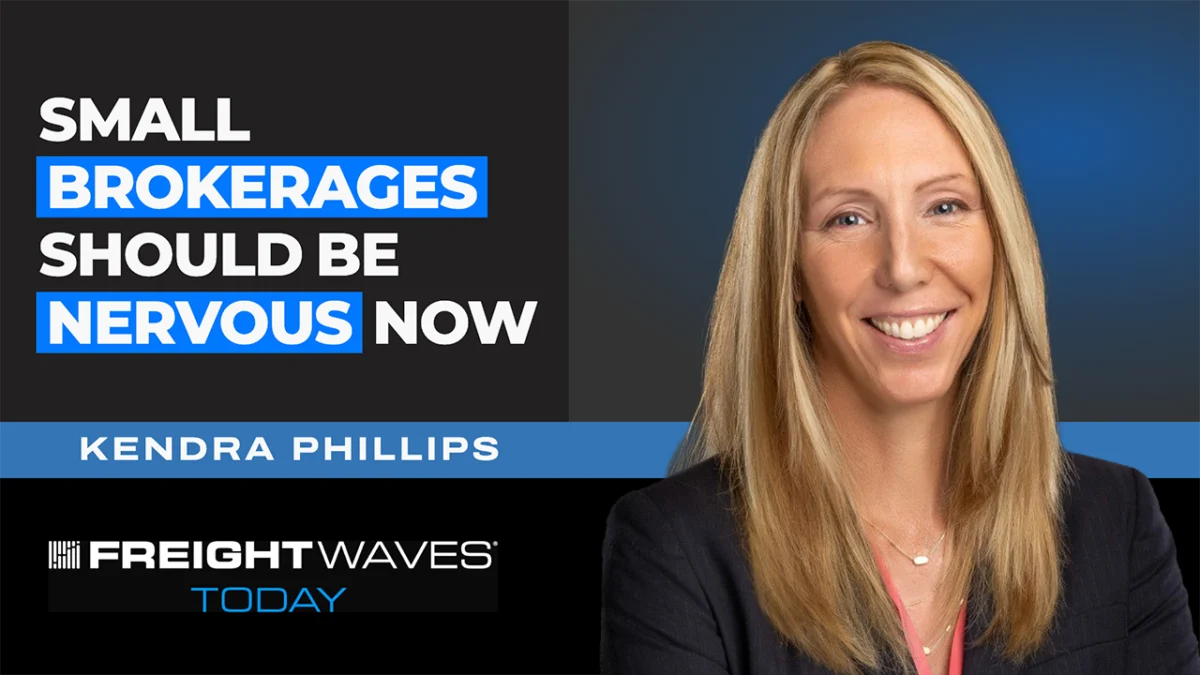
The North American freight brokerage industry is currently undergoing a structural transformation, driven by an increasingly litigious environment and a fundamental shift in how shippers perceive risk. According to Kendra Phillips, Vice President at Ryder System, Inc., the era of prioritizing the lowest possible rate is effectively over. In its place, a “post-Montgomery” reality has emerged—one where safety, vetting rigor, and corporate brand reputation are the primary currencies of the logistics market.
As legal precedents like the C.H. Robinson verdict continue to ripple through the supply chain, small and mid-sized brokerages find themselves at a precarious crossroads. For these firms, the margin for error is narrowing as shippers demand unprecedented levels of transparency and accountability.
Main Facts: The New Standard of Logistics Oversight
The fundamental shift in the market stems from what industry insiders call the "post-Montgomery world"—a reference to increased legal scrutiny regarding the liability of freight brokers in accidents involving motor carriers. Shippers, once primarily concerned with cost and capacity, are now asking high-level, C-suite questions about how their intermediaries vet, monitor, and manage the safety cultures of the carriers they hire.
Ryder, a titan in the transportation space with over 90 years of history, is leveraging its dual status as both an asset-based carrier and a 3PL to navigate this transition. Phillips emphasizes that Ryder has not needed to overhaul its vetting processes because its internal thresholds were already significantly more stringent than industry norms. However, for smaller players who have historically relied on looser vetting to maintain competitive pricing, the landscape is becoming hostile.
The primary takeaway is clear: Safety is no longer a back-office compliance function; it is a critical competitive differentiator. Shippers are increasingly willing to pay a premium for "safer capacity" and the peace of mind that comes with working with well-capitalized, established providers who can stand behind their network.
Chronology of a Market Shift
The evolution of the brokerage sector can be traced through several distinct phases that have led to the current state of heightened caution:
1. The Era of Efficiency (2010–2018)
During this period, the market was dominated by rapid growth and a focus on digital freight matching. The primary goal for many startups and mid-sized brokerages was to lower the barrier to entry and maximize the speed of tender-to-load cycles. Safety vetting was often automated, and while compliance was present, it was rarely a central pillar of the sales pitch.
2. The Rise of Nuclear Verdicts (2019–2022)
The industry saw a dramatic spike in "nuclear verdicts"—legal outcomes where jury awards reach tens of millions of dollars. These cases began targeting the entire supply chain, including intermediaries. The legal theory evolved to suggest that if a broker failed to perform sufficient due diligence on a carrier, they could be held partially liable for the carrier’s negligence.
3. The "Post-Montgomery" Reality (2023–Present)
Following major legal rulings (such as Miller v. C.H. Robinson), the legal landscape hardened. Shippers began to fear that their partnership with a smaller broker could inadvertently drag them into high-stakes litigation. This period marks the current phase: a mass flight-to-quality where shippers are consolidating their freight volumes with larger, risk-averse logistics providers who can demonstrate rigorous safety standards.
Supporting Data and The "Proximity" Factor
Why do asset-based players, such as Ryder, currently hold an advantage? Phillips points to the concept of proximity to the driver.
In a brokerage model that is purely "desk-based," the intermediary is often several degrees removed from the actual operation of the truck. They may know the insurance status and the FMCSA safety rating, but they lack visibility into the granular details of the driver’s environment. Asset-based carriers, conversely, have deep-seated protocols for:
- Rest Management: Monitoring HOS (Hours of Service) not just for compliance, but for fatigue-related risk.
- Equipment Maintenance: Maintaining a direct, proactive oversight of vehicle condition rather than relying on self-reported carrier data.
- Cultural Oversight: Instilling a safety-first culture that permeates from the executive suite down to the driver in the seat.
For non-asset brokers, replicating this level of visibility is expensive. It requires significant investment in technology to bridge the gap between the desk and the road. As Phillips notes, if a broker cannot prove they have "eyes on" the safety performance of their carriers, they are increasingly viewed as a liability by major shippers who are under their own internal pressure to reduce risk.
Official Responses and Strategic Adaptations
Ryder’s approach to this shift is defined by a proactive, often uncomfortable, communication strategy. When a carrier within their network fails to meet their rigorous standards, Ryder does not wait for a contract renewal to address it. They immediately inform the shipper partner, even if that carrier was the most cost-effective option available.
“We have gone to our shippers and said, ‘Hey, we have to remove this carrier from your network. They no longer meet our qualification needs,’” Phillips explained.
The industry’s reaction to this, according to Ryder, has been surprisingly supportive. Shippers, fearing their own legal exposure, are grateful for the transparency. This demonstrates a pivot in the "Shipper of Choice" dynamic: the most desirable logistics partner is no longer the one who offers the cheapest rate, but the one who provides the most robust shield against reputational and financial risk.
The Role of Technology: AI as a Safety Net
Ryder’s investment in an AI-driven network is designed to augment this human-led safety culture. By identifying operational risks—such as impending on-time delivery fines or load optimization hurdles—before they escalate, the company is moving toward a model of "preventative logistics."
The integration of talent from the startup space (specifically the acquisition of Baton) and the recruitment of former executives from tech-forward companies like Convoy highlights a wider trend: the "tech-enabled" brokerage is the only viable future. However, the technology is no longer being used merely for matching; it is being used for risk mitigation and efficiency in a high-compliance environment.
Implications: A Darwinian Future for Brokerages
The implications for the freight brokerage industry are profound and point toward a period of intense consolidation.
The Vulnerability of Small Brokers
Small and mid-sized brokerages face an "existential squeeze." They are caught between rising insurance costs, the need for expensive safety-monitoring technology, and the flight of large shippers toward "safer" providers. Without the economies of scale to absorb these costs or the legal team to defend against the modern litigation landscape, many smaller players may be forced to merge or exit the market entirely.
The Rise of the "Integrated" Logistics Provider
The future of the industry belongs to providers who can offer a hybrid model. The ability to manage assets, combined with a sophisticated, tech-enabled brokerage arm, provides a level of stability that pure-play brokers struggle to match.
The Looming Horizon: Autonomous Freight
Looking further into the future, the arrival of autonomous trucking will only amplify the need for centralized, high-trust logistics management. Phillips suggests that in an autonomous world, the winner will be the entity that controls the asset and understands the continuous movement of freight.
For the average broker, the message is clear: if you are not evolving your business model to prioritize safety, data-driven transparency, and long-term risk management, you are losing relevance. The market is no longer interested in the lowest bidder; it is interested in the partner who ensures that the freight moves safely, legally, and reliably.
As the industry heads toward the 2026 Future of Freight Festival and other major industry forums, the conversation will undoubtedly remain centered on this theme. The era of the "transactional broker" is sunsetting, and the era of the "strategic risk-manager" is here to stay. Shippers are no longer just buying capacity; they are buying the expertise to survive in a post-Montgomery world.
About the Author