OSLO, NORWAY – [Date of Publication] – Polaris Trykk, a leading force in the Norwegian printing industry, has announced a transformative investment in cutting-edge digital inkjet printing technology from Ricoh. This strategic move, centered around the installation of a Ricoh Pro VC80000 roll-fed inkjet press combined with an inline Hunkeler Combi Newspaper Line at its Orkanger facility, signals a significant modernization effort designed to redefine print production capabilities across Norway’s evolving media landscape. The new production line, slated to commence operations in January 2027, is poised to unlock unprecedented flexibility, efficiency, and new revenue streams for Polaris Trykk, particularly in the production of smaller print runs and highly customized content for both newspaper and commercial clients.
The decision underscores a broader industry trend where traditional print houses are embracing digital innovation to adapt to shifting market demands, characterized by declining mass circulations and a growing appetite for personalized, on-demand printed materials. Oddvar Ustad, CEO of Polaris Trykk, articulated the strategic imperative, stating, "Digital printing gives us a new tool that makes it easier to adapt production to market trends. This is an important step in the development of our print production, acquiring technology that is well-suited for a media landscape where circulation figures are getting smaller, while the need for flexibility and products tailored to specific target groups grows."
Main Facts: A Digital Leap for Nordic Print
Polaris Trykk’s substantial investment in Ricoh’s state-of-the-art digital inkjet technology represents a pivotal moment for the Norwegian printing sector. The core of this modernization initiative is the Ricoh Pro VC80000, a high-speed, roll-fed inkjet production press renowned for its ability to handle diverse print applications with exceptional quality and efficiency. This system will be seamlessly integrated with an inline Hunkeler Combi Newspaper Line, creating a fully automated workflow that transforms raw paper rolls into finished newspapers in a single, continuous process. This eliminates the need for intermediate drying steps, reduces manual handling, and significantly streamlines the overall production cycle.
The primary objective of this investment is multifaceted: to enable the efficient and cost-effective printing of smaller print runs, to cultivate new opportunities in both traditional newspaper and commercial (accidenstryk) printing, and to bolster Polaris Trykk’s agility in responding to dynamic market demands. The Ricoh Pro VC80000 is engineered for versatile production, capable of producing everything from newspapers and books to direct mail, whether in large volumes or highly customized, short-run batches.
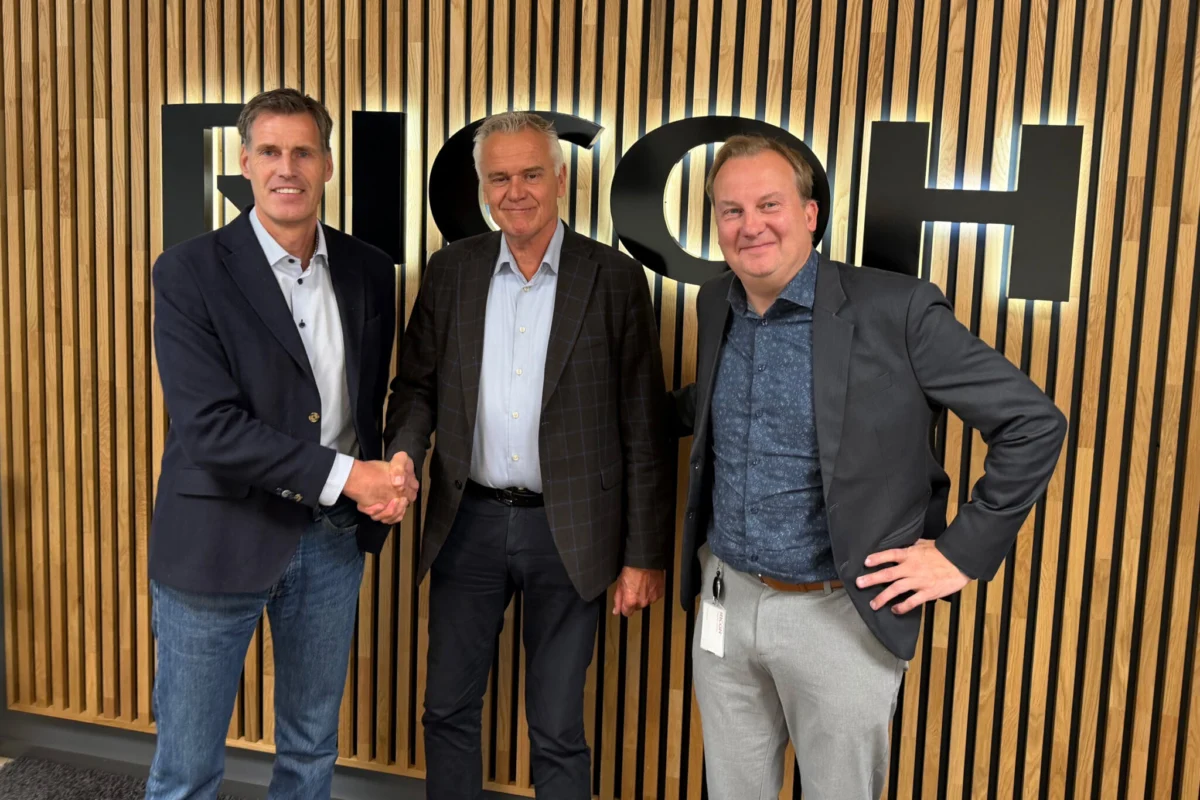
A joint press release from Polaris Trykk and Ricoh Norge highlighted the significance of this venture, emphasizing its role in modernizing Norwegian print production. The overarching goal is to equip Polaris Trykk with enhanced flexibility, superior production efficiency, and a robust foundation for developing innovative print products that cater to an increasingly segmented audience. The Orkanger plant, where the new platform will be installed, is set to become a beacon of digital print innovation within the Polaris Trykk network, complementing and optimizing the roles of its other facilities.
Chronology: Adapting to a Changing Media Landscape
The journey towards this landmark investment is rooted in the fundamental shifts observed across the global media and publishing industries over the past two decades. The decline in traditional newspaper circulation, a phenomenon not unique to Norway, has compelled print houses to re-evaluate their operational models and technological infrastructures. For decades, offset printing remained the unchallenged champion for high-volume, static print jobs, offering unparalleled speed and cost-efficiency for millions of identical copies. However, as readership patterns fragmented and the demand for bespoke content grew, the economic viability of offset for smaller runs began to wane.
Polaris Trykk, with its extensive network of five printing plants spanning from Alta in the north to Arendal in the south, has been a central figure in the Nordic print industry, consistently adapting to technological advancements. This latest move is a continuation of that legacy, recognizing that the future of print is not about abandoning traditional methods entirely, but rather about integrating new technologies to create a hybrid, more resilient model. The decision to invest in a roll-fed inkjet system, specifically designed for both efficiency at scale and unparalleled flexibility for short runs, reflects a proactive response to these market dynamics.
The detailed planning and evaluation process leading to the selection of Ricoh as a partner would have involved rigorous assessment of various digital print solutions available on the market. The choice of the Ricoh Pro VC80000, with its proven track record in high-volume production and its capacity for variable data printing, indicates a thorough understanding of current and future operational requirements. The inline integration with Hunkeler’s finishing technology further solidifies the commitment to a streamlined, automated, and highly efficient workflow, minimizing manual intervention and maximizing throughput.
While the exact timeline of initial discussions and negotiations is not detailed in the provided information, the announcement of the system’s operational readiness by January 2027 suggests a carefully planned implementation schedule, allowing for comprehensive site preparation, installation, testing, and staff training. This forward-looking approach ensures that Polaris Trykk will be well-positioned to leverage the new capabilities effectively from day one.
Supporting Data: The Power of Inkjet and Market Realities
The investment in Ricoh’s digital inkjet technology is a testament to the transformative power of this printing method, particularly in an era defined by data and personalization. Unlike traditional offset printing, which requires time-consuming plate creation for each job, digital inkjet presses print directly from digital files. This fundamental difference unlocks a host of benefits that are crucial for today’s market:
Technological Edge of the Ricoh Pro VC80000:
- Variable Data Printing (VDP): The most significant advantage of digital inkjet is its ability to print unique content on every single sheet without slowing down the press. This means newspapers can be customized with local news inserts, magazines can carry personalized advertisements, and direct mail can be hyper-targeted to individual recipients, dramatically increasing relevance and response rates.
- Efficiency for Shorter Runs: For print jobs ranging from a few hundred to several thousand copies, digital inkjet eliminates the setup costs and time associated with offset plates, making short runs economically viable and highly profitable.
- Speed and Productivity: The Ricoh Pro VC80000 is a high-speed production press, designed for continuous operation. Its integration with the Hunkeler Combi Newspaper Line allows for a seamless "roll-to-finished newspaper" process, significantly reducing turnaround times and enabling just-in-time production. This speed is critical for time-sensitive publications like newspapers.
- Quality and Versatility: Modern inkjet technology delivers print quality that rivals or even surpasses traditional offset for many applications. The Pro VC80000 can handle a wide range of substrates and paper weights, offering versatility for various products beyond just newspapers, including books, magazines, and commercial collateral.
- Reduced Waste and Environmental Impact: On-demand printing minimizes overproduction, significantly reducing paper waste. Furthermore, many inkjet inks are water-based, containing fewer volatile organic compounds (VOCs) compared to some traditional inks, contributing to a more environmentally friendly production process.
Market Trends and Economic Justification:
The global print market has undergone a seismic shift. While overall print volumes have stabilized in some sectors, the demand has moved away from monolithic, mass-produced content towards more diverse, segmented, and often smaller-batch requirements.
- Declining Newspaper Circulation: Industry data consistently shows a long-term decline in the circulation of printed newspapers in many developed markets, including Norway. Readers increasingly consume news digitally, but a significant segment still values the physical newspaper. Digital print allows publishers to serve this loyal, albeit smaller, audience economically.
- Rise of Niche Publications: The internet has fostered niche communities, and there’s a growing demand for specialized magazines, themed journals, and customer publications that cater to specific interests. Digital printing makes it feasible to produce these titles in smaller, profitable runs.
- Personalization and Direct Marketing: In an age of information overload, personalized print stands out. Highly targeted direct mail or customized promotional materials achieve much higher engagement rates than generic alternatives. This creates new revenue opportunities for printers.
- Supply Chain Optimization: The ability to print on demand and with faster turnaround times allows for leaner inventory management for publishers and brands, reducing warehousing costs and obsolescence.
The economic justification for Polaris Trykk’s investment is clear: by lowering the break-even point for print runs, they can serve a wider array of clients and product types. This not only safeguards existing business but also opens doors to entirely new market segments previously uneconomical for offset production.
Official Responses: Visionary Leadership and Strategic Partnership
The voices from both Polaris Trykk and Ricoh Norge resonate with a shared vision of innovation and adaptability. Their official responses highlight the strategic thinking behind this significant undertaking.
Oddvar Ustad, as CEO of Polaris Trykk, articulated a profound understanding of the evolving media landscape and his company’s role within it. His statements are not merely about acquiring new machinery; they speak to a fundamental reorientation of Polaris Trykk’s operational philosophy. "This is an important step in the development of our print production. We acquire technology that is well-suited for a media landscape where circulation figures are getting smaller, while the need for flexibility and products tailored to specific target groups grows. The investment gives us new opportunities to adapt production to the market and our customers’ needs," Ustad emphasized. This perspective frames the investment as a proactive measure, ensuring Polaris Trykk remains relevant and competitive in a dynamic industry.
Ustad further elaborated on the enduring value of traditional print, even in a digitally saturated world. "We still believe that the printed newspaper will play an important role for many of our media houses and readers. Digital printing gives us a new tool that makes it easier to adapt the production to market trends. In this way, the technology can help prolong the life of the printed newspaper." This statement is critical, showcasing a nuanced understanding that digital print isn’t a replacement for traditional newspapers, but rather an enabler for their continued existence and evolution. It allows for a more sustainable model where print frequency or circulation can be adjusted to demand, rather than being dictated by the high fixed costs of offset.
From Ricoh’s perspective, the partnership with Polaris Trykk is a testament to the efficacy and strategic importance of their digital inkjet solutions. Frode Kaspersen, CEO of Ricoh Norge AS, expressed immense pride in being selected as a partner. "We are proud that Polaris Trykk AS has chosen Ricoh Norge AS as partner in this important investment. The solution combines advanced digital printing technology, automation, and local expertise, which gives Polaris Trykk a solid foundation for a more flexible, efficient, and future-oriented production." Kaspersen’s comments highlight not just the technology itself, but also the comprehensive support and expertise that Ricoh brings to the table, positioning themselves as a true partner in Polaris Trykk’s long-term success. The mention of "local expertise" is particularly important, emphasizing Ricoh Norge’s ability to provide tailored support and service in the Norwegian market.
Ustad also underscored the broader impact on Polaris Trykk’s extensive network: "We have five printing plants with high professional expertise and skilled employees, ranging from Alta in the north to Arendal in the south. The new technology enables us to utilize our capacity and expertise even better, and it strengthens Polaris Trykk’s position as a future-oriented production partner." This indicates a strategic optimization across all facilities, leveraging the new digital capabilities to enhance the entire group’s service offering and competitive edge.
Implications: Reshaping the Future of Print
The ripple effects of Polaris Trykk’s investment are poised to be significant, influencing not only its own operations and market position but also potentially setting a precedent for the broader Nordic print industry.
For Polaris Trykk:
- Enhanced Competitiveness: This investment immediately positions Polaris Trykk at the forefront of digital print innovation in Norway. It grants them a distinct competitive advantage, enabling them to offer services that many traditional printers cannot, such as hyper-personalized content and cost-effective short runs.
- Diversification of Revenue Streams: Beyond traditional newspaper printing, the Ricoh Pro VC80000 opens doors to a vast array of new commercial print opportunities. This includes on-demand book printing, customized magazines for corporate clients, specialized direct marketing campaigns, and even transactional documents with integrated marketing messages. This diversification reduces reliance on any single print segment.
- Operational Optimization and Efficiency: The automated workflow from roll to finished product, coupled with reduced drying times and manual handling, will lead to substantial gains in operational efficiency. This translates to lower production costs per unit for shorter runs, faster delivery times, and potentially improved profit margins.
- Strategic Repositioning of Facilities: The article highlights a strategic optimization across Polaris Trykk’s network. The Orkanger facility will solidify its role in newspaper production and smaller titles, leveraging the new digital press. Simultaneously, the Ålesund plant will increasingly focus on large-scale newspaper production and commercial printing, suggesting a complementary strategy where each facility plays to its strengths. This intelligent allocation of resources maximizes overall group efficiency.
- Talent Development: The adoption of advanced digital technology often necessitates upskilling the existing workforce and attracting new talent with expertise in digital print workflows and data management. This can foster a more dynamic and technically proficient team within Polaris Trykk.
For the Norwegian and Nordic Print Industry:
- A Blueprint for Modernization: Polaris Trykk’s move serves as a compelling case study for other print houses grappling with similar challenges. It demonstrates a viable pathway for traditional printers to invest in future-proof technologies and adapt to evolving market demands, rather than being left behind.
- Hybrid Print Strategies: The investment underscores the importance of a hybrid approach, where offset continues to be efficient for very large, static runs, while digital handles the growing demand for flexibility, personalization, and shorter runs. This coexistence is likely to be the model for the foreseeable future.
- Stimulating Innovation: Such a significant investment by a major player can encourage other industry participants to explore similar technological upgrades, fostering a more innovative and competitive print landscape across the region.
- Sustainability Imperatives: The environmental benefits of digital print, such as reduced waste and on-demand production, align with increasing societal and regulatory pressures for more sustainable business practices. This aspect could become a key differentiator for forward-thinking printers.
For Ricoh:
- Strengthening Market Leadership: This high-profile installation with a major Nordic print group further solidifies Ricoh’s position as a leading provider of high-volume digital inkjet solutions, particularly in the newspaper and commercial print segments.
- Validation of Technology: The decision by Polaris Trykk validates the capabilities and economic viability of the Ricoh Pro VC80000 and its integrated solutions, providing a strong reference point for future sales efforts.
In conclusion, Polaris Trykk’s investment in Ricoh digital inkjet technology is far more than a simple equipment upgrade. It represents a strategic declaration of intent – a commitment to innovation, adaptability, and a belief in the enduring power of print, albeit in a reinvented form. By embracing digital flexibility, Polaris Trykk is not just securing its future but actively shaping the trajectory of the Norwegian print industry for decades to come, ensuring that printed media remains relevant, engaging, and economically viable in an increasingly personalized world. The January 2027 operational date marks not just the launch of a new press, but the dawn of a new era for print production in the Nordics.
About the Author