At its annual NetApp Insight conference, storage giant NetApp made a bold claim that could fundamentally alter the trajectory of global artificial intelligence development: it has unveiled "NetApp Novus," a file system the company describes as the "fastest storage on the planet." Designed specifically to dismantle the bottlenecks currently stifling AI factories, this new architecture promises to bridge the cavernous gap between massive compute power and data delivery speeds.
As organizations pivot toward increasingly complex AI models, the infrastructure required to sustain them has moved beyond the capabilities of legacy storage. NetApp’s latest announcement serves as a strategic intervention, aimed at GPU-as-a-service providers and enterprise AI factories that are currently struggling to keep their expensive hardware from sitting idle.
The Bottleneck Crisis: Why AI Needs More Than Traditional Storage
For years, the IT industry relied on storage architectures designed for transactional database workloads or standard cloud applications. However, the rise of Large Language Models (LLMs) and massive generative AI training sets has exposed a critical flaw in these traditional systems.
In an AI factory environment, thousands of GPUs operate in a state of high concurrency and parallelism. These chips are hungry for data; they require a constant, high-speed stream to perform their computations efficiently. When the storage layer cannot keep pace, the GPUs suffer from "data starvation."
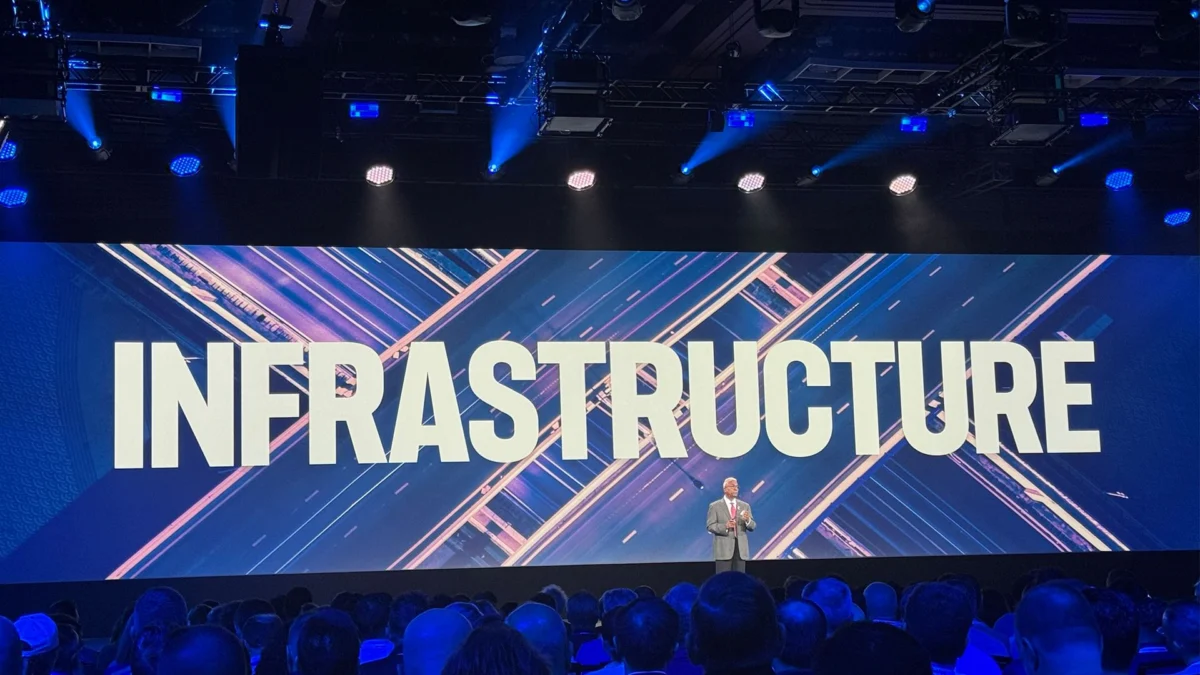
NetApp CEO George Kurian, speaking to press members at the event, highlighted the economic and operational toll of this mismatch. "We see clients in the largest AI factories or the enterprise struggle with how to work with the modern data and compute infrastructures," Kurian explained. "Most GPUs are not fed data at the rates that they need to be fed. They have a high degree of parallelism and concurrency, which makes traditional storage architectures not capable of addressing those requirements."
The consequences are not merely technical; they are financial. NetApp’s internal research indicates that under traditional storage architectures, GPU utilization can plummet below 30%. When companies spend millions on Nvidia H100 or Blackwell-class hardware, an utilization rate of 30% represents a catastrophic waste of capital expenditure. By failing to feed the GPU, the storage layer becomes the primary inhibitor of innovation, slowing down the time-to-market for critical AI breakthroughs.
Chronology of a Data Infrastructure Shift
The evolution leading to NetApp Novus is rooted in the rapid scaling of AI clusters over the past 24 months.
- Early 2023: The "AI Gold Rush" begins. Enterprises start building large-scale GPU clusters, initially struggling with simple data pipeline throughput.
- Late 2023: Nvidia and various cloud service providers begin planning clusters that house 10,000+ GPUs. It becomes evident that existing storage networks are becoming a point of failure.
- October 2024: Nvidia and Samsung announce a joint venture to build a 50,000-GPU AI factory, setting a new benchmark for industrial-scale AI.
- Late 2024 – Early 2025: NetApp internalizes the "100Tbps requirement." Engineering teams begin developing Novus to specifically meet the throughput demands of these massive, 50,000-GPU clusters.
- Present Day: At NetApp Insight, the company formally introduces Novus as the industry’s first zettabyte-scale file system, marking the transition from "Big Data" to "Zettabyte-Scale AI."
Supporting Data: The Arithmetic of the AI Factory
To understand why NetApp Novus is being positioned as a game-changer, one must look at the math. A modern, large-scale AI factory—such as the one recently conceptualized by Nvidia and Samsung—requires massive cumulative bandwidth to function at peak efficiency.
NetApp’s data suggests that a 50,000-GPU cluster demands at least 100Tbps of cumulative bandwidth to remain saturated. If the storage cannot hit these speeds, the entire factory essentially functions like a high-performance sports car stuck in first gear.
The scale of the "Novus" system is equally staggering. During his keynote, Kurian invited the audience to "let it sink in" when he stated: "Imagine if you could unify all of the world’s data center capacity that shipped last year—2,000 exabytes of data—into a single namespace."
This ability to unify such a vast amount of data into a single namespace is intended to solve the "data silo" problem. In many modern AI enterprises, data is fragmented across different storage tiers, leading to latency and management nightmares. By offering a zettabyte-scale architecture, NetApp is attempting to provide a "single source of truth" that is as performant as it is vast.
Implications for Industry Adoption
The launch of Novus arrives at a pivotal time for enterprise AI. According to recent projections from Deloitte, the adoption of AI factory-style infrastructure is no longer limited to hyperscalers or boutique AI labs. It is permeating the core of the global economy.
Energy and Industrial Transformation
The energy sector is expected to see a massive shift, with AI factory adoption projected to reach 82% by 2028. For energy companies, AI is used for everything from seismic imaging and predictive maintenance to grid optimization. As these models grow in complexity, the need for instantaneous data access—facilitated by systems like Novus—becomes a requirement for operational survival.
Financial Services
Financial institutions are moving away from simple algorithmic trading toward deep-learning models for risk assessment, fraud detection, and high-frequency market analysis. Deloitte estimates that AI factory adoption in the financial sector will jump from 24% in 2025 to 63% by 2028. This growth trajectory mirrors the demand for the kind of throughput that NetApp claims to provide.
The Rise of GPU-as-a-Service (GaaS)
For providers offering GPU time to third-party developers, Novus represents a potential competitive advantage. If a GaaS provider can guarantee higher GPU utilization rates through superior storage, they can offer lower costs to their customers while maintaining better margins. This turns storage infrastructure into a primary differentiator in an increasingly crowded cloud market.
Strategic Challenges and the Path Forward
Despite the fanfare, the introduction of a zettabyte-scale file system is not without its challenges. The primary hurdle for NetApp will be integration. Enterprise clients with legacy systems will need to navigate the complexities of migrating or augmenting their current data stacks with the Novus architecture.
Furthermore, as the industry moves toward 50,000+ GPU clusters, the networking infrastructure (InfiniBand or Ethernet) will also need to evolve in lockstep with the storage layer. NetApp is clearly betting that the "storage bottleneck" is the most pressing issue to solve right now, but the company will likely need to collaborate closely with networking vendors to ensure the 100Tbps throughput is achieved from end to end.
Kurian’s vision is clear: the company is moving away from being a traditional "storage vendor" to becoming an "AI infrastructure enabler." By positioning NetApp as the backbone of the AI factory, the firm is attempting to secure its relevance for the next decade of compute.
Conclusion: A New Benchmark for Performance
NetApp Novus is more than just a product release; it is a declaration that the era of "scaling out" storage has reached a new, astronomical threshold. By addressing the specific, high-concurrency needs of massive GPU clusters, NetApp is targeting the most expensive problem in modern IT: the underutilization of AI hardware.
If the performance figures hold true in real-world, high-pressure environments, NetApp Novus could well become the standard for the next generation of supercomputing clusters. As industries ranging from energy to finance lean further into the "AI factory" model, the ability to feed data to processors at the speed of light—or as close as physics currently allows—will determine which enterprises lead and which ones fall behind.
With Novus, NetApp has effectively set the floor for what performance should look like in 2025 and beyond. Whether the market is ready to adopt such massive scale, or whether this is a forward-looking solution for the giants of tomorrow, remains to be seen. However, one thing is certain: the storage war for the AI era has officially begun.
About the Author