While the industrial sector has spent decades perfecting lean manufacturing—transforming shop floors through 5S, Kanban, and Just-in-Time (JIT) methodologies—a significant "blind spot" remains: the maintenance department. Specifically, the management of auxiliary systems, such as compressed air, often operates in a legacy state of inefficiency.
For many organizations, compressed air is the "fourth utility," ranking alongside electricity, water, and natural gas. Yet, it is frequently the most overlooked and most abused resource in the facility. By extending the lean philosophy beyond production and into the realm of maintenance, companies can unlock substantial energy savings, extend equipment longevity, and virtually eliminate the "waste" that plagues modern industrial operations.
The Core Philosophy: Eliminating Maintenance Waste
At its heart, lean maintenance is about identifying and eliminating activities that do not add value to the operation. In traditional maintenance models, Preventive Maintenance (PM) is often performed based on arbitrary calendar intervals. From a lean perspective, this is a form of "over-processing." If a component is replaced simply because a month has passed—despite the machine showing no signs of wear—resources are being wasted.
The transition from calendar-based maintenance to condition-based, predictive maintenance is the hallmark of a lean maintenance culture. By utilizing data-driven insights, maintenance teams can ensure that the right work is performed at the right time, minimizing both downtime and the cost of ownership.
10 Pillars of Lean Maintenance for Compressed Air Systems
To transition your maintenance department into a lean powerhouse, consider these ten strategic applications of lean theory.
1. The Strategy of Incrementalism
The most common mistake managers make is attempting a total facility overhaul overnight. Lean is inherently iterative. Begin by focusing on the "Total Cost of Ownership" (TCO) rather than the initial purchase price of equipment. Air compressors, for example, incur the majority of their costs through energy consumption over their lifetime. Start with low-cost, high-impact investments like flow monitors, and scale your energy monitoring capabilities as the budget allows.
2. Prioritizing Mission-Critical Assets
Lean is a discipline of focus. Identify the processes that, if halted, would cause the greatest production impact. Utilize Overall Equipment Effectiveness (OEE) as your north star. By structuring your KPIs around the availability and efficiency of your most critical machines, you ensure that your limited maintenance labor is always deployed where it provides the highest return on investment.
3. Redefining Value and Eliminating Waste
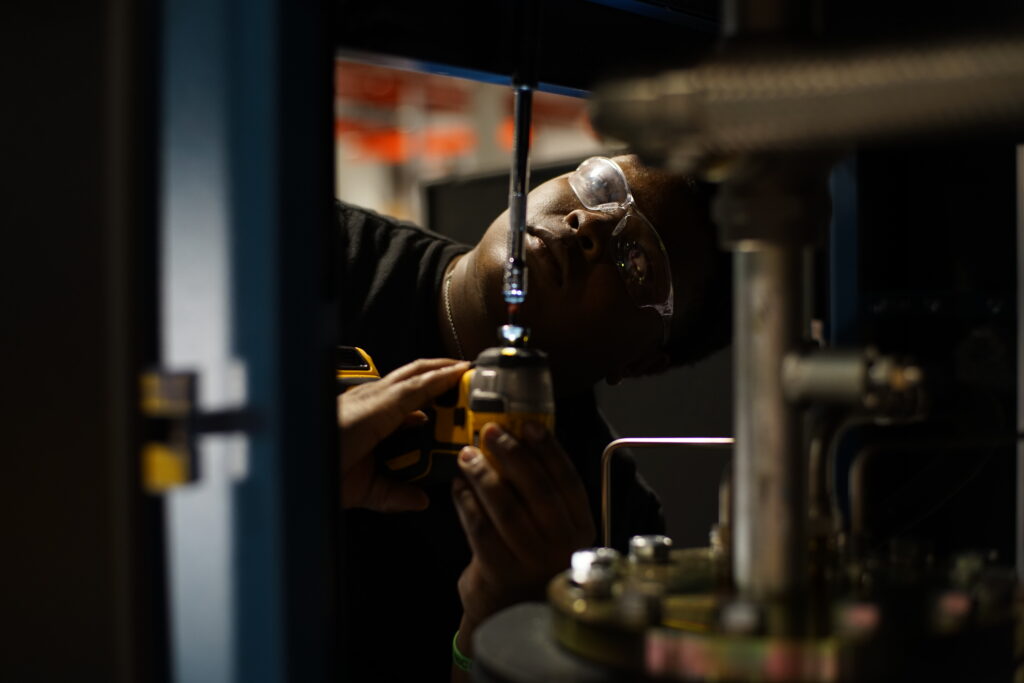
If a maintenance task does not prevent a failure or improve efficiency, it is waste. Move away from rigid calendar-based schedules. If your equipment is operating under light loads, it may not require the same service intervals as a machine running at full capacity. Leverage real-world operating data to trigger maintenance events.
4. Hunting for "Pure" Waste
In a compressed air system, leaks are the purest form of waste. Studies show that the average industrial facility loses 20% to 30% of its compressed air through leaks. This is literally paying to blow money into the atmosphere. Furthermore, operating at higher-than-necessary header pressure creates a cycle of waste: it increases leakage rates and forces compressors to work harder than required.
5. Visibility and Measurement
You cannot improve what you cannot quantify. Establish a baseline for "normal" operation. In air systems, the "North Star" metric is Specific Power—the ratio of cubic feet per minute (cfm) to kilowatt-hours (kWh). By tracking this, you gain a clear view of your compressor’s true efficiency. Modern IoT-enabled sensors can now capture subtle data points that allow for preemptive action, often validating the "gut feeling" of seasoned operators with hard, empirical evidence.
6. The 5S Approach to the Shop Floor
The 5S methodology—Sort, Set in order, Shine, Standardize, and Sustain—is as vital in the compressor room as it is on the assembly line. A clean environment is a safety imperative. For instance, dust accumulation on heat exchangers in a cement plant can cause catastrophic overheating. Similarly, keeping a floor spotless makes it immediately obvious when a new oil leak occurs. This also applies to the parts crib; removing obsolete inventory prevents the frustration of "lost" maintenance time caused by searching for parts that no longer fit active equipment.
7. Sustainability of Change
The graveyard of industrial innovation is filled with "great ideas" that were abandoned after three months. To ensure longevity in your lean maintenance program, start small and ensure that the process is institutionalized. If a new procedure isn’t sustainable for your current workforce, it will eventually be discarded, resulting in a loss of credibility for the entire lean initiative.
8. Root Cause Analysis (RCA)
When a failure occurs, do not simply replace the part and move on. If you see oil carryover, do not just change the downstream filter—investigate why the oil is carrying over. Is it a clogged scavenge line? Is the reservoir overfilled? Are you using inferior, "pirated" parts or lubricants? Solving the symptom is waste; solving the root cause is lean.
9. Visual Management and Alert Systems
Data is useless if it is buried in a server. Implement visual cues that make it obvious when a system is deviating from its baseline. A flashing light, a simple color-coded gauge, or a dashboard displayed in the breakroom can mobilize an entire team. Often, the most significant savings are discovered because a non-technical staff member noticed an indicator light that the experts had missed.
10. The Power of Expert Partnerships
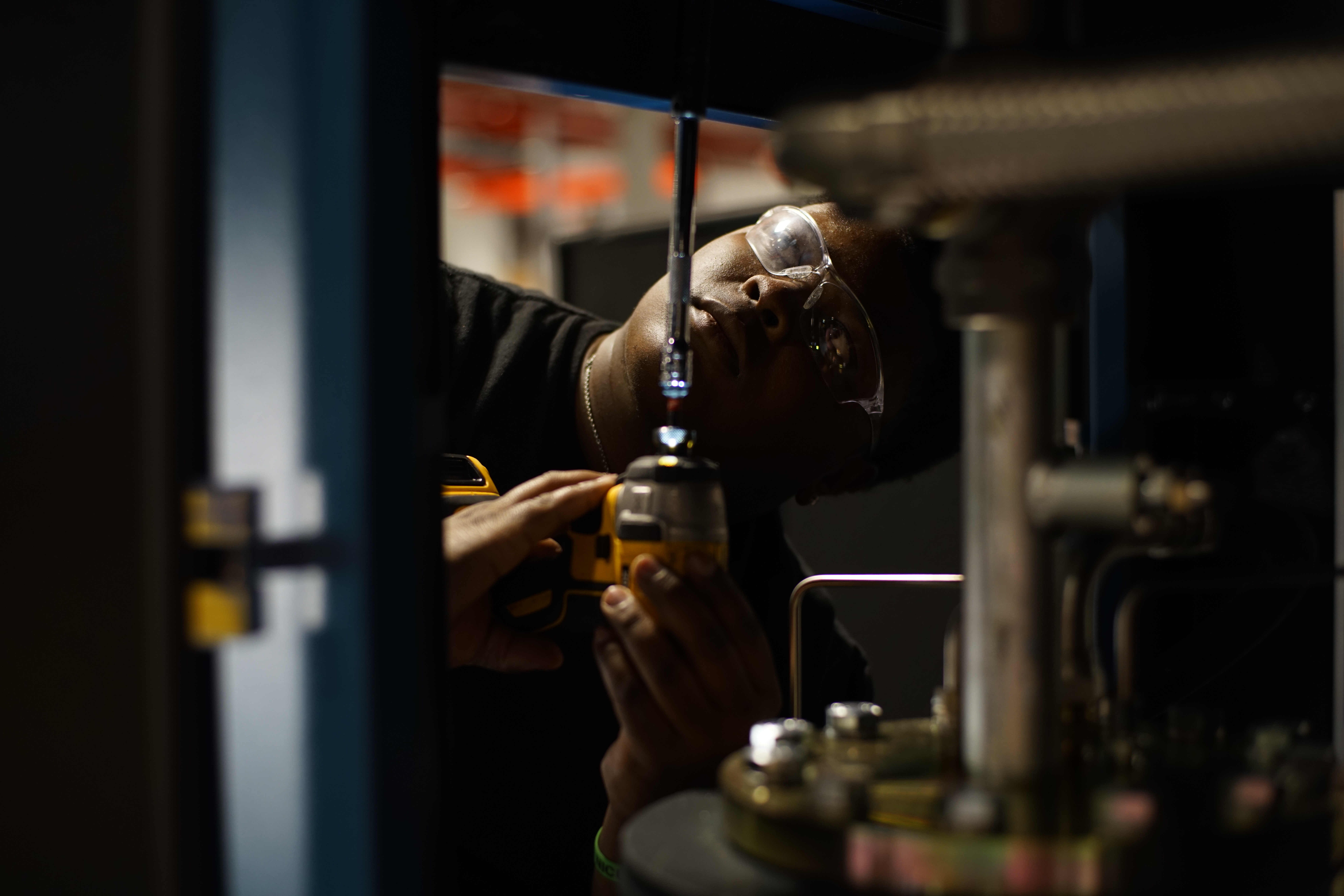
Do not be too proud to seek external expertise. Industrial consultants can provide the air audits necessary to establish your baseline and help navigate the complex world of predictive maintenance. Building a relationship with a trusted vendor is not an expense—it is a strategic investment in the uptime and longevity of your capital assets.
The Role of the CMMS: The Lean Backbone
A Computerized Maintenance Management System (CMMS) acts as the central nervous system of a lean maintenance program. It is the repository for your data, the tracker for your KPIs, and the scheduler for your predictive tasks. However, a CMMS is only as good as the data entered into it. It is not a "set-it-and-forget-it" tool; it requires a culture of discipline to ensure that every maintenance event is logged, analyzed, and used to refine future processes.
Implications for Future Industrial Operations
The implications of adopting lean maintenance are profound. By shifting from a reactive "fix-it-when-it-breaks" or a wasteful "replace-it-because-it’s-time" mentality to a lean, data-driven predictive model, companies can achieve:
- Significant Energy Reduction: Lowering the total energy demand of the facility.
- Extended Asset Life: Reducing the mechanical stress on compressors and associated equipment.
- Reduced Capital Expenditure: Avoiding premature equipment replacement through better care.
- Improved Safety: A clean, organized maintenance area is a safer working environment.
As global competition intensifies, the companies that thrive will be those that look beyond the obvious production line to find efficiency in every corner of their facility. By applying lean principles to maintenance, manufacturers can turn their compressed air systems—and their entire maintenance operation—into a competitive advantage rather than an unavoidable cost center.
The path to a leaner organization is not through a single, massive project, but through the consistent application of these ten principles. It is time to treat maintenance with the same level of analytical rigor as production. The savings are waiting in the air.
About the Author